Annual Crops - Agriculture Notes
Annuals are plants that require one full year to complete their life cycle. Within a year, they germinate, grow, bear fruit, and die. This type of life cycle is found in all herbs and plants of the grass family. True annual plants germinate, flower, set seed, and die all in the same season. Their ultimate goal is to reproduce (set seed), which is good for gardeners because most annuals will flower profusely until their mission is completed. Annual plants include mustard, watermelon, corn, lettuce, and wheat. In this article, we will discuss Annual Crops which will be helpful for UPSC exam preparation.
|
Table of Contents |
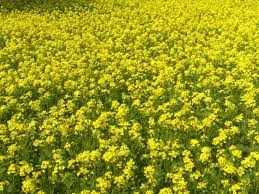
Mustard - Annual Crop
What are Annual Crops?
- An annual plant is one that completes its life cycle, from germination to seed production, within one growing season and then dies.
- Growing seasons vary in length and duration depending on geographical location, and may not correspond to the four traditional seasonal divisions of the year.
- In terms of traditional seasons, annual plants are divided into two categories: summer annuals and winter annuals.
- Summer annuals germinate in the spring or early summer and mature by the autumn of the same year.
- Winter annuals germinate in the autumn and mature in the spring or summer of the following calendar year.
- An annual plant's seed-to-seed life cycle can last as little as a month in some species, but most last several months.
- Oilseed rapa can be grown from seed to seed in about five weeks under a bank of fluorescent lights. This type of growth is frequently used in classrooms for education.
- Many desert annuals are therophytes because their seed-to-seed life cycle is only a few weeks long and they spend the majority of the year as seeds to survive dry conditions.
|
|
|
|---|---|
| Seasonal crops | Plantation Crops |
| Perennial crops | Biennial crops |
Cultivation of Annual Crops
- Many food plants are or are grown as annuals in cultivation, including virtually all domesticated grains.
- Some perennials and biennials are grown as annuals in gardens for convenience, especially if they are not cold hardy in the local climate.
- True biennials, carrot, celery, and parsley are typically grown as annual crops for their edible roots, petioles, and leaves, respectively.
- Tomatoes, sweet potatoes, and bell peppers are all tender perennials that are typically grown as annuals.
- Impatiens, mirabilis, wax begonia, snapdragon, pelargonium, coleus, and petunia are common ornamental perennials grown as annuals.
- Corn, wheat, rice, lettuce, peas, watermelon, beans, zinnia, and marigold are examples of true annuals.
Types of Annuals
- Hardy or cool-season annuals, such as forget-me-not and larkspur, thrive in the cool to moderate temperatures of early spring and fall and can withstand light frost exposure without protection.
- Tender or warm-season annuals like marigolds and petunias are native to tropical or subtropical climates and require heat to grow and thrive, often performing poorly in cold weather. It's best to add these plants to your garden beds or containers in late spring to ensure their survival.
- Half-hardy annuals are the most common and are in the middle of the road. They can withstand a wide range of temperatures, including periods of cooler weather near the start or end of the gardening season.
Summer Annuals
- During the warm months of the year, summer annuals sprout, flower, produce seeds and die.
- Summer annual crabgrass is a lawn weed.
Winter Annuals
- Winter annuals germinate in autumn or winter, survive the winter, and bloom in winter or spring.
- The plants grow and bloom during the cool season, when most other plants are dormant or in seed form, waiting for warmer weather to germinate.
- Winter annuals die after flowering and setting seed. When the soil temperature is cool in the autumn or winter, the seeds germinate.
- Winter annuals typically grow low to the ground, where they are usually sheltered from the coldest nights by snow cover, and take advantage of warm periods in winter for growth when the snow melts.
- Henbit, deadnettle, chickweed, and winter cress are examples of common winter annuals.
- Winter annuals are important ecologically because they provide vegetative cover that prevents soil erosion during the winter and early spring when no other cover exists, as well as fresh vegetation for animals and birds that feed on them.
- Although they are frequently considered weeds in gardens, this is not always necessary because most of them die when the soil temperature rises again in early to late spring, when other plants are still dormant and have not yet leafed out.
- Even though they do not directly compete with cultivated plants, winter annuals are sometimes considered a pest in commercial agriculture because they can be hosts for insect pests or fungal diseases that attack cultivated crops.
- The fact that they keep the soil from drying out can be a problem for commercial agriculture.
Conclusion
Growing annuals is a great way to take gardening one year at a time and experiment with new plants and color schemes without making a long-term commitment. Annuals are ideal for temporarily filling in bare spots in established gardens or refreshing containers throughout the season. Add annuals to a vegetable garden for a splash of color, to fill in gaps when early-season crops are harvested, and to attract pollinators to increase crop yield. Annuals provide nearly instant gratification, maturing faster than perennials or biennials, and often bloom from planting time until frost, and in some cases beyond.
FAQs
Q1: What are annual crops?
Answer: Annual crops are crops that complete their life cycle within a single growing season. These crops are planted, grow, mature, and produce seeds within the same year. After harvesting, the plants typically die, and the cycle begins again the next season with new planting. Common examples of annual crops include wheat, rice, maize, and legumes.
Q2: How do annual crops differ from perennial crops?
Answer: The key difference between annual and perennial crops lies in their life cycle. Annual crops complete their entire life cycle in one year, while perennial crops continue to live and produce for multiple years. Perennial crops, such as trees like mango and apple, grow back every season without needing to be replanted each year.
Q3: What are the main benefits of cultivating annual crops?
Answer: Annual crops offer several benefits, such as a quicker turnover time, allowing farmers to grow multiple crops within a single year. They are often easier to manage since they do not require long-term care and can be rotated with different crops each season, helping to maintain soil health. Additionally, annual crops are generally more resistant to pests and diseases due to their shorter life cycle.
Q4: What factors influence the growth of annual crops?
Answer: The growth of annual crops is influenced by a variety of factors, including soil quality, climate conditions, water availability, and temperature. Proper irrigation, sunlight, and nutrient management are essential to ensure optimal growth. Soil pH, fertility, and the presence of pests and diseases also play a crucial role in the success of annual crop cultivation.
Q5: Can annual crops be grown in all regions?
Answer: Annual crops can be grown in various regions, but the suitability depends on local climate conditions, soil types, and temperature. Some annual crops, such as rice, thrive in tropical and subtropical climates with ample water, while others, like wheat, are better suited to temperate regions with moderate rainfall and cooler temperatures. Proper selection of crops based on regional conditions is essential for maximizing yield.
MCQs
- Which of the following is an example of an annual crop?
A) Mango
B) Apple
C) Wheat
D) Grapevine
Answer: (C) See the Explanation
- How long does it take for annual crops to complete their life cycle?
A) One season
B) Two seasons
C) One year
D) Multiple years
Answer: (A) See the Explanation
- What is one of the advantages of growing annual crops?
A) They require less water
B) They can be harvested multiple times per year
C) They have a shorter life cycle
D) They grow year-round without replanting
Answer: (C) See the Explanation
- Which of the following is not an example of an annual crop?
A) Maize
B) Soybean
C) Rice
D) Mango
Answer: (D) See the Explanation
- Which environmental factor is most critical for the growth of annual crops?
A) Soil fertility
B) Daylight hours
C) Water availability
D) Wind speed
Answer: (C) See the Explanation
GS Mains Questions and Model Answers
Q1: Explain the role of annual crops in ensuring food security.
Answer: Annual crops play a vital role in ensuring food security by providing a reliable and predictable source of food production. Since annual crops like wheat, rice, and maize complete their life cycle in a single growing season, they allow for quick turnover and consistent harvests, which help meet the demand for staple foods. Additionally, annual crops are often suited to a variety of climates and can be cultivated in different regions, providing a diverse range of food products to sustain populations year after year.
Q2: Discuss the environmental impacts of growing annual crops.
Answer: Growing annual crops can have both positive and negative environmental impacts. On the positive side, annual crops can help in crop rotation, which promotes soil health by reducing the buildup of pests and diseases. However, intensive cultivation of annual crops can lead to soil depletion, erosion, and a decrease in biodiversity. The need for high water usage and chemical fertilizers and pesticides to maintain yields can also contribute to environmental degradation, including water pollution and loss of soil fertility.
Q3: How does crop rotation benefit the cultivation of annual crops?
Answer: Crop rotation, the practice of growing different crops in a specific sequence on the same land, benefits the cultivation of annual crops by improving soil health and reducing the risk of pest and disease buildup. By alternating crops that have different nutrient requirements, the soil can replenish its nutrients, leading to improved fertility. Additionally, rotating crops helps break pest and disease cycles, reducing the need for chemical interventions. This sustainable practice enhances the productivity and long-term viability of agricultural land.
Previous Year Questions on Annual Crops
1. UPSC CSE 2019
Question: "What are the factors affecting the yield of annual crops and how can they be managed?"
Answer: The yield of annual crops is affected by factors such as soil quality, water availability, temperature, and pest infestations. Managing these factors requires proper irrigation practices, optimal temperature management, soil fertility enhancement through organic and inorganic fertilizers, and timely pest control measures. Crop rotation and the use of resistant crop varieties can also help manage these factors effectively, ensuring sustained yields.
2. UPSC CSE 2018
Question: "Discuss the importance of irrigation in the cultivation of annual crops."
Answer: Irrigation is crucial for the successful cultivation of annual crops, particularly in regions where rainfall is irregular or insufficient. Proper irrigation ensures that crops receive adequate water for their growth, leading to higher yields. Different irrigation techniques, such as drip irrigation and sprinkler systems, can be used to conserve water while meeting the crop’s water requirements. Efficient irrigation systems contribute to food security by stabilizing crop production in areas vulnerable to water stress.
Download the PREPP App and attempt FREE IAS Exam Mock Tests and get complete study material!

Full Test - 04: UPSC CSE Prelims CSAT (Paper-II)
Full Test - 03: UPSC CSE Prelims CSAT (Paper-II)
UPSC CSE Prelims 2026 CSAT Paper 2 Question Paper (24-May-2026)
UPSC CSE Prelims 2026 GS Paper 1 Question Paper (24-May-2026)

17 February 2025 | The Hindu Must Read Articles | Current Affairs

16 February 2026 | The Hindu Must Read Articles | Current Affairs

13 February 2026 | The Hindu Must Read Articles | Current Affairs









Comments