New Damselfly Species Found In Western Ghats
Relevance: GS3 - Conservation, environmental pollution and degradation, environmental impact assessment
(Source: DTE, 09/29/2023)
Click here for Daily Current Affairs
Why in the news?
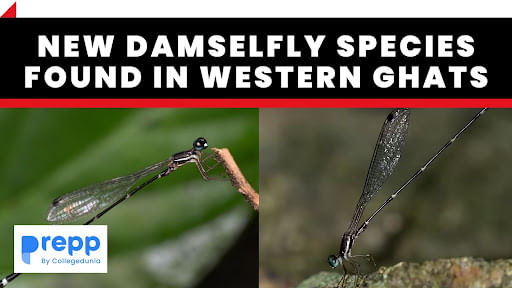
- Recently A new damselfly species has been discovered near Thiruvananthapuram in Kerala’s southern Western Ghats and it is named ‘Armageddon Reedtail’ or ‘Protosticta Armageddonia’ by the researchers.
- The term armageddon signifies the apocalypse or ending of something.
Table of Contents
What is this species and Why is it named so?
- Name: Armageddon Reedtail (Protosticta Armageddonia)
- Habitat: Primary montane streams
- Other features: It has a captivating dark brown to black body with vibrant greenish-blue eyes, and half of its eight abdominal segments are marked with delicate pale blue markings.
- The term ‘ecological armageddon’ while describing the species is used to bring focus on the devastating decline of insect populations around the world.
- This phenomenon, also called insect apocalypse, affects entire ecosystems.
About Damselfly
|
Reasons for decline in the population of insects
Habitat Loss
- It takes place as natural habitats are being converted to human utilisation areas such as agriculture areas, urban areas and for infrastructure development.
- It leads to Habitat destruction, Habitat degradation and Habitat fragmentation.
Intensive use of pesticides and herbicides
The excessive use of fertilisers and synthetic pesticides in agricultural practices resulted in deaths of insects at large scale due to heavy dose and high toxicity of pesticides.
Pollution
- The aerial nitrogen and other pollutants’ over deposition is a harmful pollutant affecting butterflies and other insects.
- Light pollution also acts as a driver of nocturnal insect decline in suburban and urban locations.
- Other than these harmful chemicals and fumes also impact negatively on biological processes of insects.
Invasive alien species
When alien species are introduced in the habitat ecosystem of insects it results in the decline of the insect population because of high competition, food loss, habitat loss, etc.
Climate change
- Climate change triggered multiple factors such as sea level rise, rise in temperature, ocean acidification, acid rain etc.
- These factors can cause genetic variation, behavioural change, change in hatching period of eggs, decrease climate susceptibility etc and also may cause fall in population numbers.
Other threats against insect population
Importance of Insects in the Ecosystem
- Insects break down debris in aquatic ecosystems such as wetlands, ponds, creeks, and streams, contributing to cleaner water for people, wildlife, and plants.
- Insects help in the process of pollination of plants and trees as they disperse seeds from one place to another.
- They are the source of nutrition for more than 90% of birds.
- Predatory insects increase crop yields by keeping weeds and pest species(caterpillars, spiders, and crickets) in check.
- By breaking down and burying animal waste insects can reduce overall methane emissions on dairy and beef farms.
- Many insect species are voracious predators of mosquitoes—which are vectors for various infectious diseases—with some dragonflies consuming hundreds in a single day.
Where insects are placed in the Biological Classification of Animals?
|
(*Click this link to read prelims specific weekly current affairs articles)
FAQs
Question: What is the meaning of Arthropods?
Answer:
Arthropoda defines the largest phylum among the animal kingdom, and it comes under the phylum Arthropoda. These animals have jointed appendages, a segmented body, and an exoskeleton structure covered with chitin. Due to the exoskeleton structure, these animals are flexible, mobile, and also well protected.
MCQs
Question: Which of the following are correct order of hierarchy from tom to bottom ?
(a) Kingdom, division, phylum, genus and species
(b) Phylum, division, genus and class
(c) Kingdom, genus, class, phylum and division
(d) Phylum, kingdom, genus, species and class
Answer: (a) See the Explanation
- In biology, taxonomic rank is the relative level of a group of organisms in an ancestral or hereditary hierarchy.
- A common system of biological classification consists of species, genus, family, order, class, phylum, kingdom, and domain from bottom to top.
- So the correct answer is option a.
Download the PREPP App and attempt FREE IAS Exam Mock Tests and get complete study material!

Full Test - 04: UPSC CSE Prelims CSAT (Paper-II)
Full Test - 03: UPSC CSE Prelims CSAT (Paper-II)
UPSC CSE Prelims 2026 GS Paper 1 Question Paper (24-May-2026)
UPSC CSE Prelims 2026 CSAT Paper 2 Question Paper (24-May-2026)

17 February 2025 | The Hindu Must Read Articles | Current Affairs

16 February 2026 | The Hindu Must Read Articles | Current Affairs

13 February 2026 | The Hindu Must Read Articles | Current Affairs









Comments