An Ageing India Needs Age-Responsive TB Care
Relevance: GS2 - Issues relating to development and management of Social Sector/Services relating to Health
(Source: The Hindu, 10/03/2023)
Click here for Daily Current Affairs
Why in the news?
- Recently, the National TB Prevalence Survey, 2021 revealed that the prevalence of TB in people above 55 was 588 per one lakh population.
- It is necessary to invest in age-appropriate healthcare initiatives especially related to TB as the percentage of India’s population over the age of 60 has been estimated to grow from 9% in 2011 to 12.5% by 2030.
Table of Contents
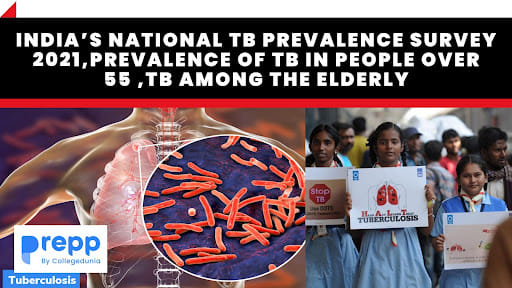
TB burden among the elederly
- Tuberculosis or TB affects over 25 lakh Indians every year and kills at least 1,000 every day.
- The National TB Prevalence Survey in 2021 revealed that prevalence of TB among individuals aged 55 and above was significantly higher than the national average of 316 per one lakh population.
- A rapid assessment report on TB among the elderly, published by REACH, a non-profit organisation in collaboration with the National TB Elimination Programme and the U.S. Agency for International Development, highlighted the impact on the elderly and the need for age-specific guidelines.
How does TB impact the elderly?
- Higher risk: They are more at risk from delayed or missed diagnosis as compared to other adults.
- Complicated management: The elderly are more commonly affected by multiple comorbidities like diabetes.
- This means that elderly victims have more pills to take which includes a higher likelihood of side effects.
- This can also lead to irregular treatment adherence and poor outcomes among the elderly.
- Access to Healthcare: Elderly individuals, especially those in remote and undeveloped terrain such as rural and hilly areas, are restrained in accessing healthcare due to mobility constraints.
- As a result, diagnosis and treatment can be delayed.
- Lack of Information: The elderly also face the challenge of limited access to reliable health information which hampers their ability to recognize symptoms and seek timely aid.
- This is also impacted by the reduction in social interactions among the elderly.
- Economic Dependence: Generally, the elderly in India are dependent on their savings or on their family members.
- Although social welfare schemes are available for the elderly, they lack sufficient financial support and accessibility.
- Infrastructure: The elderly also face challenges such as a lack of proper seating at healthcare institutions and access to high-quality nutritious food.
- Lack of support: Studies have revealed that elderly patients with TB have a lowered ‘will to live’ due to ageism which leads to poor health and social isolation.
- They also suffer from loneliness, anxiety, and a sense of purposelessness, which has negative impacts on their mental health.
What can be done to elderly-friendly TB care?
- Holistic care: It is necessary to shift from vertical and disease-specific care programmes towards holistic models.
- This will reduce the interactions of the elderly with multiple healthcare providers and facilities.
- Capacity building: Healthcare professionals must be trained to gain a better understanding of TB among the elderly and develop better techniques for the management of multiple morbidities.
- Case-finding: Case finding can be improved through measures such as
- effective sputum collection
- modernized transportation systems
- enhanced access to mobile diagnostic vans and active case finding at geriatric OPDs,
- development of residential homes for the elderly
- Protocols: Technical and operational protocols that provide clear guidance on the diagnosis and treatment of TB in the elderly must be developed.
- This can include protocols for sample extraction, assessment of co-morbidities, and adjustment of drug dosage adjustments.
- Socio-economic support: Support services based on inputs from elderly TB patients must be designed and implemented.
- community care models focused on the elderly with linkages to local caregivers
- Doorstep medicine delivery
- Age-responsive peer support and counseling for the elderly and their families
- Special help desks for the elderly at care facilities
- Assistance with documentation to access social support schemes.
- Data Collection and Analysis: Steps must be taken for gender and age-disaggregated data collection and analysis with a separate category for the elderly to help identify TB trends.
- Collaboration in the healthcare system: Effective elderly-friendly care systems can be developed through efficient collaboration within the healthcare system.
- Research: Research on TB in the elderly must focus on trends such as state-wise distribution, substance use, drug resistance, co-morbidity patterns, adoption of TB preventive therapy, and intersectionality.
Tuberculosis
|
India’s initiatives
- National Strategic Plan (NSP) for Tuberculosis Elimination (2017-2025),
- The Nikshay Ecosystem (National TB information system),
- Nikshay Poshan Yojana (NPY- financial support),
- TB Harega Desh Jeetega Campaign.
- The VPM (Vaccine Projekt Management) 1002 and MIP (Mycobacterium Indicus Pranii) vaccines have been developed and are under Phase-3 clinical trial.
(*Click this link to read prelims specific weekly current affairs articles)
FAQs
Question: What is ageism?
Answer:
According to the WHO, ageism refers to the stereotypes, prejudices, and discrimination experienced on the basis of age. Ageism is seen everywhere including institutions, relationships and individuals. The WHO recommends reforms in policy and law, educational activities and intergenerational interventions to tackle ageism.
Question: What is the Nikshay Poshan Yojana ?
Answer:
The Nikshay Poshan Yojana was launched in 2018 by the Union Ministry of Health and Family Welfare. It was implemented with the aim of supporting TB patients in the country through a Direct Benefit Transfer (DBT) of ₹500 per month for nutritional needs.
UPSC Mains Practice Question:
|
MCQs
Question: Match List-I with List-II and select the answer using the codes given below: (UPSC CSE 1998)
List-I(Disease) List-II (Organism)
- Malaria 1. Fungi
- Poliomyelitis 2. Bacteria
- Tuberculosis 3. Virus
- Ringworm 4. Protozoan
(a) A-4; B-3; C-2; D-1
(b) A-4; B-3; C-1; D-2
(c) A-3; B-4; C-1; D-2
(d) A-3; B-4; C-2; D-1
Answer: (a) See the Explanation
- Malaria parasite is a protozoan.
- Tuberculosis is a bacteria.
- Ring worm is a fungus.
- Poliomyelitis is a virus.
Therefore, option (a) is the correct answer.
Download the PREPP App and attempt FREE IAS Exam Mock Tests and get complete study material!

Full Test - 04: UPSC CSE Prelims CSAT (Paper-II)
Full Test - 03: UPSC CSE Prelims CSAT (Paper-II)
UPSC CSE Prelims 2026 GS Paper 1 Question Paper (24-May-2026)
UPSC CSE Prelims 2026 CSAT Paper 2 Question Paper (24-May-2026)

17 February 2025 | The Hindu Must Read Articles | Current Affairs

16 February 2026 | The Hindu Must Read Articles | Current Affairs

13 February 2026 | The Hindu Must Read Articles | Current Affairs









Comments