Borrowed Features (Sources) of Indian Constitution - Indian Polity Notes
Indian Constitution has borrowed many features from various other countries. These countries include Australia, Canada, Ireland, Japan, Russia, United Kingdom,United States, Germany, South Africa, and France. Critics described it as a ‘borrowed Constitution’, a ‘bag of borrowings’, a ‘hotch-potch Constitution’, and a ‘patchwork’ of several documents of the world constitutions. Sources of the Indian constitution are important for both UPSC Preliminary and Mains examination.
|
Table of Contents |

Sources of the Borrowed Features
|
|
|
|---|---|
| Sources | Features Borrowed |
| Government of India Act, 1935 |
|
| British Constitution |
|
| US Constitution |
|
| Irish Constitution |
|
| Canadian Constitution |
|
| Australian Constitution |
|
| Weimar Constitution of Germany |
|
| USSR |
|
| French Constitution |
|
| South African Constitution |
|
|
“Indian constitution was created after ransacking the known Constitutions across the world.”
|
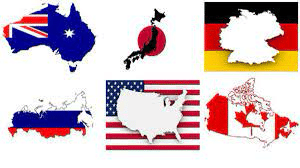
Can it be called a Borrowed Constitution?
- Answering this criticism in the Constituent Assembly, Dr. B.R. Ambedkar said that “One likes to ask whether there can be anything new in a Constitution framed at this hour in the history of the world”.
- In reality, the constitutional makers did not exactly copy the constitutional features of other nations.
- Rather, they made required changes to characteristics acquired from other constitutions in order to make them suitable for Indian conditions while avoiding their flaws.
- Thus, it was never haphazard borrowing. It was a unique way of borrowing.
- It was a document that encapsulated many existing laws and beliefs.
- It was the codification of many existing laws and values into one document.
- Concepts of Equality, Fraternity and Liberty, federalism, republic, democracy, etc. are found in ancient Indian history and scriptures.
- It was never a blind borrowing. It was innovative borrowing.
- When Western modernism interacted with local cultural institutions, something resembling a hybrid culture emerged, probably as a result of creative adaptation. As a result, when we drafted our Constitution, we tried to incorporate both Western and traditional Indian principles. Rather than borrowing, it was a process of selective adaptation.
- It's the result of 2 years, 11 months, and 18 days of intense brainstorming. They looked at numerous different constitutions from different countries but did not copy and paste them. They adapted every method possible to adapt each item you read to the Indian context.
- Our Constitution has drawn on existing foreign constitutions for inspiration, but it does not borrow the Constitution in its current form. For example, the Bill of Rights is included in the US Constitution, whereas our Constitution includes rights as well as Fundamental Duties for all Indian people.
- In order to establish a sovereign and parliamentary government in India, we have drawn heavily on the British Constitution. In India, however, there is no supreme king or queen, and the President serves as the Head of State. He is also the armed forces' ultimate commander. The British Constitution does not contain such a clause.
Conclusion
In a nutshell, such criticisms are unfair and illogical. This is because the Constitution's framers made required changes to characteristics adopted from other constitutions to make them suitable for Indian conditions while avoiding their flaws. On similar grounds, all constitutions worldwide must be based on certain basic and similar principles.
FAQs
Question: Why is the Indian Constitution called a "borrowed constitution"?
Answer: The Indian Constitution is called a "borrowed constitution" because it incorporates features from several other constitutions around the world, such as those of the UK, USA, Ireland, Canada, and more.
Question: Which country's constitution served as the model for India's parliamentary system?
Answer: The United Kingdom's constitution served as the model for India's parliamentary system of government.
Question: From which country did India borrow the concept of Fundamental Rights?
Answer: India borrowed the concept of Fundamental Rights from the United States Constitution.
Question: What features of the Indian Constitution were borrowed from the Irish Constitution?
Answer: The concept of Directive Principles of State Policy was borrowed from the Irish Constitution.
Question: Which country’s constitution influenced the provisions related to the Concurrent List in India?
Answer: The Australian Constitution influenced the provisions related to the Concurrent List in India.
MCQs
1. From which country did India adopt the idea of single citizenship?
A) United States
B) United Kingdom
C) France
D) Australia
Answer: (B) See the Explanation
Explanation: The concept of single citizenship was borrowed from the United Kingdom, where citizens are considered citizens of the nation as a whole, rather than of individual states.
2. Which of the following features was NOT borrowed from the U.S. Constitution?
A) Fundamental Rights
B) Judicial Review
C) Impeachment of the President
D) Directive Principles of State Policy
Answer: (D) See the Explanation
Explanation: The Directive Principles of State Policy were borrowed from the Irish Constitution, not from the U.S. Constitution.
3. The concept of Rule of Law in the Indian Constitution was borrowed from which country?
A) France
B) United States
C) United Kingdom
D) Japan
Answer: (C) See the Explanation
Explanation: The concept of Rule of Law was borrowed from the United Kingdom and ensures that every individual is subject to the law.
4. Which country's constitution provided the inspiration for India's federal structure with a strong centre?
A) Canada
B) United States
C) Australia
D) France
Answer: (A) See the Explanation
Explanation: India's federal structure with a strong centre was inspired by the Canadian Constitution.
5. From which country did India borrow the idea of the Five-Year Plans?
A) United Kingdom
B) France
C) Soviet Union
D) Canada
Answer: (C) See the Explanation
Explanation: The concept of Five-Year Plans in India was borrowed from the Soviet Union as part of its economic planning system.
GS Mains Questions and Model Answers
Q1: Discuss the significance of borrowing features from different constitutions in shaping the Indian Constitution.
Answer: The Indian Constitution is unique in that it draws from various global sources while remaining original and suited to Indian needs. By borrowing features such as the parliamentary system from the UK, fundamental rights from the U.S., and Directive Principles from Ireland, the framers ensured that India's Constitution reflected the best democratic principles and governance practices from across the world. These borrowed features helped India adopt tried-and-tested mechanisms that promote democracy, protect individual rights, and create a strong yet flexible framework for governance.
Q2: Analyze how the adoption of the Rule of Law from the British Constitution has impacted Indian democracy.
Answer: The adoption of the Rule of Law from the British Constitution has had a profound impact on Indian democracy. It ensures that all citizens, regardless of rank or position, are subject to the law, promoting equality and justice. The Rule of Law protects citizens' fundamental rights and prevents the arbitrary exercise of power. By borrowing this principle, India has created a legal framework where the judiciary can act independently and safeguard the Constitution from executive overreach, thereby strengthening democratic governance.
Q3: Evaluate the relevance of the Directive Principles of State Policy, borrowed from Ireland, in modern Indian governance.
Answer: The Directive Principles of State Policy, borrowed from the Irish Constitution, continue to play a crucial role in modern Indian governance by guiding the state in implementing social and economic reforms. While not legally enforceable, these principles serve as moral obligations that the government must consider in policy-making. They promote goals such as social justice, equitable distribution of wealth, and protection of the environment. Although there are challenges in their implementation, the Directive Principles provide a framework for the state to work towards a more equitable society.
Previous Year Questions on Borrowed Constitution
1. UPSC CSE Prelims 2018
Question: The Directive Principles of State Policy in the Indian Constitution have been borrowed from which country's constitution?
A) United States
B) Canada
C) Ireland
D) Germany
Answer: C
Explanation: The Directive Principles of State Policy in the Indian Constitution were borrowed from the Irish Constitution, where they serve as guidelines for the state in governance.
2. UPSC CSE Mains 2020 (GS Paper 2)
Question: How has the borrowing of features from other constitutions shaped the Indian Constitution? Discuss with examples.
Answer: The borrowing of features from other constitutions has shaped the Indian Constitution by providing it with a balanced framework that addresses both governance and rights. For example, India borrowed the parliamentary system from the UK, ensuring responsible governance, while the Fundamental Rights borrowed from the U.S. Constitution protect individual freedoms. The Directive Principles of State Policy from Ireland have guided India’s social policies, and the federal structure with a strong centre was inspired by Canada. These borrowings have helped create a robust and adaptable Constitution that meets India's diverse and complex needs.
*email: contactus@prepp.in
Download the PREPP App and attempt FREE IAS Exam Mock Tests and get complete study material!

Live Test : UPSC CSE Prelims CSAT (Paper-II) (Oct 20 - 23)
Full Test - 04: UPSC CSE Prelims CSAT (Paper-II)
Full Test - 03: UPSC CSE Prelims CSAT (Paper-II)
UPSC CSE Prelims 2026 GS Paper 1 Question Paper (24-May-2026)
UPSC CSE Prelims 2026 CSAT Paper 2 Question Paper (24-May-2026)

17 February 2025 | The Hindu Must Read Articles | Current Affairs

16 February 2026 | The Hindu Must Read Articles | Current Affairs

13 February 2026 | The Hindu Must Read Articles | Current Affairs









Comments