Adaptation Gap Report - Environment Notes
Adaptation Gap Report (AGR) is a yearly flagship release of UNEP. The report's primary objective is to inform the negotiators of the UNFCCC Member States, and the broader UNFCCC constituency, about the status and trends within climate adaptation at global and regional levels. The report also offers policy-makers with a collection of science-based choices for increasing ambition in climate change adaptation across important climate-sensitive industries. This article will explain to you about the Adaptation Gap Report (AGR) which will be helpful in preparing the Environment Syllabus for the UPSC Civil Service exam.
Table of Contents
Adaptation Gap Report (AGR)
- The UNEP has released the Adaptation Gap Report (AGR) every year since 2014 to provide a science-based assessment of worldwide development on adaptation planning, financing, and execution.
- The main goal of the study is to educate about the state and patterns in climate adaptation at the global and regional levels.
- The Adaptation Gap Report (AGR) also offers policymakers and decision-makers with a collection of science-based alternatives for increasing ambition in climate change adaptation across important climate-sensitive industries.
- It makes recommendations for measures that can help national and global adaptation efforts, as well as offers in-depth assessments of different subjects of interest.
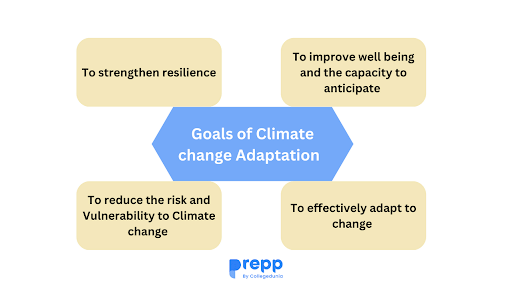
- Parties to the UN Framework Convention on Climate Change and its Paris Agreement recognise that adaptation is a critical component of the long-term global reaction to climate change in order to safeguard people, jobs, and environments.
What is Adaptation?
|
Adaptation Gap Report 2022 - Key Points
- Adaptation measures are increasingly being implemented, with a focus on agriculture, water, ecosystems, and cross-cutting industries.
- However, without a significant increase in assistance, adaptation measures may be outpaced by escalating climate risks, widening the adaptation implementation gap even further.
- According to the United Nations Environment Programme's (UNEP) Adaptation Gap Report 2022, worldwide efforts in adaptation planning, financing, and execution are insufficient to prepare vulnerable areas around the world to adapt to increasing risks from climate change effects.
- The Report examines the benefits of prioritising actions that reduce greenhouse gas emissions while also assisting communities in adapting, such as nature-based solutions, and urges nations to increase financing and implementation of adaptation measures.
- The Report also addresses adaptation effectiveness, as well as adaptation-mitigation linkages and co-benefits.
Global progress on adaptation
- Global watch: A third of the UNFCCC's 197 countries have included quantifiable and time-bound adaptation goals. 90% of them have thought about women and disadvantaged populations.
- The study discovered some work on adaptation strategies from national governments, but they are not supported by money.
- Inadequate: Global efforts in adaptation planning, funding, and execution are insufficient to prepare vulnerable areas worldwide to adjust to the increasing risks of climate change effects.
Adaptation finance
- Large deficit: International adaptation funding transfers are 5-10 times fewer than needed, and the difference is growing.
- Inadequate financial flows: Adaptation funding rose to $29 billion in 2020, a 4% rise over 2019. This is when developing nations' yearly adaptation requirements are expected to be $160-340 billion by 2030 and $315-565 billion by 2050.
Linking Mitigation and Adaptation
- In terms of adaptation planning, financing, and execution, the study stated that the best method to achieve co-benefits was to link mitigation and adaptation activities.
- Nature-based solutions, for example, could help communities all over the world adjust to the increasing risks posed by the effects of climate change.
Other Strategies
Four crucial steps must be taken to close the adaptation gap:
- Increase Adaptation Financing: Developed nations must provide a clear plan for their pledge to double adaptation funding to USD 40 billion, as agreed at COP 26 in Glasgow.
- A New Business Model: Because there is a mismatch between what governments suggest and what financiers deem investable, the world desperately requires a new business model for converting adaptation priorities into investable initiatives.
- Data Implementation is Required: The availability of climate risk statistics and knowledge, which is a problem for many emerging nations' adaptation strategy.
- Modified Warning Systems: The development and application of early warning systems for severe weather disasters and slow-onset shifts like sea level rise.
Initiatives for Climate Finance in India
- National Adaptation Fund for Climate Change (NAFCC): It was created in 2015 to cover the costs of climate change adaptation for India's states and union territories that are especially vulnerable to the adverse impacts of climate change.
- National Renewable Energy Fund: It was established to encourage renewable energy and was initially funded by a carbon tax on businesses that use coal.
- It is administered by an Inter-Ministerial Group, which is chaired by the Finance Secretary.
- Its mission is to fund innovative renewable energy research and development in both the fossil and non-fossil fuel industries.
- National Adaptation Fund: Established in 2014 with a corpus of Rs. 100 crores, the fund aims to bridge the disparity between need and accessible funds.
- The Ministry of Environment, Forests, and Climate Change manages the fund. (MoEF&CC).
Conclusion
Since 2014, the UNEP has published the Adaptation Gap Report (AGR) to provide a science-based evaluation of global development on adaptation planning, funding, and implementation. The study's primary aim is to teach about the current status and patterns in climate adaptation at the global and regional levels. At least 84% of UN Framework Convention on Climate Change (UNFCCC) Parties have created response plans, strategies, laws, and policies, a 5% increase from the previous year. The tools are improving their ability to prioritise vulnerable groups such as Indigenous peoples.
FAQs
Question: What is the Adaptation Gap Report?
Answer: The Adaptation Gap Report (AGR) is an annual publication by the United Nations Environment Programme (UNEP) that highlights the challenges and progress in adaptation to climate change. It assesses the adaptation gap between the needs and actions being taken to address climate impacts, particularly in developing countries.
Question: Why is the Adaptation Gap Report important?
Answer: The AGR is important as it helps track global progress on climate adaptation efforts, identifies funding needs, and provides critical insights to policymakers. It informs the global community about the disparity in adaptation actions and resources between developed and developing nations.
Question: What are the key findings of the Adaptation Gap Report?
Answer: The AGR consistently reports a significant gap between the current adaptation efforts and the needs of vulnerable populations. Key findings include insufficient financial resources, lack of local capacity, and the need for stronger climate adaptation policies, particularly in developing countries.
Question: How does the Adaptation Gap Report influence international climate policy?
Answer: The AGR provides critical data to shape international climate negotiations, such as the United Nations Framework Convention on Climate Change (UNFCCC) conferences. It advocates for increased funding and action for climate adaptation, influencing policy commitments at both national and global levels.
Question: What are some recommendations from the Adaptation Gap Report?
Answer: The AGR recommends enhancing financial investments in climate adaptation, improving capacity-building in vulnerable regions, and ensuring better data and monitoring systems to track adaptation progress. It also calls for integrating adaptation measures into national development plans and international climate agreements.
MCQs
1. What does the Adaptation Gap Report primarily assess?
A) Mitigation of climate change
B) Global carbon emissions
C) The gap between adaptation needs and actions
D) Renewable energy adoption
Answer: (C) See the Explanation
The AGR primarily assesses the gap between the adaptation needs of vulnerable regions and the actions being taken globally to address climate change impacts.
2. Which region faces the most significant adaptation gaps according to the AGR?
A) North America
B) Sub-Saharan Africa
C) Europe
D) Australia
Answer: (B) See the Explanation
Sub-Saharan Africa faces the most significant adaptation gaps, with limited resources, infrastructure, and capacity to address the challenges posed by climate change.
3. Which of the following is a key recommendation from the Adaptation Gap Report?
A) Reducing carbon emissions
B) Enhancing climate adaptation finance
C) Increasing global trade
D) Expanding fossil fuel extraction
Answer: (B) See the Explanation
One key recommendation of the AGR is to enhance financial investments in climate adaptation, particularly for developing nations vulnerable to the impacts of climate change.
4. How does the AGR suggest improving climate adaptation in developing countries?
A) By increasing coal production
B) By improving infrastructure in urban areas
C) By strengthening local capacity and governance
D) By promoting agricultural subsidies
Answer: (C) See the Explanation
The AGR suggests strengthening local capacity, governance, and institutional frameworks in developing countries to implement effective climate adaptation strategies.
5. What is the role of financial support in closing the adaptation gap?
A) Reducing carbon emissions
B) Supporting vulnerable regions with adaptation funding
C) Promoting global trade agreements
D) Expanding fossil fuel subsidies
Answer: (B) See the Explanation
Financial support is crucial for closing the adaptation gap, as it helps vulnerable regions implement necessary adaptation measures, improve infrastructure, and increase resilience to climate impacts.
GS Mains Questions and Model Answers
Q1: Discuss the role of adaptation in global climate change strategies and assess the challenges faced by developing countries in adapting to climate impacts.
Answer: Adaptation plays a crucial role in climate change strategies by helping countries, particularly vulnerable regions, cope with the unavoidable impacts of climate change, such as extreme weather events, sea-level rise, and agricultural disruptions. Developing countries face significant challenges, including insufficient financial resources, limited technical capacity, and weak governance structures, making adaptation efforts difficult. The global community needs to focus on increasing adaptation finance, improving infrastructure, and strengthening local capacities to address these challenges effectively.
Q2: Analyze the relationship between climate adaptation and sustainable development, particularly in the context of the Adaptation Gap Report.
Answer: Climate adaptation and sustainable development are closely linked, as adaptation strategies aim to ensure that communities and economies can continue to thrive despite climate change. The Adaptation Gap Report highlights the need for integrating adaptation into national development plans to ensure long-term resilience. Sustainable development can only be achieved when adaptation measures address both the environmental and socio-economic impacts of climate change, creating systems that are equitable, inclusive, and resilient to future climate risks.
Q3: Evaluate the effectiveness of current international climate adaptation strategies, including the role of the Adaptation Gap Report in shaping global climate policy.
Answer: Current international climate adaptation strategies have made some progress, but the Adaptation Gap Report underscores the need for greater action. While there is an increased focus on financing adaptation and integrating it into development strategies, the gap between adaptation needs and actions remains substantial. The AGR plays a pivotal role in identifying key challenges and providing actionable recommendations, such as enhancing financial support and capacity-building, to guide global climate policy and improve adaptation efforts, particularly for vulnerable nations.
Previous Year Questions on Adaptation Gap
1. UPSC CSE Prelims 2021:
Question: What does the Adaptation Gap Report primarily focus on?
A) Financial support for climate change mitigation
B) The gap between adaptation needs and actions
C) Carbon emissions reduction
D) Energy efficiency policies
Answer: (B)
Explanation: The Adaptation Gap Report primarily focuses on the gap between the adaptation needs of vulnerable regions and the actions being taken globally to address these climate change impacts.
2. UPSC CSE Mains 2020 (GS Paper 3):
Question: "Assess the role of international financial mechanisms in closing the adaptation gap, especially in developing countries."
Answer: International financial mechanisms, such as the Green Climate Fund, play a critical role in closing the adaptation gap by providing financial support to developing countries. These funds are essential for implementing adaptation strategies, improving infrastructure, and enhancing local resilience. However, challenges such as slow disbursement, lack of access to finance, and insufficient capacity at the local level hinder the effectiveness of these mechanisms. A more robust, accessible, and equitable financing model is necessary to ensure that adaptation needs are met in vulnerable regions.
Download the PREPP App and attempt FREE IAS Exam Mock Tests and get complete study material!
UPSC IAS : CSAT - Mini Live Test

Live Test : UPSC CSE Prelims CSAT (Paper-II) (Oct 20 - 23)
Full Test - 04: UPSC CSE Prelims CSAT (Paper-II)
Full Test - 03: UPSC CSE Prelims CSAT (Paper-II)
UPSC CSE Prelims 2026 GS Paper 1 Question Paper (24-May-2026)
UPSC CSE Prelims 2026 CSAT Paper 2 Question Paper (24-May-2026)

17 February 2025 | The Hindu Must Read Articles | Current Affairs

16 February 2026 | The Hindu Must Read Articles | Current Affairs

13 February 2026 | The Hindu Must Read Articles | Current Affairs









Comments