We Need Evidence-Based Traditional Medicine
Relevance: GS2 - Issues Relating To Development And Management of Social Sector/Services Relating To Health, Education, Human Resources
(Source: The Hindu, 10/11/2023)
Click here for Daily Current Affairs
Why in the news?
- This article is based on ‘We need evidence-based traditional medicine,’ which was published in ‘The Hindu,’ on 10/11/2023.
- The recent case where a manufacturer of indigenous drugs filed a lawsuit against a medical practitioner over a social media thread has ignited discussions in medical circles.
- Hence, the case serves as a catalyst for us to delve into the larger issues concerning the place of traditional medicine in our contemporary society, the fundamentals of evidence-based medicine, and the actions governments should undertake to safeguard the well-being of their citizens.
Table of Contents
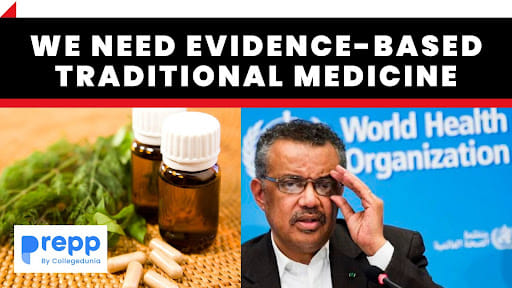
What are Traditional Medicines?
- Traditional medicine, as per the World Health Organization, encompasses the collective knowledge, skills, and practices rooted in the theories, beliefs, and experiences indigenous to various cultures.
- These practices are applied to maintain health, prevent diseases, diagnose conditions, and provide physical and mental healthcare.
- Traditional medicine systems can be well-documented with extensive literature and theoretical foundations, while others are passed down through generations via oral traditions.
- The most prevalent traditional medicine systems globally are those originating from China, India, and Africa.
- India has been known to be a rich repository of medicinal plants. The forest in India is the principal repository of a large number of medicinal and aromatic plants.
What is the position of traditional medicine in a modern world?
- Coexistence with Modern Medicine: Traditional medicine, which includes systems like Ayurveda, Unani, and Siddha, continues to coexist alongside modern medicine. People may seek out traditional healers, herbal remedies, or ancient practices alongside conventional medical treatments. This coexistence reflects the continued trust in and reliance on traditional medicine.
- Cultural Significance: Traditional medicine often holds significant cultural and historical value. It is deeply rooted in the customs, beliefs, and practices of a particular culture or community. This cultural significance can influence people's choices when seeking healthcare.
- Alternative Medicine: In some cases, traditional medicine is used as an alternative to modern medicine. This can occur due to factors such as cost, accessibility, or personal beliefs. People may rely solely on traditional treatments when modern medical resources are limited.
- Scientific Evaluation: Modern science has been applied to evaluate the effectiveness and safety of certain traditional therapies. Some traditional remedies have been found to have medicinal properties and are integrated into evidence-based healthcare.
Challenges faced by Traditional Medicines
- Lack of Scientific Evidence: The position of traditional medicine can be controversial in the modern world. Critics may argue that some traditional practices lack scientific evidence, safety, and efficacy.
- Safety and Quality Control: Ensuring the safety and quality of traditional medicines can be a concern. It can lead to misdiagnosis, mismanagement, and adverse effects in some cases.
- Public Awareness: Public awareness about traditional medicine varies widely. Some individuals are well-informed about its benefits and limitations, while others may have limited knowledge. Education and awareness campaigns can help people make informed decisions about their healthcare options.
- Education and Training: There is a need for comprehensive education and training programs to ensure that practitioners of traditional medicine are well-informed about modern medical standards and safety protocols.
Evolution of Modern Medicine
- Early Medical Practices: Various ancient civilizations developed their own medical systems based on traditions and observations, laying the foundation for future medical knowledge.
- Science-Based: Modern medicine became science-based in the late 19th century, with technological advances that improved the understanding of human health and disease, as well as the development of safe anesthesia and surgical techniques.
- The 20th century brought unprecedented developments in medical technology, including diagnostic imaging, organ transplantation, and pharmaceutical research, revolutionizing patient care.
- Global Collaboration: The latter half of the 20th century and early 21st century have been characterized by increased global collaboration in healthcare, transcending geographical boundaries and leading to improved healthcare outcomes worldwide.
- Universality: Modern medicine is a global knowledge system, not limited to the West. Its strength lies in rigorous testing and incorporating effective therapies. Post-World War II developments have promoted the global flow of ideas, fostering scientific progress.
What should be the government’s role in promoting evidence-based medicine?
- Research and Funding: To assess the effectiveness of traditional medicine like Ayurveda, governments should support the development of new research methods and trial designs. These methods should respect the traditional basis of these therapies, and the Ministry of AYUSH can facilitate this research.
- Public Awareness: Governments can educate the public about the advantages and limitations of traditional medicine. This helps individuals make informed choices when seeking healthcare, ensuring they understand the potential benefits and risks associated with traditional therapies.
- Regulation and Oversight: Governments should establish regulatory bodies to monitor and ensure the safety and quality of traditional medicine practices. This involves creating guidelines for the manufacturing, labeling, and marketing of traditional medicines to protect consumers.
- Evidence-Based Integration: The ultimate goal of government policy should be the well-being of its citizens. Health policies should be grounded in evidence-based assessments of all traditional medical systems. It is essential to identify and retain valuable aspects of traditional practices, integrating them into a comprehensive medical framework accessible to everyone.
- Integration with Modern Healthcare: Encouraging collaboration and integration between traditional and modern healthcare systems is important. This approach offers patients a broader range of treatment options, promoting a more comprehensive approach to healthcare.
AYUSH
|
FAQs
Question: What is the Unani System of Medicine?
Answer:
The Unani system, with its roots in ancient Greece and contributions from Arab scholars, found its way to India around the eleventh century. India has the highest number of Unani educational, research, and healthcare institutions.
Question: What is Siddha System?
Answer:
The Siddha system, prevalent in parts of South India, particularly Tamil Nadu, traces its origin to the term 'Siddhi,' denoting achievement. Siddhars were individuals who attained profound knowledge in medicine, yoga, or meditation.
Question: What is Ayurveda?
Answer:
Ayurveda, a natural system of medicine, originated in India more than 3,000 years ago. The term Ayurveda is derived from the Sanskrit words ayur (life) and veda (science or knowledge). Thus, Ayurveda translates to knowledge of life.
UPSC Mains Practice Question:
|
Download the PREPP App and attempt FREE IAS Exam Mock Tests and get complete study material!
Live Test : UPSC IAS : GS - Modern History - Subject Knowledge Test

Live Test : UPSC CSE Prelims CSAT (Paper-II) (Oct 14 - 17)
Full Test - 04: UPSC CSE Prelims CSAT (Paper-II)
Full Test - 03: UPSC CSE Prelims CSAT (Paper-II)
UPSC CSE Prelims 2026 GS Paper 1 Question Paper (24-May-2026)
UPSC CSE Prelims 2026 CSAT Paper 2 Question Paper (24-May-2026)

17 February 2025 | The Hindu Must Read Articles | Current Affairs

16 February 2026 | The Hindu Must Read Articles | Current Affairs

13 February 2026 | The Hindu Must Read Articles | Current Affairs









Comments