Veblen Goods – Indian Economy Notes
Veblen good is a good for which demand rises as the price rises because of its exclusive nature and appeal as a status symbol. In contrast to the conventional downward-sloping demand curve, a Veblen good has an upward-sloping demand curve. Diamond and luxury cars are some examples of Veblen goods. The topic “Veblen Goods” is one of the important concepts in the UPSC/IAS 2023 Economy syllabus which is discussed in this article in detail.
|
Table of Contents |
What are Veblen Goods?
- Veblen goods, a concept conceived by American economist Thorstein Veblen in the late 19th century, challenge conventional theories of demand and consumer behavior.
- Unlike traditional goods, where demand decreases as prices rise, Veblen goods experience an increase in demand as their prices soar.
- These goods are emblematic of conspicuous consumption, where consumers showcase their social status and affluence through lavish spending.
- In contrast to a Giffen good, which is an inferior product with no readily available substitutes, a Veblen good is often a high-quality, valued commodity.
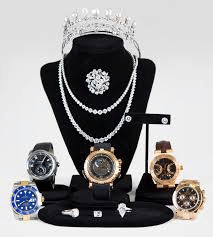
- Diamonds, for example, are luxury items whose attraction is based on their high price.
- In recent years, flagship smartphone prices have increased causing their demand as well to increase like the iPhones, and Samsung Galaxy Fold.
- Veblen goods are regarded as exceptions to the law of demand, which holds that as a good's price rises, so does its demand, and vice versa.
- Some economists disagree, claiming that the law only applies to absolutely comparable commodities.
- When compared to costly diamonds, for example, cheap diamonds may appear to be a lesser good in the perspective of the consumer; thus, they are not genuinely comparable.
| Other Relevant Links | |
|---|---|
| Elasticity of Demand | Demand for Money |
| Law of Demand | Supply of Money |
| Price Elasticity of Demand | Giffen Goods |
Characteristics of Veblen Goods
- Positive Price-Demand Relationship: The demand for Veblen goods rises with an increase in price, defying the law of demand.
- Conspicuous Consumption: Consumers purchase Veblen goods to flaunt their social status, with the conspicuous display of luxury serving as a status symbol.
- Income Elasticity: Veblen goods have high income elasticity of demand, meaning that as income increases, the demand for these goods also rises.
- Absence of Substitution Effect: Veblen Goods often lack close substitutes, limiting the role of substitution in the demand equation and reinforcing their prestige-driven demand.
Concept of Conspicuous Consumption
- The concept of conspicuous consumption applies to Veblen goods.
- It represents a desire of prestige through the purchasing of goods and services in order to demonstrate one's economic power and societal status.
- Thorstein Veblen also introduced the concept of conspicuous consumption in his 1899 book, "The Theory of the Leisure Class."
- According to the practises of conspicuous consumption, a product's price determines how desirable it is as a status symbol, which provides a social explanation for the characteristics of Veblen commodities.
- The term "conspicuous consumption" was once only used to describe the upper (leisure) class.
- As living standards rose in the 20th century, middle-class people with discretionary means also exhibited this type of socioeconomic behaviour.
- Following are some examples that showcase the phenomenon of conspicuous consumption:
- Luxury cars epitomize Veblen goods in modern society. As the price of luxury cars escalates, the demand for these vehicles often surges, driven by the allure of prestige and status. The branding, exclusivity, and aesthetics of these cars play a pivotal role in stimulating consumer desire.
- Luxury brands like Louis Vuitton, Gucci, and Chanel leverage the Veblen effect to position their products as symbols of opulence and exclusivity.
- High-end properties in prime locations become Veblen goods, as their exorbitant prices attract buyers seeking to exhibit their wealth and social standing.
Veblen Goods vs. Giffen Goods
- Another class of items that do not precisely follow the law of demand is Giffen goods. Unlike Veblen products, which defy the law of demand once prices reach a certain point, Giffen goods defy the law of demand until prices reach a particular point.
- Furthermore, Giffen products have a negative income effect. A positive relationship exists between the price of a Giffen good and the amount required of the good.
Balancing Aspiration and Equality
- Luxury Taxation: Governments may impose luxury taxes to curb excessive spending on Veblen goods, aiming to redistribute wealth and promote economic equality.
- Consumer Education: Promoting financial literacy can help consumers make informed decisions about their purchases, leading to a more balanced consumption pattern.
- Sustainable Luxury: Encouraging sustainable and ethical practices within the luxury industry can align with India's commitment to responsible consumption.
Veblen Goods vs. Giffen Goods
| Aspect | Giffen Goods | Veblen Goods |
|---|---|---|
| Nature | Inferior goods with negative income elasticity | Luxury goods with positive income elasticity |
| Price-Demand Relationship | Demand increases as price rises | Demand increases with higher prices |
| Explanation | Price-effect dominance overrides income effect | Higher price enhances perceived status and prestige |
| Consumer Behavior | Consumers buy more due to affordability constraints | Consumers buy more for social status and exclusivity |
| Income Effect | Weak or negligible | May play a role in demand increase |
| Examples | Basic staple foods for impoverished populations | Designer clothing, luxury cars, high-end watches |
| Relationship with Income | Low income elasticity | High income elasticity |
| Policy Implications | Subsidy programs to mitigate price effects | Marketing and branding strategies to enhance status |
| Common Occurrence | Historically relevant, rare in modern economies | More prevalent in conspicuous consumption contexts |
Conclusion
Veblen Goods stand as a captivating phenomenon in the realm of economics, unraveling the intricate interplay between consumer behavior, status aspirations, and economic choices. The paradoxical nature of these goods challenges the conventional notions of price and demand relationships, underscoring the power of human aspiration and social signaling. In India, as the nation navigates economic growth and cultural traditions, understanding the nuances of Veblen goods can guide policies that strike a balance between promoting aspirations and fostering socioeconomic equality.
|
|
|
|---|---|
| Indian Economics Notes | Micro Economics |
| Economic Systems | Macro Economics |
| Branches of Economics | Sectors of Indian Economy |
FAQs
Question: What are Veblen goods?
Answer: Veblen goods are luxury items for which demand increases as the price rises, contrary to the usual law of demand. This occurs because higher prices often signify greater status and prestige, making them more desirable as status symbols. Examples of Veblen goods include luxury cars, designer clothing, and high-end watches. The concept was introduced by economist Thorstein Veblen.
Question: How do Veblen goods differ from Giffen goods?
Answer: Both Veblen and Giffen goods show an upward-sloping demand curve but for different reasons. Veblen goods are luxury items whose demand increases as their price rises due to their status symbol appeal. Conversely, Giffen goods are typically inferior goods for which demand increases as their price rises because consumers cannot afford to switch to pricier alternatives, causing them to consume more of the inferior good.
Question: What factors drive the demand for Veblen goods?
Answer: The demand for Veblen goods is driven by factors such as social status, exclusivity, and prestige. Consumers purchase these goods to signal wealth and social standing. Marketing strategies that emphasize luxury and exclusivity, along with cultural and societal norms, further fuel demand.
Question: Can you provide examples of Veblen goods in India?
Answer: In India, examples of Veblen goods include luxury cars like BMW and Mercedes-Benz, premium watches such as Rolex, and high-end designer clothing by brands like Sabyasachi. These items are often sought for their prestige and exclusivity, and demand tends to increase as their prices rise.
Question: How do Veblen goods relate to conspicuous consumption?
Answer: Veblen goods are closely associated with conspicuous consumption, where individuals purchase high-priced items to publicly display wealth and status. The higher price makes these goods more desirable as status symbols, enhancing their appeal to consumers seeking social distinction.
MCQs
1. What characterizes the demand for a Veblen good?
A) Decrease in demand as price rises
B) Increase in demand as price rises
C) Stable demand irrespective of price
D) Increase in demand when the price decreases
Answer: (B) See the Explanation
Explanation: Veblen goods are unique in that their demand increases as their prices rise, as consumers perceive higher-priced goods as more prestigious and desirable.
2. Which of the following is considered a Veblen good in India?
A) Basic food grains
B) Designer clothing
C) Generic medicines
D) Public transport tickets
Answer: (B) See the Explanation
Explanation: Designer clothing from brands such as Sabyasachi is an example of a Veblen good in India, as these products are often sought after for their exclusivity and status-enhancing appeal.
3. The demand curve for a Veblen good:
A) Slopes downward
B) Slopes upward
C) Is flat
D) Is vertical
Answer: (B) See the Explanation
Explanation: The demand curve for a Veblen good is upward-sloping, reflecting that demand increases with rising prices due to their appeal as status symbols.
4. Who introduced the concept of Veblen goods?
A) Alfred Marshall
B) Adam Smith
C) Thorstein Veblen
D) John Maynard Keynes
Answer: (C) See the Explanation
Explanation: The concept of Veblen goods was introduced by the economist Thorstein Veblen, known for his work on conspicuous consumption and social status in economic behavior.
5. Veblen goods are primarily sought for:
A) Their low price
B) Their functionality
C) Their status-enhancing value
D) Their necessity
Answer: (C) See the Explanation
Explanation: Consumers primarily seek Veblen goods for their ability to convey social status and prestige. Their value lies in their high price and the status they confer upon their owners.
GS Mains Questions and Model Answers
Q1: Analyze the role of Veblen goods in shaping consumer behavior in India’s luxury market.
Answer: Veblen goods, characterized by increased demand with rising prices, play a significant role in India’s luxury market. They are primarily sought as status symbols, with consumers using them to signify wealth and social prestige. The luxury market thrives on the exclusivity, high price, and brand image of these goods. This consumer behavior is driven by cultural norms and a desire for social distinction. As India’s affluent population grows, demand for luxury goods such as high-end cars, designer apparel, and premium accessories has surged. The market dynamics thus underscore the social importance of Veblen goods in India.
Q2: Discuss the economic implications of the demand for Veblen goods in an emerging economy like India.
Answer: The demand for Veblen goods in India reflects changing socio-economic dynamics, with rising affluence and greater income inequality fueling luxury consumption. This demand contributes to economic growth by boosting the luxury goods market and creating employment opportunities in sectors like fashion, automobiles, and luxury services. However, it may also deepen socio-economic disparities by emphasizing wealth-based social differentiation. Balancing the growth of the luxury market with policies aimed at reducing inequality is critical for inclusive economic development.
Q3: Explain the factors driving the increasing demand for Veblen goods in India and their socio-economic impact.
Answer: Rising incomes, increased exposure to global luxury trends, and cultural emphasis on status have driven demand for Veblen goods in India. Social norms often encourage conspicuous consumption, making luxury goods popular status symbols. While this demand boosts economic sectors related to luxury and creates jobs, it can exacerbate socio-economic inequality. Policymakers must consider these impacts when shaping economic and social policies, balancing growth and equitable wealth distribution.
Previous Year Questions on Veblen Goods
1. UPSC CSE Prelims 2020:
Question: Which of the following best defines a Veblen good?
A) A good with decreasing demand as price rises
B) A luxury good with increasing demand as price rises
C) An essential commodity with stable demand
D) A perishable good with seasonal demand
Answer: (B)
Explanation: A Veblen good is defined by an increase in demand as the price rises, due to its appeal as a status symbol and indicator of wealth.
2. UPSC CSE Mains 2019 (GS Paper 3):
Question: Examine the influence of social status on the consumption of Veblen goods in India’s luxury market.
Answer: Social status plays a pivotal role in driving the consumption of Veblen goods in India’s luxury market. High prices of these goods enhance their prestige, attracting affluent consumers who seek to display their wealth and social standing. Cultural values that emphasize social status and success further fuel this demand. While luxury consumption stimulates economic growth, it can also create socio-economic divides. Addressing these divides through inclusive policies is essential for balanced development.
Download the PREPP App and attempt FREE IAS Exam Mock Tests and get complete study material!

Full Test - 04: UPSC CSE Prelims CSAT (Paper-II)
Full Test - 03: UPSC CSE Prelims CSAT (Paper-II)
UPSC CSE Prelims 2026 CSAT Paper 2 Question Paper (24-May-2026)
UPSC CSE Prelims 2026 GS Paper 1 Question Paper (24-May-2026)

17 February 2025 | The Hindu Must Read Articles | Current Affairs

16 February 2026 | The Hindu Must Read Articles | Current Affairs

13 February 2026 | The Hindu Must Read Articles | Current Affairs









Comments