Elasticity of Demand – Indian Economy Notes
Elasticity of Demand is the percentage change in quantity demanded divided by the percentage change in one of the variables that affect demand. Price elasticity of demand measures how much a product's consumption changes in response to price changes. The topic “Elasticity of Demand” is one of the important concepts in the UPSC/IAS 2023 Economy syllabus which is discussed in this article in detail.
What is Elasticity of Demand?
- An elastic demand is one where there is a significant shift in the quantity demanded as a result of a price change.
- The elasticity of demand describes how sensitive a good's demand is to changes in other economic variables like prices and consumer benefits.
- Higher demand elasticity for an economic variable indicates that the customers are more conscious of changes in this variable.
Elasticity
 |
|
|
|
|---|---|
| Law of Demand & Supply | Law of Demand |
| Veblen Goods | Giffen goods |
Elasticity of Demand - Example
- A product is deemed elastic if the amount wanted or purchased fluctuates more than the price does (for instance, the price increases by 5% while the demand decreases by 10%).
- Consumer durables are an example of a product with elastic demand.
- Like a washing machine or an automobile, these are products that are rarely bought and can be postponed if the price goes up.
- For instance, lowering the price of cars has been a very effective way to increase sales of cars.
Types of Elasticity of Demand
- Price elasticity of demand
- Cross elasticity of demand
- Income elasticity of demand
- Advertisement elasticity of demand
Price Elasticity of Demand (PED)
- Price Elasticity of Demand measures the responsiveness of quantity demanded to changes in price. It can be classified into three categories:
- Elastic Demand (E > 1): A relatively small price change leads to a proportionally larger change in quantity demanded.
- Unitary Elastic Demand (E = 1): A percentage change in price results in an equal percentage change in quantity demanded.
- Inelastic Demand (E < 1): Quantity demanded changes proportionally less than the price change.
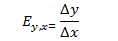
- The percentage change in the quantity required divided by the percentage change in price is known as price elasticity of demand.
Measurement of Price Elasticity of Demand The price elasticity of demand can be measured in three different ways.
|
Cross Elasticity of Demand (XED)
- The responsiveness to a change in the pricing of related goods is referred to as cross elasticity of demand.
- It is defined as the ability to respond to changes in commodity X demand in response to a change in commodity Y price.
- Positive XED: Substitute goods have a positive value, indicating that an increase in the price of one leads to an increase in demand for the other.
- Negative XED: Complementary goods have a negative value, signifying that an increase in the price of one decreases demand for the other.
Income Elasticity of Demand (YED)
- The responsiveness of demand for a commodity to changes in income, with all other factors, held constant, is known as income elasticity of demand.
- Positive YED: Normal goods have a positive value, signifying that an increase in income leads to an increase in demand.
- Negative YED: Inferior goods have a negative value, indicating that an increase in income results in reduced demand.
Advertising Elasticity of Demand (AED)
- Advertising elasticity of demand (AED) is a measure of a market's sensitivity to changes in advertising saturation.
- Advertising elasticity assesses the effectiveness of an advertising campaign in generating new sales.
- It is calculated by dividing the percentage change in demand by the percentage change in advertising spending.
- A positive advertising elasticity indicates that increasing advertising increases demand for the advertised goods or services.
Factors That Affect Price Elasticity of Demand
Availability of Substitutes
- The price will decrease more and more quickly if a customer may substitute one item for another.
- For instance, if everyone in the world prefers both coffee and tea equally, the demand for coffee will decline if coffee prices rise because people will easily switch to tea.
- This is due to the fact that tea and coffee are seen as good alternatives to one another.
Urgency
- The quantity of demand for a product will decrease in response to price rises the more discretionary the purchase is. In other words, the product demand is more elastic.
- Consider that your existing washing machine is still functional despite being old and out-of-date, but you are thinking about getting a new one.
- If the cost of a new washing machine increases, you can decide against making the purchase right away and instead hold off until the price drops or the old machine malfunctions.
- A product's demand will decline less as its discretionary property increases. Luxury goods that people purchase because of their brand names are an example of an elastic example.
- Both addictive products and necessary add-on items, like inkjet printer cartridges, are rather inelastic.
- All of these products share the problem of having poor alternatives.
Duration of Price Change
- The duration of the price change is also important. A one-day sale has a different impact on consumer demand than a price change that lasts for a season or a full year.
- To understand the price elasticity of demand and to compare it with other items, temporal sensitivity must be clearly defined.
- Consumers could be willing to put up with a seasonal price shift rather than altering their routines.
Applications of Elasticity of Demand
- Business Strategies: Understanding elasticity helps businesses set optimal prices. For goods with elastic demand, price cuts may lead to higher revenue, while for inelastic goods, higher prices might generate more revenue.
- Taxation and Revenue: Governments consider elasticity when levying taxes. For inelastic goods, higher taxes may lead to increased revenue, while for elastic goods, taxes could lead to reduced consumption and revenue.
- Consumer Behavior Analysis: Elasticity provides insights into how consumers react to price changes, aiding companies in making informed decisions about product launches, pricing adjustments, and marketing strategies.
Conclusion
Understanding Elasticity of Demand provides a lens through which consumer behavior and market dynamics can be interpreted. A change in a commodity's price has an impact on its demand. By comparing the percentage price changes with the quantities demanded, we may determine the elasticity of demand or the degree of responsiveness of demand.
|
|
|
|---|---|
| Indian Economics Notes | Micro Economics |
| Economic Systems | Macro Economics |
| Branches of Economics | Sectors of Indian Economy |
FAQs
Question: What is the concept of elasticity of demand?
Answer: Elasticity of demand measures how the quantity demanded of a good responds to changes in its price. If the demand for a product changes significantly when the price changes, the product is said to have elastic demand. In contrast, if the demand remains relatively unaffected by price changes, the demand is inelastic.
Question: What are the different types of elasticity of demand?
Answer: The main types of elasticity of demand are:
- Price Elasticity of Demand (PED) - measures the responsiveness of quantity demanded to price changes.
- Income Elasticity of Demand (YED) - measures how demand changes with income changes.
- Cross Elasticity of Demand (XED) - measures the responsiveness of demand for one good to a price change in another related good.
- Advertising Elasticity of Demand (AED) - measures the effect of advertising on demand for a product.
Question: What factors influence the price elasticity of demand?
Answer: Several factors influence the price elasticity of demand, including:
- Availability of substitutes - More substitutes make demand more elastic.
- Necessity vs. luxury - Necessities tend to have inelastic demand, while luxury items tend to have elastic demand.
- Time period - Demand is often more elastic in the long run as consumers have time to adjust to price changes.
- Proportion of income spent - Products that take up a large proportion of a consumer’s income typically have more elastic demand.
Question: What is the significance of elasticity of demand for businesses?
Answer: Understanding the elasticity of demand helps businesses set prices effectively. For goods with elastic demand, lowering prices can increase revenue, whereas for goods with inelastic demand, businesses can increase prices to boost revenue without significantly reducing sales.
Question: How does elasticity of demand affect government policy on taxation?
Answer: Governments use elasticity of demand to determine the impact of taxes on different products. For inelastic goods, taxes can raise revenue without significantly affecting demand, whereas for elastic goods, taxes may lead to a decrease in consumption and thus less revenue.
MCQs
1. What does price elasticity of demand measure?
A) Change in demand based on income
B) Change in demand based on price change
C) Change in demand based on availability of substitutes
D) Change in demand based on advertising
Answer: (B) See the Explanation
Explanation: Price elasticity of demand measures how much the quantity demanded of a good changes in response to a change in its price.
2. What is an example of an inelastic good?
A) Luxury watches
B) Medicine
C) Designer shoes
D) Vacation packages
Answer: (B) See the Explanation
Explanation: Medicine is typically an inelastic good, as people continue to buy it even if prices increase, due to its necessity for health.
3. What does income elasticity of demand measure?
A) The effect of price change on demand
B) The effect of income change on demand
C) The effect of advertising on demand
D) The effect of government intervention on demand
Answer: (B) See the Explanation
Explanation: Income elasticity of demand measures how the quantity demanded of a good changes in response to a change in consumer income.
4. If a good has an elasticity greater than 1, what type of demand does it have?
A) Elastic demand
B) Inelastic demand
C) Unitary demand
D) Perfectly inelastic demand
Answer: (A) See the Explanation
Explanation: When the elasticity is greater than 1, the demand is considered elastic, meaning that the quantity demanded changes more than the price change.
5. Which factor contributes most to the elasticity of demand for a good?
A) The product’s price
B) The availability of substitutes
C) The consumer’s income
D) The size of the market
Answer: (B) See the Explanation
Explanation: The availability of substitutes makes demand more elastic. If substitutes are easily available, consumers can switch products when prices change.
GS Mains Questions and Model Answers
Q1: Discuss the concept of elasticity of demand and its relevance to pricing strategies in economics.
Answer: Elasticity of demand is a measure of how sensitive the quantity demanded of a good is to changes in its price. A higher elasticity means that consumers will reduce their demand significantly when the price rises, whereas a lower elasticity means that demand will not decrease substantially. This concept is vital for pricing strategies as businesses and governments can use it to set optimal prices, maximize revenue, and assess the impact of taxation policies. For instance, for goods with elastic demand, price reductions can increase total revenue, while for inelastic goods, price increases may lead to higher revenue without much reduction in demand.
Q2: How do businesses and governments use the concept of elasticity of demand to make decisions about taxation and pricing?
Answer: Businesses and governments use elasticity of demand to make informed decisions on pricing and taxation policies. For inelastic goods, taxes may be increased without significantly reducing consumption, leading to higher government revenue. Conversely, for elastic goods, higher taxes might reduce consumption drastically, thus decreasing revenue. Businesses also adjust prices based on elasticity to maximize profits. For example, for luxury goods with elastic demand, a price decrease can boost sales, while for essential goods with inelastic demand, prices can be increased with minimal impact on demand.
Q3: Evaluate the impact of advertising elasticity of demand on the effectiveness of marketing campaigns.
Answer: Advertising elasticity of demand measures the responsiveness of demand to changes in advertising expenditure. A high advertising elasticity indicates that a small increase in advertising leads to a large increase in demand, making marketing campaigns more effective. On the other hand, a low advertising elasticity suggests that advertising has a minimal impact on consumer demand. Understanding this concept helps businesses allocate their marketing budgets efficiently, targeting advertising efforts towards products that will benefit most from increased exposure.
Previous Year Questions on Elasticity of Demand
1. UPSC CSE Prelims 2020:
Question: Which of the following factors is NOT likely to affect the price elasticity of demand?
A) Availability of substitutes
B) Consumer preferences
C) Changes in consumer income
D) Weather conditions
Answer: (D)
Explanation: Weather conditions do not directly affect the price elasticity of demand, unlike factors such as the availability of substitutes or changes in consumer income.
2. UPSC CSE Mains 2021 (GS Paper 3):
Question: "How can understanding the price elasticity of demand assist policymakers in designing effective taxation policies?"
Answer: Policymakers use price elasticity of demand to understand how consumers will react to price changes, especially in relation to taxation. For inelastic goods, governments can levy higher taxes without significantly reducing consumption, increasing revenue. However, for elastic goods, taxes may result in a significant reduction in demand, thereby reducing expected revenue. Understanding these dynamics helps create balanced policies that optimize both economic efficiency and fiscal revenue.
Download the PREPP App and attempt FREE IAS Exam Mock Tests and get complete study material!

Full Test - 04: UPSC CSE Prelims CSAT (Paper-II)
Full Test - 03: UPSC CSE Prelims CSAT (Paper-II)
UPSC CSE Prelims 2026 CSAT Paper 2 Question Paper (24-May-2026)
UPSC CSE Prelims 2026 GS Paper 1 Question Paper (24-May-2026)

17 February 2025 | The Hindu Must Read Articles | Current Affairs

16 February 2026 | The Hindu Must Read Articles | Current Affairs

13 February 2026 | The Hindu Must Read Articles | Current Affairs









Comments