Types of Goods – Indian Economy Notes
Goods are items and resources that meet people's needs and desires. A good can be a physical item, a service, or a combination of the two. Almost anything is good if it provides some sort of benefit to consumers. Goods are of many types based on the characteristics that determine their value. The most common types of goods are Capital goods, Intermediate goods, Final goods, Durable goods, and Luxury goods. Learning about the various types of goods can assist you in determining how they affect the economy and your own life. The topic “Types of Goods” is an important part of UPSC/IAS Exam 2023 Economy syllabus which is discussed in this article in detail.
|
Table of Contents |
Types of Goods
-
Free Goods
- A free good is a good that is available free of cost and is unlimited.
- Air – which we breathe – is the best example of a free good. It has utility, but it is so abundant in nature that we don't have to pay a price for both its production and use.
- Thus, one need not pay anything for a free good.
- However, in the economic sense, a free good sold for promotion is not a free good.
-
Basic Goods
- A basic good is one that does not have utility in and of itself but is derived from another good that does.
- For example, cotton or textile is a basic good because clothing made from it is useful.
- In other words, basic goods are bulk or raw material products used in the production of new items in agriculture, manufacturing, or construction.
-
Intermediate Goods
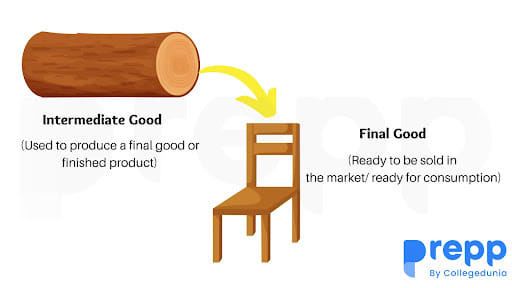
- Intermediate Good is a good that is used to make a finished good or a final good.
- In other words, intermediate goods are unfinished goods that are used as input for further processing.
- Thus, intermediate goods are found in the production chain between raw materials and finished goods.
- For example, Sugarcane is an intermediate good in the manufacture of Sugar.
-
Finished Goods/ Final Goods
- A finished good is one that has completed the necessary manufacturing and is ready to be used.
- Finished goods are ready for consumption or distribution. Finished Goods are also called Final Goods.
- Examples of finished goods: electronic gadgets such as TV, smartphones, and bicycles.

-
Capital Goods
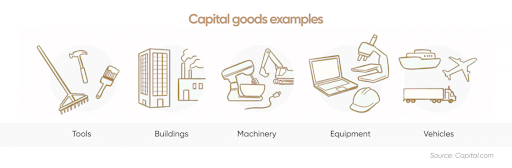
- Capital Goods are goods that are used in the conversion of basic goods to finished goods.
- Plants, machinery, and other assets are examples of finished goods.
- Capital Good provides service without losing its essential functional characteristic, form, or shape except for wear and depreciation.
- Furthermore, a Capital Good is a finished good because it does not require any further processing.
-
Producer Goods
- A producer good is any good that is used to manufacture some other goods or services.
- Examples: Tools, raw materials, seeds, and machinery.
- As a result, all basic goods, intermediate goods, and capital goods are called producer goods because they are used in the production of other goods.
- The basic and intermediate goods are raw materials, but NOT capital goods.
-
Consumer Goods
- Consumer goods are goods that are used for personal consumption while producer goods are used to make other goods.
- Consumer goods are generally, but not always, "Finished Goods" because they are ready to use without further processing or changes.
- Some consumer goods may require additional processing – for example, cloth that must be sent to a tailor is both a consumer good and an intermediate good.
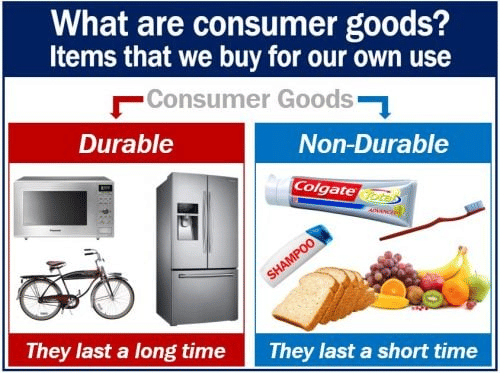
- Consumer goods are classified into two types: consumer durable goods and consumer non-durable goods.
Consumer Durable Goods (aka. Consumer Durables)
- Consumer Durable Goods are non-perishable goods, such as electronics.
- Such items do not need to be purchased on a regular basis because they are designed to last for at least three years.
- They are generally more expensive than non-durables.

Consumer Non-durable Goods (aka. Consumer Non-durables)
- Consumer non-durables are perishable goods such as fruits, vegetables, cosmetics, and food items.
- Consumer Non-durable goods are generally purchased on a regular basis.
-
Convenience Goods
- Convenience goods are goods that are purchased frequently, quickly, and with minimal effort.
- These include sweets, ice cream, cold drinks, magazines, and medicines, among other things.
-
Shopping Goods
- Shopping goods are those that are purchased after selecting, purchasing, and comparing various goods.
- In general, shopping goods are long-lasting items such as furniture, dresses, electronic items, appliances, etc.
-
Speciality Goods
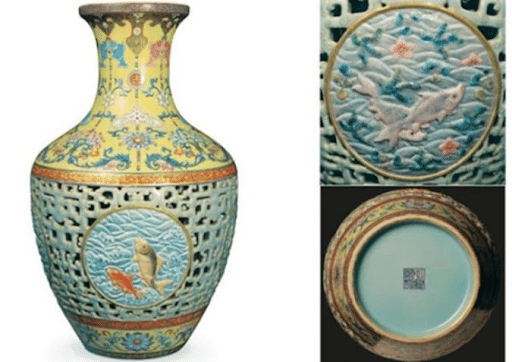
- Specialty goods have unique characteristics (and prices) and necessitate special purchasing efforts.
- Rare art collectibles, antiquities, and fashion items are examples of specialty goods.
-
Inferior Goods
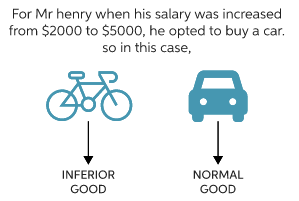
- An inferior good is one in which an increase in income causes a decrease in demand. It has a negative elasticity of demand.
- For example, as your income grows, you buy less low-value bread and more high-quality, organic bread.
-
Normal Goods
- A normal good is one whose demand rises as a result of an increase in consumer income.
- It is important to note that a normal good can be either income elastic or income inelastic.
- Examples of normal goods are stapled foods, household appliances, clothing, etc.
-
Luxury Goods
- A luxury good is one in which an increase in income causes a greater percentage of increase in demand. This indicates that the elasticity of demand is greater than one.
- For example, high-definition televisions would be considered luxury items.
- People spend a greater proportion of their income on luxury goods as their income rises.
- It should be noted that a luxury good is also a normal good, but a normal good is not always a luxury good.
- Luxury automobiles, yachts, and designer jewellery are a few examples of Veblen items.

-
Complementary Goods
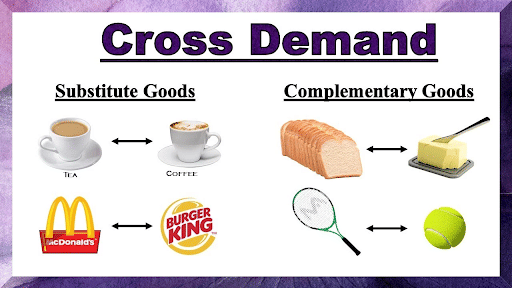
- Complementary Goods are goods that add value to another good or service.
- To put it another way, they are two items that the client uses in combination with one another.
- For example, a television and a DVD player.
-
Substitute Goods
- Substitute Goods are products that can be used in place of one another and provide the same level of satisfaction.
- Products that are alternatives, such as Pepsi and Coca-Cola.
-
Giffen Good
- Giffen Goods are a rare type of goods in which a price increase leads to an increase in demand.
- Since you can't afford more expensive goods, the income effect of a price increase causes you to buy more of this cheap good.
- For example, if the price of wheat rises, a poor peasant may no longer be able to afford meat and thus must purchase more wheat.
-
Veblen / Snob Good
- Veblen / Snob Good is a good whose price increase encourages people to buy more of it.
- This is because they believe that more expensive goods are superior.
-
Public Goods
- Public Goods are goods that provide non-rivalry and non-excludability characteristics, such as national defence.
-
Merit Goods
- Merit Goods are goods whose benefits may be underestimated by people and may have positive externalities. Example: Education.
-
Demerit Goods
- Demerit Goods are goods in which the consumption cost may be underestimated and may often have negative externalities, such as smoking and drugs.
| Other Relevant Links | |
|---|---|
| Final Goods | Intermediate Goods |
| Consumption Goods | Capital Goods |
| Aggregate Demand | Aggregate Supply |
| Law of Demand and Supply | Keynesian Economics |
Conclusion
In economics, goods are items that provide some kind of benefit to the people who use them. Most businesses manufacture and sell goods, whether they are physical goods or services that consumers can use on a regular basis.
| Other Relevant Links | |
|---|---|
| Indian Economics Notes | Macro Economics |
| Micro Economics | Difference Between Macroeconomics and Microeconomics |
| Branches of Economics | Sectors of Indian Economy |
FAQs
Question: What are the main types of goods in economics?
Answer: The main types of goods in economics are classified into four categories: consumer goods, capital goods, intermediate goods, and public goods. Each category serves a different role in production, consumption, or public welfare, influencing economic activities and market dynamics.
Question: What are consumer goods?
Answer: Consumer goods are products that are purchased by individuals for personal use. They can be durable (long-lasting, such as cars), non-durable (used quickly, such as food), or services (such as education). These goods are directly consumed and satisfy personal needs and wants.
Question: How do capital goods differ from consumer goods?
Answer: Capital goods are used by businesses to produce other goods or services, such as machinery, tools, and factories. Unlike consumer goods, they are not meant for direct consumption but for facilitating the production process, which can ultimately lead to the production of consumer goods.
Question: What are public goods, and why are they important?
Answer: Public goods are non-excludable and non-rivalrous, meaning that individuals cannot be excluded from using them, and one person’s use does not reduce availability for others. Examples include national defense, clean air, and public parks. Public goods are essential for social welfare and are typically provided by the government due to market failure in private provision.
Question: What are intermediate goods, and how do they contribute to the economy?
Answer: Intermediate goods are products used in the production process to produce final goods or services. They are crucial in the supply chain, as they add value to the production process. Examples include raw materials like steel or textiles that are further processed into finished products like cars or clothing.
MCQs
1. Which of the following is an example of a public good?
A. Electricity
B. National defense
C. A smartphone
D. Food grains
Answer: (B) See the Explanation
National defense is a public good because it is non-excludable and non-rivalrous. Everyone benefits from it, and one person's enjoyment of security does not diminish its availability to others.
2. Which of the following best describes consumer goods?
A. Goods used for future production
B. Goods purchased for personal consumption
C. Goods used in the production of other goods
D. Goods that cannot be sold in the market
Answer: (B) See the Explanation
Consumer goods are products that individuals purchase for personal use and consumption, such as food, clothing, and electronics. They are not intended for future production.
3. Which of the following is considered a capital good?
A. A television
B. Machinery used in a factory
C. Groceries
D. A laptop used for gaming
Answer: (B) See the Explanation
Machinery used in a factory is a capital good because it is used in the production process to create other goods or services. It is not consumed directly by individuals.
4. What is the primary purpose of intermediate goods?
A. To be consumed directly
B. To be used in the production of final goods
C. To be stored for future use
D. To be exported
Answer: (B) See the Explanation
Intermediate goods are used in the production of final goods or services. They are crucial inputs that undergo further processing to become consumable products, such as raw materials in manufacturing.
5. Which of the following characteristics applies to public goods?
A. They are rivalrous
B. They are non-excludable
C. They are used only by private companies
D. They are always paid for by consumers
Answer: (B) See the Explanation
Public goods are non-excludable, meaning that individuals cannot be excluded from using them. Once they are provided, everyone can benefit from them without reducing their availability to others.
GS Mains Questions and Model Answers
1. Analyze the importance of public goods in the context of economic development.
Answer: Public goods play a critical role in economic development by promoting social welfare, equality, and infrastructure that benefits everyone. Goods like national defense, clean air, and public roads are essential for maintaining a stable and functioning society. Their non-excludable and non-rivalrous nature ensures that every individual has access to these resources, which are often under-provided by the private sector due to the free-rider problem. The government typically steps in to ensure their provision, which in turn fosters long-term economic growth, stability, and development.
2. Discuss the role of capital goods in boosting industrial growth and economic progress.
Answer: Capital goods, such as machinery, equipment, and infrastructure, are vital for industrial growth as they enable the production of consumer goods and services. By increasing the capacity for production, capital goods drive economic progress and contribute to technological advancement. Investments in capital goods enhance productivity, reduce costs, and create employment opportunities, leading to overall economic development. Additionally, a strong capital goods sector can lead to self-sufficiency and reduce dependency on imports.
3. Examine the significance of intermediate goods in the global supply chain and how they impact trade.
Answer: Intermediate goods are crucial components in the global supply chain as they form the building blocks of finished products. The efficient production and trade of intermediate goods drive international trade by integrating various countries into global production networks. Nations that specialize in producing high-quality intermediate goods can export them for further processing, leading to economic growth through value addition. However, disruptions in the supply chain, such as trade barriers or supply shortages, can have a ripple effect, impacting the production of final goods and global trade flows.
Previous Year Questions on Types of Goods
1. UPSC CSE Prelims 2018
Question: Which of the following is an example of an intermediate good?
A. A car
B. Steel used in construction
C. A refrigerator
D. A laptop
Answer: B
Explanation: Steel is an intermediate good used in the production process, such as in construction or manufacturing of cars, but it is not a final product consumed directly.
2. UPSC CSE Mains 2020 (GS Paper 3)
Question: "Public goods are essential for achieving equitable economic growth." Discuss the challenges in providing public goods in developing countries like India.
Answer: Public goods are crucial for promoting equitable economic growth, especially in developing countries. However, providing these goods presents challenges such as funding constraints, inefficient public administration, and the free-rider problem, where individuals benefit from goods without contributing to their cost. In countries like India, public goods such as healthcare, education, and clean water are often underfunded, leading to disparities in access. Overcoming these challenges requires government intervention, effective taxation policies, and international cooperation to ensure that public goods are accessible to all segments of society.
Download the PREPP App and attempt FREE IAS Exam Mock Tests and get complete study material!

Full Test - 04: UPSC CSE Prelims CSAT (Paper-II)
Full Test - 03: UPSC CSE Prelims CSAT (Paper-II)
UPSC CSE Prelims 2026 GS Paper 1 Question Paper (24-May-2026)
UPSC CSE Prelims 2026 CSAT Paper 2 Question Paper (24-May-2026)

17 February 2025 | The Hindu Must Read Articles | Current Affairs

16 February 2026 | The Hindu Must Read Articles | Current Affairs

13 February 2026 | The Hindu Must Read Articles | Current Affairs









Comments