Capital Goods – Indian Economy Notes
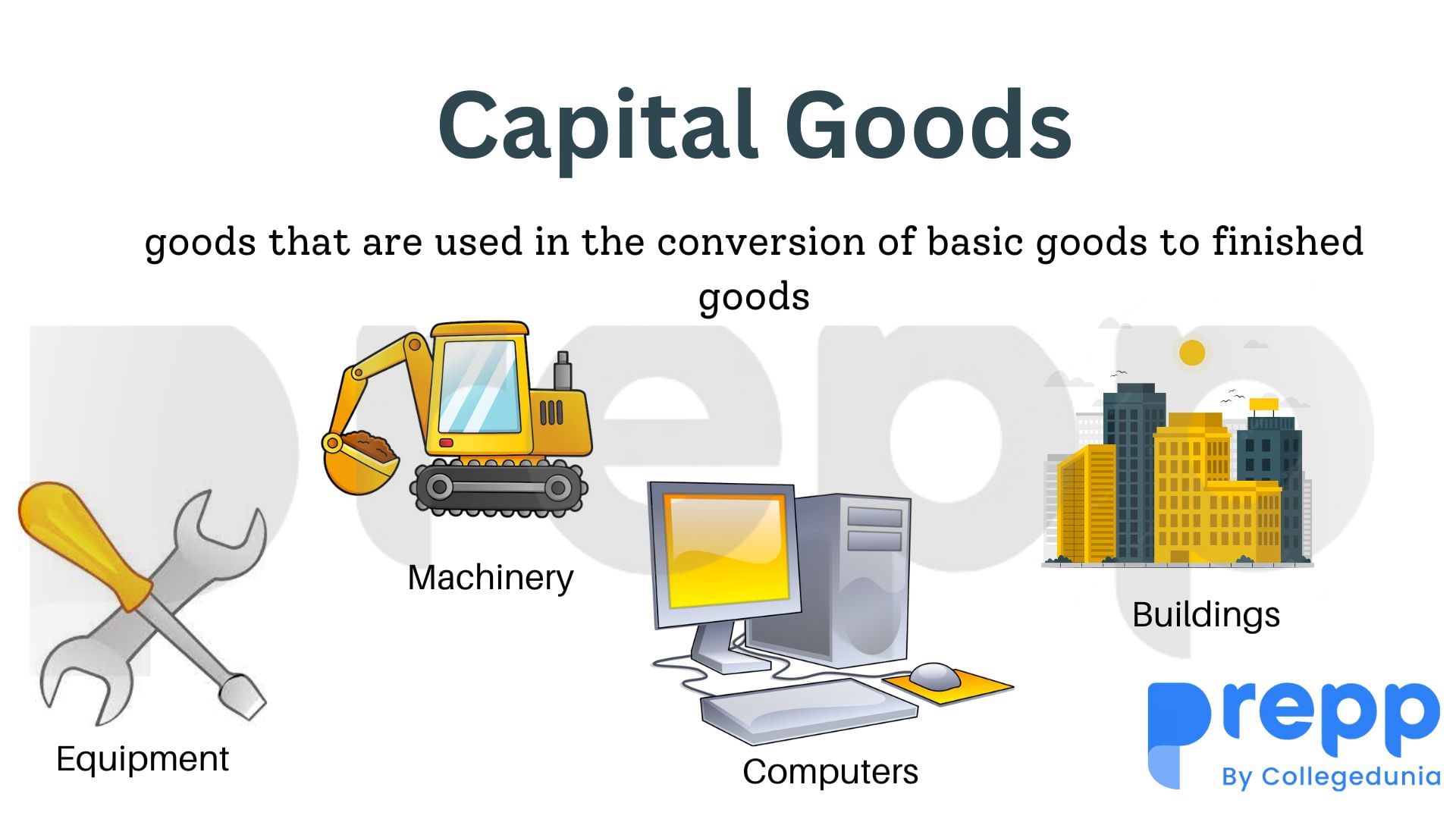
Capital Goods are tangible or physical goods used by a company in the production process to manufacture products and services. Equipment, machinery, computers and buildings are the best examples of capital goods. The topic “Capital Goods” is an important part of the UPSC/IAS Exam 2023 Economy syllabus which is discussed in this article in detail.
|
Table of Contents |
 Capital Goods
What exactly are Capital Goods?
- Capital Goods are physical goods that are used in the conversion of basic goods to finished goods such as plants, machinery, and other assets.
- In other words, capital goods are goods that a company utilizes in the production of goods and services that consumers will eventually use.
- Except for wear and depreciation, Capital Good provides service without losing their essential functional characteristic, form, or shape.
- As capital goods is a finished good it does not require any further processing.
- Capital goods are most typically employed in macroeconomics to determine capital formation and output capability.
- Capital goods are one of the four fundamental factors in the production of commodities. The other three factors of production are land, labor, and entrepreneurship.
- Plant, property, and equipment are the three most common types of capital goods.
| Other Relevant Links | |
|---|---|
| Consumption Goods | Final Goods |
| Intermediate Goods | Types of Goods |
Importance of Capital Goods in the Economy
- Capital goods are products that require significant investment and play a vital role in the economy.
- Capital goods operate as a barrier to entry for new businesses that do not have the financial resources to purchase such equipment.
- A company cannot compete in the market if it is unable to create items owing to a lack of equipment.
- Capital goods play a critical role in increasing long-term goods production capacity, or in other words, increasing the capacity to produce products and services.
Capital Goods vs. Consumer Goods
| BASIS FOR COMPARISON | CONSUMER GOODS | CAPITAL GOODS |
|---|---|---|
| Meaning | Consumer goods are goods that are utilized for consumption by the end-user | Capital goods are goods that are used to manufacture consumer goods |
| Marketing | Business to Consumer | Business to Business |
| Purpose | Purchased for personal use only | Purchased to be used in the production of other products |
| Buyer | Consumer | Manufacturers |
| Demand | Direct Demand | Derived Demand |
| Price determination | By suppliers | By companies |
| Meant for | Final Consumption | Final Investment |
Conclusion
Capital goods are goods that are used to increase production. Businesses use capital goods, which are man-made, long-lasting commodities, to generate goods and services. An increase in capital goods indicates that companies expect more demand and that the economy will expand.
| Other Relevant Links | |
|---|---|
| Indian Economics Notes | Macro Economics |
| Micro Economics | Difference Between Macroeconomics and Microeconomics |
| Branches of Economics | Sectors of Indian Economy |
FAQs
Question. What are capital goods?
Answer: Capital goods are physical assets such as machinery, equipment, and buildings that are used in the production of goods and services. They are critical for increasing the production capacity of an economy.
Question. Why are capital goods important for the economy?
Answer: Capital goods are essential for economic growth because they enable the production of consumer goods, increase productivity, and contribute to technological advancements. They are the backbone of industrial development.
Question. How does the capital goods sector contribute to India’s economy?
Answer: The capital goods sector plays a crucial role in India's industrial development. It supports sectors like manufacturing, infrastructure, and defense, creating jobs, driving technological innovation, and contributing to export growth.
Question. Which are the key industries involved in the production of capital goods in India?
Answer: Key industries involved in capital goods production in India include machinery manufacturing, steel production, heavy engineering, electrical equipment, and transport equipment manufacturing.
Question. What government initiatives support the capital goods sector in India?
Answer: Initiatives such as the ‘Make in India’ campaign, ‘Atmanirbhar Bharat’ (Self-Reliant India), and policy measures like the National Capital Goods Policy aim to boost domestic production of capital goods and reduce reliance on imports.
MCQs
- Which of the following is a capital good?
A) Rice
B) Computer
C) Television
D) Car
Answer: (B) See the Explanation
A computer is a capital good because it is used for production and not for immediate consumption, unlike rice or television.
- Which sector is primarily involved in the production of capital goods?
A) Agriculture
B) Manufacturing
C) Services
D) Retail
Answer: (B) See the Explanation
Capital goods are mainly produced in the manufacturing sector, which includes industries such as machinery, construction, and equipment.
- What is the impact of capital goods on economic growth?
A) They decrease productivity
B) They increase industrial output
C) They reduce employment
D) They create inflationary pressure
Answer: (B) See the Explanation
Capital goods increase the productive capacity of industries, leading to higher output, efficiency, and economic growth.
- Which of the following initiatives is aimed at boosting India’s capital goods sector?
A) Digital India
B) Make in India
C) Skill India
D) Start-up India
Answer: (B) See the Explanation
The ‘Make in India’ initiative aims to promote the domestic manufacturing of capital goods and reduce dependence on imports.
- Which of the following is NOT a characteristic of capital goods?
A) They are used for further production of goods and services.
B) They are tangible assets.
C) They are consumed immediately.
D) They help increase the economy's production capacity.
Answer: (C) See the Explanation
Capital goods are not consumed immediately but are used for production over an extended period to generate further output.
GS Mains Questions and Model Answers
Q1: Discuss the importance of capital goods in fostering industrial growth in India.
Answer: Capital goods are crucial for industrial growth in India, as they serve as the backbone of manufacturing and infrastructure development. Industries such as machinery, automobiles, heavy engineering, and power generation depend on capital goods for expanding production capacity, improving efficiency, and meeting demand. As India strives for self-reliance under initiatives like 'Atmanirbhar Bharat,' the focus on domestic production of capital goods will reduce reliance on imports, enhance the competitiveness of Indian industries, and contribute to job creation. Moreover, investments in capital goods lead to technological advancements, higher productivity, and sustainable economic development.
Q2: Evaluate the role of government policies in promoting the capital goods sector in India.
Answer: The government of India has introduced several policies to promote the capital goods sector, which is integral to economic growth. The National Capital Goods Policy aims to raise the share of capital goods in the manufacturing sector, enhance competitiveness, and encourage innovation. Initiatives like 'Make in India' and 'Atmanirbhar Bharat' aim to boost domestic production by encouraging investments in capital goods industries and infrastructure. Additionally, policy measures such as tax incentives, financial support, and the creation of special industrial zones for capital goods manufacturing are designed to reduce the cost of production and improve technological capabilities. These initiatives aim to make India a global hub for capital goods manufacturing.
Q3: Analyze the challenges faced by the capital goods sector in India and suggest measures for improvement.
Answer: The capital goods sector in India faces challenges such as high production costs, outdated technology, inadequate infrastructure, and competition from cheap imports. Additionally, there is a lack of skilled labor in certain sub-sectors, and financing for large projects is often limited. To overcome these challenges, the government should continue to invest in infrastructure, simplify regulatory procedures, and offer incentives for research and development in advanced technologies. Public-private partnerships (PPPs) can help bridge the financing gap. Moreover, focusing on skill development programs to provide a trained workforce would enhance productivity and innovation in the sector.
Previous Year Questions on Capital Goods
1. UPSC CSE 2017
Question: "What role do capital goods play in economic development, and how does the government of India support the sector?"
Answer: Capital goods are integral to economic development as they enhance production capacity, foster technological advancement, and improve industrial efficiency. The government of India supports the sector through initiatives like the National Capital Goods Policy, tax incentives, and infrastructure development projects such as the ‘Make in India’ initiative. These policies are designed to reduce reliance on imports, increase domestic manufacturing, and improve the competitiveness of the Indian economy.
2. UPSC CSE 2020
Question: "How can the growth of the capital goods sector contribute to the transformation of India's manufacturing sector?"
Answer: The growth of the capital goods sector is crucial to transforming India's manufacturing sector. By improving the availability of machinery, equipment, and technology, the capital goods sector enhances the production capacity of industries. This leads to increased industrial output, higher quality products, and more efficient production processes. Additionally, the development of capital goods fosters technological innovation, which can make Indian manufacturing more competitive globally. Initiatives like ‘Make in India’ are expected to further boost this transformation by promoting domestic production and reducing dependence on imports.
Download the PREPP App and attempt FREE IAS Exam Mock Tests and get complete study material!

Full Test - 04: UPSC CSE Prelims CSAT (Paper-II)
Full Test - 03: UPSC CSE Prelims CSAT (Paper-II)
UPSC CSE Prelims 2026 GS Paper 1 Question Paper (24-May-2026)
UPSC CSE Prelims 2026 CSAT Paper 2 Question Paper (24-May-2026)

17 February 2025 | The Hindu Must Read Articles | Current Affairs

16 February 2026 | The Hindu Must Read Articles | Current Affairs

13 February 2026 | The Hindu Must Read Articles | Current Affairs









Comments