Sustainable Development Goals – Indian Economy Notes
The Sustainable Development Goals (SDGs), also known as the Global Goals, are a set of 17 interrelated goals that are meant to act as a common blueprint for peace and prosperity for people and the planet today and into the future. “Sustainable Development Goals” is one of the important concepts in the UPSC/IAS 2023 Economy syllabus which is discussed in this article in detail.
| To Read update on this topic: |
|
Table of Contents |

What exactly are Sustainable Development Goals?
- Sustainable development is an approach that aims to achieve human development objectives while allowing natural systems to support human needs for essential ecosystem services and natural resources.
- Sustainable development was first defined in the Brundtland Commission in its report Our Common Future in the year 1987.
- Sustainable development (SD) includes a concerted effort to create a future for people and the planet that is inclusive, sustainable, and resilient.
- Sustainable development aims to strike a balance between economic, social, and environmental aspects to ensure a harmonious and equitable future for all.
- It emphasizes long-term thinking, responsible resource management, and inclusive growth.
- Sustainable development is not just about economic growth; it's a broader concept that takes into account the long-term well-being of people and the planet.
- It necessitates responsible decision-making that considers economic, social, and environmental implications.
- For instance, a project that boosts economic growth but harms the environment may not be sustainable in the long run.
- Technology and innovation play a crucial role in advancing sustainable development.
- Renewable energy technologies, efficient waste management systems, and digital platforms for education and healthcare are examples of how technology can contribute to a sustainable future.
*To know more about the topic, click this link Sustainable Development
What are Sustainable Development Goals (SDGs)?
- Sustainable Development Goals (SDGs) are the blueprints for achieving a better, more sustainable future for everybody.
- In other words, the Sustainable Development Goals are a series of seventeen pointer targets that all UN members have pledged to work on in order to improve the country's future.
- "Future We Want," a documentary played at the Rio+20 meeting, proposed a post-2015 development agenda.
- The Sustainable Development Goals (SDGs) are an intergovernmental agreement that replaces the Millennium Development Goals as the post-2015 development agenda.
- The Open Working Group on Sustainable Development Objectives of the United Nations General Assembly set 17 goals with 169 targets and 304 indicators to be accomplished by 2030.
- The United Nations Sustainable Development Summit established a post-negotiation agenda named "Transforming Our World: the 2030 Agenda for Sustainable Development."
- The Rio+20 summit (2012) in Rio de Janeiro produced the SDGs, which are non-binding documents.
8 Targets of Millennium Development GoalsThe eight targets of the Millennium Development Goals were as follows:
|
|
|
|
|---|---|
| Sustainable Development | Classification of Countries |
| Human Capital and Human Development | Sources of Human Capital |
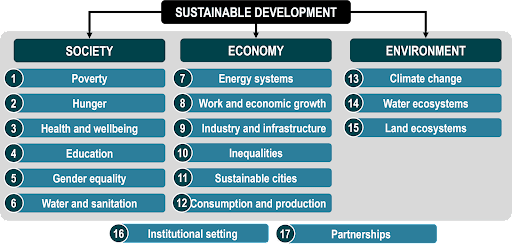
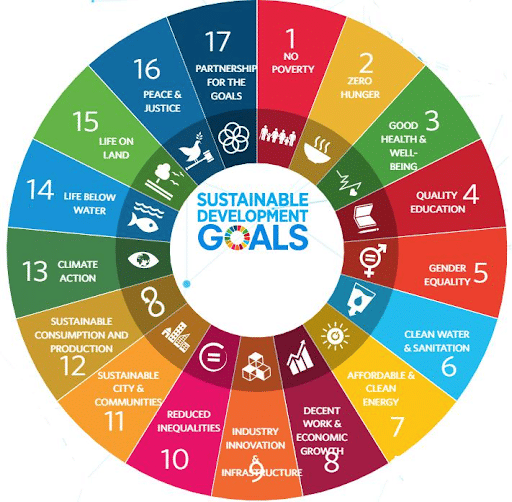
The 17 Sustainable Development Goals are as follows:
- No Poverty: End poverty in all its forms everywhere.
- Zero Hunger: End hunger, achieve food security and improved nutrition, and promote sustainable agriculture.
- Good Health & well-being: Ensure healthy lives and promote well-being for all at all stages.
- Quality Education: Ensure inclusive and equitable quality education and promote lifelong learning opportunities for all.
- Gender Equality: Achieve gender equality and empower all women and girls.
- Clean Water and Sanitation: Ensure availability and sustainable management of water and sanitation for all.
- Affordable and Clean Energy: Ensure access to affordable, reliable, sustainable, and modern energy for all.
- Decent Work and Economic Growth: Promote sustained, inclusive, and sustainable economic growth, full and productive employment, and decent work for all.
- Industry, Innovation, and Infrastructure: Built resilient infrastructure, promote inclusive and sustainable industrialization, and foster innovation.
- Reduced Inequality: Reduce inequalities within and among countries.
- Sustainable Cities and Communities: Make cities and human settlements inclusive, safe, resilient, and sustainable.
- Responsible Consumption and Production: Ensure sustainable consumption and production patterns.
- Climate Action: Take urgent actions to combat climate change and its impact.
- Life Below Water: Conserve and sustainably use the oceans, seas, and marine resources.
- Life on land: Protect, restore, and promote sustainable use of terrestrial ecosystems, sustainably managed forests, combat desertification, and halt and reverse land degradation and halt biodiversity loss.
- Peace, justice, and strong institutions: Promote peaceful and inclusive societies for sustainable development, provide access to justice for all and build effective, accountable and inclusive institutions at all levels.
- Partnership for the goals: Strengthen the means of implementation and revitalise the global partnership for sustainable development.
Sustainable Development Goals in India
According to the latest SDG India Index from NITI Aayog, India has made steady progress toward achieving the United Nations' Sustainable Development Goals (SDGs) in the areas of health, energy, and infrastructure.


India's track record in terms of achieving the Sustainable Development Goals:
- The Mahatma Gandhi National Rural Employment Guarantee Act (MNREGA) is being implemented to offer jobs and enhance the living standards of unskilled laborers.
- The National Food Security Act is in place to ensure that subsidized food grains are available.
- The government of India aims to make India open defecation free under its flagship program Swachh Bharat Abhiyan.
- Renewable energy generation targets have been set at 175 GW by 2022 in order to maximize the use of solar energy, wind energy, and other renewable energy sources while reducing reliance on fossil fuels.
- To improve infrastructure, the Atal Mission for Rejuvenation and Urban Transformation (AMRUT) and Heritage City Development and Augmentation Yojana (HRIDAY) projects have been implemented.
- By ratifying the Paris Agreement, India has demonstrated its commitment to combating climate change.
Sustainable Development Goals Report 2020
|
Impact of SDG & MDG
- The Millennium Development Goals served as a springboard for UN members to strive for a more developed and prosperous future for their countries and people.
- The Millennium Development Goals (MDGs) were approved in 2000, and the final report presented in 2015 clearly states that the rate of infant mortality has decreased, that poverty has decreased, that safe drinking water and sanitation have been provided, and that people's mental health has improved dramatically.
- The Sustainable Development Goals are meant to make the world a better place to live by 2030, following in its footsteps.
- The plan was approved in 2015, and reports produced by the UNDP show that numerous activities have been made for the welfare of the nation and that people's livelihoods have improved around the world.
- The Sustainable Development Goals have helped to lower maternal mortality rates, reduce poverty, enhance people's health, and raise awareness of infectious and non-communicable diseases, as well as the immunizations that are essential for children.
- Mental illness is being treated as a big concern, and efforts are being made to provide better medication to the world.
- Overall, the Sustainable Development Goals aim to make the world a better place to live by achieving their targets within the 15-year time frame set by the United Nations and eradicating poverty, improving health, providing employment, empowering women, reducing inequalities, and adhering to all of the UN's seventeen targets.
Conclusion
The goal of sustainable development is to meet today's requirements while without jeopardising tomorrow. This means we can't keep utilising present amounts of resources since future generations won't have enough. Thus, the UN's 17 global sustainable development goals strive to achieve peace, health, and prosperity by 2030. The Brundtland Report, published in 1987, was the first to provide an "official" concept of sustainable development.
|
|
|
|---|---|
| Indian Economics Notes | Human Development |
| Inclusive Growth | Human Capital |
| Economic Growth vs Economic Development | Sustainable Development |
FAQs
Question: What are the Sustainable Development Goals (SDGs)?
Answer: The Sustainable Development Goals (SDGs) are a set of 17 global goals adopted by the United Nations in 2015 to address global challenges such as poverty, inequality, climate change, and environmental sustainability by 2030.
Question: How many SDGs are there, and what do they address?
Answer: There are 17 SDGs, addressing a wide range of issues including poverty, hunger, health, education, gender equality, clean water and sanitation, climate action, and more.
Question: How is India working towards achieving the SDGs?
Answer: India is working towards the SDGs through various government initiatives such as Swachh Bharat Mission, Ayushman Bharat, Digital India, and Skill India, focusing on economic growth, poverty eradication, and environmental sustainability.
Question: What is the significance of Goal 17 of the SDGs?
Answer: Goal 17 focuses on strengthening global partnerships to achieve sustainable development, ensuring that all stakeholders, including governments, civil society, and the private sector, collaborate to achieve the SDGs.
Question: How is progress on the SDGs monitored?
Answer: Progress on the SDGs is monitored through annual reports by the United Nations and Voluntary National Reviews (VNRs) submitted by member countries. These reviews assess the progress and challenges in achieving the SDG targets.
MCQs
1. Which year were the Sustainable Development Goals (SDGs) adopted?A) 2000
B) 2015
C) 2010
D) 2020
Answer: (B) See the Explanation
The Sustainable Development Goals (SDGs) were adopted by the United Nations in 2015 as a universal call to action to achieve global sustainable development by 2030.
A) 10
B) 15
C) 17
D) 20
Answer: (C) See the Explanation
There are 17 Sustainable Development Goals (SDGs) that address various global challenges, including poverty, climate change, inequality, and peace and justice.
A) SDG 1
B) SDG 7
C) SDG 13
D) SDG 17
Answer: (C) See the Explanation
SDG 13 focuses on taking urgent action to combat climate change and its impacts by promoting sustainability and reducing greenhouse gas emissions.
A) Quality education
B) Clean water and sanitation
C) Gender equality
D) Affordable and clean energy
Answer: (B) See the Explanation
Goal 6 of the SDGs aims to ensure availability and sustainable management of clean water and sanitation for all by 2030.
A) Make in India
B) Ayushman Bharat
C) Digital India
D) Swachh Bharat Mission
Answer: (B) See the Explanation
Ayushman Bharat is closely aligned with SDG 3, which focuses on ensuring healthy lives and promoting well-being for people of all ages.
GS Mains Questions and Model Answers
Q1: Evaluate India’s progress in achieving the Sustainable Development Goals (SDGs).
Answer: India has made significant strides in achieving the Sustainable Development Goals (SDGs) through various national initiatives like Swachh Bharat Mission, Ayushman Bharat, and Digital India. Progress has been observed in areas such as sanitation, healthcare, and education. However, challenges remain in achieving gender equality, climate action, and poverty reduction. Despite the challenges, India continues to work towards integrating the SDGs into its development framework, ensuring inclusive growth and environmental sustainability.
Q2: Discuss the role of global partnerships in achieving the Sustainable Development Goals (SDGs).
Answer: Global partnerships are crucial for achieving the Sustainable Development Goals (SDGs), as no single country can address global challenges like poverty, climate change, and inequality alone. Goal 17 emphasizes the importance of international cooperation, resource mobilization, and technology transfer to support developing countries. Partnerships between governments, international organizations, the private sector, and civil society can foster innovation, strengthen governance, and promote sustainable development across the world.
Q3: Analyze the impact of India’s national policies on the implementation of the Sustainable Development Goals (SDGs).
Answer: India’s national policies, such as Swachh Bharat Mission, Ayushman Bharat, and Skill India, have been aligned with the Sustainable Development Goals (SDGs) to promote inclusive growth, healthcare access, and environmental sustainability. These policies have improved sanitation, healthcare, and employment opportunities across the country. However, more efforts are required to address challenges related to gender equality, climate action, and affordable clean energy. By integrating the SDGs into its national development framework, India can accelerate progress towards a sustainable and equitable future.
Previous Year Questions on Sustainable Development
1. UPSC CSE Mains 2017 (GS Paper 2)
Question: Discuss the role of SDG 3 (Good Health and Well-being) in improving healthcare outcomes in developing countries.
Answer: SDG 3 aims to ensure healthy lives and promote well-being for all. In developing countries, the goal focuses on improving healthcare access, reducing infant mortality, and combating diseases like HIV/AIDS, malaria, and tuberculosis. Government initiatives like Ayushman Bharat in India, which provides healthcare to the economically vulnerable, contribute to achieving SDG 3. Improving healthcare infrastructure, promoting preventive care, and addressing social determinants of health are essential for achieving better healthcare outcomes in these regions.
2. UPSC CSE Mains 2019 (GS Paper 3)
Question: Evaluate the role of SDG 13 (Climate Action) in addressing global climate change challenges.
Answer: SDG 13 emphasizes taking urgent action to combat climate change and its impacts by promoting sustainability and reducing greenhouse gas emissions. The goal aligns with global efforts like the Paris Agreement, which seeks to limit global temperature rise to below 2°C. Climate action is crucial for mitigating the effects of climate change, such as rising sea levels, extreme weather events, and loss of biodiversity. India’s commitment to renewable energy, such as the International Solar Alliance (ISA), is a significant step toward achieving SDG 13 and combating climate change.
Download the PREPP App and attempt FREE IAS Exam Mock Tests and get complete study material!

Full Test - 04: UPSC CSE Prelims CSAT (Paper-II)
Full Test - 03: UPSC CSE Prelims CSAT (Paper-II)
UPSC CSE Prelims 2026 GS Paper 1 Question Paper (24-May-2026)
UPSC CSE Prelims 2026 CSAT Paper 2 Question Paper (24-May-2026)

17 February 2025 | The Hindu Must Read Articles | Current Affairs

16 February 2026 | The Hindu Must Read Articles | Current Affairs

13 February 2026 | The Hindu Must Read Articles | Current Affairs









Comments