Classification of Countries: Developed Countries, UDCs and LDCs - Indian Economy Notes
The World Bank classifies countries based on the Gross National Income (GNI) per Capita data. Based on the GNI per capita data the countries are classified as lower-income, lower-middle-income, upper-middle income and high-income countries. This classification generally overlaps with the terminology of Developed, Developing/ Emerging, Underdeveloped, and Least developed countries. “Classification of Countries: Developed Countries, UDCs and LDCs” is one of the important concepts in the UPSC/IAS 2023 Economy syllabus which is discussed in this article in detail.
|
Table of Contents |

How are countries classified on the basis of economic status?
- Countries are classified as developed or developing based on their gross domestic product (GDP) or gross national income (GNI) per capita, level of industrialization, the general standard of living, and technological infrastructure, among other factors.
- The United Nations (UN) defines a country's development status as a reflection of its "basic economic country conditions."
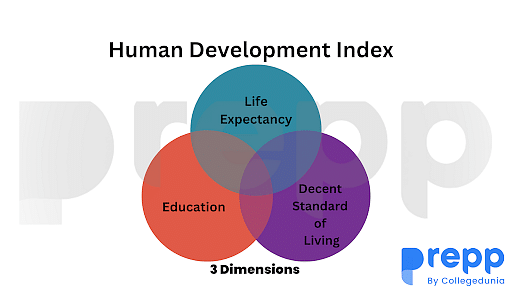
- The human development index (HDI) is a metric developed by the United Nations that is used to assess countries' social and economic development levels based on life expectancy, educational attainment, and income, and it serves as an alternative means of determining a country's development status.
- For instance, many western countries such as the USA, UK, France, Germany, and Sweden are considered developed countries, and few countries in the African continent like Ethiopia, Gambia, Guinea, and Eritrea are classified as the Least Developed Countries.
|
|
|
|---|---|
| Human Development Index | Sources of Human Capital |
| Human Capital and Human Development | What is Human Capital |
What are the Three Major Classification of Countries based on Economic Status?
Developed Countries
- A developed country, also known as an industrialized country, has a mature and sophisticated economy, as measured by GDP and/or average income per resident.
- Developed countries have sophisticated technological infrastructure as well as diverse industrial and service sectors. Their citizens usually have access to good health care and higher education.
- Because there are so many variables to consider, determining which countries are developed can be difficult.
- Developed countries have more advanced post-industrial economies, which means that the service sector generates more wealth than the industrial sector.
- They are contrasted with developing countries that are either industrializing or pre-industrial and almost entirely agrarian, some of which may fall into the category of Least Developed Countries.
Characteristics of Developed Countries
- Has a high per capita income: Developed countries have high per capita incomes year after year. The country's economic value will be increased by having a high per capita income. As a result, the level of poverty can be reduced.
- Security is ensured: When compared to developing countries, developed countries have a higher level of security. This is also a result of advanced technology in developed countries. Security facilities and weapon technology are also improving as a result of advanced technology.
- Guaranteed Health: A developed country's health is guaranteed in addition to its security. This is distinguished by a wide range of adequate health facilities, such as hospitals, as well as trained and dependable medical personnel.
- As a result, mortality rates in developed countries can be reduced while population life expectancy can be increased. Furthermore, with adequate healthcare facilities, population growth in developed countries can be controlled.
- Low unemployment rate: The unemployment rate in developed countries is relatively low because every citizen can find work.
- Mastering Science and Technology: People in developed countries are more likely to have mastered science and technology, which has resulted in the introduction of new useful products to the market, such as industrial pendant lights.
- As a result, they have used sophisticated technology and modern tools to help them in their daily lives.
- Level of exports exceeds the level of imports: Because developed countries have superior human resources and technology, the level of exports exceeds the level of imports.
Developed Countries: Criteria
- One of the criteria is the income per capita; countries with high GDP per capita would thus be classified as developed.
- The most common metric used to determine whether an economy is developed or developing is per capita GDP, though no strict level exists for an economy to be classified as developing or developed.
- Some economists believe that a country's per capita GDP of $12,000 to $15,000 is sufficient for developed status, whereas others believe that a country is not developed unless its per capita GDP is greater than $25,000 or $30,000.
- Another economic criterion is industrialization; countries, where the tertiary and quaternary sectors of industry predominate, would thus be classified as developed.
- Recently, another measure, the Human Development Index (HDI), which combines an economic measure, national income, with other measures, indices for life expectancy and education, has gained prominence. This criterion would classify developed countries as having a very high (HDI) rating.
|
Top 10 Developed Countries
|
Under Developed Countries (UDCs)
- An "underdeveloped country" is one that has widespread chronic poverty and less economic development than other countries.
- The term "underdeveloped country" is unofficial, but countries that would qualify as such are generally classified as developing countries or least-developed countries (LDCs) by the United Nations, which lists 46 nations as least-developed as of 2021.
- The World Bank refers to underdeveloped countries as low-income countries (a term that is gaining popularity), while other organizations refer to them as emerging markets, newly industrialized countries, or members of the "Global South."
Characteristics of UDCs
- Low per capita income and widespread poverty - People in developing countries make very little money. In 2006, the United States' per capita GNP was $44,970 (US$). The average for low-income countries was $650 (US), which was less than 1.4 percent of that of the United States.
- Lack of capital, both public and private - Not only do very few citizens of developing countries own lumber yards, factories, and other businesses, but the government is nearly as poor and lacks funds to properly build and support roads, railways, schools, and hospitals, among other things.
- Population explosion - In most developing countries, the birth rate far outnumbers the death rate, resulting in overpopulation. If growth is too rapid, systems such as infrastructure, food supplies, and social services may be unable to keep up.
- Excessive unemployment - One of the most significant consequences of disproportionate population growth is skyrocketing unemployment, which is caused by a slow-growing job market matched with a rapidly expanding population.
- Predominance of agriculture - Agriculture still accounts for 40-50 percent of national income in most developing economies, compared to 2-8 percent in developed economies.
- Small and ineffective investments - Both citizens and governments in developing countries have little extra income to save or invest, and the little they do have is frequently invested in ways that do not lead to national growth.
- Reduced productivity - In underdeveloped countries, land, labour, and capital all produce less than in developed countries. Labourers are poorly educated, malnourished, and receive inadequate medical care. Existing resources are typically managed inefficiently or with less technological solutions.
|
Top 10 underdeveloped countries in the world
|
Least Developed Countries (LDCs)
-
Least-developed countries (LDCs) (also known as less-developed countries) are developing countries that face significant structural challenges to long-term development.
- There are currently 46 countries on the UN's list of LDCs. Least-developed countries are particularly vulnerable to economic and environmental shocks, and they have fewer human assets than other countries.
- Least-developed countries are sometimes referred to as "emerging markets" in some contexts.
- LDCs have access to specific international support measures for development assistance and trade that more developed countries do not have.
Features of LDCs
- Least-developed countries (LDCs) are low-income countries that face significant structural barriers to long-term development.
- The United Nations Committee on Development Policy devised measures to assist LDCs in gaining access to and benefiting from international assistance.
- The United Nations' list of LDCs contained 46 countries as of October 2021.

LDCs: Criteria
The General Assembly (GA) and the Economic and Social Council (ECOSOC) have mandated the Committee on Development Policy (CDP) to review the list of LDCs every three years and make recommendations on the inclusion and graduation of eligible countries based on the following criteria:
Gross National Income(GNI) Per Capita
- Rationale: GNP per capita provides information on a country's income status as well as the overall level of resources available.
- Thresholds: The inclusion threshold is set at the three-year average of GNP per capita, as defined by the World Bank for identifying low-income countries. In 2021, the threshold is less than 1046 USD GNI per capita.
- Methodology: GNP is calculated by converting national account data into USD using the World Bank Atlas method (to reduce the impact of short-term exchange rate fluctuations). GNP per capita is calculated by dividing a country's GDP in USD by its annual population.
- Sources of information: The United Nations Statistics Division calculates GNP per capita using its National Accounts Main Aggregates Database. The United Nations Population Division provided the population data.
Human Assets Index (HAI)
- Rationale: The HAI is a measure of the level of human capital. Low levels of human assets indicate significant structural impediments to long-term development. A lower HAI indicates a lower level of human capital development.
- Thresholds: The CDP has used absolute thresholds for the HAI to determine inclusion and graduation eligibility since 2015. The inclusion criterion was set at 60. The graduation threshold is 10% higher than the inclusion threshold of 66.
- Composition: The HAI is made up of six indicators that are grouped into a health and education subindex, with each indicator carrying an equal weight of 1/6. Using a max-min procedure, the original values for each HAI indicator are converted into index numbers.
Economic & Environmental Vulnerability Index (EVI)
- Rationale: The Economic Vulnerability Index (EVI) is a measure of structural vulnerability to economic and environmental shocks. High vulnerability indicates significant structural impediments to long-term development. A higher EVI indicates greater economic vulnerability.
- Thresholds: The CDP has used absolute thresholds for the EVI to determine inclusion and graduation eligibility since 2015. The threshold for inclusion has been set at 36. The graduation threshold is 10% lower than the inclusion threshold of 32.
- Composition: The EVI is made up of eight indicators that are divided into economic and environmental subindices, with each indicator carrying an equal weight of 1/8. Using a max-min procedure, the original values for each EVI indicator are converted into index numbers.

Other Indicators
Human Development Index
- The HDI was created to emphasize that people and their capabilities, rather than economic growth alone, should be the ultimate criterion for assessing a country's development.
- The HDI can also be used to question national policy choices, such as how two countries with the same per capita GNP can have such disparities in human development outcomes. These contrasts can spark discussion about the government's policy priorities.
- The Human Development Index (HDI) is a summary measure of average achievement in key dimensions of human development, such as living a long and healthy life, being knowledgeable, and having a good standard of living.
- The HDI is the geometric mean of the normalized indices for each dimension.
Happiness Index
- Gross National Happiness Index is a much richer objective than GDP or economic growth.
- In this index, material well-being is important but is also important to enjoy sufficient well-being in things like community, culture, governance, knowledge, wisdom, wealth, health, spirituality, psychological welfare, balanced use of time, and harmony with the environment.
- GDP does not measure well-being.

Conclusion
The classification of countries into developed, underdeveloped, and least developed categories is a complex process influenced by a variety of economic, social, and human development indicators. These classifications provide valuable insights into global disparities and inform policies aimed at fostering equitable growth and development. As countries continue to work towards improving the well-being of their citizens, it is important to recognize the challenges faced by underdeveloped and least developed countries and collaborate on strategies for sustainable development.
|
|
|
|---|---|
| Indian Economics Notes | Human Development |
| Inclusive Growth | Human Capital |
| Economic Growth vs Economic Development | Sustainable Development |
FAQs
Q1: What are developed countries?
Answer: Developed countries are nations with high income per capita, advanced technological infrastructure, and high living standards. These countries typically have a strong economy, high industrialization, and robust healthcare and education systems.
Q2: How are underdeveloped countries (UDCs) characterized?
Answer: UDCs have low industrialization, limited economic growth, and low income per capita. They often face issues like inadequate healthcare, education, and infrastructure, and they primarily rely on agriculture and resource extraction.
Q3: What criteria define Least Developed Countries (LDCs)?
Answer: LDCs are defined by low income, weak human assets, and economic vulnerability. The United Nations uses these criteria to classify countries as LDCs, which include low levels of development, political instability, and dependency on a limited range of exports.
Q4: How does the United Nations assess economic vulnerability in LDCs?
Answer: Economic vulnerability in LDCs is assessed based on factors like export instability, agricultural dependency, and susceptibility to natural disasters. High vulnerability indicates that an economy is less resilient to external shocks.
Q5: Why is the classification of countries important for global economics?
Answer: Classification helps in understanding and addressing the unique challenges each category of countries faces. For example, LDCs receive special assistance from international organizations, while developed countries focus on trade and technological advancements.
MCQs
- Which of the following characteristics is associated with developed countries?
A) High poverty rates
B) High income per capita
C) Limited industrialization
D) Dependence on agriculture
Answer: (B) See the Explanation
- Underdeveloped countries (UDCs) are generally characterized by:
A) Low industrialization and high dependence on agriculture
B) High technological advancement
C) Strong social services
D) Diversified economies
Answer: (A) See the Explanation
- What is a major criterion for a country to be classified as an LDC by the United Nations?
A) High GDP per capita
B) Strong political stability
C) Economic vulnerability and low human assets
D) Advanced infrastructure
Answer: (C) See the Explanation
- Which classification does the United Nations use for countries facing extreme poverty and economic challenges?
A) Least Developed Countries (LDCs)
B) Developing Nations
C) Emerging Markets
D) Industrialized Countries
Answer: (A) See the Explanation
- Which of the following is an indicator used by the United Nations to assess an LDC’s status?
A) High export diversification
B) Export instability and dependency on agriculture
C) Strong healthcare systems
D) High technological advancement
Answer: (B) See the Explanation
GS Mains Questions and Model Answers
Q1: Explain the key characteristics that differentiate developed, underdeveloped, and least developed countries.
Answer: Developed countries are economically advanced, with high income per capita, industrialization, and robust social services. Underdeveloped countries (UDCs) have low levels of industrialization, low income, and heavy reliance on primary sectors, particularly agriculture. Least Developed Countries (LDCs), identified by the United Nations, have extremely low income, weak human assets, and are highly vulnerable to economic shocks. Each category requires unique policy interventions, as developed countries can focus on trade and technological progress, while UDCs and LDCs often require economic assistance and development support.
Q2: Discuss the significance of classifying countries as Least Developed by the United Nations.
Answer: The classification of Least Developed Countries (LDCs) is significant as it highlights nations needing urgent economic development and humanitarian aid. It helps in mobilizing international support and grants these countries access to preferential trade agreements, financial aid, and technical assistance. This classification aims to reduce global poverty and assist these vulnerable nations in building resilience against economic shocks and achieving sustainable development.
Q3: How does economic vulnerability impact the growth prospects of Least Developed Countries (LDCs)?
Answer: Economic vulnerability, marked by factors like export instability, reliance on agriculture, and exposure to natural disasters, severely restricts LDCs’ growth. It hampers their ability to attract foreign investment, maintain stable economic growth, and ensure sustainable livelihoods for their populations. High vulnerability makes these countries more susceptible to global economic shifts, reducing their ability to achieve long-term development and economic independence.
Previous Year Questions on Classification of Countries
1. UPSC CSE Mains 2020
Question: What are the challenges faced by Least Developed Countries (LDCs) in achieving sustainable development?
Answer: LDCs face several challenges, including low income, inadequate infrastructure, poor human assets, and high economic vulnerability. Limited resources and dependency on a narrow range of exports make them susceptible to external shocks. Additionally, political instability, lack of education, and poor healthcare hinder sustainable development. Addressing these challenges requires coordinated international efforts, targeted aid, and the establishment of robust domestic policies that foster economic resilience.
2. UPSC CSE Mains 2019
Question: Explain the role of the United Nations in assisting Least Developed Countries (LDCs).
Answer: The United Nations provides essential support to LDCs through financial aid, technical assistance, and preferential trade agreements. It mobilizes resources to reduce poverty, enhance infrastructure, and improve human development indices. Programs such as the UN Development Programme (UNDP) and the UN Conference on Trade and Development (UNCTAD) focus on helping these countries build economic resilience and reduce dependency, aiming to improve their socio-economic conditions and enable sustainable growth.
Download the PREPP App and attempt FREE IAS Exam Mock Tests and get complete study material!

Full Test - 04: UPSC CSE Prelims CSAT (Paper-II)
Full Test - 03: UPSC CSE Prelims CSAT (Paper-II)
UPSC CSE Prelims 2026 GS Paper 1 Question Paper (24-May-2026)
UPSC CSE Prelims 2026 CSAT Paper 2 Question Paper (24-May-2026)

17 February 2025 | The Hindu Must Read Articles | Current Affairs

16 February 2026 | The Hindu Must Read Articles | Current Affairs

13 February 2026 | The Hindu Must Read Articles | Current Affairs









Comments