Siraj ud Daula (1756-57) - Modern India History Notes
Siraj-ud-Daulah also known as Mirza Muhammad Siraj-ud-Daulah, was Bengal's last independent Nawab. At the age of 23, Siraj succeeded his maternal grandfather, Alivardi Khan, as Nawab of Bengal in April 1756.Siraj ud-Daulah was betrayed by Mir Jafar, the leader of the Nawab's army, and lost the Battle of Plassey on June 23, 1757. The end of his reign signalled the beginning of the East India Company's dominion over Bengal and, ultimately the whole Indian subcontinent. This article will explain to you about Siraj ud Daula (1756-57) which will be helpful in Modern Indian History preparation for the UPSC Civil service exam.
|
Table of Contents |
Siraj ud Daula - Early Life
- Siraj was born in 1733 to Mirza Muhammad Hashim and Amina Begum.
- Siraj's maternal grandfather, Alivardi Khan, was appointed Deputy Governor of Bihar shortly after his birth.
- Siraj was known as the family's "lucky kid." He got his grandfather's special care and was nurtured at the Nawab's palace with all the required education and training for a future Nawab.
- In 1746, young Siraj accompanied Alivardi on his military expeditions against the Marathas.
- Siraj rose against his grandpa and captured Patna in 1750, but shortly submitted and was pardoned.
- Alivardi named Siraj as his successor in May 1752. The former died on April 9, 1756, at the age of eighty.
- At the age of 23, Siraj succeeded his maternal grandfather, Alivardi Khan, as Nawab of Bengal in April 1756.
- Siraj was betrayed by Mir Jafar, the leader of the Nawab's army, and lost the Battle of Plassey on June 23, 1757.
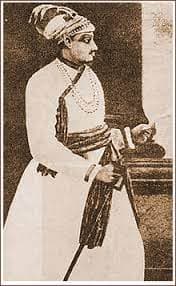
Siraj ud Daula
Siraj ud Daula - Reign
- During this time, the British East India Company was expanding its power in the Indian subcontinent, notably in Bengal; Siraj quickly began to detest the East India Company's politico-military presence in Bengal.
- He was particularly enraged by the Company's apparent involvement in, and sponsorship of, a coup plot against him by some members of his own court.
- His allegations against the firm were essentially threefold.
- They strengthened the fortifications around Fort William without any intimation or approval;
- They grossly abused trade privileges granted to them by Mughal rulers – resulting in heavy losses of customs duties for the government;
- They provided shelter to some of his officers, such as Krishnadas, son of Rajballav, who fled Dhaka after misappropriating government funds.
- The British success in the Carnatic wars made Siraj-Ud-Daula fearful about the British increasing influence in India.
- The Company's officials abused their trading rights in a way that harmed the nawab's finances.
- The British strengthened Fort Williams without Nawab's approval, infuriating him even more.
- When the East India Company began bolstering military power at Fort William in Calcutta, Siraj ud-Daulah ordered a halt. Because the Company disobeyed his orders, Siraj responded by seizing Calcutta (for a short time renamed Alinagar) from the British in June 1756.
- He marched to Fort Williams, grabbed 146 Britishers, and imprisoned them in a cramped chamber, resulting in the deaths of 123 Britishers.
- This is known as the "Black Hole Tragedy of Calcutta."
- Siraj ud-Daulah was betrayed by Mir Jafar, the leader of the Nawab's army, and lost the Battle of Plassey on June 23, 1757.
- The East India Company's soldiers, led by Robert Clive, invaded Bengal, seizing control of the administration.
- Mohammad Ali Beg executed Siraj-ud-Daulah on 2 July 1757 on instructions from Mir Miran, son of Mir Jafar, at Namak Haram Deorhi as part of the agreement between Mir Jafar and the British East India Company.
- The grave of Siraj-ud-Daulah is located in Khushbagh, Murshidabad.
- The end of Siraj ud-rule Daulah's also signified the end of Bengali autonomy and the establishment of British control in India.
Battle of Plassey
- The Battle of Plassey took place on June 23, 1757, in the Plassey district of West Bengal.
- The British East India Company, led by Robert Clive, fought this battle against the Nawab of Bengal, Siraj-ud-daula.
- The French forces took part in this battle as well, fighting with Siraj-ud-daula against Robert Clive.
- The Nawab of Bengal's army of 50,000 warriors, with French forces on their side, vastly overpowered the British army of roughly 3000 soldiers.
- However, Robert Clive's conspiracy and subsequent betrayal by Mir Jafar, Rai Durlabh, and others led to the downfall of Nawab of Bengal Siraj-ud-daula in the Battle of Plassey.
- The Fight of Plassey is seen as a momentous battle for the British and a turning point in Indian history in their favour.
- It established the British military and political dominance in Bengal.
- The battle of Plassey is regarded by most historians as the crucial event, with origins in British control and governance over India.
Robert Clive
- He was born in England in 1725.
- He arrived at Fort St. George (Madras) in 1744 to serve as a 'factor,' or company agent, for the East India Company.
- He joined the company army and was able to demonstrate his abilities.
- He achieved renown and acclaim for his involvement in the Siege of Arcot, which resulted in a British triumph over the superior troops of Chanda Sahib, the Nawab of Carnatic, and the French East India Company.
- Despite possessing a greater army, the Nawab was beaten by the British at the Battle of Plassey.
- By inducing the Nawab's army Commander Mir Jaffar, who was appointed as Bengal's Nawab after the fight, Clive secured a decisive English victory.
- The British fought the Battle of Buxar against the united troops of Mir Qasim, Shuja Ud Daulah (the Nawab of Awadh), and Mughal Emperor Shah Alam II. This battle was won by the British.
- As a result of this fight, the Mughal Emperor granted the British the Diwani (right to collect income) of Bengal, Bihar, and Odisha in exchange for an annual sum of money and the Allahabad and Kora districts.
- Robert Clive, who could have annexed Awadh as well, chose not to do so. He hoped to utilise it as a "buffer" state between the British and the Marathas.
- Clive was also successful in capturing certain French forts in Bengal.
- As a result of those struggles, the British established themselves as the dominant force in the Indian subcontinent.
- Bengal became theirs, considerably improving the company's profits. (At the time, Bengal was wealthier than Britain.)
- This also allowed the British to expand into other sections of India, eventually leading to the creation of the British Raj in India.
- As a result, Robert Clive is also regarded as the "Conqueror of India."

Robert Clive
Conclusion
Sirajuddaula's limits, as well as his public and private character, should be considered in light of the context in which he worked and the cause for which he fought and died. After he became a nawab, there was a significant shift in his personality. The judgement of history is that, whatever his faults may have been, Sirajuddaula never betrayed his lord or sold his nation. 'The name Sirajuddaula ranks higher on the honour scale than the name Clive. He was the only one of the main characters who didn't try to mislead.'
FAQs
Question: What is the reason for the failure of Siraj-ud-daula in the Battle of Plassey?
Answer:
The Battle of Plassey took place on June 23, 1757, in the Palashi area of Bengal. The Nawab of Bengal's army of 50,000 warriors, with French forces on their side, vastly overpowered the British army of roughly 3000 soldiers. However, Robert Clive's conspiracy and subsequent betrayal by Mir Jafar, Rai Durlabh, and others led to the defeat of Nawab of Bengal Siraj-ud-daula in the Battle of Plassey.
Question: What do you mean by the Dual system introduced by Robert Clive?
Answer:
Robert Clive established a dual government in Bengal in 1765, which lasted until 1772. The governance of Bengal was divided into two components under this system: Diwani and Nizamat. Diwani refers to the company's right to collect money, whereas Nizamat refers to the nawab's administrative privileges.
Question: Who is Alivardi Khan?
Answer:
From 1740 until 1756, Alivardi Khan was the Nawab of Bengal. He deposed the Nasiri dynasty of Nawabs and established himself as ruler. During the Maratha invasions of Bengal, he is well remembered for his victory in the Battle of Burdwan against the Maratha Empire.
UPSC Mains Practice Question:
|
FAQs
Question: Who was Siraj-ud-Daula, and why is he significant in Indian history?
Answer: Siraj-ud-Daula was the last independent Nawab of Bengal, who ruled from 1756 to 1757. He is significant in Indian history for his resistance against the growing influence of the British East India Company, leading to the historic Battle of Plassey in 1757, which marked the beginning of British dominance in India.
Question: What were the causes of conflict between Siraj-ud-Daula and the British East India Company?
Answer: The conflict between Siraj-ud-Daula and the British East India Company arose due to multiple reasons: the expansion of British fortifications without the Nawab's permission, the misuse of trading privileges by the British, and the political machinations by company officials to destabilize Siraj's rule.
Question: What was the significance of the Battle of Plassey (1757)?
Answer: The Battle of Plassey was a turning point in Indian history. It marked the defeat of Siraj-ud-Daula by the British forces under Robert Clive, largely due to betrayal within Siraj's ranks. This victory laid the foundation for British control over Bengal and eventually the whole of India.
Question: How did Siraj-ud-Daula lose the Battle of Plassey?
Answer: Siraj-ud-Daula lost the Battle of Plassey primarily due to the betrayal by his commander, Mir Jafar, who conspired with the British in exchange for being made Nawab. This betrayal weakened Siraj's army, leading to his defeat and eventual death.
Question: What were the consequences of Siraj-ud-Daula's defeat?
Answer: The defeat of Siraj-ud-Daula resulted in the establishment of British political and economic control over Bengal. It marked the beginning of British dominance in India, and the East India Company expanded its influence through puppet rulers like Mir Jafar.
MCQs
1. Who was the last independent Nawab of Bengal?
A) Mir Jafar
B) Siraj-ud-Daula
C) Alivardi Khan
D) Mir Qasim
Answer: B See the Explanation
Explanation: Siraj-ud-Daula was the last independent Nawab of Bengal, whose defeat at the Battle of Plassey in 1757 marked the beginning of British political dominance in India.
2. What was the primary cause of the Battle of Plassey?
A) British attempts to fortify Calcutta
B) Siraj-ud-Daula's aggression against the French
C) Maratha invasions
D) Mughal intervention in Bengal
Answer: A See the Explanation
Explanation: The British fortified Calcutta without Siraj-ud-Daula's permission, leading to his attack on the British settlement. This sparked the Battle of Plassey in 1757.
3. Who betrayed Siraj-ud-Daula at the Battle of Plassey?
A) Alivardi Khan
B) Mir Qasim
C) Mir Jafar
D) Robert Clive
Answer: C See the Explanation
Explanation: Mir Jafar, one of Siraj-ud-Daula's commanders, conspired with the British in exchange for being made Nawab, leading to Siraj's defeat at Plassey.
4. What was the result of the Battle of Plassey for the British East India Company?
A) The company lost control over Bengal
B) The company gained political control over Bengal
C) The company was forced out of India
D) The French gained dominance in Bengal
Answer: B See the Explanation
Explanation: The British East India Company gained political and economic control over Bengal after their victory in the Battle of Plassey, establishing their dominance in India.
5. What was one of the major consequences of Siraj-ud-Daula's defeat?
A) The decline of the Mughal Empire
B) The rise of Maratha power
C) The beginning of British political dominance in India
D) The rise of the Sikh Empire
Answer: C See the Explanation
Explanation: Siraj-ud-Daula's defeat at the Battle of Plassey marked the beginning of British political dominance in India, eventually leading to the establishment of British rule.
GS Mains Questions and Answers
Q1: Analyze the significance of the Battle of Plassey in the establishment of British rule in India.
Answer: The Battle of Plassey, fought in 1757, was a watershed moment in Indian history as it marked the beginning of British political control over Bengal, which was one of the wealthiest regions of India at the time. Siraj-ud-Daula's defeat, facilitated by the betrayal of Mir Jafar, allowed the British East India Company to establish political dominance and economic control over Bengal. This victory was crucial for the British as it provided them with the resources to expand their influence throughout India, eventually leading to the colonization of the entire subcontinent. The battle also demonstrated the growing British military strength and their ability to manipulate local politics, marking the decline of independent Indian rulers.
Q2: Discuss the role of Mir Jafar in the defeat of Siraj-ud-Daula and its implications for Indian politics.
Answer: Mir Jafar played a pivotal role in Siraj-ud-Daula's defeat at the Battle of Plassey by conspiring with the British. His betrayal was decisive in the British victory, as he withdrew support from Siraj's army at a critical moment. In return, Mir Jafar was installed as the puppet Nawab of Bengal by the British, further consolidating their control over Bengal. This event set a precedent for British interference in Indian politics, as they continued to install puppet rulers across various regions of India. It also signaled the beginning of a new era in Indian history, where local rulers were gradually reduced to figureheads under British supremacy.
Q3: Evaluate the economic consequences of the British victory in the Battle of Plassey for Bengal.
Answer: The British victory in the Battle of Plassey had profound economic consequences for Bengal. The region, once known for its wealth and prosperity, was subjected to heavy taxation and exploitation by the British East India Company. The company gained control over Bengal's resources, including its lucrative trade in textiles and agricultural products. This led to the deindustrialization of Bengal and a shift in wealth from local merchants to the British. The economic drain imposed by the British eventually led to widespread poverty and famine, most notably the Great Bengal Famine of 1770. The battle thus marked the beginning of Bengal's economic decline under British rule.
Previous Year Questions on Siraj-ud-Daula and the Battle of Plassey
1. UPSC CSE Prelims 2019:
Question: Who was the Nawab of Bengal during the Battle of Plassey?
A) Mir Jafar
B) Alivardi Khan
C) Siraj-ud-Daula
D) Mir Qasim
Answer: C
Explanation: Siraj-ud-Daula was the Nawab of Bengal during the Battle of Plassey in 1757, where he was defeated by the British East India Company forces led by Robert Clive.
2. UPSC CSE Mains 2020 (GS Paper 1):
Question: Discuss the impact of the Battle of Plassey on the political landscape of India.
Answer: The Battle of Plassey had a transformative impact on the political landscape of India. It marked the beginning of British political dominance in Bengal, and eventually, all of India. The battle demonstrated the effectiveness of British military strategy and manipulation of local politics, with the installation of Mir Jafar as a puppet ruler. This victory allowed the British East India Company to gain control over Bengal's vast resources, paving the way for its expansion across India. The defeat of Siraj-ud-Daula also highlighted the weakening power of Indian rulers, who increasingly became dependent on foreign support for their survival.
Download the PREPP App and attempt FREE IAS Exam Mock Tests and get complete study material!

Full Test - 04: UPSC CSE Prelims CSAT (Paper-II)
Full Test - 03: UPSC CSE Prelims CSAT (Paper-II)
UPSC CSE Prelims 2026 GS Paper 1 Question Paper (24-May-2026)
UPSC CSE Prelims 2026 CSAT Paper 2 Question Paper (24-May-2026)

17 February 2025 | The Hindu Must Read Articles | Current Affairs

16 February 2026 | The Hindu Must Read Articles | Current Affairs

13 February 2026 | The Hindu Must Read Articles | Current Affairs









Comments