Awadh - Rise of Autonomous States during Mughal Empire - Modern India History Notes
The rise of Awadh as an autonomous state in the eighteenth century was aided by both economic and geographical factors. Saadat Khan, also known as Burhan-ul-Mulk, was the founder of the autonomous principality of Awadh.It was founded as one of the twelve original Subhas under Mughal emperor Akbar in the 16th century, and it became a hereditary tributary polity around 1722, with Faizabad as its capital.It came in the contact of British in 1765, when its Nawab was defeated at Buxar.In 1856 Oudh was annexed with the pretext of misgovernance.This article will explain to you about Awadh - Rise of Autonomous States during Mughal Empire which will be helpful in Modern Indian History preparation for the UPSC Civil service exam.
|
Table of Contents |
Awadh
- Awadh, also known as Avadh or Oudh in British historical texts, is a region and proposed state in the modern Indian state of Uttar Pradesh, which was previously known as the United Provinces of Agra and Oudh before independence.
- Awadh is bordered on the southwest by the Ganges Doab, on the northwest by Rohilkhand, on the north by Nepal, and the east by Bhojpur-Purvanchal.
- The people who live there are known as Awadhis.
- The emergence of Awadh as a self-governing state in the eighteenth century was not an isolated event.
- The Mughal imperial system included Awadh as a key component.
- The Mughal emperors directly recruited higher officials such as the Nazim and the Diwan in both provinces.
- The rise of Awadh as a regional political system in the eighteenth century was aided by both economic and geographical factors.
Rise of Autonomous State - Awadh
- Saadat Khan, also known as Burhan-ul-Mulk, was the founder of the autonomous principality of Awadh. Saadat Khan belonged to the Shia sect.
- He was awarded an additional mansab as a result of his involvement in a plot against the Sayyid brothers.
- After being thrown out of court, he felt compelled to form a new sovereign state. Due to pressure from Nadir Shah, who demanded a large bounty from him, Saadat Khan committed himself.
- As Nawab of Awadh, he was replaced by Safdar Jang.
- The combined forces of the Nawab of Bengal, Shuja-ud-daula, and the Mughal emperor's failure to defeat the English forces at Buxar severely weakened the Nawab of Awadh's authority and prestige.
- The Treaty of Allahabad brought Awadh into the British dragnet. Shuja-ud-daula was allowed to keep Awadh proper under this treaty, but Kora and Allahabad were given to the Mughal emperor.
- The vulnerability of the Nawabi was brought into sharp focus in and after 1775.
- Ironically, it was during these years that the emergence of a provincial cultural identity centered around the new court and capital at Lucknow (the capital had been shifted from Fyzabad) became more visible than before.
- Despite the hostility of some of Shja's courtiers and the opposition faction of his brother Saadat Ali, the governor of Rohil Khand, Asaf-ud-succession daula's to the throne in 1775 went off without a hitch.
- Lord Wellesley, who arrived in 1798 but rejected the Awadh system, started a more forward policy.
- Wellesley used the Nawab's declaration of inability to pay the company's increased financial demands as a pretext to consider annexation.
Saadat Khan
- Saadat Ali Khan (1680–19 March 1739) was the son of Muhammad Nasir and the Subahdar Nawab of Awadh (Oudh) from 26 January 1722 until 1739.
- At the age of 25, he accompanied his father on the Mughal Emperor Aurangzeb's final expedition against the Maratha in the Deccan, for which the emperor bestowed the title of Khan Bahadur.
- In 1722, Sa'adat Khan was named subadar of Awadh, and he established one of the most important states to emerge from the Mughal Empire's disintegration.
- The lush alluvial Ganga plain and the primary commerce route between north India and Bengal made Awadh an affluent province.
- Burhan-ul-Mulk was also in charge of the subadari, Diwani, and faujdari offices.
- In other words, he was in charge of the province of Awadh's political, financial, and military affairs.
- Burhan-ul-Mulk attempted to reduce Mughal power in the Awadh area by limiting the number of Mughal office holders (jagirdars).
- He also lowered the size of jagirs and filled empty jobs with his devoted slaves.
- In 1739, a Persian monarch named Nader Shah attacked India.
- Saadat Ali Khan led a force of 3000 cavalries from Awadh to assist Mughal Emperor Muhammad Shah. At Karnal, he joined Muhammad Shah's army.
- The Persian army battled with Khan's men. Muhammad Shah granted Saadat Ali Khan permission to engage the enemy.
- However, the conflict ended in a peace treaty, and Nader Shah was forced to pay Muhammad Shah a payment of rupees fifty lakhs.
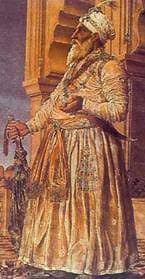
Saadat Khan
Safdar Jung
- During the decline of the Mughal empire, Safdar Jung was a key player at the Mughal court.
- When he succeeded Saadat Ali Khan I (his maternal uncle and father-in-law) in 1739, he became the second Nawab Vazier of Awadh.
- All successive Nawabs of Oudh descended from Safdar Jung's male line.
- Safdar Jang proved to be a capable administrator.
- He was not only successful in maintaining control of Oudh, but he also managed to provide crucial support to the Emperor Muhammad Shah, who was debilitated.
- He was soon appointed governor of Kashmir as well, and he rose to prominence in the Delhi court.
- During Muhammad Shah's final years, he obtained entire control of the Mughal Empire's government.
- Safdar Jung became Ahmad Shah Bahadur's Wazir-ul-Mumalik-i-Hindustan, or Prime Minister of Hindustan after he ascended the throne in Delhi in 1748.
- He was also appointed governor of Ajmer and "Faujdar" of Narnaul.

Safdar Jung
Conclusion
In the 18th century, Awadh's rise as an independent state marked a pivotal shift, navigating between the declining Mughal Empire and the encroaching British East India Company. The Nawabs of Awadh played a central role, fostering cultural richness amid geopolitical challenges. The era reflected economic prosperity, administrative prowess, and a unique Awadhi identity. However, the British annexation in the mid-19th century brought an end to Awadh's autonomy, leaving behind a legacy that continues to influence the cultural and historical landscape of the Indian subcontinent.
FAQs
Question: How did Awadh become an autonomous state?
Answer: Awadh became an autonomous state in the early 18th century under Saadat Khan, who established independent rule while maintaining nominal allegiance to the declining Mughal Empire.
Question: Who was the first Nawab of Awadh?
Answer: Saadat Khan Burhan-ul-Mulk was appointed as the first Nawab of Awadh in 1722, establishing the foundations of an independent and prosperous state.
Question: What role did Awadh play in resisting British influence?
Answer: Awadh was strategically important and attempted to resist British dominance. However, increasing British influence led to its eventual annexation in 1856.
Question: How did the governance in Awadh differ from the central Mughal rule?
Answer: Unlike the centralized Mughal rule, Awadh’s governance emphasized autonomy with a local administrative system, military, and revenue collection independent of the empire.
Question: Why was Awadh annexed by the British?
Answer: The British annexed Awadh in 1856, citing misgovernance as a pretext, though their real motive was to strengthen control over a wealthy and strategically located region.
MCQs
1. Who established Awadh as an autonomous state?
A) Asaf Jah
B) Saadat Khan
C) Hyder Ali
D) Tipu Sultan
Answer: (B) See the Explanation
Explanation: Saadat Khan was appointed Nawab of Awadh in 1722, establishing its autonomy while maintaining nominal ties to the Mughal Empire.
2. Which year did the British annex Awadh?
A) 1848
B) 1856
C) 1860
D) 1852
Answer: (B) See the Explanation
Explanation: In 1856, the British annexed Awadh, using allegations of misgovernance as a pretext.
3. Which Nawab of Awadh expanded its military and administrative independence?
A) Shuja-ud-Daula
B) Safdar Jung
C) Saadat Khan
D) Wajid Ali Shah
Answer: (B) See the Explanation
Explanation: Nawab Safdar Jung, the successor of Saadat Khan, strengthened Awadh’s autonomy by consolidating its military and administrative structure.
4. Which Mughal emperor appointed Saadat Khan as Nawab of Awadh?
A) Akbar
B) Shah Jahan
C) Aurangzeb
D) Muhammad Shah
Answer: (D) See the Explanation
Explanation: Muhammad Shah appointed Saadat Khan as the Nawab of Awadh in 1722.
5. Which British Governor-General was responsible for the annexation of Awadh?
A) Lord Dalhousie
B) Lord Wellesley
C) Lord Hastings
D) Lord Canning
Answer: (A) See the Explanation
Explanation: Lord Dalhousie annexed Awadh in 1856 as part of his doctrine to consolidate British control over Indian territories.
GS Mains Questions and Model Answers
Q1: Analyze the reasons for the emergence of Awadh as an autonomous state during the decline of the Mughal Empire. How did it maintain its autonomy?
Answer: Awadh emerged as an autonomous state in the early 18th century, leveraging the weakening central Mughal authority. Saadat Khan, its first Nawab, established a local administration and military independent of Mughal control. Successive Nawabs strengthened Awadh’s autonomy by building a strong economy and administrative structure, maintaining nominal allegiance to the Mughals but operating independently. Awadh’s autonomy exemplifies the decentralization during the Mughal decline and the rise of regional powers across India.
Q2: Discuss the socio-political and economic significance of Awadh during the Mughal era. How did it influence neighboring regions?
Answer: Awadh played a vital role in regional politics as a buffer state with economic prosperity and agricultural productivity. Its administration under the Nawabs was marked by revenue reforms and support for cultural developments, impacting trade and cultural exchanges in neighboring regions. Awadh’s strategic location in North India also made it significant for regional security, influencing military and political developments until its annexation by the British.
Q3: Explain the British rationale for the annexation of Awadh. What were the broader implications of this annexation on Indian politics?
Answer: The British justified Awadh’s annexation in 1856 by citing misgovernance, though the real motive was to secure a strategic and economically prosperous region. This annexation stirred resentment among the local elite and contributed to the 1857 Revolt, with Awadh becoming a key center of resistance against British rule. The annexation demonstrated the British policy of exploiting regional weaknesses to consolidate power, ultimately leading to increased militarization and the breakdown of regional alliances against the British.
Previous Year Questions on Awadh and Autonomous States
1. UPSC CSE Prelims 2020:
Question: Who was the founder of Awadh as an autonomous state during the Mughal Empire?
A) Shuja-ud-Daula
B) Asaf Jah
C) Saadat Khan
D) Hyder Ali
Answer: (C)
Explanation: Saadat Khan was appointed Nawab of Awadh in 1722, marking its rise as an autonomous state during the Mughal decline.
2. UPSC CSE Mains 2019 (GS Paper 1):
Question: "Evaluate the impact of the emergence of autonomous states like Awadh on the decline of the Mughal Empire. What role did these states play in regional stability?"
Answer: The rise of autonomous states like Awadh indicated the fragmentation of Mughal control. These states often pursued independent policies, contributing to the empire's disintegration. Awadh, with its own administration and military, demonstrated the shift toward regional governance, impacting the political and economic balance in North India. While these states initially promoted regional stability, British interests eventually exploited this fragmentation for colonial expansion.
Download the PREPP App and attempt FREE IAS Exam Mock Tests and get complete study material!

Full Test - 04: UPSC CSE Prelims CSAT (Paper-II)
Full Test - 03: UPSC CSE Prelims CSAT (Paper-II)
UPSC CSE Prelims 2026 GS Paper 1 Question Paper (24-May-2026)
UPSC CSE Prelims 2026 CSAT Paper 2 Question Paper (24-May-2026)

17 February 2025 | The Hindu Must Read Articles | Current Affairs

16 February 2026 | The Hindu Must Read Articles | Current Affairs

13 February 2026 | The Hindu Must Read Articles | Current Affairs









Comments