Marathas Rise of Autonomous States During Mughal Empire - Modern India History Notes
Maratha empire emerged from a series of revolts led by Chhatrapati Shivaji Maharaj against the reign of the Bijapur Sultanate and subsequently the Mughal Empire in the 17th century. The Marathas eradicated Mughal authority from Malwa and Gujarat and established their reign under the skilled leadership of the Peshwas. De jure, the empire's leader was the Chhatrapati, but following Chhatrapati Shahu I's reign, the empire's de facto rulers were the Peshwas. Subsequently, The Marathas emerged as a formidable force in resisting foreign invasions, particularly against the British East India Company. This article will explain to you about Marathas - Rise of Autonomous States during Mughal Empire which will be helpful in Modern Indian History preparation for the UPSC Civil service exam.
|
Table of Contents |
Maratha Empire - Origin
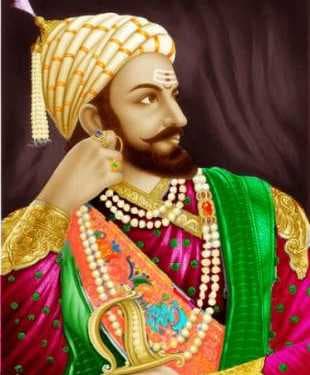
- Shivaji (1630–1680), the founder of the Maratha Empire, was a Maratha nobleman from the Bhosale clan.
- In 1645, Shivaji led a struggle to free the people of Bijapur from the Sultanate of Bijapur by conquering the fort Torna, followed by many other forts, gaining control of the region and establishing Hindavi Swarajya (self-rule of Hindu people).
- He established an independent Maratha state with Raigad as its capital and successfully defended his country against the Mughals.
- In 1674, he was enthroned as the nascent Maratha kingdom's Chhatrapati (Sovereign).
- He maintained his father's goal of expanding his frontiers by conquering the Portuguese and Mysore's Chikka Deva Raya.
- The Mughal Emperor Aurangzeb was alarmed enough by these developments to mount an expedition against the Marathas.
- It was fortified with over 300 forts and guarded by roughly 40,000 cavalry and 50,000 troops, as well as naval stations along the west coast, at the time of Shivaji’s death.
- The kingdom grew in size and diversity throughout time, and by the time his grandson ruled, and subsequently under the Peshwas in the early 18th century, it had grown into a full-fledged empire.
Maratha Confederacy
- The Maratha confederacy was created in the 18th century after the collapse of Shivaji's Maharashtra state in western India due to Mughal pressure.
- Following the death of Mughal ruler Aurangzeb (1707), Shivaji's grandson Shahu restored Maratha sovereignty.
- He delegated authority to the Brahman Bhat family, who were made hereditary peshwas (chief ministers).
- Each prominent family under a chief was allotted a zone of influence by the Maratha confederacy, which he was meant to capture and control in the name of the then Maratha ruler, Shahu.
- The Gaekwad of Baroda, the Bhonsle of Nagpur, the Holkars of Indore, the Sindhias of Gwalior, and the Peshwa of Poona were among the Maratha families who rose to prominence.
- The confederacy operated well from Bajirao I to Madhavrao I, but the Third Battle of Panipat (1761) altered everything.
Marathas During Mughal Empire
- The Marathas were perhaps the most formidable province to emerge.
- The Marathas eradicated Mughal authority from Malwa and Gujarat and established their reign under the skilled leadership of the Peshwas.
- They claimed to be the principal inheritors of the Mughal empire at one point, but Ahmad Shah Abdali contested their authority at the Third Battle of Panipat (1761).
- In the quest for political domination in India, the Marathas soon rebounded from their setback and presented the English East India Company with the most dangerous threat.
- The Mughal–Maratha Wars, also known as The Deccan War or The Maratha War of Independence, lasted from 1680 to 1707. They were fought between the Maratha Empire and the Mughal Empire.
- The Mughal Emperor Aurangzeb invaded the Maratha Enclave in Bijapur, which was built by the Maratha leader Shivaji, in 1680, starting the conflict.
- After Aurangzeb's demise, the Marathas destroyed the Mughals in Delhi and Bhopal, and by 1758 had extended their dominion to Peshawar.
Marathas under Peshwas
- Peshwas from the Bhat family ruled the Maratha Army during this time and ultimately became de facto rulers of the Maratha Empire until 1772.
- The Maratha Empire eventually ruled most of the Indian subcontinent.
- Following the death of Aurangazeb in 1707, Shahuji was freed from captivity. In order to reclaim the Maratha crown, he challenged and defeated Tarabai in a series of conflicts.
- Satara and Kolhapur were established as two distinct realms in 1707. The Treaty of Varna, signed in 1731, reaffirmed this.
- After Aurangazeb's death, the Mughal Empire descended into civil war, with his many sons vying for the throne.
- Farrukhsiyar, one of the claimants, was supported by Chhatrapati Shahuji.
- The Marathas marched on Delhi after choosing Balaji Vishwanath as Peshwa (Prime Minister) and succeeded in deposing Emperor Bahadur Shah and installing Farrukhsiyar on the throne.
- The new sovereign, grateful for Maratha cooperation, issued a decree guaranteeing the Marathas the authority to collect taxes in Mughal territory under Maratha control while also providing swarajya to the Maratha homeland.
- Shahuji's mother has also freed from Mughal captivity thanks to Peshwa Balaji Vishwanath's efforts.
- The Peshwas launched a campaign of expansion with Balaji Vishwanath (appointed on November 16, 1713), which saw the Marathas reach their highest extent.
- Balaji's son, Peshwa Baji Rao I, extended the kingdom even farther, including most of modern-day central and southern India.
- Meanwhile, under the protection of the Maratha Chhatrapati, the Mughals were reduced to little more than puppets.
- By 1760, the Maratha kingdom had expanded to about 250 million acres (1 million km2), or one-third of the Indian subcontinent, under Peshwa Balaji Baji Rao, the son of Baji Rao I.
Invasion of Durrani Empire
- The Maratha Empire suffered a devastating defeat in 1761 when it was defeated by the Afghan Durrani Empire.
- The Maratha kingdom was fragmented into distinct territories under the sovereignty of individual Maratha clans as a result of an entire generation of Maratha commanders dying on the battlefield.
- Peshwa Madhavrao I began the Maratha revival, which was eventually finished by Mahadaji Shinde.
- However, the Maratha Empire would never operate as a single independent unit again after this.
Peshwa Bajirao I (1720–40)
- The 7th Peshwa, Shrimant Peshwa Baji Rao I, popularly known as Bajirao Ballal, enlarged the Maratha Empire to cover much of modern-day India.
- Balaji Vishwanath and his wife Radhabhai Barve gave birth to Baji Rao on August 18, 1700.
- Instead of Deccan, Baji Rao I directed the Maratha attention to the north.
- He is credited as being the first Indian to detect the Mughals' fragility and fading empire. He was well aware of the Mughal rulers' weaknesses in Delhi.
- The well-known phrase "Attock to Cuttack" alludes to the Maratha Kingdom as visualized by Baji Rao-I, who wished to plant the Saffron Flag atop the walls of Attock.
- Baji Rao-I fought 41 wars and never lost a single one of them.
- This capable Maratha Prime Minister was able to form a confederacy of Marathas who had dispersed following Shivaji's death.
- The confederacy includes the Scindias which were led by Ranoji Shinde of Gwalior, the Holkars by Malharrao of Indore, the Gaekwads by Pilaji of Baroda, and the Pawars by Udaiji of Dhar.
- After Maharaja Chhattrasal's death, he was able to get one-third of Bundelkhand.
- He had a half-Muslim girlfriend from Bundelkhand named Mastani, who was never welcomed into Maratha culture.
- Baji Rao, I relocated the Marathas' administrative headquarters from Satara to Pune.
- Baji Rao-I died of an illness in 1740 and was succeeded by his son Balaji Baji Rao.
Third Battle of Panipat (1761)
- The Third Battle of Panipat took place on 14 January 1761 at Panipat, about 60 miles (95.5 kilometers) north of Delhi, between a Maratha Empire northern expeditionary force and King of Afghanistan, Ahmad Shah Durrani, with two Indian Muslim allies - the Rohilla Afghans of the Doab and Shuja-ud-Daula, the Nawab of Oudh.
- The decline of the Mughal Empire following the 27-year Mughal-Maratha war (1680–1707), which resulted in quick territory gains for the Maratha Empire, had resulted in rapid territorial gains for the Maratha Empire.
- Gujarat and Malwa fell under Maratha control under Peshwa Baji Rao.
- Finally, in 1737, Baji Rao destroyed the Mughals on the outskirts of Delhi and took control of most of the old Mughal territory south of Delhi.
- This brought the Marathas into direct conflict with Ahmad Shah Abdali's Durrani empire.
- He raised an army from Pashtun tribes in 1759 and made several gains in Punjab against the smaller Maratha garrisons.
- He subsequently formed a broad alliance against the Marathas with his Indian allies, Rohilla Afghans.
- The fight put an end to further Maratha gains in the north, as well as destabilizing their territory, for around ten years.
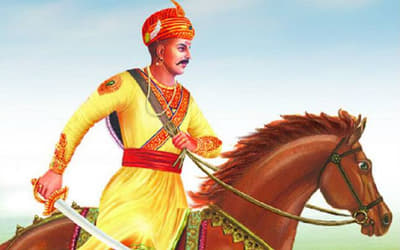
- The reign of Peshwa Madhavrao, who is credited with resurrecting Maratha dominance following the defeat at Panipat, spans ten years.
- Peshwa Madhavrao dispatched a huge Maratha force into North India in 1771, ten years after Panipat, in an attempt to: Re-establish Maratha dominance in North India
- Punish recalcitrant nations that had either joined with the Afghans, like the Rohillas or had managed to shake from Maratha dominance following Panipat.
- The campaign's triumph might be viewed as the final chapter in Panipat's lengthy history.
Conclusion
The Maratha Empire did make important changes in Indian governance and history. Religious tolerance and plurality were vital cornerstones of the kingdom, as they were Chhatrapati Shivaji Maharaj's core values. Many talented people have been recruited into the leadership of the Maratha Empire since its beginning, making it one of the most socially mobile governments in history.
FAQs
Question: What factors contributed to the rise of the Maratha Empire during the Mughal period?
Answer: The rise of the Maratha Empire was influenced by several factors, including the weakening of the Mughal Empire, internal dissensions among Mughal rulers, and the Marathas' military prowess. The leadership of figures such as Shivaji, who strategically took advantage of Mughal weakness, played a pivotal role. The Marathas also capitalized on the lack of centralized power in the Mughal territories, establishing a strong regional presence and gradually expanding their territory through guerrilla tactics and organized military campaigns.
Question: How did the Marathas establish their dominance in the Deccan region?
Answer: The Marathas established dominance in the Deccan region by leveraging their military strategies, such as guerrilla warfare and mobility. Shivaji's establishment of an effective administrative system and fort-building strategy also helped consolidate Maratha power. His ability to organize a large and disciplined army, along with forging alliances with other regional powers, enabled the Marathas to expand their control over large swathes of the Deccan, ultimately challenging Mughal authority.
Question: What role did Shivaji play in the Maratha rise to power?
Answer: Shivaji played a crucial role in the Maratha rise by consolidating territories, establishing a robust administration, and developing a strong military presence. His leadership, vision, and ability to unite the Maratha chiefs under one banner helped lay the foundation for the Maratha Empire. He utilized guerilla tactics to successfully challenge larger Mughal forces, and his policies, including the promotion of secularism and the establishment of a naval force, were key to the empire's expansion.
Question: How did the weakening of the Mughal Empire impact the rise of autonomous states like the Marathas?
Answer: The weakening of the Mughal Empire, particularly after Aurangzeb’s death, created a power vacuum in the Indian subcontinent. The Marathas and other regional powers, such as the Rajputs and Sikhs, capitalized on this decline by asserting their autonomy. The decline in Mughal central authority allowed regional rulers like Shivaji to assert their control over territories, creating decentralized states like the Maratha Empire that were able to challenge Mughal supremacy.
Question: How did the Marathas contribute to the socio-political landscape of India during the 17th and 18th centuries?
Answer: The Marathas played a significant role in shaping the socio-political landscape of India by challenging Mughal dominance and promoting regional autonomy. Their administrative innovations, including the development of the "Peshwa" system, and their encouragement of trade, cultural integration, and religious tolerance, contributed to the broader socio-political dynamics. They created a decentralized power structure that empowered regional leaders and influenced the future political organization of India.
MCQs
1. Which of the following factors contributed most significantly to the rise of the Maratha Empire?
A) Strong diplomatic relations with the Mughals
B) The weakening of the Mughal Empire
C) The rise of European colonial powers
D) The unification of the Rajputs
Answer: (B) See the Explanation
Explanation: The weakening of the Mughal Empire after Aurangzeb's death created an opportunity for regional powers, including the Marathas, to expand their territories and assert autonomy, leading to their rise as a dominant force in India.
2. Who was the founder of the Maratha Empire?
A) Shambhuji
B) Shivaji Maharaj
C) Balaji Vishwanath
D) Baji Rao I
Answer: (B) See the Explanation
Explanation: Shivaji Maharaj is regarded as the founder of the Maratha Empire, establishing the foundation for Maratha dominance in India through his military conquests and administrative reforms.
3. What was the primary reason for the Marathas' success against the Mughal Empire?
A) Superior technology
B) Effective guerrilla warfare tactics
C) Strategic alliances with the Rajputs
D) Mughals’ internal conflicts
Answer: (B) See the Explanation
Explanation: The Marathas were able to use guerrilla warfare tactics effectively, which allowed them to fight and defeat the larger Mughal forces. Their mobility and intimate knowledge of the terrain also gave them a significant advantage.
4. Which Maratha ruler is known for establishing the Peshwa system?
A) Chhatrapati Shivaji Maharaj
B) Baji Rao I
C) Balaji Vishwanath
D) Shahu Maharaj
Answer: (B) See the Explanation
Explanation: Baji Rao I is credited with establishing the Peshwa system, which centralized the administration of the Maratha Empire and made the Peshwa the de facto ruler of the Maratha state, with the Chhatrapati as a figurehead.
5. How did the decline of the Mughal Empire lead to the rise of autonomous states in India?
A) By creating a vacuum in political power
B) By strengthening the power of regional kings
C) By encouraging European colonial powers to intervene
D) By increasing the influence of Sikh forces
Answer: (A) See the Explanation
Explanation: The decline of the Mughal Empire, especially after the death of Aurangzeb, created a power vacuum, which allowed regional powers like the Marathas, Rajputs, and Sikhs to assert their independence and establish autonomous states.
GS Mains Questions and Model Answers
Q1: Discuss the Marathas’ role in the decline of the Mughal Empire and the rise of regional powers in the 17th and 18th centuries.
Answer: The Marathas played a crucial role in the decline of the Mughal Empire, primarily by exploiting the weaknesses of the Mughal state, such as weak succession, internal conflicts, and overstretched resources. The Maratha Empire, under Shivaji and later leaders like Baji Rao I, expanded rapidly by challenging Mughal authority in key regions, especially in the Deccan. Their success in using guerrilla tactics, establishing a strong administrative system, and maintaining alliances with other regional powers helped them establish a strong presence, which significantly weakened Mughal control and led to the rise of regional powers across India.
Q2: Evaluate the significance of the Maratha Empire’s rise to Indian politics in the 17th and 18th centuries. How did they influence the political landscape of the subcontinent?
Answer: The rise of the Maratha Empire was a turning point in Indian politics, as it marked the decline of centralized Mughal power and the rise of decentralized regional states. The Marathas introduced new military strategies, political structures like the Peshwa system, and governance models that prioritized regional autonomy. Their empire not only brought together diverse communities but also led to the formation of other regional powers like the Sikhs and Rajputs. The Marathas’ influence on the political landscape was profound, as they challenged imperial powers and laid the groundwork for future Indian autonomy.
Q3: Analyze the socio-economic impacts of Maratha rule on the Deccan region.
Answer: The socio-economic impacts of Maratha rule in the Deccan region were multifaceted. The Marathas promoted a system of land revenue collection that integrated traditional local structures with new Maratha norms. They established a strong military and trade economy, leading to a revival of commerce and industry in the region. Socially, they encouraged the spread of Hindu culture and practices while providing support to the peasantry through land grants. The Marathas also played a crucial role in the cultural revival of the region, as they patronized local arts, architecture, and education.
Previous Year Questions on Maratha Empire
1. UPSC CSE Prelims 2021:
Question: Which of the following is NOT a reason for the rise of the Maratha Empire in the 17th century?
A) The weakening of the Mughal Empire
B) The support of the Rajputs
C) The rise of European colonial powers
D) The leadership of Shivaji Maharaj
Answer: (C)
Explanation: The weakening of the Mughal Empire, the leadership of Shivaji Maharaj, and regional support were the primary reasons for the Maratha rise, rather than European colonial powers.
2. UPSC CSE Mains 2020 (GS Paper 1):
Question: Discuss the role of Shivaji Maharaj in the formation of the Maratha Empire and his contribution to the political dynamics of the 17th century India.
Answer: Shivaji Maharaj’s leadership and military genius were instrumental in establishing the Maratha Empire. His consolidation of territories through effective guerrilla warfare, creation of a robust administrative system, and development of a strong naval force enabled him to challenge Mughal power. His political policies promoted regional autonomy, secularism, and local governance, which later became the hallmark of the Maratha state, influencing the future of India’s political landscape.
Download the PREPP App and attempt FREE IAS Exam Mock Tests and get complete study material!

Full Test - 04: UPSC CSE Prelims CSAT (Paper-II)
Full Test - 03: UPSC CSE Prelims CSAT (Paper-II)
UPSC CSE Prelims 2026 GS Paper 1 Question Paper (24-May-2026)
UPSC CSE Prelims 2026 CSAT Paper 2 Question Paper (24-May-2026)

17 February 2025 | The Hindu Must Read Articles | Current Affairs

16 February 2026 | The Hindu Must Read Articles | Current Affairs

13 February 2026 | The Hindu Must Read Articles | Current Affairs









Comments