Sadatullah Khan (1725) - Modern Indian History Notes
Saadatullah Khan I, also known as Sa'adatullah Khan, was the founder of the Nawayath dynasty and the Nawab of Carnatic (1710–1732). The final Mughal governor, Mohammed Sayyid, was installed as Nawab of Carnatic with the title Saadatullah Khan I and transferred his capital from Gingee to Arcot. He also took his contribution to Srirangapatnam's gates, where he collected "peshkash," or tribute, from the monarchs. This article will explain to you about Sadatullah Khan (1725) which will be helpful in Modern Indian History preparation for the UPSC Civil service exam.
|
Table of Contents |
Sadatullah Khan - Early Life
- Mohammed Sayeed was the name given to Nawab Saadatullah Khan by his father, Mohammed Ali. In the year 1651, he was born in Bijapur.
- From an early age, he and his older brother, Ghulam Ali, underwent religious instruction and physical training.
- They originally served in the Bijapur Sultanate's army before applying for a position in the Mughal army in 1686 AD.
- While Ghulam Ali was chosen as a soldier, Emperor Aurangzeb turned down Mohammed Sayeed.
- However, his perseverance and hard work paid off, and he was hired as a servant.
- But it was by his own merit that he ascended from a lowly rank to that of Mansabdar. He later became Bidar's Amir and Faujdar.
- The control of Delhi weakened after Aurungazeb's death due to his successor's incapacity.
- Saadatullah Khan, who had no children of his own, adopted his brother Ghulam Ali Khan's son Dost Ali Khan and nominated him as his heir.
- Even though he had not informed the Nizam of Deccan of his desire, he had gotten the Mughal Emperor's confidential assent for this action.
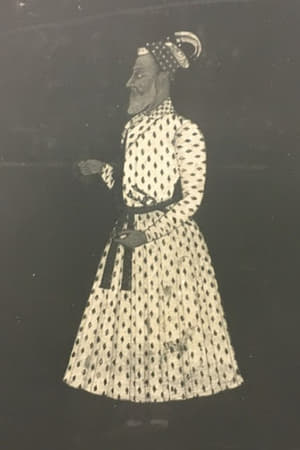
Sadatullah Khan - As the Dewan
- Mohammed Sayeed rose to prominence in the Carnatic due to his administrative abilities.
- From 1700 until 1710 AD, he was the Dewan (Finance Head).
- Revenue officials did everything they could to make the administration run like a well-oiled machine under his rigorous supervision.
- Aside from the civil administration, Saadatullah Khan successfully showed his ability as an army commander on various occasions.
- His aid to his superior Daudh Khan at critical periods resulted in the Marathas' victory in Vellore. He enslaved Arni and Pallikonda to the Mughal Empire.
- In the presence of Aurangzeb's successor Bahadur Shah, Saadatullah Khan was called and confirmed as Dewan of the Carnatic, a position he held from 1707 to 1710 AD.
- At the same time when Nawab Daudh Khan was declining to stay in the Carnatic, Dewan Saadatullah Khan was acknowledged as the Carnatic's Faujdar (garrison commander).
- Nawab Saadatullah Khan was also awarded the titles of Qiladar (Governor) of Sera and Basavapatna.
- As a result, Mohammed Sayeed, also known as Saadatullah Khan in history, became the Nawab of the Carnatic.
Sadatullah Khan - Nawab of the Carnatic
- Nawab Saadatullah Khan ruled Carnatic from 1710 to 1732 AD.
- Following his ascension to power, the Nawab set about forming a cabinet of ministers made up of his closest allies.
- His purpose was to identify those who were dedicated to and concerned about other people's problems.
- Dakhini Rai was selected as the next Dewan. The official chronicler was appointed to Surjaman. The efficient administration of Nawab Saadatullah Khan was due to these officials.
- The Poligars, Nayaks, Kallars, Marwars, Tondimans, and Qiladars of various areas built strong relationships with the Nawab.
- Though he was typically tolerant with them when it came to determining yearly tributes, the Nawab was adamant about collecting the tributes on schedule. He often reverted to a show of power in an attempt to intimidate them.
- He warned the Nayaks of Tanjore, Trichy, Madurai, and Venkatgiri, as well as 54 other Qiladars, who had postponed payment, and he obtained the money.
- He admonished the Qiladar Mahmud Khan of Satgadh and Shah Mir of Chennapatnam, for example, for abusive tax collecting techniques.
Sadatullah Khan and the Marathas
- As Faujdar of Bidar, Saadatullah Khan successfully withstood the Maratha kings Dhanaji Jadhav and Shantaji's invasion.
- Saadatullah Khan was elevated to Bakshi of the Mughal army contending for the fort of Gingee under the command of Zulfiqhar Ali Khan as a result of this victory.
- When Emperor Aurangzeb summoned him, he was the Dewan of the Carnatic under Nawab Daudh Khan.
- He swore an allegiance oath and promised to conquer the fort of Vellore. In 1700 AD, Saadatullah Khan maintained his word and defeated Raja Ram's deputy, Shankar Malhar, to take Vellore.
- Aurangzeb bestowed upon him a title. His older brother, Ghulam Ali, was appointed as the Qhiladar of Vellore Fort.
- Saadatullah Khan's military victory over the Marathas was noteworthy. Thanks to Dewan Saadatullah Khan's prompt help, Arni was also captured from the Tanjore Nayak.
Conclusion
Nawab Saadatullah Khan's civil administration and military campaign were very effective because he did not rely solely on the competence of aristocrats or family members, but instead used the services of individuals of distinction and loyalty, regardless of their religious or regional sympathies. Along with Saadatullah Khan, a group of Rajputs and their families arrived in Arcot and settled.
FAQs
Question. Who was Sadatullah Khan?
Answer: Sadatullah Khan was a prominent figure in 18th-century India, known for his contributions to the Nawabi and military history of the subcontinent. He was a trusted general under the Nizam of Hyderabad and played a significant role in the administration and military campaigns of the time.
Question. What was Sadatullah Khan’s role in the politics of Hyderabad?
Answer: Sadatullah Khan was appointed as the Prime Minister (or Mir Saman) in the court of the Nizam of Hyderabad, Asaf Jah I. His influence in the court allowed him to shape both the military and administrative policies of the region.
Question. What were the key military achievements of Sadatullah Khan?
Answer: Sadatullah Khan was known for his military leadership, particularly in the Nizam's wars against various external and internal enemies. His strategic acumen helped him secure victories for the Nizam's kingdom, strengthening its position in the Deccan region during a time of instability.
Question. How did Sadatullah Khan contribute to the development of Hyderabad?
Answer: Apart from his military career, Sadatullah Khan also contributed to the administration and consolidation of Hyderabad. He worked on improving the governance system and was involved in the planning and administration of the state's finances, which laid the groundwork for Hyderabad’s later prosperity.
Question. What is Sadatullah Khan's legacy?
Answer: Sadatullah Khan’s legacy is mainly tied to his political and military leadership during a turbulent period in Deccan history. He is remembered as a key figure in the early stages of the Asaf Jahi dynasty and is seen as one of the architects of the Nizam’s state, which later grew into the princely state of Hyderabad under his descendants.
MCQs
- In which court did Sadatullah Khan serve as Prime Minister?
a) Mughal court
b) Maratha court
c) Nizam of Hyderabad's court
d) Rajputana court
Answer: (C) See the Explanation
Sadatullah Khan served as the Prime Minister in the court of the Nizam of Hyderabad, Asaf Jah I, where he played a major role in military and administrative affairs.
- What military position did Sadatullah Khan hold under the Nizam of Hyderabad?
a) General
b) Mir Saman
c) Nawab
d) Diwan
Answer: (A) See the Explanation
Sadatullah Khan was a general who led military campaigns for the Nizam of Hyderabad, contributing to his rise in political and military ranks.
- What was one of Sadatullah Khan’s contributions to Hyderabad’s governance?
a) Establishment of new revenue systems
b) Creation of the Nizam's army
c) Strengthening of the legal system
d) Administrative reforms and consolidation of power
Answer: (D) See the Explanation
Apart from his military achievements, Sadatullah Khan contributed to strengthening the administration and consolidating the power of the Nizam, thus stabilizing the region.
- Which dynasty was Sadatullah Khan associated with?
a) Mughal dynasty
b) Maratha Empire
c) Asaf Jahi dynasty
d) Rajput dynasty
Answer: (C) See the Explanation
Sadatullah Khan played a key role in the early history of the Asaf Jahi dynasty, which ruled Hyderabad after the establishment of the Nizam's state.
- Which of the following was Sadatullah Khan’s main contribution to Hyderabad’s military strength?
a) Defeating the Marathas in war
b) Strengthening the Nizam’s army
c) Establishing an alliance with the Mughals
d) Building Hyderabad’s fortifications
Answer: (B) See the Explanation
Sadatullah Khan is remembered for his significant contributions to the military strength of the Nizam of Hyderabad, which helped consolidate his position in the Deccan.
GS Mains Questions and Model Answers
Q1: Discuss the role of Sadatullah Khan in shaping the military and political landscape of Hyderabad during the 18th century.
Answer: Sadatullah Khan played a pivotal role in the establishment and consolidation of the Nizam's rule in Hyderabad. As a skilled military leader and Prime Minister, he was instrumental in organizing and strengthening the Nizam's army, ensuring the stability and protection of Hyderabad’s borders. His political acumen helped solidify the early foundations of the Asaf Jahi dynasty, and his administrative contributions laid the groundwork for future prosperity under the Nizams.
Q2: How did Sadatullah Khan contribute to the development of the Nizam’s state in the Deccan region?
Answer: Sadatullah Khan’s contributions to the Nizam’s state included military victories and political consolidation. He played a significant role in safeguarding the interests of Hyderabad amidst external threats and internal disputes. His administrative reforms ensured the stability of the region, making Hyderabad a powerful state in the Deccan. His role in strengthening the governance structure helped pave the way for the Nizam’s successors to maintain control over the Deccan, ensuring its growth as a regional power.
Q3: What were the challenges faced by Sadatullah Khan in his role as Prime Minister and military leader of Hyderabad?
Answer: Sadatullah Khan faced several challenges during his tenure, including managing the volatile political environment of the Deccan, dealing with external threats from neighboring Maratha forces and the Mughal Empire, and navigating the complexities of the court. Additionally, balancing military duties with administrative responsibilities was a constant challenge. Despite these hurdles, his leadership helped stabilize the Nizam’s rule and contributed to the growth of Hyderabad’s political and military power.
Previous Year Questions on Sadatullah Khan
1. UPSC CSE 2019
Question: "Discuss the contributions of regional leaders in strengthening the kingdoms of southern India during the 18th century."
Answer: Regional leaders such as Sadatullah Khan in Hyderabad, along with figures like the Maratha Peshwa and the rulers of Mysore, played crucial roles in strengthening their respective kingdoms during the 18th century. These leaders were key in defending against foreign invasions, consolidating power, and shaping the political and military landscape of southern India during a time of great upheaval.
2. UPSC CSE 2018
Question: "Assess the role of military and political reforms in the development of the Deccan region under the Nizams."
Answer: The Nizam of Hyderabad, supported by leaders like Sadatullah Khan, introduced military and political reforms that strengthened Hyderabad’s position in the Deccan. Reforms in the army, governance, and administration helped ensure stability and facilitated the growth of Hyderabad as a major regional power. These reforms allowed the Nizams to maintain their autonomy despite external pressures from the Marathas and the Mughals.
Download the PREPP App and attempt FREE IAS Exam Mock Tests and get complete study material!

Full Test - 04: UPSC CSE Prelims CSAT (Paper-II)
Full Test - 03: UPSC CSE Prelims CSAT (Paper-II)
UPSC CSE Prelims 2026 GS Paper 1 Question Paper (24-May-2026)
UPSC CSE Prelims 2026 CSAT Paper 2 Question Paper (24-May-2026)

17 February 2025 | The Hindu Must Read Articles | Current Affairs

16 February 2026 | The Hindu Must Read Articles | Current Affairs

13 February 2026 | The Hindu Must Read Articles | Current Affairs









Comments