Recalibrating India’s Clean-Cooking Strategy
Relevance: GS2 - Government policies and interventions for development in various sectors; GS3 - Growth and Development
(Source: The Hindu, 08/01/2023)
Click here for Daily Current Affairs
Why in the news?
- In this article, Karthik Ganesan, Director of Research Coordination, at the Council on Energy, Environment and Water (CEEW) has discussed India's need to adopt cleaner cooking technologies.
Table of Contents
India’s LPG Story Growth
- India's LPG story over the last 15 years has been marked by significant efforts to improve adoption of clean cooking solutions, particularly in poorer and rural households.
- The government has introduced various schemes and initiatives to promote LPG usage and expand its reach to a broader population.
- Grameen Vitrak Yojana: Launched in 2009, this program aimed to grow the rural distributor base for LPG, and it has been successful in increasing the rural distributor base from 18% to 60% of the total LPG distributor base.
- Pradhan Mantri Ujjwala Yojana (PMUY): Introduced in 2016, PMUY has been one of the most ambitious programs, providing over 9.5 crore new households with LPG connections.
- These efforts have led to significant growth in LPG adoption, with 71% of Indian households using LPG as their primary cooking fuel in 2020.
- However, the LPG consumption in Indian households saw a slight reduction in FY23, raising questions about the sustainability of relying solely on LPG subsidies to drive adoption.
What are the challenges to sustaining this growth?
- Impact of COVID-19: The COVID-19 pandemic led to the withdrawal of LPG consumption subsidies for all consumers in 2020, affecting access for some households.
- Financial Barriers: Even though there was a demand for clean cooking solutions, financial barriers, especially due to the loss of livelihoods and income during the pandemic, have hindered the adoption of LPG in some households.
- Volatile International Prices: India's dependence on imported LPG has increased to over 64% in FY23, which makes the domestic market vulnerable to volatile international prices.
- The Russian invasion of Ukraine and resulting geopolitical tensions have further added to the volatility in crude and product prices.
What are the disadvantages of traditional methods of cooking?
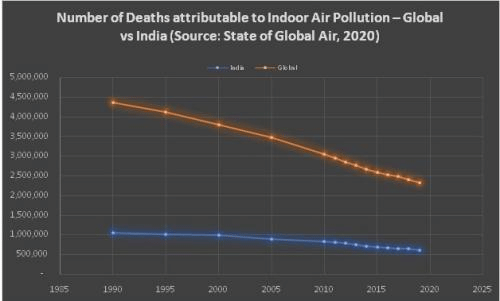
- Health Hazards: It produces smoke, indoor air pollution, and particulate matter that can be harmful to health. Prolonged exposure to these pollutants can lead to respiratory problems, eye irritation, and other health issues.
- According to WHO, more than 3 billion people worldwide use solid fuels like wood, charcoal, and dung for cooking and heating, leading to about 4.3 million premature deaths annually due to indoor air pollution and respiratory illnesses.
- Deforestation: Traditional cooking methods reliant on wood and biomass fuel cause deforestation and environmental degradation, with over 13 million hectares of forest lost annually due to fuelwood consumption, as estimated by the Food and Agriculture Organization.
- Climate Change: It releases significant amounts of carbon dioxide, methane, and black carbon (soot) into the atmosphere. These greenhouse gases contribute to global warming and climate change.
- Energy Inefficiency: The International Energy Agency (IEA) states that traditional cooking methods waste a significant amount of energy as heat dissipates into the surroundings due to their lower energy efficiency.
- Reduced Nutrition: Traditional cooking methods can lead to nutrient loss in food due to prolonged cooking times and exposure to high temperatures.
- For example, water-soluble vitamins like vitamin C can be significantly diminished during such practices.
Adoption of Cleaner Cooking Technologies
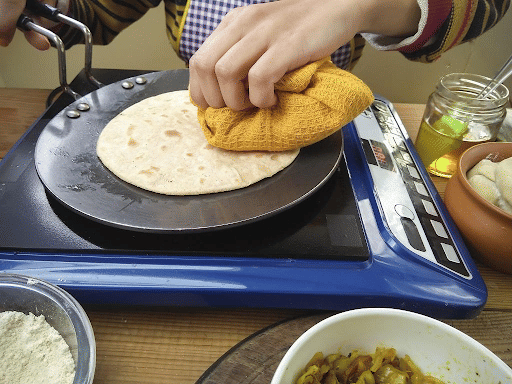
- Electric cooking should be promoted which involves the use of electric cooking appliances as a clean and energy-efficient alternative to traditional cooking methods
- It encompasses the adoption of electric stoves, induction cooktops, and other electric cooking devices in households.
- E-cooking has many benefits, like improved indoor air quality, reduced greenhouse gas emissions and enhanced per capita energy access for India.
- A study shows that even with higher electricity prices, it's still cheaper than using traditional cooking fuels like LPG.
- In urban areas, some households already use electric cooking appliances, and can be used as an example to inspire rural areas to transition too.
Challenges to E-cooking adoption
- Low Consumer Awareness and Acceptance: Consumer awareness and acceptance of these technologies are low, especially in regions where cooking practices, foods, and cultures vary widely.
- Learning Curve for Different Appliances: E-cooking appliances like microwaves and induction cooktops require users to understand and adjust to power settings for different types of food.
- Utensil Compatibility: E-cooking appliances, such as induction cooktops, require iron-based utensils for effective use. Non-ferrous metals like copper, aluminum, or brass will not work on these appliances, leading to the need for new kitchenware and potential additional costs for users.
- Cultural Barriers: In rural areas, cultural aspects like caste can act as a barrier to the adoption of clean cooking technologies. Social stratifications may lead to resistance or objections from certain communities when others gain access to the same technologies.
- Unreliable Power Supply in Rural Areas: Rural geographies often suffer from an inconsistent and unreliable power supply. While the grid may have reached most parts of the country, the lack of a dependable electricity supply hinders the widespread adoption of e-cooking appliances.
- Financial Constraints: The average electricity prices from mini-grids can be relatively high for rural households, making it challenging for them to afford the transition to e-cooking without sufficient government subsidies or financial incentives from banks.
Measures taken for clean cooking fuel
- Pradhan Mantri Ujjwala Yojana (PMUY)
- Piped natural gas (PNG)
- Go Electric campaign
- Energy Efficiency Services Limited
- Surya Nutan
- Energy Sector Management Assistance Programme (ESMAP)
Conclusion
India's clean cooking policy should pivot towards a diverse set of clean-cooking technologies, including electric cooking, to reduce the reliance on LPG subsidies and imported LPG. By embracing various clean-cooking solutions, India can achieve its clean cooking goals while also contributing to climate and environmental benefits.
(*Click this link to read prelims specific weekly current affairs articles)
FAQs
Question: What is E-cooking?
Answer:
E-cooking involves the use of electric cooking appliances as a clean and energy-efficient alternative to traditional cooking methods. It encompasses the adoption of electric stoves, induction cooktops, and other electric cooking devices in households.
Question: What is Pradhan Mantri Ujjwala Yojana (PMUY)?
Answer:
The Pradhan Mantri Ujjwala Yojana was launched in August 2016. Under the Ujjwala Scheme, the Center provides qualified individuals with a deposit-free LPG connection and financial support in the amount of Rs 1,600 per connection.
MCQ
Question: Read the following passage and answer the item that follows. Your answer to this item should be based on the passage only. (UPSC 2018)
Cooking with biomass and coal in India is now recognized to cause major health problems, with women and children in poor populations facing the greatest risk. There are more than 10 lakh premature deaths each year from household air pollution due to polluting cooking fuels with another 1.5 lakh due to their contribution to general outdoor air pollution in the country. Although the fraction of the Indian population using clean cooking fuels, such as LPG, natural gas and electricity, is slowly rising, the number using polluting solid fuels as their primary cooking fuel has remained static for nearly 30 years at about 70 crore.
Which of the following is the most crucial and logical inference that can be made from the above passage?
(a) Rural people are giving up the use of polluting solid fuels due to then increasing awareness of health hazards.
(b) Subsidizing the use of clean cooking fuels will solve the problem of India's indoor air pollution.
(c) India should increase its import of natural gas and produce more electricity.
(d) Access to cooking gas can reduce premature deaths in poor households.
Answer: (d) See the Explanation
Option (d) is correct as it has been highlighted that the use of polluting solid fuels lead to immature death. Hence,access to clean cooking gas will solve the issue.
Therefore, option (d) is the correct answer.
Download the PREPP App and attempt FREE IAS Exam Mock Tests and get complete study material!

Full Test - 04: UPSC CSE Prelims CSAT (Paper-II)
Full Test - 03: UPSC CSE Prelims CSAT (Paper-II)
UPSC CSE Prelims 2026 GS Paper 1 Question Paper (24-May-2026)
UPSC CSE Prelims 2026 CSAT Paper 2 Question Paper (24-May-2026)

17 February 2025 | The Hindu Must Read Articles | Current Affairs

16 February 2026 | The Hindu Must Read Articles | Current Affairs

13 February 2026 | The Hindu Must Read Articles | Current Affairs









Comments