Over The Borderline: On Pakistan And Its Security Situation With Afghanistan
Relevance: GS 2 - India and its neighbourhood- relations; GS 3 - Security challenges and their management in border areas - linkages of organized crime with terrorism.
(Source: The Hindu, 08/01/23)
Click here for Daily Current Affairs
Why in the news?
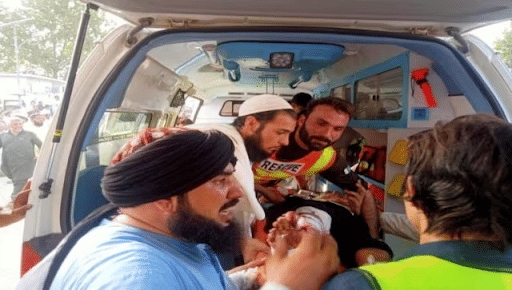
- Recently, a suicide attack at a political rally by the hardline party Jamiat Ulema-e-Islam-Fazl (JUI-F), led by Maulana Fazlur Rehman, a key member of Pakistan's ruling coalition, in Khyber-Pakhtunkhwa, Pakistan, resulted in 44 fatalities and over 200 injuries.
- The attack was carried out by the Islamic State-Khorasan (IS-K), which has escalated its attacks in Afghanistan since the Taliban's takeover of Afghanistan in August 2021 and has targeted both Taliban-affiliated groups and Afghanistan's minorities.
- The JUI-F, with ideological ties to the Afghan Taliban, has also been a previous target of IS-K's attacks.
Table of Contents
How the Security Situation in Afghanistan is impacting Pakistan?
- Pakistan is facing the consequences of its past support to Islamist extremists for geopolitical purposes.
- Pakistan aided the Mujahideen, during Afghanistan's anti-communist civil war and later backed the emerging Taliban during the intra-Mujahideen conflict.
- After the Taliban's fall in 2001, Pakistan played a double game, supporting the U.S. war while harboring the Taliban.
- Radicalisation of youth: The prolonged civil war radicalized Muslim youth in the Af-Pak region, posing security threats to Pakistan.
- In 2014-15, Pakistan conducted an operation to crush the Pakistan Taliban, but the Taliban's resurgence in Afghanistan empowered their Pakistani counterparts (Tehreek-e-Taliban Pakistan) and enabled IS-K to become a formidable opposition to the Taliban in Kabul.
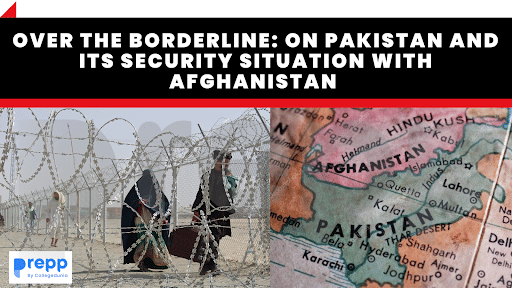
- Porous Afghanistan-Pakistan borders:The porous Afghanistan-Pakistan borders, previously used to support militancy, are now exploited by terrorists.
- Pakistan now faces a two-front security challenge from the Pakistani Taliban and IS-K, while dealing with political gridlock and a struggling economy.
- A crackdown on terrorism may bring temporary calm in the border region.
Rise of taliban and its impact on India
- The Taliban’s reemergence in Afghanistan has opened a pandora’s box of radicalism, extremism, and narco-trafficking.
- Use of technology: Social media and cyberspace for propaganda will be used to attract the disgruntled youth and may catalyze further terrorist violence in India.
- Radicalization through the Internet and social media, along with terror financing through cryptocurrencies and crowdfunding, has intensified during the COVID-19 pandemic.
- According to a RAND report in 2019 terrorist organizations like al Qaeda and its affiliates, the Islamic State of Iraq and Syria (ISIS), Hezbollah as well as lone-wolf attackers have used cryptocurrencies for drug trafficking, fund-raising, among other activities.
- Haven for terrorist activities: The Taliban regime views many terrorists and terror groups as ‘brothers of faith’ and has also helped them maintain their training camps in the country.
- Pakistan: The Taliban's takeover of Afghanistan gives Pakistan "strategic depth" against India and serves as a recruiting ground for militants and terrorists.
- For example, in the first six months of 2022, 32 of the 118 terrorists killed in Jammu and Kashmir were foreigners. In contrast, of the 182 terrorists killed there in 2021, only 20 were foreigners.
Conclusion
- Categorizing terror acts by religious or ideology will dilute the shared global commitment to fighting terrorism.
- The menace of terrorism cannot be associated with any religion, nationality, civilisation or ethnic group.
- Therefore, Pakistan should stop differentiating between Islamist militants as “good terrorists” and “bad terrorists” based on its geopolitical interests.
(*Click this link to read prelims specific weekly current affairs articles)
FAQs
Question: Which countries border Afghanistan?
Answer:
To the south and east, Afghanistan shares a border with Pakistan; to the west, it shares a border with Iran, and its northern border touches the Central Asian countries of Turkmenistan, Uzbekistan, and Tajikistan. In the far northeast, it shares a border with China.
Question: What is soft power?
Answer:
Soft power is the capacity to attract and co-opt rather than force people in politics (especially international politics) (contrast hard power). Soft power, in other terms, is the ability to influence others' preferences via appeal and attractiveness. Soft power is non-coercive, and its currency includes culture, political principles, and foreign policy.
Question: What is the Afghan-India Friendship Dam?
Answer:
Afghan-India Friendship Dam, formerly the Salma Dam, is on the Harirud River and is the main source of electricity and irrigation water for hundreds of thousands of people in western Afghanistan.
Download the PREPP App and attempt FREE IAS Exam Mock Tests and get complete study material!

Full Test - 04: UPSC CSE Prelims CSAT (Paper-II)
Full Test - 03: UPSC CSE Prelims CSAT (Paper-II)
UPSC CSE Prelims 2026 GS Paper 1 Question Paper (24-May-2026)
UPSC CSE Prelims 2026 CSAT Paper 2 Question Paper (24-May-2026)

17 February 2025 | The Hindu Must Read Articles | Current Affairs

16 February 2026 | The Hindu Must Read Articles | Current Affairs

13 February 2026 | The Hindu Must Read Articles | Current Affairs









Comments