Public Service Commission - Indian Polity Notes
Public Service Commission for the Union of India and the States are established, according to Articles 315 to 323 in Part XIV of the Indian Constitution. These Articles in the Constitution contain elaborate provisions regarding the composition, appointment and removal of members along with the independence, powers and functions of the Public Service Commission.
This article explains the Public Service Commission, Constitutional provisions, composition and powers and functions which are important for UPSC IAS exam preparation.
|
Table of Contents |
Constitutional Provisions
- Part XIV of the Indian Constitution contains articles 315 to 323 that deal with the Union Public Service Commission and the State Public Service Commission.
- These constitutional provisions govern the appointment, composition, removal, functions, and duties of the Public Service Commissions, among other things.
- The content of the various provisions of the Constitution is summarised in the table below.
| Article | Provisions |
|---|---|
| Article 316 | Provisions governing the appointment of members and their terms of office. |
| Article 317 | Removal and suspension provisions for members of the Public Service Commission. |
| Article 318 | Provisions relating to the Commission's authority to enact regulations governing the conditions of service of its members and personnel. |
| Article 319 | Provisions prohibiting members of the Commission from holding office after they have ceased to be members. |
| Article 320 | Functions of Public Service Commissions are outlined in this section. |
| Article 321 | Provisions relating to the power of Public Service Commissions to expand their functions. |
| Article 322 | Provisions for Public Service Commissions' costs. |
| Article 323 | Provisions relating to Public Service Commission reports. |
| Article 315 | Provisions for the Union and States' Public Service Commissions. |
| Other Relevant Links | |
|---|---|
| All-India Services | Integrated Judicial System |
| Reorganisation of States | Allocation of Taxing Powers |
| Distribution of Tax Revenues | Goods and Services Tax Council |
|
"The Public Service Commissions, established under Articles 315 to 323 in Part XIV of the Indian Constitution, serve as the pillars of meritocracy and integrity, ensuring that public servants are selected with fairness.” |
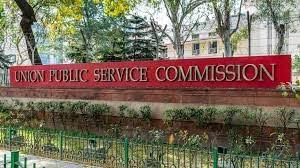
Union Public Service commission (UPSC) and State Public Service commission (SPSC)
| Comparison | UPSC | SPSC |
|---|---|---|
| Composition |
|
|
| Appointment |
|
|
| Tenure |
|
|
| Resignation and removal |
|
|
Appointment of Acting Chairman
- If the Chairman's office becomes vacant, the President shall appoint an acting chairman from among the Commission members to carry out the Chairman's duties while he or she is away.
- If any of the following conditions exist, the governor may nominate one of the members of the SPSC. as interim chairman:
- The chairman of the commission's position falls vacant;
- The chairman of the commission is unable to discharge his duties owing to absence or for any other cause.
- The acting chairman will perform the functions of the chairman until the chairman returns to their office.
Structure of the Public Service Commissions
Secretariat
- The Commission's activities are carried out by a Secretariat led by a Secretary and four Additional Secretaries. Several Joint Secretaries, Deputy Secretaries, and other support workers make up the additional secretaries. The secretariat is further divided into numerous departments for administrative purposes, each with its own set of responsibilities, as follows:
- Administration: The administration oversees the Secretariat as well as the personal affairs of the Chairman/Members and other Commission Officers/Staff.
- All India Services: Direct recruitment, Civil Services Examination, or promotion from the State Service are all options for joining the All India Services. Promotions of State Service personnel to the IAS, IPS, and IFS are handled by the All India Service Branch. It also deals with policy issues connected to All India Services and revisions to the respective services' 'Promotion Regulations.'
- Appointments: They make appointments to the Central and State services through promotion, deputation, and absorption.
- Examination: It conducts merit-based selection and recommendation of candidates for Group A and Group B Services of the Government of India and the appropriate State through various examinations.
- General: The general is in charge of the Commission's day-to-day housekeeping. It is responsible for responsibilities such as arranging and facilitating examinations by the UPSC and SPSC, printing annual reports, and so on.
- Recruitment: This branch of the UPSC. and the SPSC conducts Direct Recruitment (one of three mechanisms: "direct recruitment, "recruitment by promotion,' and recruitment by transfer and permanent absorption') for all Group 'A' and certain Group 'B' posts in the Union (including some Union Territories) or the State. These positions are filled through either a selection process (interview) or a competitive examination.
- Services I: Handles disciplinary matters submitted from various Ministries/Departments and State Governments for the Commission's advice, as required by Article 320(3)(c).
- Services II: Deals with cases that aren't handled by the 'Services I' branch. It also publishes the Annual Report and manages foreign delegation visits, organizing international events, and correspondence with foreign governments, especially the SAARC Member States, regarding Public Service Commissions.
Powers of UPSC and SPSC
The Union Public Service Commission and the State Public Service Commission's main power is to advise the President and Governors of any State on the following issues:
- On all subjects relating to the appointment of government civil servants.
- Evaluation of candidates for appointment, promotion, or transfer in all civil positions based on their efficiency and standard.
- On all matters relating to the civil service's personnel’s discipline and timeliness.
- Concerns about the expectations and benefits of Civil Service employees, as well as employees who have been harmed while on duty.
- Whether or not the payment or expenditure for any task performed by a Civil Service employee will be charged to India's consolidated fund.
- Regarding the promptness of decisions and the discipline of action in government functions, as well as the payment of compensation to a government employee who has incurred any issues or financial loss as a result of the government's incompetence.
- It also has the authority to deal with issues such as disciplinary actions taken against employees who have broken the rules, as well as all issues concerning the interests of government employees working for both the federal and state governments.
Functions of UPSC and SPSC
The Union Public Service Commission and the State Public Service Commission are responsible for conducting examinations for appointments to the Union and State public services, respectively. The Union Public Service Commission and State Public Service Commission have the following responsibilities under Article 320 of the Indian Constitution.
- The first and most important function of the Union Public Service Commission and the State Public Service Commission is to appoint meritorious and potential candidates to administrative positions after they have been selected through competitive examinations at the national and state levels, respectively.
- Second, for any service that requires specific qualifications, the UPSC and SPSC's role is to help the legislature in drafting and implementing joint recruitment schemes.
- The President and the Governor, respectively, are advised by the Union Public Service Commission and the State Public Service Commission on all matters relating to civil service and civil post recruiting.
- The UPSC and SPSC establish guidelines to be followed.
- in the appointment of public workers to positions;
- in promoting employees and transferring them from one service to another;
- to assess individuals' suitability for such positions as promotions or transfers.
- Another function of the UPSC and SPSC is to investigate all disciplinary matters involving a person functioning in a civil capacity for the Government of India or a State. It could also include memorials or petitions on the subject.
Conclusion
Public Service Commissions, as enshrined in Articles 315 to 323 of the Indian Constitution, play a vital role in maintaining the efficiency and integrity of public administration. By ensuring a transparent, merit-based selection process, they uphold the principles of fairness and competence, thereby fortifying the foundations of democratic governance and fostering public trust in the system. These commissions are indispensable in shaping a capable and committed civil service that is essential for the nation's progress and development.
| Other Relevant Links | |
|---|---|
| Indian Polity UPSC Notes | Legislative Relations |
| Financial Relations | Administrative Relations |
| Indian Parliament | Trends in Centre-State Relations |
| Federal System | Parliamentary System |
FAQs
Question: What is the Public Service Commission in India?
Answer: The Public Service Commission (PSC) in India is a constitutional body established to recruit and manage civil services in the country. PSCs function at both the Union (UPSC) and State levels (State PSCs) under the provisions outlined in Articles 315 to 323 of the Indian Constitution. Their main responsibility is to ensure a transparent, merit-based recruitment process for government positions and services.
Question: What is the role of the Union Public Service Commission (UPSC)?
Answer: The UPSC is responsible for conducting examinations and selecting candidates for All India Services, Central Services, and Group A and B posts under the Government of India. It also advises the President of India on matters related to civil service appointments, promotions, and disciplinary actions, ensuring an impartial process for selecting suitable candidates.
Question: How are State Public Service Commissions (SPSCs) different from the UPSC?
Answer: While the UPSC handles recruitment for central government positions, each state in India has its own SPSC to manage recruitment for state-level positions. SPSCs conduct exams for state services and advise the respective state governments on matters related to appointments, promotions, and disciplinary actions within their jurisdiction.
Question: Under which constitutional articles are the functions of the Public Service Commissions outlined?
Answer: The functions, powers, and responsibilities of the Union and State Public Service Commissions are outlined in Articles 315 to 323 of the Indian Constitution. These articles define the framework for recruitment, advisory roles, and appointment processes for civil services in India.
Question: How does the UPSC ensure transparency in recruitment?
Answer: The UPSC ensures transparency in recruitment through rigorous examinations, objective selection criteria, and a merit-based process. It follows a structured examination format, detailed guidelines, and a multi-stage selection process that includes preliminary exams, main exams, and interviews to maintain impartiality and fairness in civil services recruitment.
MCQs
1. Under which article of the Indian Constitution is the UPSC established?
A) Article 315
B) Article 324
C) Article 330
D) Article 340
Answer: (A) See the Explanation
Explanation: Article 315 of the Indian Constitution provides for the establishment of Public Service Commissions, including the Union Public Service Commission (UPSC) for central recruitment and State Public Service Commissions (SPSCs) for state-level recruitment.
2. Which body is responsible for conducting exams for All India Services?
A) State Public Service Commission
B) Union Public Service Commission
C) Election Commission
D) Finance Commission
Answer: (B) See the Explanation
Explanation: The Union Public Service Commission (UPSC) is responsible for conducting exams for All India Services like IAS, IPS, and IFS, as well as for other central government posts.
3. Which constitutional article outlines the powers of the Public Service Commissions?
A) Articles 301 to 310
B) Articles 311 to 320
C) Articles 315 to 323
D) Articles 325 to 335
Answer: (C) See the Explanation
Explanation: Articles 315 to 323 of the Indian Constitution outline the powers, functions, and responsibilities of the Union and State Public Service Commissions.
4. Who appoints the Chairman of the UPSC?
A) Prime Minister
B) Chief Justice of India
C) President of India
D) Speaker of the Lok Sabha
Answer: (C) See the Explanation
Explanation: The Chairman and other members of the Union Public Service Commission are appointed by the President of India, as per the provisions of the Indian Constitution.
5. What is the primary function of a State Public Service Commission?
A) Conducting exams for central services
B) Managing elections
C) Recruiting for state-level government positions
D) Advising on financial policies
Answer: (C) See the Explanation
Explanation: State Public Service Commissions are responsible for recruiting candidates for various state government positions and advising state governments on appointments, promotions, and disciplinary matters related to the state's civil services.
GS Mains Questions and Model Answers
Q1: Analyze the role of the Union Public Service Commission (UPSC) in maintaining the integrity and efficiency of India's civil services. Discuss its constitutional mandate and responsibilities.
Answer: The Union Public Service Commission (UPSC) plays a pivotal role in recruiting competent individuals for India's civil services, ensuring a transparent, merit-based selection process. Established under Article 315 of the Constitution, the UPSC conducts examinations for All India and Central Services, upholding the principles of impartiality and fairness. The UPSC's responsibilities include conducting exams, advising the President on civil service matters, and ensuring that recruitment policies align with national objectives. By maintaining rigorous standards, the UPSC upholds the integrity and efficiency of India's administrative system, contributing significantly to governance.
Q2: Examine the significance of Articles 315 to 323 of the Indian Constitution in defining the powers and functions of Public Service Commissions in India.
Answer: Articles 315 to 323 of the Indian Constitution outline the establishment, roles, and functions of both the Union Public Service Commission (UPSC) and State Public Service Commissions (SPSCs). These articles empower the PSCs to conduct examinations, advise on appointments, and handle disciplinary cases, thus ensuring an independent and transparent civil services recruitment process. By setting clear mandates, these constitutional provisions uphold the PSCs' autonomy, making them crucial in strengthening India's administrative system and ensuring accountable governance at both the central and state levels.
Q3: Discuss the role of State Public Service Commissions in strengthening state administration in India. How do they differ in their functions compared to the UPSC?
Answer: State Public Service Commissions (SPSCs) are essential for recruiting and managing personnel for state administrative services, enhancing governance at the local level. Unlike the UPSC, which handles recruitment for All India and central services, SPSCs focus on state-level roles, conducting examinations and advising state governments on civil service matters. SPSCs ensure a merit-based, transparent recruitment process aligned with state needs, contributing to efficient governance and providing support in implementing state policies effectively.
Previous Year Questions on Public Service Commission
1. UPSC CSE Prelims 2021:
Question: Under which Article of the Indian Constitution are the functions of the State Public Service Commissions defined?
A) Article 315
B) Article 321
C) Article 324
D) Article 329
Answer: (A)
Explanation: Article 315 of the Indian Constitution establishes the Public Service Commissions and lays down the framework for their functions, including both the Union and State Public Service Commissions.
2. UPSC CSE Mains 2020 (GS Paper 2):
Question: "Discuss the constitutional role and importance of the Union and State Public Service Commissions in India. How do these bodies contribute to the transparency and effectiveness of civil service recruitment?"
Answer: The Union and State Public Service Commissions are constitutionally mandated bodies that ensure transparency and efficiency in civil service recruitment. Articles 315 to 323 outline their roles, which include conducting exams, advising governments, and managing disciplinary matters. By focusing on merit-based selections, these commissions enhance the quality of public administration and help maintain an independent civil service, contributing to effective governance at both the central and state levels.
*email: contactus@prepp.in
Download the PREPP App and attempt FREE IAS Exam Mock Tests and get complete study material!
UPSC IAS : CSAT - Mini Live Test

Live Test : UPSC CSE Prelims CSAT (Paper-II) (Oct 14 - 17)
Full Test - 04: UPSC CSE Prelims CSAT (Paper-II)
Full Test - 03: UPSC CSE Prelims CSAT (Paper-II)
UPSC CSE Prelims 2026 GS Paper 1 Question Paper (24-May-2026)
UPSC CSE Prelims 2026 CSAT Paper 2 Question Paper (24-May-2026)

17 February 2025 | The Hindu Must Read Articles | Current Affairs

16 February 2026 | The Hindu Must Read Articles | Current Affairs

13 February 2026 | The Hindu Must Read Articles | Current Affairs









Comments