Presiding Officers of State Legislature (Article 178) - Indian Polity Notes
Presiding Officers of the State Legislature play a crucial role in the functioning of the state legislature, ensuring that debates are conducted smoothly, rules are followed, and legislative processes are carried out effectively. There are Speaker, Deputy Speaker for the legislative assembly and Chairman and Deputy Chairman for the legislative council. The UPSC Indian Polity and Governance Syllabus includes Presiding Officers of State Legislature which is described in this article.
| To Read update on this topic: |
Table of Contents
- Constitutional Provisions Regarding Presiding Officers of the State Legislature
- Speaker of Legislative Assembly
- Deputy Speaker of Assembly
- Chairman of the Legislative Council
- Deputy Chairman of the Legislative Council
- Issues with the office of the Speaker
- Important Judgements Regarding the Office of Speaker
- Conclusion
- FAQs
- MCQs
Constitutional Provisions Regarding Presiding Officers of the State Legislature
| Article | Provisions |
|---|---|
| Article 178 | Speaker and Deputy Speaker of the Legislative Assembly |
| Article 179 | Vacation, resignation of, and removal from, the offices of Speaker and Deputy Speaker. |
| Article 180 | Power of the Deputy Speaker or other person to perform the duties of the office of, or to act as, Speaker |
| Article 181 | Speaker or the Deputy Speaker not to preside while a resolution for his removal from office is under consideration. |
| Article 182 | Chairman and Deputy Chairman of the Legislative Council. |
| Article 183 | Vacation and resignation of, and removal from, the offices of Chairman and Deputy Chairman |
| Article 184 | Power of the Deputy Chairman or other person to perform the duties of the office of, or to act as, Chairman. |
| Article 185 | Chairman or the Deputy Chairman not to preside while a resolution for his removal from office is under consideration |
| Article 186 | Salaries and allowances of the Speaker and Deputy Speaker and the Chairman and Deputy Chairman determined by the State Legislature. |
| Article 187 | Secretariat of State Legislature |
Speaker of Legislative Assembly
The speaker is elected by the assembly itself from amongst its members under Article 178 of the Constitution.
Tenure of a Speaker (Article 179)
- Speaker remains in the office during the life of the assembly. However, has to vacate the office in the following cases:
- If he ceases to be a member of the assembly.
- If he resigns by writing to the Deputy Speaker.
- If removed by an effective majority (Majority of all the then membership of the assembly)
- Such a resolution can be moved only after giving 14 days’ advance notice.
- Whenever the Legislative Assembly is dissolved, the speaker does not resign but continues till the newly elected assembly meets.
Powers and Duties of Speaker
- Maintains order and decorum in the assembly for conducting its business and regulating its proceedings.
- Final interpreter of the provisions of the Constitution of India, the Rules of Procedure and Conduct of Business of the Legislative Assembly and the legislative precedents, within the assembly.
- Can adjourn the House or suspend the meeting in the absence of quorum. (quorum for meeting of the House is one-tenth of the total strength of the House)
- Decides whether a bill is a money bill or not and his decision in this regard is final.
- Exercises casting vote in case of tie to resolve a deadlock.
- Can allow the secret sitting of the House at the request of the Leader of the House.
- Decides matters of disqualification of MLA on the ground of defection under the Tenth schedule. The decision of the speaker in this regard is subject to judicial review.
- Appoint the chairperson of all the committees of the assembly. He/She is the chairperson of the Business Advisory Committee, the Rules Committee, and the General Purpose Committee.
|
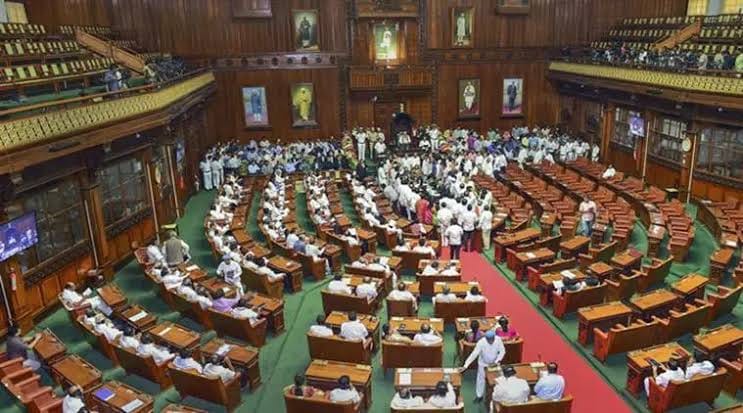
“Presiding Officers of the State Legislature play a crucial role in the functioning of the state legislature, ensuring that debates are conducted smoothly, rules are followed, and legislative processes are carried out effectively.” |
Deputy Speaker of Assembly
- Like the Speaker, Deputy Speaker is also elected by the assembly itself from amongst its members under Article 178 of the Constitution.
- He/She is elected after the election of the Speaker. Speaker remains in the office during the life of the assembly. However, has to vacate the office in the following cases:
- If he ceases to be a member of the assembly.
- If he resigns by writing to the Speaker.
- If removed by an effective majority (Majority of all the then membership of the assembly)
- Such a resolution can be moved only after giving 14 days’ advance notice.
- The Deputy Speaker performs the duties of the Speaker when the Speaker’s Office is vacant. He also presides over the assembly in the absence of the Speaker.
- When he presides over the assembly in the absence of the Speaker, he has the same powers as the Speaker.
- He is directly responsible to the assembly and not subordinate to the speaker.
- The speaker nominates a panel of chairman from among the members of assembly to preside over the assembly in the absence of the Speaker or the Deputy Speaker.
Chairman of the Legislative Council
- Chairman is elected by the council itself from amongst its members under Article 182 of the Constitution.
- Chairman remains in office during the life of the Council. However, has to vacate the office in the following cases:
- If he ceases to be a member of the council.
- If he resigns by writing to the Deputy Chairman.
- If removed by an effective majority (Majority of all the then membership of the council)
- Such a resolution can be moved only after giving 14 days’ advance notice.
- The powers and functions of the Chairman in the council are similar to those of the Speaker in the assembly. However, the Speaker enjoys one special power ie. his decision on money bill is final and beyond judicial review.
Deputy Chairman of the Legislative Council
- Like the Chairman, Deputy Chairman is elected by the council itself from amongst its members under Article 182 of the Constitution.
- Deputy Chairman remains in office during the life of the Council. However, has to vacate the office in the following cases:
- If he ceases to be a member of the council.
- If he resigns by writing to the Chairman.
- If removed by an effective majority (Majority of all the then membership of the council)
- Such a resolution can be moved only after giving 14 days’ advance notice.
- The Deputy Chairman performs the duties of the Chairman when the Chairman’s Office is vacant. He also presides over the council in the absence of the Chairman.
- When he presides over the council in the absence of the Chairman, he has the same powers as the Chairman.
- The Chairman nominates a panel of vice-chairman from among the members of the council to preside over the council in the absence of the Chairman or the Deputy Chairman.
- Under Article 186, the Salaries and allowances of the Speaker and Deputy Speaker and the Chairman and Deputy Chairman are determined by the State Legislature. They are charged on the Consolidated Fund of the State and thus are not subject to the annual vote of the state legislature.
Issues with the office of the Speaker
- Party Affiliation: Speakers are elected from political parties, raising concerns about their impartiality as they may prioritize party interests over parliamentary neutrality.
- Anti-defection Law: Criticisms arise when Speakers disqualify members under anti-defection laws, with allegations of bias towards ruling parties. Eg. Karnataka MLAs disqualification case 2019, Manipur MLA disqualification case 2020.
- Discretionary Powers: Speakers wield significant discretion, such as determining bills as money bills, leading to controversies like the Aadhar bill being passed as a money bill, raising questions about procedural integrity.
- Limited Accountability: Decisions of the Speaker are final and not subject to appeal or review, limiting mechanisms for challenging potentially biased or erroneous rulings.
- Disruptions and Punishments: Frequent disruptions in proceedings lead to accusations of biased allocation of time and harsher punishments against opposition members, undermining the Speaker's perceived impartiality and effectiveness in maintaining order.
Important Judgements Regarding the Office of Speaker
| Case | Summary |
|---|---|
| Kihoto Hollohan v. Zachillhu & Ors Case (1992) | The Supreme Court upheld the anti-defection law and ruled that the decision of the Speaker/Chairman on disqualification under the Tenth Schedule is subject to judicial review. |
| Nabam Rebia Case (2016) | SC held that the speaker or deputy speaker facing the notice of removal cannot decide the cases of disqualification of legislators. |
| Keisham Meghachandra Singh vs. Speaker of Manipur Legislative Assembly (2020) | The Supreme Court suggested the appointment of an independent tribunal to substitute the Speaker of the Lok Sabha and Legislative Assemblies in handling matters of disqualifications under the Tenth Schedule. |
Conclusion
Presiding Officers of State Legislatures hold a crucial position in the functioning of democratic governance. Their role extends beyond merely chairing sessions; they are entrusted with upholding parliamentary rules, ensuring decorum during debates, and facilitating the legislative process. These officers are instrumental in maintaining the sanctity of legislative proceedings, promoting fairness, and fostering consensus-building among diverse political representatives.
FAQs
Question: Who is the presiding officer of a state legislature in India?
Answer: The presiding officer of a state legislature is known as the Speaker in the Vidhan Sabha (Legislative Assembly) and the Chairman in the Vidhan Parishad (Legislative Council). The Speaker is elected by the members of the Vidhan Sabha from among themselves, while the Chairman is the Vice Governor or an elected member in case of the Vidhan Parishad. Their primary role is to maintain order during proceedings and ensure the smooth functioning of the legislature.
Question: What are the main functions of the presiding officer in a state legislature?
Answer: The presiding officer has several key functions, including maintaining decorum and discipline in the house, deciding on points of order, conducting votes, and ensuring that the rules of procedure are followed. They also represent the state legislature in all external matters and may play a crucial role in facilitating discussions and negotiations among members. Additionally, the presiding officer has the authority to manage the legislative agenda and oversee debates on bills and motions.
Question: How does the presiding officer contribute to the legislative process?
Answer: The presiding officer plays a pivotal role in the legislative process by guiding the discussions and ensuring that all voices are heard in debates. They are responsible for allocating time for various discussions and managing the legislative agenda. Their impartiality is crucial in ensuring fair proceedings, as they must rule on the admissibility of motions and amendments. Furthermore, they have the power to adjourn sessions if necessary to maintain order and decorum in the house.
Question: In what ways can the presiding officer impact the functioning of the state legislature?
Answer: The presiding officer can significantly impact the functioning of the state legislature through their leadership style and decision-making. A presiding officer who promotes transparency and inclusivity can enhance the legislative process and foster collaboration among members. Conversely, a presiding officer who is perceived as biased may lead to tensions and conflicts within the legislature. Their ability to manage debates effectively and maintain a balanced environment is vital for the overall health of the democratic process within the state.
Question: What are the eligibility criteria to become a presiding officer in a state legislature?
Answer: To be eligible for the position of presiding officer, a candidate must be a member of the state legislature. For the Speaker of the Vidhan Sabha, they must be elected from among the members of the assembly. In the case of the Chairman of the Vidhan Parishad, they are typically the Vice Governor. Additionally, the candidates must meet the general qualifications required for membership in the legislature, such as age and citizenship criteria as outlined in the Constitution of India.
MCQs
1. Who serves as the presiding officer of the Vidhan Sabha?
A) Governor
B) Chief Minister
C) Speaker
D) Leader of Opposition
Answer: See the Explanation
Explanation: The Speaker serves as the presiding officer of the Vidhan Sabha, overseeing the legislative proceedings and maintaining order.
2. Which of the following is a primary responsibility of the presiding officer?
A) Formulating laws
B) Maintaining order in the house
C) Representing the executive
D) Appointing ministers
Answer: See the Explanation
Explanation: Maintaining order in the house is a primary responsibility of the presiding officer, ensuring that proceedings run smoothly.
3. How is the Speaker of the Vidhan Sabha chosen?
A) Appointed by the Governor
B) Elected by the members of the Vidhan Sabha
C) Nominated by the Chief Minister
D) Elected through a public vote
Answer: See the Explanation
Explanation: The Speaker of the Vidhan Sabha is elected by the members of the Vidhan Sabha from among themselves.
4. What power does the presiding officer have during legislative debates?
A) To veto bills
B) To allocate time for discussions
C) To dismiss members
D) To amend the Constitution
Answer: See the Explanation
Explanation: The presiding officer has the power to allocate time for discussions and manage the legislative agenda during debates.
5. What is the role of the Chairman of the Vidhan Parishad?
A) To conduct the sessions of the Vidhan Parishad
B) To act as the Chief Minister
C) To represent the legislative assembly
D) To advise the Governor
Answer: See the Explanation
Explanation: The Chairman of the Vidhan Parishad conducts the sessions of the Vidhan Parishad and maintains order during proceedings.
GS Mains Questions and Model Answers
Q1: Discuss the functions and powers of the presiding officer in a state legislature and their impact on legislative proceedings.
Answer: The presiding officer in a state legislature plays a crucial role in maintaining order and ensuring that legislative proceedings are conducted smoothly. Their primary functions include managing debates, deciding on points of order, and overseeing the legislative agenda. By promoting fairness and impartiality, the presiding officer facilitates discussions that allow diverse viewpoints to be heard. This can significantly impact the quality of legislative debates and the effectiveness of governance. An efficient presiding officer can enhance the overall functionality of the legislature, ensuring that it operates as a vital organ of democracy.
Q2: Analyze the significance of the Speaker and Chairman in the context of state governance.
Answer: The Speaker of the Vidhan Sabha and the Chairman of the Vidhan Parishad hold pivotal positions within the state governance framework. Their roles are significant as they represent the legislative authority of the state and ensure that the legislative process adheres to the principles of democracy. The Speaker, elected by assembly members, has the responsibility to guide discussions, manage legislative business, and maintain decorum. Similarly, the Chairman oversees the workings of the council, ensuring that discussions remain productive and orderly. Their leadership is essential for facilitating effective governance and promoting accountability in the legislative process.
Q3: Evaluate the challenges faced by presiding officers in managing legislative proceedings.
Answer: Presiding officers often face several challenges in managing legislative proceedings, including maintaining impartiality in politically charged environments and addressing conflicts among members. The need to balance differing opinions while ensuring that debates remain constructive can be difficult. Additionally, presiding officers must navigate the complexities of legislative rules and procedures, which may sometimes lead to disputes over points of order. Effective communication and negotiation skills are crucial in overcoming these challenges, enabling presiding officers to uphold the integrity of the legislative process while fostering a collaborative atmosphere.
Previous Year Questions on the Role of Presiding Officers
1. UPSC CSE Prelims 2020:
Question: What is the primary role of the Speaker of the Vidhan Sabha?
A) To appoint ministers
B) To manage the legislative proceedings
C) To advise the Governor
D) To lead the opposition
Answer: (B)
Explanation: The primary role of the Speaker of the Vidhan Sabha is to manage the legislative proceedings, ensuring order and fairness during debates.
2. UPSC CSE Mains 2019 (GS Paper 1):
Question: "Assess the importance of the presiding officers in the state legislative assemblies and councils." Discuss with examples.
Answer: The presiding officers in state legislative assemblies and councils are critical to the functioning of democracy. They ensure that the legislative process is conducted efficiently and transparently. For example, the Speaker's role in facilitating discussions and allowing members to express their views contributes to the overall quality of governance. Moreover, their authority to maintain decorum helps prevent disruptions, allowing the legislature to operate effectively. This is particularly important in times of political contention, where their impartiality can uphold the democratic process.
*email: contactus@prepp.in
Download the PREPP App and attempt FREE IAS Exam Mock Tests and get complete study material!

Full Test - 04: UPSC CSE Prelims CSAT (Paper-II)
Full Test - 03: UPSC CSE Prelims CSAT (Paper-II)
UPSC CSE Prelims 2026 GS Paper 1 Question Paper (24-May-2026)
UPSC CSE Prelims 2026 CSAT Paper 2 Question Paper (24-May-2026)

17 February 2025 | The Hindu Must Read Articles | Current Affairs

16 February 2026 | The Hindu Must Read Articles | Current Affairs

13 February 2026 | The Hindu Must Read Articles | Current Affairs









Comments