Comparison Between Legislative Assembly and Legislative Council - Indian Polity Notes
Comparison between Legislative Assembly and Legislative Council is a very crucial topic for UPSC examination.
The Legislative Assembly and Legislative Council are called as lower and upper house of the State Legislature respectively. Members of the Legislative Assembly are elected directly whereas the members of the Legislative Council are elected indirectly. In some states, where there is a bicameral legislature, the Legislative Council acts as a revising chamber.
|
Table of Contents |
Legislative Council is not an essential part of the state legislature, as per the Constitution. Not all states have a Legislative Council. The creation or abolition of the Council is subject to the resolution of the state legislature and the Parliament. At present six states have a Legislative Council. These are Andhra Pradesh, Telangana, Uttar Pradesh, Bihar, Maharashtra, Karnataka.
|
“The key distinction between the Legislative Assembly and the Legislative Council is one is directly elected and holds primary legislative power whereas the other is indirectly elected or partially nominated, representing specific interests within the state.” |
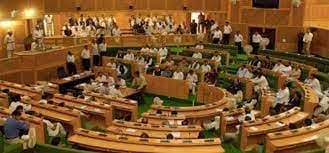
Constitutional Provisions Regarding State Legislative Assembly and State Legislative Council
- Article 168 of the Indian Constitution provides that the Legislature of every State consists of the Governor and one or two Houses.
- The Legislative Councils are stated under Article 171 of the Indian Constitution.
- The Legislative Council of each State elects its Chairman and Deputy Chairman from amongst its members
Legislative Assembly
- The Legislative Assembly in a State is the popular House of the State.
- The Speaker is the Chief Presiding Officer of the Legislative Assembly of a State. He is elected by the members of the Assembly amongst themselves.
- The Deputy Speaker shall officiate whenever the Speaker is absent or while the office of Speaker is vacant. But if the office of the Deputy Speaker is also vacant, the duties of the office of the Speaker are performed by such members of the assembly as the Governor may appoint for the purpose.
- According to the principle of the universal adult franchise, members of the Legislative Assembly are elected directly by the people on the basis of adult franchise from territorial constituencies in the State.
Composition of Legislative Assembly
The total number of Members of Legislative Assembly in the State Assembly cannot exceed 500 and should not be less than 60.
Exception: Assembly of Mizoram and Goa should have only 40 members each.
- The centre has fixed a lesser number of members for small states.
- In the Legislative Assembly a State seat is reserved for the Schedule Caste, Schedule Tribes on the basis of population.
Duration of Legislative Assembly
- The normal tenure of the Legislative Assembly of every State is of five years but it may be dissolved earlier by the Governor. The Constitution 42nd Amendment Act, 1976 had extended the term of the legislative assembly of States from five years to six years.
- The 44th Amendment Act, 1978 restored the term of the State Legislative Assemblies to five years.
- During the national emergency the life of the Assembly may be extended by an Act of Parliament for a period of not more than one year at a time, but in no case beyond a period of six months after the proclamation has ceased to operate.
Qualification to be a member in State Legislature
- A person must be a citizen of India.
- A person must not be less than 25 years of age in the case of the Legislative Assembly and not less than 30 years in the case of the Legislative Council.
- A person must possess such other qualifications as may be prescribed by Parliament by law.
Disqualification of a member of State Legislature
- Article 191 provides that a person is disqualified for being chosen as a member of the State Legislature of a State:
- If he holds any office of profit under the Central or State Government.
- If he is of unsound mind.
- If he is an undischarged insolvent.
- If he is not a citizen of India or has voluntarily acquired the citizenship of a foreign State or is under any acknowledgement of allegiance or adherence to a foreign State.
- If he is disqualified under any law of Parliament.
- If any question arises as to whether a member of a House of the Legislative of a State has become a subject to any of the disqualification mentioned above, the question shall be referred for the decision of the Governor and his decision is final.
- Article 192 (2) states that “before giving any decision on any such question, the Governor should obtain the opinion of the Election Commission of India and must act according to such opinion.”
Sessions of the State Legislature
- According to Article 174 the Governors shall from time to time summon the Legislature to meet at such time and place as he thinks fit. But six months should not intervene between its last sitting in one session and the date appointed for its sitting in the next session.
- This means that the legislature must meet at least twice a year.
- The Governor may from time to time prorogue the either House or dissolve the legislative assembly.
Formation and Abolition of Legislative Council
- According to Article 169, Parliament may by law approve for the abolition of the Legislative Council in a State where it already exists or for the creation of such a Council in a State having no such council.
- If the Legislative Assembly of the State passes a resolution to that effect by a majority of total membership of the Assembly and by a majority of not less than 2/3rd of the members of the Assembly present and voting.
- Parliament approved the resolution by simple majority.
- A resolution passed by the Legislative Assembly of the State for the creation or abolition of its Council is not binding on the Parliament. Parliament may or may not approve such a resolution.
Composition of Legislative Council
- The total number of members in the Legislative Council of a State having such a council should not exceed one-third of the total members in the state Legislative Assembly of that State.
- But the total number of members in the Legislative Council should not be less than 40 in any case. There can be exceptions in the composition of Vidhan Parishad.
The composition of the Legislative Council is as follows - Of the total number of members in the Legislative Council of a State:
|
Duration of Legislative Council
- Like the Rajya Sabha, the legislative council is a permanent body and is not subject to dissolution. The tenure of a Member of the Legislative Council is six years, with one-third of the members retiring every two years.
- The retiring members are also eligible for re-election and re-nomination any number of times.
Difference Between Legislative Council And Legislative Assembly
| Basis for Comparison | Legislative Assembly | Legislative Council |
|---|---|---|
| Position in State Legislature | The Legislative Assembly is a lower chamber in the State Legislature. | The Legislative Council is an upper chamber in the State Legislature. |
| Presiding Officer | Speaker | Chairman |
| Minimum Age | 25 Years | 30 Years |
| Term of a member | 5 years | 6 years |
| Election Process | Direct election | Indirect election |
| Tenure | Temporary (5 Years if they have majority) | Permanent Chamber |
| Present in States | It is present in all the states of India | Only in six States in India |
| Strength | The maximum strength is 500 members, and the minimum strength is 60 members. | The total number of members in the Legislative Council of a State having such a council should not exceed one-third of the total members in the state Legislative Assembly of that State. But the total number of members in the Legislative Council should not be less than 40. |
Conclusion
Overall, the key distinction is that the Legislative Assembly is directly elected and holds primary legislative power, while the Legislative Council is an indirectly elected or partially nominated body that acts as a revising chamber and represents specific interests within the state.
FAQs
Question: What is the difference between the Legislative Assembly and Legislative Council in India?
Answer: The Legislative Assembly and the Legislative Council are both essential components of a State Legislature in India, but they differ in their composition, powers, and functions:
- The Legislative Assembly (Vidhan Sabha) is the lower house, directly elected by the people of the state through general elections. It has more legislative powers, such as introducing and passing laws, approving the state budget, and controlling the executive through motions of confidence.
- The Legislative Council (Vidhan Parishad) is the upper house, similar to the Rajya Sabha at the national level. It is a revising chamber, composed of members elected by various methods, such as members of the Legislative Assembly, graduates, teachers, and local authority representatives. It has a limited role in law-making and is mainly responsible for reviewing and suggesting amendments to the bills passed by the Legislative Assembly.
Question: Which states in India have a Legislative Council?
Answer: Currently, only six states in India have a Legislative Council:
- Uttar Pradesh
- Bihar
- Maharashtra
- Karnataka
- Telengana
- West Bengal
Question: Can the Legislative Council reject a bill passed by the Legislative Assembly?
Answer: The Legislative Council does not have the power to reject a bill passed by the Legislative Assembly. It can only delay a bill for up to 14 days (for most bills) and suggest amendments. If the Legislative Assembly chooses to ignore the amendments or recommendations made by the Council, it can pass the bill again without considering them. The Legislative Council acts primarily as a revising chamber and does not have veto power over the legislation passed by the Legislative Assembly.
Question: What are the qualifications for a person to become a member of the Legislative Assembly?
Answer: To become a member of the Legislative Assembly, a person must fulfill the following criteria:
- They must be a citizen of India.
- They must be at least 25 years of age.
- They should not be disqualified by any law from being elected, such as being convicted of certain criminal offenses or holding an office of profit under the government.
- They must be elected directly by the people of the state through the system of direct elections (single-member constituencies).
Question: What is the role of the Legislative Assembly in controlling the state government?
Answer: The Legislative Assembly plays a crucial role in controlling the state government in the following ways:
- Motion of Confidence: The assembly has the power to pass a motion of confidence or no-confidence against the government. If the government loses a vote of confidence, it must resign, and new elections may be called.
- Budget Approval: The Legislative Assembly approves the state budget, which outlines the government's financial plans for the year. This is a significant check on the executive branch.
- Legislative Oversight: Through various committees and debates, the assembly scrutinizes the actions of the executive and ensures accountability. Members can question the ministers and demand explanations for government policies and expenditures.
MCQs
1. Which of the following states does NOT have a Legislative Council?
A) Maharashtra
B) Bihar
C) Punjab
D) Karnataka
Answer: (C) See the Explanation
Explanation: Punjab does not have a Legislative Council. Only six states in India—Uttar Pradesh, Bihar, Maharashtra, Karnataka, Telangana, and West Bengal—have a Legislative Council.
2. Who is eligible to become a member of the Legislative Assembly?
A) Must be at least 30 years of age
B) Must be a citizen of India
C) Must be appointed by the governor
D) Must be a graduate
Answer: (B) See the Explanation
Explanation: To become a member of the Legislative Assembly, one must be a citizen of India, at least 25 years old, and elected directly by the people in state elections. Graduate qualifications are not required for Legislative Assembly members.
3. Which house of the State Legislature is directly elected by the people?
A) Legislative Council
B) Legislative Assembly
C) Rajya Sabha
D) Lok Sabha
Answer: (B) See the Explanation
Explanation: The Legislative Assembly (Vidhan Sabha) is directly elected by the people of the state through general elections, whereas the Legislative Council (Vidhan Parishad) is a revising chamber and is not directly elected by the public.
4. What is the maximum period for which the Legislative Council can delay a bill passed by the Legislative Assembly?
A) 6 months
B) 14 days
C) 30 days
D) 1 month
Answer: (B) See the Explanation
Explanation: The Legislative Council can delay a bill passed by the Legislative Assembly for a maximum of 14 days. It can suggest amendments to the bill, but it does not have the power to reject the bill.
5. Which of the following is NOT a function of the Legislative Assembly?
A) Passing laws
B) Approving the state budget
C) Reviewing bills passed by the Council
D) Ensuring accountability of the executive
Answer: (C) See the Explanation
Explanation: The Legislative Assembly does not review bills passed by the Legislative Council; rather, it directly passes laws and controls the state government through budget approval and motions of confidence or no-confidence.
GS Mains Questions and Model Answers
Q1: Discuss the role of the Legislative Assembly in the state legislature. How does it differ from the Legislative Council?
Answer: The Legislative Assembly is the lower house of the State Legislature, where members are directly elected by the people. It plays a significant role in law-making, as it introduces, debates, and passes bills, including the state budget. It has the power to check the actions of the executive through the motion of confidence, making it more powerful than the Legislative Council. The Legislative Council, on the other hand, is a revising chamber that is indirectly elected, often composed of representatives from local authorities, graduates, and teachers. It reviews and suggests amendments to bills passed by the Legislative Assembly but does not have the same legislative powers as the Assembly.
Q2: How does the Legislative Council contribute to the functioning of the State Legislature in India? Discuss its powers and limitations.
Answer: The Legislative Council contributes to the functioning of the State Legislature primarily through its revising role. It can delay bills passed by the Legislative Assembly, suggest amendments, and provide a check on the Assembly’s decision-making. However, the powers of the Council are limited. It does not have the power to reject bills outright and can delay legislation only for a limited period (usually 14 days). Its function is more consultative and advisory, ensuring that a broader range of perspectives is considered before legislation becomes law.
Q3: Examine the impact of the bicameral legislature on the governance of a state in India. Is the Legislative Council necessary in all states?
Answer: A bicameral legislature, with both a Legislative Assembly and a Legislative Council, allows for a more thorough review of laws, promoting careful deliberation. It provides an opportunity for the expertise of non-elected members to influence legislation, ensuring that laws are balanced and well-considered. However, the necessity of the Legislative Council is debated, as some states function effectively with just a Legislative Assembly. The Council's role is limited, and in many cases, it serves as an additional layer of governance that may not always justify its cost. States like Punjab, which lack a Legislative Council, have managed effectively with only an Assembly, indicating that the Council is not essential for all states.
Previous Year Questions on Legislative Assembly and Council
1. UPSC CSE Prelims 2020:
Question: Which of the following states has a bicameral legislature consisting of both a Legislative Assembly and a Legislative Council?
A) Gujarat
B) Bihar
C) Odisha
D) Kerala
Answer: (B)
Explanation: Bihar has a bicameral legislature consisting of a Legislative Assembly and a Legislative Council. Other states like Gujarat and Kerala have a unicameral legislature with only a Legislative Assembly.
2. UPSC CSE Mains 2021 (GS Paper 2):
Question: Discuss the significance of having a Legislative Council in a state legislature. How does it enhance the democratic process?
Answer: A Legislative Council plays a vital role in enhancing the democratic process by providing a forum for the review of laws passed by the Legislative Assembly. It ensures that bills are thoroughly scrutinized, and alternative perspectives are considered, thus preventing hasty and ill-conceived legislation. The Council brings in experienced individuals, including educationists, lawyers, and professionals, to provide expert input into the legislative process. While it does not have veto power, its function as a revising chamber ensures better governance and accountability. Its existence strengthens the democratic principle of separation of powers and promotes checks and balances in state governance.
*email: contactus@prepp.in
Download the PREPP App and attempt FREE IAS Exam Mock Tests and get complete study material!
UPSC IAS : CSAT - Mini Live Test

Live Test : UPSC CSE Prelims CSAT (Paper-II) (Oct 20 - 23)
Full Test - 04: UPSC CSE Prelims CSAT (Paper-II)
Full Test - 03: UPSC CSE Prelims CSAT (Paper-II)
UPSC CSE Prelims 2026 GS Paper 1 Question Paper (24-May-2026)
UPSC CSE Prelims 2026 CSAT Paper 2 Question Paper (24-May-2026)

17 February 2025 | The Hindu Must Read Articles | Current Affairs

16 February 2026 | The Hindu Must Read Articles | Current Affairs

13 February 2026 | The Hindu Must Read Articles | Current Affairs









Comments