Green Coal - Environment Notes
Green Coal is an eco-friendly coal briquettes made from wasted fine coal, bio-char, and unique chemical binders. It is seen as a sustainable alternative to traditional coal since it combines agricultural waste. Green Coal provides an effective technology for greener coal gasification, making it perfect for use in power generation and other industrial steam raising applications. This article explains about the Green Coal which is important for UPSC IAS exam preparation.
Table of Contents
What is Green Coal?
- Green coal, also known as bio-coal, is an environmentally beneficial alternative to fossil fuels manufactured from waste materials such as agricultural residue and municipal solid waste (MSW).
- One of the primary advantages of green coal is that it minimises CO2 emissions.
- Green coal has gained popularity owing to its capacity to replace coal for energy and so reduce CO2 emissions from coal burning.
- It is claimed that substituting one kilogramme of coal with the equivalent amount of green coal will reduce CO2 emissions by two kilogrammes.
- This is an important step towards lowering the carbon footprint of businesses that rely on fossil fuels, such as thermal power plants, petrochemical refineries, cement factories, and so on.
- The National Thermal Power Corporation's Vidyut Vyapar Nigam Limited (NVVNL) has opened a commercial 'green coal' facility in Varanasi, Uttar Pradesh, to create green coal or torrefied charcoal from garbage.
- This is India's first attempt to create green coal from agricultural waste and municipal solid waste (MSW).
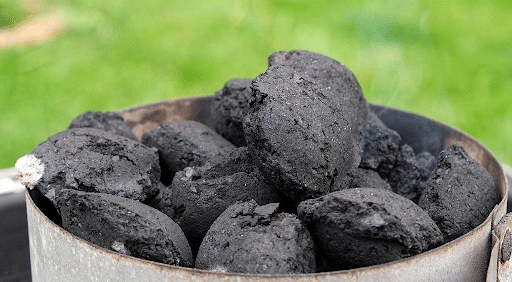
Production of Green Coal
- Green coal manufacturing from municipal solid waste (MSW) entails operations such as sorting, mixing, and heating.
- The first step is to turn raw garbage into refuse-derived fuel (RDF).
- This is followed by thermal treatment of the waste within a 'charcoal reactor' at a temperature of 200-300°C, resulting in the creation of a solid fuel with qualities comparable to conventional coal.
- The reaction within the reactor is said to be reasonably simple and cost-effective because no additives or hazardous operations are required. It is far more efficient than conventional coal-burning technologies.
- A sieve is used to clean the charcoal that has been created. In a mixer, the cleansed charcoal is blended with specific amounts of binder and water.
- The mixture is then placed through a pelletising process, which generates the final product, 'Green Coal'.
Green Coal - Significance
- Cost-effective: Green coal is a renewable resource, thus it doesn't have the same supply chain problems and price volatility as fossil fuels.
- It is manufactured from waste products including municipal solid waste and agricultural leftovers, making it a more affordable option than fossil coal, which is getting more and more expensive.
- Less expenses for transportation: Local production of green coal eliminates the need for long-distance transportation.
- This lowers the cost of transportation and lowers the amount of carbon emissions generated by it. Because it is a solid fuel that can be stored and delivered in quantity, it is also simple to store and transport.
- Cleaner combustion: Green coal burns more cleanly than fossil coal because it contains less sulphur.
- This indicates that it creates less pollutants, like sulphur dioxide and particulate matter, when it is burned.
- Better waste management: Making green coal offers a long-term answer to waste management.
- It enables the recycling of waste products into useful energy sources, cutting down on the quantity of garbage dumped in landfills, etc.
- Utilisation of non-biodegradable components: Plastics, such as bottles and cans, now make up a larger portion of MSW and take hundreds of years to disintegrate.
- Since it is completely broken down into volatile stuff during this process, it provides a quick fix.
- Enhanced energy security: Thermal power plants and industry may lessen their reliance on fossil fuels, which are limited resources, by employing green coal.
- This might increase energy security and offer a more steady supply of electricity.
- Reduced environmental impact: Compared to fossil coal, green coal has a smaller carbon footprint and emits less pollutants.
- Green coal made from MSW emits no hazardous pollutants and decreases greenhouse gas emissions.
Conclusion
Green coal, also known as bio-coal, is a low-polluting alternative to traditional coal since it blends agricultural waste and municipal solid waste. Green coal has gained appeal due to its ability to substitute coal as an energy source and so reduce CO2 emissions from coal combustion. Local green coal production avoids the need for long-distance transportation. Vidyut Vyapar Nigam Limited (NVVNL), a subsidiary of the National Thermal Power Corporation, has constructed a commercial 'green coal' operation in Varanasi.
FAQs
Question: What is Green Coal?
Answer: Green coal is an alternative fuel derived from renewable sources that mimic the properties of traditional coal. It is produced through the process of biomass conversion, which includes organic materials like agricultural waste, wood chips, or even algae. Unlike traditional coal, green coal is carbon-neutral, as it absorbs CO2 during the growth phase of the biomass used in its production, making it a sustainable energy source for the future.
Question: How is green coal produced?
Answer: Green coal is typically produced through a process called "torrefaction," which involves heating biomass (such as wood, agricultural residues, or other organic waste) in an oxygen-deprived environment. This process transforms the biomass into a high-energy, solid fuel similar to coal but with lower sulfur content and reduced greenhouse gas emissions. The product is a sustainable and clean alternative to traditional coal.
Question: What are the environmental benefits of using green coal?
Answer: Green coal offers several environmental benefits over traditional coal. It produces significantly lower carbon emissions and reduces dependence on fossil fuels. As a biomass-based fuel, it is considered carbon-neutral because the plants used to create green coal absorb CO2 during their growth cycle. Moreover, it helps mitigate environmental degradation caused by coal mining and reduces air pollution.
Question: Can green coal be used for large-scale energy production?
Answer: Yes, green coal can be used for large-scale energy production. It can be blended with traditional coal in power plants, enabling them to reduce their carbon footprint while maintaining energy production levels. Green coal can also be used in standalone biomass power plants to generate electricity and heat, providing a renewable energy source to complement conventional energy systems.
Question: What are the challenges in scaling up green coal production?
Answer: Scaling up green coal production presents several challenges, including the cost of technology, the need for large quantities of biomass feedstock, and competition with other renewable energy sources like solar and wind. Additionally, there are logistical issues related to biomass collection, transportation, and storage. Government support, along with advancements in biomass conversion technologies, is essential to make green coal a viable and widespread energy source.
MCQs
1. What is the primary advantage of using green coal over traditional coal?
A) Higher energy output
B) Lower sulfur content
C) Lower production cost
D) Increased carbon emissions
Answer: (B) See the Explanation
Explanation: Green coal has lower sulfur content compared to traditional coal, making it a cleaner fuel alternative. This helps reduce air pollution and harmful emissions when it is used for energy production.
2. Which process is used to produce green coal from biomass?
A) Pyrolysis
B) Torrefaction
C) Hydration
D) Gasification
Answer: (B) See the Explanation
Explanation: Torrefaction is the process used to produce green coal from biomass. This involves heating the biomass in an oxygen-deprived environment, which alters its chemical structure and increases its energy density, making it a viable fuel alternative.
3. Which of the following is a key environmental benefit of green coal?
A) Increased air pollution
B) Carbon-neutral status
C) Increased dependence on fossil fuels
D) Depletion of renewable resources
Answer: (B) See the Explanation
Explanation: Green coal is considered carbon-neutral because the plants used to create it absorb carbon dioxide during their growth phase. This reduces the net carbon emissions when the fuel is burned, making it an environmentally friendly alternative to traditional coal.
4. Which of the following is a challenge in scaling up green coal production?
A) Overabundance of biomass
B) High production costs
C) Lack of government support
D) Excessive carbon emissions
Answer: (B) See the Explanation
Explanation: One of the main challenges in scaling up green coal production is the high cost of technology and production. The infrastructure required for converting biomass into green coal can be expensive, and economies of scale are necessary to make the process cost-effective.
5. Green coal is produced from which of the following sources?
A) Fossilized wood
B) Agricultural waste and organic materials
C) Petroleum products
D) Coal reserves
Answer: (B) See the Explanation
Explanation: Green coal is produced from renewable biomass sources such as agricultural waste, wood chips, or other organic materials. This makes it a more sustainable and eco-friendly alternative to traditional fossil fuels like coal.
GS Mains Questions and Model Answers
Q1: Discuss the potential of green coal as an alternative energy source. What are its advantages and challenges?
Answer: Green coal is an emerging alternative energy source made from biomass such as wood, agricultural residues, or algae. The key advantages of green coal include its carbon-neutral status, lower sulfur content, and potential to reduce greenhouse gas emissions when compared to traditional coal. It can also reduce reliance on fossil fuels and help transition to more sustainable energy systems. However, challenges such as high production costs, limited feedstock availability, and competition with other renewable energy sources like solar and wind need to be addressed to make green coal a viable large-scale energy solution. Technological advancements and government support will play crucial roles in overcoming these challenges.
Q2: How does green coal contribute to achieving environmental sustainability goals? Explain the role of this energy source in reducing carbon emissions.
Answer: Green coal contributes significantly to environmental sustainability by reducing the carbon emissions associated with traditional coal. Since green coal is made from biomass, it is considered carbon-neutral. The carbon dioxide released during combustion is offset by the carbon absorbed by the plants during their growth phase. This reduces the net emissions and helps in combating climate change. Additionally, green coal does not require extensive mining, unlike traditional coal, thus reducing environmental degradation. When used in power plants, green coal can complement other renewable energy sources, further promoting sustainability.
Q3: What are the technological and logistical barriers in scaling up green coal production, and how can these be overcome?
Answer: Technological and logistical barriers to scaling up green coal production include high costs associated with the biomass conversion process, challenges in sourcing sufficient feedstock, and the need for specialized infrastructure for biomass collection and processing. To overcome these barriers, technological innovations that lower production costs are essential. Additionally, improving biomass collection and transportation systems through better infrastructure and fostering partnerships between the public and private sectors can help meet the demand. Government incentives and policies promoting the use of green coal will also be crucial in overcoming these challenges and ensuring large-scale adoption.
Previous Year Questions on Green Coal
UPSC CSE Mains 2020:
Question: Critically evaluate the role of alternative fuels such as green coal in the context of India’s energy transition.
Answer: Green coal plays an important role in India’s energy transition by offering a cleaner alternative to traditional coal. It helps reduce carbon emissions, decreases dependency on fossil fuels, and promotes the use of renewable resources. However, the high cost of production, limited biomass availability, and logistical challenges need to be addressed to ensure its scalability. Policy support, technological advancements, and private sector involvement will be critical in overcoming these barriers and realizing the full potential of green coal in India’s energy mix.
Download the PREPP App and attempt FREE IAS Exam Mock Tests and get complete study material!

Full Test - 04: UPSC CSE Prelims CSAT (Paper-II)
Full Test - 03: UPSC CSE Prelims CSAT (Paper-II)
UPSC CSE Prelims 2026 GS Paper 1 Question Paper (24-May-2026)
UPSC CSE Prelims 2026 CSAT Paper 2 Question Paper (24-May-2026)

17 February 2025 | The Hindu Must Read Articles | Current Affairs

16 February 2026 | The Hindu Must Read Articles | Current Affairs

13 February 2026 | The Hindu Must Read Articles | Current Affairs









Comments