Food Crops - Agriculture Notes
Food crops are subsistence plants grown for human consumption. Fruits, vegetables, grains, and tubers such as potatoes are among them. Grains, which include crops such as wheat, rice, and corn, are the world's most popular crops, with wheat being the most widely grown crop overall. The country produces a variety of food crops. This article will explain to you about the Food crops which will be helpful in preparing the Agriculture Syllabus for the UPSC Civil Service exam.
|
Table of Contents |
What are Food Crops?
- The term "food crops" refers to the majority of the world's food supply derived from plants; a crop assumes human intervention via agriculture.
- Grains, legumes (including dried beans), seeds and nuts, vegetables, fruit, herbs and spices, beverage plants such as tea and coffee, and so on comprise the majority of food crops.
- Grains are an important source of food for humans. They are the majority of the population's staple food. Rice, wheat, maize, and barley are among them.
- Legumes and dried beans have a longer shelf life and are more cost effective.
- As a result, they can be used during times when food is scarce. They contain a lot of protein.
- Kidney beans, chickpeas, green peas, and peanuts are a few examples.
- Seeds and nuts are high in energy and a concentrated source of nutrition. Cashew, badam, pistachio, brazil nuts, and walnuts are examples of nuts.
- Herbs have a distinct flavour. These consist primarily of leaves, stems, flowers, roots, and seeds. For example, coriander leaf.
Major Food Crops
Rice
- It is the primary food crop for the vast majority of Indians. After China, our country is the world's second largest producer of rice.
- It is a kharif crop that demands high temperatures (over 25°C) and high humidity, as well as an annual rainfall of more than 100 cm.
- It grows with irrigation in locations with little rainfall. Rice is grown across the plains of north and north-eastern India, as well as along the coast and in deltaic areas.
- Rice can now be grown in areas with little rainfall, such as Punjab, Haryana, western Uttar Pradesh, and portions of Rajasthan, thanks to the development of a complex network of canal irrigation and tubewells.
- A few government initiatives to boost rice growing include the National Food Security Mission, Hybrid Rice Seed Production, and the Rashtriya Krishi Vikas Yojana.
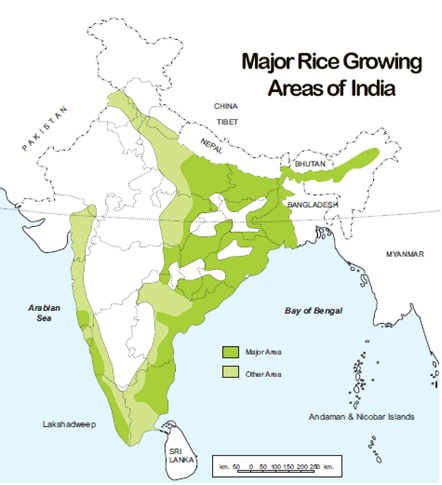
Rice Producing States
Wheat
- This is the second most important cereal crop in the world. It is the primary food crop in the country's north and northwestern regions.
- This rabi crop requires a mild growing season as well as bright sunlight during ripening.
- It requires 50 to 75 cm of yearly rainfall distributed uniformly throughout the growing season.
- The country has two main wheat-growing zones: the Ganga-Satluj plains in the northwest and the black soil region of the Deccan.
- Punjab, Haryana, Uttar Pradesh, Bihar, Rajasthan, and parts of Madhya Pradesh are the primary wheat-producing states.
- In north and northwestern India, this is the second most important cereal crop and the main food crop.
- The success of the Green Revolution contributed to the growth of Rabi crops, particularly wheat.
- Few government initiatives to support wheat cultivation include the Macro Management Mode of Agriculture, the National Food Security Mission, and the Rashtriya Krishi Vikas Yojana.
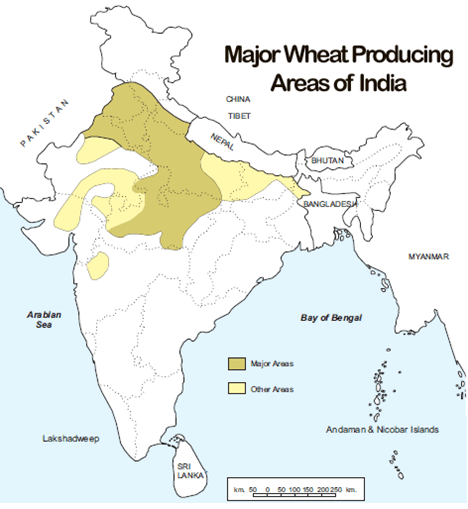
Wheat Producing States
Millets
- In India, the most important millets are jowar, bajra, and ragi. Despite the fact that these are classified as coarse grains, they offer a high nutritious value.
- Ragi, for example, is high in iron, calcium, other micronutrients, and roughage. In terms of acreage and production, jowar is the third most important food crop.
- It is a rain-fed crop that is mostly grown in damp locations and does not require irrigation.
- The major Jowar producing states are Maharashtra, Karnataka, Andhra Pradesh, and Madhya Pradesh.
- Bajra thrives in sandy and shallow dark soils. The major Bajra producing states were Rajasthan, Uttar Pradesh, Maharashtra, Gujarat, and Haryana.
- Ragi is a dry-land crop that grows best in red, black, sandy, loamy, and shallow black soils.
- Karnataka, Tamil Nadu, Himachal Pradesh, Uttarakhand, Sikkim, Jharkhand, and Arunachal Pradesh are the major ragi producing states.
- Government attempts to encourage millet production include the National Agricultural Insurance Scheme and the Initiative for Nutritional Security through Intensive Millets Promotion.
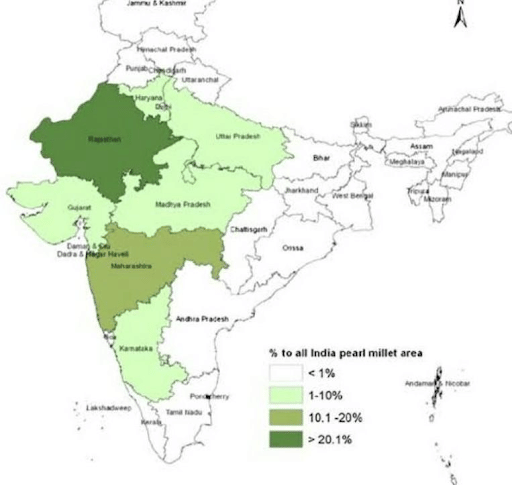
Millet Producing States
Maize
- It is a crop that is utilised for both food and fodder.
- It is a kharif crop that grows well in old alluvial soil and requires temperatures ranging from 21°C to 27°C.
- Maize is farmed in some places, like Bihar, during the rabi season as well.
- Karnataka, Uttar Pradesh, Bihar, Andhra Pradesh, Telangana, and Madhya Pradesh are the major maize-producing states.
- The use of contemporary inputs such as High-Yielding Variety seeds, fertilisers, and irrigation has helped to increase maize yield.
- One of the government's maize efforts is the Maize Technology Mission.
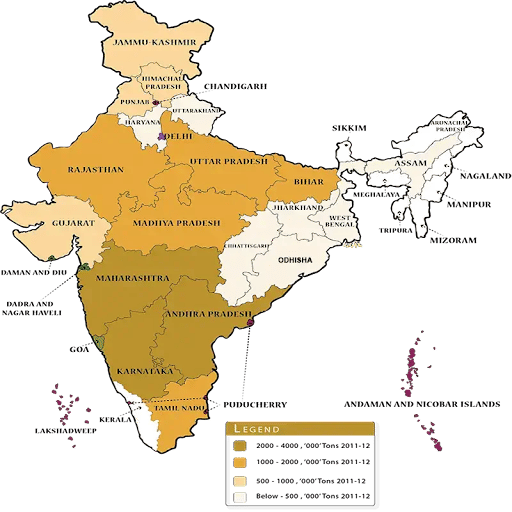
Maize Producing States
Pulses
- India is both the world's greatest producer and consumer of pulses. In a vegetarian diet, this is the main source of protein.
- Tur (arhar), urad, moong, masur, peas, and gramme are the major pulses farmed in India.
- All of these crops, with the exception of arhar, are leguminous crops that help restore soil fertility by fixing nitrogen from the air. As a result, they are typically planted in rotation with other crops.
- Among the government's programmes to encourage pulse production are the National Food Security Mission for Pulses, the Pulses Development Scheme and the Technological Mission on Pulses.
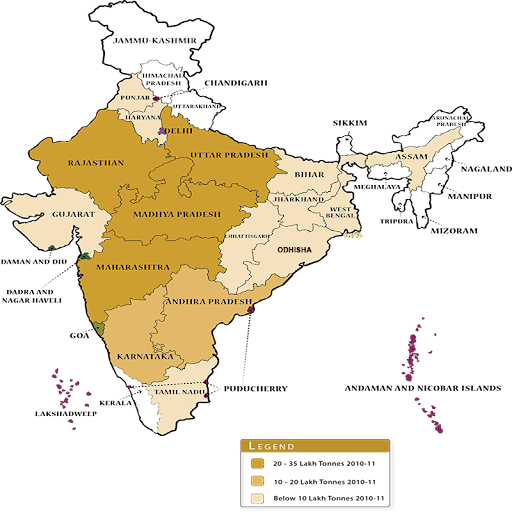
Pulses Producing States
Significance of Food crops
- The first crops harvested through agriculture were food crops.
- Other types of crops evolved as agriculture progressed and civilizations expanded. These crops contain nutrients that animals require for growth.
- India ranks second in agricultural output worldwide. India is an agrarian country, with agriculture providing a living for more than 60% of the population.
- Agriculture, along with its allied sectors, is India's most important source of income.
- India is the world's largest producer, the consumer (27% of global consumption), and importer of pulses.
- It is the world's second-largest producer of rice, wheat, sugarcane, cotton, and groundnuts, as well as the world's second-largest producer of fruits and vegetables.
- The amount of investment required to develop marketing, storage, and cold storage infrastructure is estimated to be enormous.
Conclusion
India is the world's second-largest agricultural producer. India is an agrarian country, with agriculture employing more than 60% of the population. The term "food crops" refers to the vast majority of the world's food supply that is derived from plants; a crop presumes human intervention through agriculture. Food crops were the first crops harvested through agriculture. Other crops evolved as agriculture advanced and civilizations expanded. These crops contain nutrients necessary for animal growth.
FAQs
Question. What are food crops?
Answer: Food crops are crops that are grown primarily for human consumption. These crops provide the essential nutrients needed for human health, including carbohydrates, proteins, vitamins, and minerals. The most common food crops include cereals (such as rice, wheat, and maize), pulses (such as lentils and chickpeas), and vegetables (such as potatoes and tomatoes). These crops are fundamental to food security and play a crucial role in the economy of countries, especially in regions where agriculture is the primary source of livelihood.
Question. What are the major types of food crops?
Answer: Food crops can be broadly classified into several categories:
- Cereals: These are the most widely grown food crops and form the staple diet for a large portion of the world's population. Examples include rice, wheat, maize, barley, and sorghum.
- Pulses: These are leguminous crops that are an important source of protein. Examples include lentils, peas, chickpeas, and beans.
- Fruits and Vegetables: These crops provide essential vitamins and minerals and are integral to a balanced diet. Examples include tomatoes, potatoes, apples, and bananas.
- Oilseeds: These crops are grown for their edible oils, which are used for cooking and as raw materials in the food industry. Examples include sunflower, soybean, and groundnut.
Question. What are the key characteristics of cereal crops?
Answer: Cereal crops are important staple foods and are characterized by:
- High carbohydrate content: Cereal grains are rich in carbohydrates, which provide the main source of energy in many diets.
- Wide adaptability: Cereal crops, such as wheat and rice, can be grown in a variety of climates, from tropical to temperate zones.
- Major staple crops: These crops form the base of food systems in many countries. Rice is a staple in Asia, while wheat is widely consumed in Europe and North America.
- Examples: Major cereals include rice, wheat, maize, barley, and oats.
Question. Why are pulses important as food crops?
Answer: Pulses are crucial food crops due to their high protein content and other nutritional benefits:
- Protein source: Pulses are a key source of plant-based protein, making them especially important in vegetarian diets.
- Soil enrichment: Pulses are leguminous plants, meaning they have the ability to fix nitrogen in the soil, enriching it and improving soil health for subsequent crops.
- Examples: Common pulses include lentils, chickpeas, peas, and beans.
- Economic importance: Pulses are essential for the agricultural economy, especially in countries like India and Canada, where they are extensively cultivated and consumed.
Question. What are the challenges faced in growing food crops?
Answer: Growing food crops comes with several challenges:
- Climate change: Shifting weather patterns, including droughts, floods, and extreme temperatures, can significantly affect crop yields.
- Water scarcity: Many food crops require substantial water, and in regions where water is scarce, this can hinder agricultural productivity.
- Pests and diseases: Food crops are vulnerable to a variety of pests and plant diseases, which can reduce yields and damage crops.
- Soil degradation: Over-farming and improper land management can lead to soil erosion, nutrient depletion, and desertification, which affect crop production.
- Market access: Farmers often face difficulties in accessing markets to sell their produce, leading to post-harvest losses and income instability.
MCQs
- Which of the following is a major cereal crop?
A) Lentils
B) Wheat
C) Groundnut
D) Tomatoes
Answer: (B) See the Explanation
Wheat is a major cereal crop, rich in carbohydrates, and is a staple food for many populations, especially in North America and Europe.
- Which food crop is an important source of protein for vegetarian diets?
A) Rice
B) Maize
C) Pulses
D) Barley
Answer: (C) See the Explanation
Pulses are a significant source of plant-based protein and are essential in vegetarian diets. Examples include lentils, chickpeas, and beans.
- Which of the following is NOT a characteristic of cereal crops?
A) High carbohydrate content
B) Grown in tropical and temperate zones
C) Rich in vitamins and minerals
D) Examples include rice, maize, and barley
Answer: (C) See the Explanation
Cereal crops like rice and maize are primarily rich in carbohydrates, not vitamins and minerals. Fruits and vegetables are generally the source of vitamins and minerals.
- What is a major benefit of growing pulses in crop rotation?
A) They reduce soil nutrients
B) They increase soil nitrogen levels
C) They require no water
D) They do not attract pests
Answer: (B) See the Explanation
Pulses are leguminous plants and have the ability to fix nitrogen in the soil, improving soil fertility for subsequent crops.
- Which of the following is a major challenge in growing food crops?
A) Excessive water supply
B) Climate change and unpredictable weather patterns
C) Inability to use modern farming methods
D) Overabundance of land
Answer: (B) See the Explanation
Climate change and unpredictable weather patterns such as droughts and flooding are significant challenges for growing food crops, affecting crop yields and farming productivity.
GS Mains Questions and Model Answers
Q1: Examine the role of food crops in ensuring food security and sustainable agricultural practices in India.
Answer: Food crops play a central role in ensuring food security in India, which is home to a large population dependent on agriculture for sustenance. Cereal crops such as rice and wheat form the staple diet for millions of Indians and are critical for maintaining basic nutrition levels. The cultivation of pulses is also essential, especially for protein intake in vegetarian diets. Sustainable agricultural practices, such as crop rotation and integrated pest management, can help maintain soil fertility, reduce dependency on chemical inputs, and ensure long-term food security. In India, the government’s efforts to promote food crop diversity and invest in irrigation infrastructure are key to improving yields and reducing food insecurity. However, challenges such as water scarcity, climate change, and market access need to be addressed to ensure the sustainability of food crop production.
Q2: Discuss the challenges faced by food crop farmers in India and suggest measures for improving crop productivity.
Answer: Food crop farmers in India face several challenges, including climate change, water scarcity, and pest outbreaks, which affect crop yields and productivity. Unpredictable monsoons, floods, and droughts pose risks to both Kharif and Rabi crops. Additionally, the high dependence on monsoon rains makes crop production vulnerable. The growing competition for water resources due to increasing industrial and domestic demands exacerbates this challenge. Pests and diseases also threaten food crops, reducing yields and quality. To improve productivity, farmers need access to sustainable farming practices, such as water-efficient irrigation systems, drought-resistant crop varieties, and integrated pest management. Government policies should support farmers' access to credit, market linkages, and agricultural research. Also, investing in climate-smart agriculture and agroforestry can help mitigate climate risks and enhance food security.
Q3: Evaluate the importance of crop diversification in enhancing agricultural resilience and sustainability in India.
Answer: Crop diversification is vital for enhancing agricultural resilience and ensuring sustainability in India. By growing a variety of crops in different seasons, farmers reduce the risk of total crop failure due to unpredictable weather patterns or pest outbreaks. Diversifying crops helps improve soil health, as different crops have different nutrient requirements and root structures, preventing soil depletion. It also spreads out the income risk for farmers, as different crops may have varying market prices and demand throughout the year. Additionally, crop diversification allows for the efficient use of resources, such as water, and can lead to higher overall farm productivity. In India, promoting diverse cropping systems, including legumes, oilseeds, and vegetables, alongside traditional cereal crops, can contribute to environmental sustainability, economic security, and food diversification, especially in the face of climate change.
Previous Year Questions on Food Crops in Agriculture
1. UPSC 2020
Question: Discuss the impact of the classification of crops based on growing season on India's agricultural economy.
Answer: This question required candidates to examine how the classification of crops into Kharif, Rabi, and Zaid influences agricultural productivity, economic stability, and income generation in India.
2. UPSC 2019
Question: Analyze the importance of crop rotation based on the growing season for sustainable agriculture in India.
Answer: The question asked candidates to analyze the role of crop rotation in maintaining soil fertility and ensuring sustainable agriculture by utilizing crops suited for different growing seasons.
Download the PREPP App and attempt FREE IAS Exam Mock Tests and get complete study material!

Full Test - 04: UPSC CSE Prelims CSAT (Paper-II)
Full Test - 03: UPSC CSE Prelims CSAT (Paper-II)
UPSC CSE Prelims 2026 GS Paper 1 Question Paper (24-May-2026)
UPSC CSE Prelims 2026 CSAT Paper 2 Question Paper (24-May-2026)

17 February 2025 | The Hindu Must Read Articles | Current Affairs

16 February 2026 | The Hindu Must Read Articles | Current Affairs

13 February 2026 | The Hindu Must Read Articles | Current Affairs









Comments