Culture Corridor Outside G-20 Leaders Summit Venue
Relevance: Prelims, GS2 - Bilateral, regional and global groupings and agreements involving India and/or affecting India’s interests GS1 - Indian Heritage and Culture
(Source: The Hindu, 09/01/2023)
Click here for Daily Current Affairs
Why in the news?
- Recently, a Culture Corridor has been set up outside the G-20 Summit venue in New Delhi.
- The Corridor will symbolize a museum that recognizes and celebrates the shared heritage of G-20 members and invitee nations.
Table of Contents

What is the G-20 Culture Corridor?
- The Culture Corridor-G-20 Digital Museum has been created by the Union Ministry of Culture to represent and celebrate the shared heritage of the G-20 states and invitee countries.
- It will create a “museum in the making” and is intended to become a legacy project of the grouping.
- The exhibition will be exhibited at the Bharat Mandapam, which is the site of the G-20 summit.
- It is a tangible embodiment of the theme of India’s G20 presidency - 'Vasudhaiva Kutumbakum' - and emphasizes the idea that the world is one family.
What is the heritage that will be exhibited at the Culture Corridor?
- The G-20 member countries and the nine guest nations were requested to submit heritage under five categories to be exhibited as physical and digital displays.
- Object of Cultural Significance (physical display)
- Iconic Cultural Masterpiece (digital display)
- Intangible Cultural Heritage (digital display)
- Natural Heritage (digital display)
- Artifacts Related to Democratic Practices (physical or digital display).
- The exhibition will include a 12-ft digital cube that will showcase the iconic cultural masterpieces as anamorphic content.
- It will also display artifacts related to democratic practices.
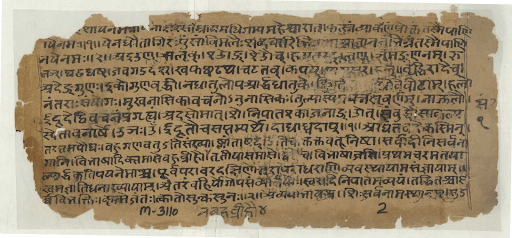
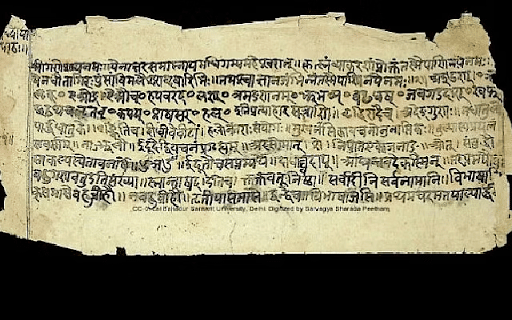
- The Objects of Cultural Significance category will include Panini’s Ashtadhyayi (India), a copy of the Magna Carta (United Kingdom), a 15th-century bronze statue of Belvedere Apollo (Italy), and an 18th-century Fahua-lidded jar (China).
Ashtadhyayi
- The Ashtadhyayi or ‘Eight Chapters', is an ancient text written by the scholar Panini who lived in the 4th century BC.
- It is a linguistic text that set the standard for how Sanskrit was meant to be written and spoken.
Magna Carta
- The Magna Carta refers to the Charter of Rights issued by King John of England in 1215.
- It is the first written document relating to the Fundamental Rights of citizens.
- It laid the first steps towards parliamentary democracy and the principles of supremacy of law and balance of power between the governed and government.
- It influenced the UN Universal Declaration of Human Rights, the US Constitution and Bill of Rights, and Part III of the Indian Constitution.
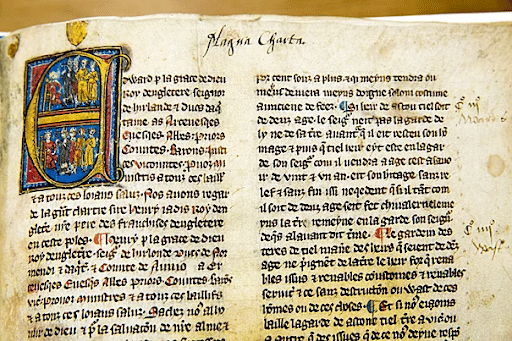
- The Iconic cultural masterpiece category will include the Bhimbhetka cave paintings (India), a digital version of a rhinoceros-shaped wine jar dating to the Qing dynasty era (China), Mona Lisa (France), and the Vermeer painting - Girl With a Pearl Earring (Netherlands).
Bhimbetka Caves
- The Bhimbetka rock shelters are an archaeological site in Madhya Pradesh that traces back to the Paleolithic and Mesolithic periods.
- It displays some of the earliest exhibits of human life in India and evidence of the Stone Age.
- It is a UNESCO World Heritage Site that is famous for its prehistoric cave paintings done in red and white.
- The Natural Heritage category consists of submissions such as the Himalayas and the Ganga (India), the Grand Canyon (U.S.A.), Lake Baikal (Russia), and the Wadden Sea (Netherlands).
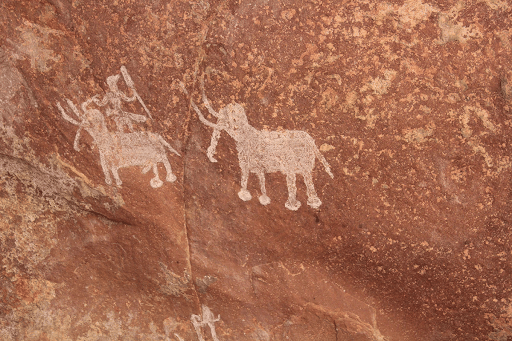
- The Artifacts related to democratic practices include original copies of the Charters of Freedom (U.S.A.) and a copy of the Rigveda.
Rigveda
- The Rig Veda, which is a Sanskrit religious text from as early as 1700 BC, is the oldest of the four Vedas and the oldest text in any Indo-European language.
- It is a collection of 10,600 verses and 1,028 hymns which are divided into ten books which are known as Mandalas.
- It is believed to have been compiled by Vyasa and is a collection of hymns on mythology.
Culture Working Group
- The Fourth Culture Working Group meeting was held in Varanasi on 23rd August 2023.
- The meeting resulted in the creation of an outcome document titled “The Kashi Culture Pathway”.
- The G-20 nations had achieved a consensus on cultural issues such as:
- Addressing the destruction of cultural heritage in situations of conflict
- Curbing illicit trafficking of artifacts,
- Restitution of cultural property
- The need to protect living heritage, particularly of indigenous people.
- The previous meetings of the Culture Working Group were held in Khajuraho (Madhya Pradesh), Bhubaneswar (Odisha), and Hampi (Karnataka) respectively.
G-20
- The G20 is an informal organization of 19 countries and the European Union, as well as officials from the World Bank and the International Monetary Fund.
- Its members are drawn from a mix of industrialized and emerging economies, representing more than two-thirds of the worldwide population, 85% of global GDP, 80% of global investment, and over 75% of global commerce.
- Members: Argentina, Australia, Brazil, Canada, China, France, Germany, India, Indonesia, Italy, Japan, Republic of Korea, Mexico, Russia, Saudi Arabia, South Africa, Turkey, the United Kingdom, the United States, and the European Union.
- Guest invitees: Bangladesh, Egypt, Mauritius, Netherlands, Nigeria, Oman, Singapore, Spain, UAE.
- In addition to the regular International Organisations (UN, IMF, WB, WHO, WTO, ILO, FSB, and OECD) and Chairs of Regional Organisations (AU, AUDA-NEPAD, and ASEAN), India, as G20 President will be inviting ISA, CDRI and ADB as Guests.
To learn more about the G-20, click the link.
(*Click this link to read prelims specific weekly current affairs articles)
FAQs
Question: What is Vasudaiva Kutumbakam?
Answer:
Vasudhaiva Kutumbakam is a phrase from the Maha Upanishad which means “the world is family”. It has been used to convey India’s ideas about global commons, globalization, etc., and discourages individualism and encourages collectivism. It is the theme of India’s presidency of the G-20.
Question: What is anamorphic content?
Answer:
Content in anamorphic form refers to content that the viewer will see in a 3D form with visual depth. It is distorted imagery that appears normal when viewed from a particular point or with a suitable mirror or lens.
UPSC Mains Practice Question:
|
MCQs
Question: With reference to the difference between the culture of Rigvedic Aryans and Indus Valley people, which of the following statements is/are correct?
- Rigvedic Aryans used the coat of mail and helmet in warfare whereas the people of Indus Valley Civilization did not leave any evidence of using them.
- Rigvedic Aryans knew gold, silver, and copper whereas Indus Valley people knew only copper and iron.
- Rigvedic Aryans had domesticated the horse whereas there is no evidence of Indus Valley people having been aware of this animal.
Select the correct answer using the code given below: (UPSC CSE 2017)
(a) 1 only
(b) 2 and 3 only
(c) 1 and 3 only
(d) 1, 2 and 3
Answer: (c) See the Explanation
- There is evidence of the use of swords, arrows, and bows by Rig Vedic Aryans. Hence statement 1 is correct.
- Rig Vedic Aryans were aware of gold, silver, copper, and iron while Indus Valley people were aware of gold, copper, and bronze but not iron. Hence statement 2 is incorrect.
- Rig Vedic Aryans domesticated the horse whereas there is no evidence of Indus Valley people having been aware of the horse. Hence statement 3 is correct.
Therefore, option (c) is the correct answer.
Question: With reference to the scholars/litterateurs of ancient India, consider the following statements:
- Panini is associated with Pushyamitra Shunga.
- Amarasimha is associated with Harshavardhana.
- Kalidasa is associated with Chandra Gupta-II.
Which of the statements given above is/are correct? (UPSC CSE 2020)
(a) 1 and 2 only
(b) 2 and 3 only
(c) 3 only
(d) 1, 2 and 3
Answer: (c) See the Explanation
- Panini was a non-Mauryan scholar who lived during the 4th Century BC. He is not associated with Pushyamitra Shunga. Hence statement 1 is incorrect.
- Amarasimha is a litterateur from the Gupta period while Harshavardhana is a post-Gupta period ruler. Hence statement 2 is incorrect.
- Kalidasa is believed to be one of the members of the court of King Chandragupta Maurya II or Vikramaditya. Hence statement 3 is correct.
Therefore, option (c) is the correct answer.
Download the PREPP App and attempt FREE IAS Exam Mock Tests and get complete study material!

Full Test - 04: UPSC CSE Prelims CSAT (Paper-II)
Full Test - 03: UPSC CSE Prelims CSAT (Paper-II)
UPSC CSE Prelims 2026 GS Paper 1 Question Paper (24-May-2026)
UPSC CSE Prelims 2026 CSAT Paper 2 Question Paper (24-May-2026)

17 February 2025 | The Hindu Must Read Articles | Current Affairs

16 February 2026 | The Hindu Must Read Articles | Current Affairs

13 February 2026 | The Hindu Must Read Articles | Current Affairs









Comments