Communal Award – Indian Polity Notes
Communal Award was framed by Ramsay MacDonald who was the British Prime Minister also known as the MacDonald Award. It was announced after the Second Round Table Conference (1930–32). It extended the principle of separate electorate to depressed Classes and other minorities. The topic “Communal Award” is an important part of the UPSC/IAS Exam Polity and Governance syllabus which is discussed in this article in detail.
|
Table of Contents |
Historical Background
- Since the late nineteenth and early twentieth centuries, there was a growing awareness among the depressed classes to raise their voices for legitimate rights and social equality, which they have been denied over the years.
- The British government, under the pressure of the Indian national movement, initiated constitutional reforms to accommodate Indians in various representative bodies.
- When the Morley - Minto Reforms Act of 1909 made provision for a separate electorate for the Muslims, many leaders of the depressed classes felt that they should also demand the reservation of seats for their representatives in legislative bodies.
- They succeeded in forcing the British government to get invitations for their representatives to the Round Table Conference in London to deliberate on the prospective constitutional amendments.
- Despite these concerns for the rights of the oppressed, Gandhi and the Congress Party opposed the idea of a separate electorate for the depressed classes.
- In spite of the demand for a separate electorate for the depressed classes, the Simon Commission recommended for reservation of seats for the depressed classes but did not support the demand for a separate electorate.
- Although the leaders of the depressed classes were not happy with the recommendations, it definitely provided them with much strength to bargain for their legitimate rights.
- This was the time when Ambedkar emerged as a strong exponent of the rights of the depressed classes and attacked Congress for its inability to address the problems of the depressed classes.
|
“Communal Award strategically accentuated communal identities, perpetuating divisions within India to serve colonial interests."
|
Objective
- For a period of 20 years, the Communal Award granted the Depressed Classes voting rights alongside Hindus in general constituencies, as well as an extra vote in special Depressed Classes constituencies numbering 71.
- The announcement of the Communal Award was considered as a clear indication of widening the rift between the Depressed Classes and caste Hindus posing a serious challenge to the Indian nationalist movement.
Key Provisions Of Communal Award
- To double the existing seats in provincial legislatures;
- To keep the system of separate electorates for minorities in place;
- To grant weightage to Muslims in provinces where they were in minority;
- To reserve three percent seats for women in all provincial legislatures except in the North West Frontier electorate;
- To recognize depressed classes minority communities and make them entitled to the right of the separate electorate; and
- To allocate seats to labour, landlords and traders, and industrialists.
Facts Related To Freedom Struggle
- Gandhi reacted strongly to the proposal of granting the right of a separate electorate to the depressed classes. He regarded the Depressed Classes as an integral part of Hindu society.
- He had pinned his hopes for the welfare on the firm belief that the Hindus would do full social justice to that section of society whom they had exploited for centuries and would fully integrate them within their fold.
- To persuade the recalcitrant Ambedkar to accept his viewpoint on this, Gandhi, then in the Yarvada Jail, resorted to a fast unto death.
- In anxiety to save his life, the Poona Pact was concluded on 25 September 1932.
- As promised, Gandhi ended his fast after the signing of the pact. He found in this victory his political and social goals.
Significance Of Constitutional Development
Poona Pact
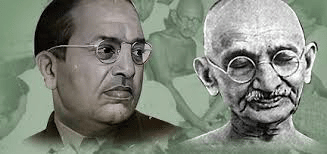
- The Poona Pact of 1932 was an agreement with regard to the political representation of Depressed Classes betweenB.R. Ambedkar and M.K. Gandhi.
- It was agreed to allocate 148 seats in provincial legislatures to the oppressed classes, as opposed to the 71 promised by the Communal Award.
- Madras-30; Bombay with Sind 15; Punjab 8; Bihar and Orissa 18; Central Provinces 20; Assam 7; Bengal 30; United Provinces 20
- Congress also agreed that the depressed classes would be given adequate representation in the civil service.
- The depressed classes accepted the principle of a joint electorate.
- The Pact reinforced and expanded on the claim that the Depressed Classes were a political minority whose interests could not be ignored when drafting India's constitutional future.
Defects
- The Communal award was based on the British theory that India is not a nation but a conglomerate of racial, religious, and cultural groups, castes, and interests.
- The British had a one-point agenda to end nationalism and instill provincial loyalty among smaller communities.
- This was one of the reasons the British developed the concept of a separate electorate since elections are a powerful means of distributing power.
- With this award began a policy of appeasement and quota regulation that is still slowly killing India.
Conclusion
The Poona Pact was a watershed moment in the constitutional and political history of India.The promise of a large number of seats for the marginalised raised the prospect of a strong voice for the weaker sections of society in public life.
| Other Relevant Links | |
|---|---|
| The Company Rule (1773 – 1858) | The Crown Rule (1858-1947) |
| Historical Background of Indian Constitution | Making of The Constitution |
FAQs
Question: What was the Communal Award?
Answer: The Communal Award was a scheme announced by the British Prime Minister Ramsay MacDonald in 1932, which provided separate electorates for different religious and social communities in India, including Muslims, Sikhs, Christians, Anglo-Indians, and Dalits (then referred to as Depressed Classes). It aimed to ensure representation of these communities in legislative bodies but was controversial for deepening divisions.
Question: Why was the Communal Award controversial?
Answer: The Communal Award was controversial because it further institutionalized communal divisions by creating separate electorates based on religion and social class. Mahatma Gandhi opposed the provision of separate electorates for the Dalits, fearing it would divide the Hindu community and weaken India's struggle for independence.
Question: What was the Poona Pact in relation to the Communal Award?
Answer: The Poona Pact was an agreement reached in 1932 between Mahatma Gandhi and Dr. B.R. Ambedkar to resolve differences over the representation of the Dalits in legislative bodies. Instead of separate electorates, it provided for reserved seats for Dalits within the general electorate, thus ensuring their political representation while maintaining broader unity.
Question: Who announced the Communal Award, and when?
Answer: The Communal Award was announced by the British Prime Minister Ramsay MacDonald on August 16, 1932. It was part of Britain's divide-and-rule strategy during colonial rule in India.
Question: What impact did the Communal Award have on Indian politics?
Answer: The Communal Award had a profound impact on Indian politics, intensifying communal divisions and shaping debates on minority representation. It led to the Poona Pact, which marked a significant moment in the discourse on Dalit rights and representation. The legacy of the Award influenced communal politics and electoral representation patterns in independent India.
MCQs
- The Communal Award was announced by:
A) Winston Churchill
B) Lord Mountbatten
C) Ramsay MacDonald
D) Clement Attlee
Answer: (C) See the Explanation
British Prime Minister Ramsay MacDonald announced the Communal Award in 1932.
- The main objective of the Communal Award was to:
A) Unite all religious communities
B) Provide separate electorates for various communities
C) Abolish caste distinctions
D) Establish a democratic constitution for India
Answer: (B) See the Explanation
The Communal Award aimed to ensure representation by creating separate electorates for different communities.
- Mahatma Gandhi's opposition to the Communal Award focused on:
A) Providing separate electorates for Muslims
B) The inclusion of Dalits in separate electorates
C) British control over India's economy
D) Women's rights
Answer: (B) See the Explanation
Gandhi opposed separate electorates for Dalits, fearing it would divide the Hindu community.
- The Poona Pact was an agreement between:
A) Gandhi and Jinnah
B) Gandhi and Dr. B.R. Ambedkar
C) The British government and Congress
D) Hindus and Muslims
Answer: (B) See the Explanation
The Poona Pact was a compromise between Gandhi and Dr. Ambedkar regarding Dalit representation.
- One of the main criticisms of the Communal Award was that it:
A) Promoted unity among all communities
B) Deepened communal divisions
C) Abolished all forms of reservation
D) Focused solely on economic reforms
Answer: (B) See the Explanation
The Communal Award was criticized for creating separate electorates, which heightened communal tensions.
GS Mains Questions and Model Answers
Q1: Explain the objectives and impact of the Communal Award of 1932 on Indian politics.
Answer: The Communal Award of 1932, announced by Ramsay MacDonald, aimed to provide separate electorates for various religious and social communities in India, including Muslims, Sikhs, Christians, Anglo-Indians, and Dalits. Its objective was to ensure political representation for minority groups, but it also institutionalized communal divisions, creating tensions within Indian society. The Award led to strong opposition from leaders like Mahatma Gandhi, particularly concerning separate electorates for Dalits. This opposition resulted in the Poona Pact between Gandhi and Dr. B.R. Ambedkar, which provided reserved seats for Dalits within a joint electorate. The Communal Award significantly influenced communal politics and debates on representation in India, shaping the discourse on social justice and unity.
Q2: Discuss the Poona Pact and its relevance in the context of the Communal Award.
Answer: The Poona Pact, signed in 1932 between Mahatma Gandhi and Dr. B.R. Ambedkar, was a direct outcome of disagreements over the Communal Award's provision of separate electorates for Dalits. Gandhi opposed separate electorates, fearing it would fragment Hindu society, while Ambedkar supported it to ensure Dalit political empowerment. The Pact led to an agreement for reserved seats for Dalits within the general electorate, increasing their representation while maintaining community unity. The Poona Pact highlighted tensions within the nationalist movement regarding caste and representation and marked a significant step in the struggle for Dalit rights and political inclusion.
Q3: Analyze the significance of the Communal Award in shaping India's approach to minority representation in post-independence India.
Answer: The Communal Award of 1932 had a lasting impact on India's approach to minority representation. By introducing separate electorates, it intensified communal divisions, prompting debates on how to balance minority rights with national unity. Post-independence, India adopted a system of reserved constituencies for Scheduled Castes and Scheduled Tribes within a joint electorate framework, reflecting lessons from the Communal Award and the Poona Pact. This approach sought to ensure political representation for marginalized groups without deepening communal divides. The legacy of the Award and the ensuing debates continue to influence policies on social justice and affirmative action in India.
Previous Year Questions on Communal Award
1. UPSC CSE 2020
Question: Evaluate the role of the Communal Award in the context of India's freedom struggle and its impact on communal politics.
Answer: The Communal Award played a complex role in India's freedom struggle by attempting to address the issue of minority representation. While it aimed to provide separate electorates for various communities, it was perceived by many Indian leaders as a divisive tactic by the British to weaken the nationalist movement through communal divisions. Mahatma Gandhi's opposition, particularly to separate electorates for Dalits, highlighted the tensions between achieving social justice and maintaining unity. The Communal Award's impact on communal politics was profound, as it intensified debates on representation and sowed seeds of division that continued to influence political dynamics in pre- and post-independence India.
2. UPSC CSE 2019
Question: Discuss the significance of the Poona Pact as a response to the Communal Award and its implications for Dalit representation in India.
Answer: The Poona Pact, reached between Mahatma Gandhi and Dr. B.R. Ambedkar in response to the Communal Award's provision for separate Dalit electorates, was significant in shaping the framework for Dalit representation in India. By agreeing to reserved seats for Dalits within a joint electorate, the Pact aimed to balance the need for political empowerment of Dalits with broader communal unity. It marked a critical moment in the struggle for social justice, highlighting both the challenges and compromises in achieving representation for marginalized groups. The Poona Pact laid the foundation for the system of reserved constituencies for Scheduled Castes in independent India, reflecting its lasting impact on political inclusion and affirmative action.
*email: contactus@prepp.in
Download the PREPP App and attempt FREE IAS Exam Mock Tests and get complete study material!

Live Test : UPSC CSE Prelims CSAT (Paper-II) (Oct 20 - 23)
Full Test - 04: UPSC CSE Prelims CSAT (Paper-II)
Full Test - 03: UPSC CSE Prelims CSAT (Paper-II)
UPSC CSE Prelims 2026 GS Paper 1 Question Paper (24-May-2026)
UPSC CSE Prelims 2026 CSAT Paper 2 Question Paper (24-May-2026)

17 February 2025 | The Hindu Must Read Articles | Current Affairs

16 February 2026 | The Hindu Must Read Articles | Current Affairs

13 February 2026 | The Hindu Must Read Articles | Current Affairs









Comments