Code of Ethics for Civil Servants - Ethics Notes
Code of Ethics for civil servants is a formal document that explains the ethical concepts, beliefs, and rules that regulate the behaviour and conduct of those working in the civil service or public administration. It establishes expectations for professional behaviour and encourages honesty, accountability, and public trust in the civil service. This article will explain Code of Ethics for Civil Servants which will be helpful in Ethics preparation for the UPSC Civil service Mains exam.
Table of Contents
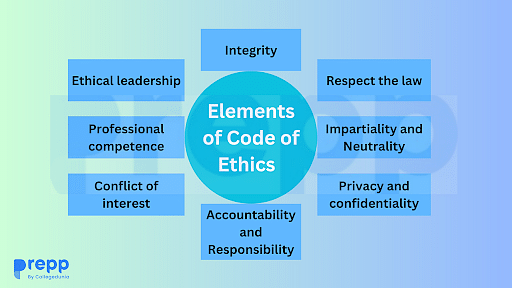
Elements of Code of Ethics
- Integrity: Civil servants are required to maintain the highest levels of integrity and ethical behaviour. In all professional transactions, they must operate honestly, transparently, and impartially.
- Respect the law: Civil servants are required to comprehend the laws, rules, and policies that govern their employment. They must follow the law and ensure that their activities are consistent with the values of justice and fairness.
- Impartiality and Neutrality: Civil servants are expected to serve the public interest and carry out their responsibilities without prejudice or favouritism. They must be fair and equitable to all persons and organisations, regardless of personal affiliations or inclinations.
- Privacy and confidentiality: Civil servants frequently handle sensitive information and data. They are required to keep such information discreet and private, to use it only for lawful reasons, and to prevent unauthorised access or disclosure.
- Accountability and Responsibility: Civil servants must take responsibility for their acts and judgements. They are required to take ownership of their work, use solid judgement, and be open about their decision-making processes.
- Conflict of interest: Civil servants must avoid conflicts of interest that might impair their neutrality or public confidence. They must declare any possible conflicts of interest and act in the best interests of the public.
- Professional competence: Civil servants are obliged to maintain and expand their professional knowledge and abilities on a constant basis. They must strive for quality in their job, uphold professional standards, and pursue chances for advancement and development.
- Ethical leadership: Civil servants in positions of leadership bear the additional responsibility of fostering ethical behaviour within their organisations. They are supposed to set a good example, establish an ethical culture, and mentor and assist their subordinates.
| Other Relevant Links | |
|---|---|
| Ethical Ideals in Life | Kantianism |
| Epicureanism | Moral subjectivism |
| Cultural relativism | Sceptical doctrines |
| Kindness, Forgiveness, Self-Control And Good Temper, Fortitude, Cowardice, Empathy, Atruism, Truthfulness-Ethical Qualities | Code of Ethics And Code of Conduct |
| Ethical Ideas in Indian Philosophical Tradition | Code of Conduct for Civil Servants |
| Western Moral Thinkers | Political Neutrality |
Code of Ethics for Civil Servants
- A code of ethics is a collection of broad and basic ethical standards designed to help professionals conduct business in an honest and ethical manner.
- The ethical ideals of a code of conduct are based on the organisation's fundamental values and the standards to which the professional will be held accountable.
- The code is created based on the activities that organisations desire to avoid from occurring and occurring, rather than just on the actions of previous organisational and human experiences.
- Robert Bowen has provided the code of ethics with two essential and crucial roles.
- The primary goal is to uphold moral and professional standards of behaviour. These will keep individuals accountable for their performance as well as their commitment to honesty and obligation.
- The second goal is to define professional behaviour so that professionals can develop a feeling of tolerance, pride, and responsibility.
Characteristics of Code of Ethics
- Codes of Ethics for Civil Servants are critical for establishing public trust, preserving the integrity of government, and supporting the ideals of openness, accountability, and justice.
- Code of Ethics offers a framework for ethical decision-making and direct government workers' professional behaviour while serving the public.
- A code of ethics that is enforced but serves no beneficial purpose is analogous to laws without penalties.
- If the law is not followed in text and spirit, an individual will lose respect for it. This is also true for ethical codes
- Failure to enforce the norms leads to a lack of respect for the codes and undermines the process's integrity and support for ethos.
Challenges of Code of Ethics
- Absence of Enforcement mechanism: The absence of effective enforcement measures for the Code of Ethics is a big concern. Without appropriate monitoring and enforcement, government workers may break from ethical norms without incurring penalties. This diminishes the code's credibility and efficacy.
- Difficulty to Understand: Some regulations may use confusing or imprecise wording, making it difficult for public employees to grasp and implement ethical concepts in their daily job. Inconsistent interpretations and subjective decision-making might result from unclear instructions, possibly jeopardising ethical standards.
- The Code of Ethics may contrast with the prevalent organisational culture in government. If the organisational culture does not prioritise ethical behaviour or places greater focus on other considerations (such as efficiency or political expediency), it can lead to conflicts and difficulty in sustaining the ideals of the code.
- Political influence and pressure: Political influence and involvement in civil employees' work might jeopardise adherence to the Code of Ethics. When civil workers are pressured to choose political objectives over ethical concerns, the integrity and independence of government are jeopardised.
- The Code of Ethics may not cover all of the ethical issues that government officials encounter. It may neglect developing ethical difficulties or fail to offer guidance on specific instances, leaving public workers unsure how to deal with complicated ethical quandaries.
Conclusion
The Code of Ethics for Civil Servants is a set of principles and rules that explain the required ethical behaviour and conduct for anyone working in civil service or public administration. The Code of Ethics is critical in influencing ethical behaviour, upholding standards, and promoting the welfare and confidence of stakeholders in a variety of professions. It is a critical tool for professionals to use in navigating ethical issues and fulfilling their societal commitments.
| Other Relevant Links | |
|---|---|
| Challenges To Ethics and Moral Accountability | Gandhian Ethics |
| Aspects of Morals | Definition of Ethics |
| Post Aristotelian Philosophers | Ethical Ideas in Indian Philosophical Tradition |
| Lessons From The Lives Of Great Indian Leaders, Reformers And Administration | Moral Thinkers of the Twentieth Century |
FAQs
Question: What is the purpose of a code of ethics for civil servants?
Answer: A code of ethics for civil servants provides guidelines for making moral decisions, promoting integrity, fairness, and transparency in public administration, and ensuring that officials act in the best interest of the public.
Question: How does the code of ethics impact the behavior of civil servants?
Answer: The code of ethics sets clear expectations for behavior, ensuring civil servants act with impartiality, responsibility, and accountability in all their professional duties, fostering public trust and confidence in governance.
Question: What are the core principles included in the code of ethics for civil servants?
Answer: The core principles include integrity, transparency, accountability, impartiality, fairness, respect for law, and dedication to the public service, ensuring that civil servants uphold democratic values and ethical standards.
Question: How can a code of ethics prevent corruption in public administration?
Answer: A code of ethics helps prevent corruption by establishing clear behavioral standards, discouraging unethical practices, and promoting transparency, accountability, and equal treatment in decision-making processes within public administration.
Question: Why is it important for civil servants to adhere to a code of ethics?
Answer: Adherence to a code of ethics is crucial for maintaining the credibility, integrity, and transparency of civil servants, ensuring that public resources are used responsibly and that the government serves the interests of all citizens fairly.
MCQs
1. What is the primary goal of a code of ethics for civil servants?
A) To ensure legal compliance
B) To guide moral and ethical decision-making
C) To regulate salary and compensation
D) To provide career advancement guidelines
Answer: (B) See the Explanation
Explanation: The primary goal of a code of ethics for civil servants is to guide moral and ethical decision-making, ensuring that civil servants act in the public’s interest with integrity, fairness, and transparency.
2. Which of the following is an important principle of a code of ethics for civil servants?
A) Favoritism
B) Accountability
C) Secrecy
D) Profit-making
Answer: (B) See the Explanation
Explanation: Accountability is an important principle as it ensures that civil servants are answerable for their actions and decisions, promoting transparency and preventing corruption in public administration.
3. How does the code of ethics for civil servants promote transparency?
A) By restricting the flow of information
B) By discouraging public accountability
C) By providing guidelines for open and clear decision-making
D) By reducing government regulations
Answer: (C) See the Explanation
Explanation: A code of ethics promotes transparency by providing guidelines for civil servants to make decisions openly and clearly, ensuring that the public can trust the fairness and honesty of their actions.
4. Why is impartiality a key principle of a code of ethics for civil servants?
A) To ensure equal treatment of all individuals
B) To allow civil servants to favor specific individuals
C) To prioritize personal interests
D) To enable rapid decision-making
Answer: (A) See the Explanation
Explanation: Impartiality ensures that civil servants treat all individuals equally and fairly, without bias, ensuring that their actions and decisions are in the best interest of the public.
5. What is the role of ethics in public administration?
A) To promote favoritism
B) To ensure responsible use of public resources
C) To encourage personal gains
D) To minimize government transparency
Answer: (B) See the Explanation
Explanation: Ethics in public administration ensures the responsible use of public resources, promotes fairness, and ensures that public servants act in the best interest of citizens while maintaining trust and transparency.
GS Mains Questions and Model Answers
Q1: Discuss the importance of a code of ethics for civil servants in maintaining integrity and accountability in public administration.
Answer: A code of ethics is essential for maintaining integrity and accountability within public administration. It sets the behavioral standards and moral values expected of civil servants, ensuring they make decisions based on fairness, transparency, and the public good. A well-defined code of ethics prevents corruption, ensures transparency in public dealings, and promotes the responsible use of public resources. It strengthens the relationship between the government and the public, fostering trust in public institutions and the legitimacy of government actions. By adhering to a code of ethics, civil servants can uphold democratic principles and serve as role models for others in public life.
Q2: How can ethical decision-making improve the effectiveness of governance in India?
Answer: Ethical decision-making is critical in improving governance by ensuring that decisions are made with integrity, fairness, and accountability. It reduces the scope for corruption and nepotism, ensuring that government policies and programs benefit all citizens equitably. Ethical decision-making also promotes transparency, which is essential for citizen participation and trust in governance. By making decisions that align with ethical standards, public officials can address social issues, ensure justice, and build sustainable policies. Effective governance rooted in ethical practices ensures the long-term welfare of society, improves service delivery, and strengthens democratic institutions.
Q3: Analyze the role of a code of ethics in curbing corruption in public services.
Answer: A code of ethics plays a pivotal role in curbing corruption in public services by setting clear guidelines for ethical behavior, thereby discouraging misconduct. It helps public servants understand the moral boundaries within which they must operate, preventing unethical practices such as bribery, favoritism, and nepotism. By promoting transparency, accountability, and impartiality, a code of ethics creates an environment where unethical actions are less likely to be tolerated. Civil servants are held to high ethical standards, and the public can hold them accountable for their actions. Moreover, a strong ethical framework encourages civil servants to act in the public's best interest, leading to more effective and just governance.
Previous Year Questions on Ethics
1. UPSC CSE Mains 2021 (GS Paper 4):
Question: "Discuss the significance of ethical governance in a democracy. How can ethical decision-making help in the betterment of society?"
Answer: Ethical governance is the backbone of a democratic system, ensuring fairness, transparency, and accountability in public administration. Ethical decision-making ensures that policies and actions are based on moral principles that benefit society as a whole. It reduces corruption, promotes justice, and helps in creating policies that address the needs of marginalized communities, ultimately leading to a more equitable society. Ethical governance fosters public trust and strengthens democratic institutions, ensuring that the government remains responsive to the people it serves.
2. UPSC CSE Mains 2020 (GS Paper 4):
Question: "What role does ethics play in shaping the behavior of civil servants in India? Discuss the challenges faced by civil servants in adhering to ethical standards."
Answer: Ethics play a crucial role in shaping the behavior of civil servants by guiding their actions, ensuring that decisions are made based on integrity and fairness. It helps them resist unethical temptations and make decisions that are in the public's interest. However, civil servants face challenges such as political pressure, corruption, and lack of accountability that make it difficult to adhere to ethical standards. Despite these challenges, a strong ethical framework and commitment to public service can help civil servants overcome these obstacles and serve society with integrity.
Download the PREPP App and attempt FREE IAS Exam Mock Tests and get complete study material!

Full Test - 04: UPSC CSE Prelims CSAT (Paper-II)
Full Test - 03: UPSC CSE Prelims CSAT (Paper-II)
UPSC CSE Prelims 2026 GS Paper 1 Question Paper (24-May-2026)
UPSC CSE Prelims 2026 CSAT Paper 2 Question Paper (24-May-2026)

17 February 2025 | The Hindu Must Read Articles | Current Affairs

16 February 2026 | The Hindu Must Read Articles | Current Affairs

13 February 2026 | The Hindu Must Read Articles | Current Affairs









Comments