Procedure For Appointing A Governor - Indian Polity Notes
Governor of a state is appointed by the President by warrant under his hand and seal under Article 155. Governor is both a titular or constitutional leader and an agent of the federal government, as the union government appoints Governors in each state. This dual duty has been in the news for a long time and is crucial for the IAS Exam.
The Governor, Chief Minister, Council of Ministers, and State Advocate-General make up the state executive.
Table of Contents
- Procedure For Appointing A Governor – Constituent Assembly Debates
- What Is The Procedure For Appointing A Governor?
- Conventions Followed while appointing Governor
- What Is The Governor's Term Of Office?
- Procedure For Appointing A Governor – Associated Controversies
- Reforms Recommended by Various Commissions
- Conclusion
- FAQs
- MCQs
Procedure For Appointing A Governor – Constituent Assembly Debates
- During the making of the Constitution, the Constituent Assembly considered four alternative schemes of gubernatorial appointment –
1. Election on the basis of adult suffrage;
2. Election by the legislature;
3. Nomination by the President out of a panel of names submitted by the provincial legislature; and
4. Discretionary appointment by the President.
- The first suggestion was included in the Draft Constitution for the Constituent Assembly's consideration. However, Framers of the Constitution argued that, If Governor is directly elected, he could not be above political ambition, and he may claim genuine power in some situations.
- Because of the Governor's claim of popular representation, clashes with the Chief Minister would be common.
- Constituent Assembly rejected the Second idea of election by the legislature. It was pointed out in this situation that he would be a powerless instrument in the hands of the local dominant party and such a form of appointment would jeopardize the Governor's independence.
- Third, the President's suggestion to pick the Governor from a list of four individuals presented to him by the legislature or the Cabinet was also rejected. It was thought that in such a circumstance, divisions and groupings would emerge, causing the majority-coherence party's to be disrupted.
- When weighing the pros and cons of these existing practices, the framers of our Constitution chose in favor of the Canadian model.
|
“Governor should be an eminent person from outside the State and should be a detached figure without intense political links or should not have taken part in politics in the recent past”-Sarkaria Commission |
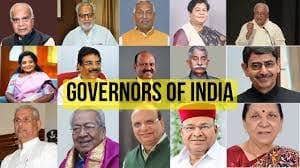
What Is The Procedure For Appointing A Governor?
The governors of each state are appointed by the federal government.
- Unlike presidential elections, there are no direct or indirect elections for Governor.
- The appointment of the Governor is entirely a matter of presidential discretion under Article 155 of our Constitution, which states, "The Governor of a state shall be appointed by the President by warrant under his hand and seal"
- A governor is an autonomous constitutional role that is not part of the union administration. The governor is neither a servant nor a subordinate of the federal government.
- In India, the Union nominates a governor, who is then appointed by the President, according to the Canadian model of administration in which the Governor is purely a nominated functionary.
Conventions Followed while appointing Governor
The President was given total and unrestricted control over the nomination of the Governor, as stated in Article 155. According to detractors Centre may abuse such broad authority. However, there are some Conventions to follow to keep it under check:
- It is considered that if a resident of another state would be less likely to get involved in the political affairs of the state in question, and so would behave with more honesty and impartiality.
- It would also contribute to the lofty sentiments of togetherness and solidarity that exist among such a large and varied community.
- Another convention is the practice of consulting the Chief Minister before the appointment of the Governor of the State concerned.
| Other Relevant Links | |
|---|---|
| Emergency Provisions | Indian Constitution |
| Integrated Judiciary | Single Citizenship |
What Is The Governor's Term Of Office?
The Governor's post has no fixed term because he serves at the pleasure of the President. The President has the power to remove the Governor, and the grounds for doing so are not specified in the Constitution.
The President may also transfer the governor from one state to another. He is also eligible for reappointment.
- An interregnum is not permitted, after which a Governor may continue to serve in the position for another 5 years (until the term expires) until a new governor takes over.
- The Chief Justice of the High Court of the relevant state can also be appointed as Governor temporarily at the President's discretion, when and how the President sees proper. (For example, if the governor dies, the Chief Justice of the High Court can be nominated as governor. It effectively prevents the possibility of imposing a person who does not agree with the state in the issue.
Important Constitutional Articles related to the Governor
| Articles | Provisions |
|---|---|
| 153 | Governors of states |
| 155 | Appointment of Governor |
| 156 | Term of office of Governor |
| 157 | Qualifications for appointment as Governor |
| 158 | Conditions of Governor’s office |
Procedure For Appointing A Governor – Associated Controversies
- It may be argued that such appointments have frequently been a source of political wrangling, with the Centre failing to seek the advice of the appropriate state on occasion. It's also true that the position is frequently referred to be a "safe haven for mediocres" or "the consolation prize for burned-out politicians."
- The agency has also been accused of serving as a final resort for retiring or rejected individuals, particularly fallen heroes of the governing party.
- As a result, since Congress lost its control, the selection of the Governor has become a component of the Centre-State dispute.
- Different political parties may be in control in various states in the federal landscape, and as a result, they claim to have a role in the selection process.
Reforms Recommended by Various Commissions
Sarkaria Commission
- He/She should be an eminent person from outside the State and should be a detached figure without intense political links or should not have taken part in politics in the recent past.
- Chief Minister should be consulted while appointing the governor.
Punchhi Commission
- He/She should be detached from active politics for at least two years prior to his appointment.
- He must be appointed after consultation with the Chief Minister of the State concerned.
- A committee should be formed that is entrusted with the task of appointment of Governors. This committee may comprise the Prime Minister, the Home Minister, the Lok Sabha's Speaker and the concerned Chief Minister of the State.
National Commission to Review the Working of the Constitution (NCRWC) (Venkatachaliah Commission)
- A committee should be constituted comprising the prime minister, the home minister, the speaker of the Lok Sabha and the chief minister of the concerned state for the appointment of the governor.
- Fixed tenure of five years should be given to the governor unless he/she resigns or is removed by the President.
Conclusion
The office of the Governor in India, a vital constitutional position within the federal structure, has encountered persistent criticism and challenges over the years. There is a need for reforms aimed at depoliticizing appointments, clarifying constitutional roles, fostering cooperative relationships with state governments, and promoting transparency and accountability. Such reforms are essential to enhancing the effectiveness and credibility of the Governor's office.
FAQs
Question. Who appoints the Governor of a state in India?
Answer: The President of India appoints the Governor of each state in India under Article 155 of the Indian Constitution. The appointment is made on the recommendation of the Prime Minister and after considering the opinion of the Chief Minister of the respective state.
Question. What are the qualifications required for a Governor?
Answer: To be appointed as a Governor in India, an individual must fulfill the following qualifications:
- Citizenship: The person must be an Indian citizen.
- Age: The individual must be at least 35 years old.
- Disqualifications: A person cannot be a member of either house of Parliament or a State Legislature.
- The person must not hold any office of profit under the Government of India or any state government.
Question. What is the tenure of a Governor in India?
Answer: A Governor holds office at the pleasure of the President of India. This means the Governor’s tenure is not fixed, and they can be removed at any time by the President. However, once appointed, a Governor usually serves for a term of 5 years unless they resign or are removed earlier.
Question. What are the functions and powers of the Governor?
Answer: The Governor’s functions and powers can be divided into three categories:
- Executive Powers: The Governor is the head of the executive in the state and appoints the Chief Minister, other ministers, and other key officials like the Attorney General.
- Legislative Powers: The Governor plays an important role in the legislative process, including the summoning and dissolution of the state legislature and the assent to bills passed by the legislature.
- Judicial Powers: The Governor has the authority to grant pardons, reprieves, and respites to individuals convicted of crimes.
Question. Can the Governor act independently?
Answer: The Governor acts as the nominal head of the state, while the real executive power lies with the Council of Ministers, headed by the Chief Minister. The Governor is expected to act according to the advice of the Council of Ministers in all matters, except in certain cases where the Governor can exercise discretion. For example, in situations like the formation of a government, or if there is a constitutional crisis in the state, the Governor may use their discretion in decisions.
MCQs
- Who appoints the Governor of an Indian state?
A) The Prime Minister
B) The Chief Minister
C) The President of India
D) The Supreme Court of India
Answer: (C) See the Explanation
The President of India appoints the Governor of each state under Article 155 of the Indian Constitution.
- What is the minimum age requirement for a person to be appointed as a Governor in India?
A) 25 years
B) 30 years
C) 35 years
D) 40 years
Answer: (C) See the Explanation
A person must be at least 35 years old to be eligible for appointment as a Governor of a state in India.
- Which of the following powers is NOT a function of the Governor?
A) Executive powers
B) Legislative powers
C) Judicial powers
D) Judicial review of laws
Answer: (D) See the Explanation
The Governor has executive, legislative, and judicial powers, but judicial review of laws is a function of the judiciary, not the Governor.
- Can the Governor be removed from office before the completion of their term?
A) No, the Governor has a fixed tenure of 5 years.
B) Yes, the Governor can be removed by the President of India at any time.
C) Yes, the Governor can be removed by the Chief Minister of the state.
D) No, the Governor can only be removed through impeachment.
Answer: (B) See the Explanation
The Governor holds office at the pleasure of the President of India, meaning they can be removed at any time without any fixed term.
- Which of the following is a power of the Governor in India?
A) To introduce bills in the state legislature
B) To grant pardons for crimes committed in the state
C) To act as the Chief Justice of the state
D) To form the Cabinet without the Chief Minister
Answer: (B) See the Explanation
The Governor has judicial powers, including the ability to grant pardons to individuals convicted of crimes in the state.
GS Mains Questions and Model Answers
Q1: Discuss the role of the Governor in the Indian federal structure and how their appointment affects the functioning of state governments.
Answer: The Governor plays a crucial role in India’s federal structure, serving as the nominal head of the state, while the real executive power rests with the Chief Minister and the Council of Ministers. The Governor's role is largely symbolic, but it carries significant constitutional responsibilities. Governors are appointed by the President of India, and their actions are guided by the Constitution and the advice of the Council of Ministers. In the event of a constitutional crisis or disputed government formation, the Governor can exercise discretion to take actions that might affect the stability and functioning of the state government. The Governor’s powers are seen as a link between the state and the central government, and they must ensure that the state government functions within the limits of the Constitution. The appointment of Governors is a political decision, and their conduct has been a subject of debate, particularly concerning their role in suspending or dissolving state governments, sometimes leading to tensions between state and central authorities.
Q2: Analyze the impact of the Governor’s discretionary powers on the relationship between the state and central governments.
Answer: The Governor’s discretionary powers have a significant impact on the relationship between the state and the central government in India. While the Governor is constitutionally required to act in accordance with the advice of the Council of Ministers headed by the Chief Minister, there are certain situations where the Governor can exercise discretion. For instance, when a state government has lost majority support in the Legislature, the Governor has the discretion to dissolve the Legislative Assembly and recommend President’s Rule under Article 356. Similarly, the Governor plays a key role in disputes over government formation or resolution of political crises, which can sometimes lead to conflicts between the state government and the central government. Critics argue that the use of discretionary powers by Governors can undermine federalism and be misused for political purposes, especially when Governors are perceived to be aligned with the central government’s policies. The impact of the Governor’s powers is particularly evident in situations where the central government may intervene in state politics, raising concerns about the autonomy of states within the Indian Union.
Q3: What are the key challenges associated with the appointment and role of Governors in India?
Answer: The appointment and role of Governors in India have raised several challenges, particularly in relation to the political neutrality of the office and its impact on the functioning of state governments. Some of the key challenges include:
- Political Bias: Since Governors are appointed by the President (on the recommendation of the Prime Minister), they are often seen as aligned with the ruling party at the Centre. This can lead to concerns about the political neutrality of Governors and their ability to act impartially in the state.
- Misuse of Discretionary Powers: The discretionary powers vested in Governors, such as dissolving the state legislature or recommending President’s Rule, have been criticized for being misused for political purposes, especially during instances of political instability or when the central government seeks to interfere in state affairs.
- Unclear Constitutional Boundaries: The role of the Governor in the Indian federal system remains a subject of debate. There is often ambiguity regarding the scope of their powers and responsibilities, particularly in situations where the state and central governments are in conflict.
- Governors’ Oversight: Governors have the responsibility of ensuring that state governments operate within the framework of the Constitution, but there are instances where the intervention of Governors has been perceived as an overstep, leading to friction between state and central authorities. To address these challenges, there is a growing need for reforms in the appointment process of Governors, ensuring their independence and impartiality in the exercise of their duties.
Previous Year Questions on Procedure For Appointing A Governor
1. UPSC 2020
Question: "Analyze the role of Governors in maintaining the balance between the central and state governments in India."
Answer: This question requires an evaluation of the Governor’s role in managing the relationship between the central government and state governments, especially with regard to the discretionary powers and political neutrality.
2. UPSC 2019
Question: "Discuss the powers and functions of Governors under the Indian Constitution and the challenges involved in their appointment."
Answer: This question focuses on the powers and functions of Governors as outlined in the Indian Constitution, as well as the challenges related to their appointment, particularly concerning political neutrality and discretionary powers.
*email: contactus@prepp.in
Download the PREPP App and attempt FREE IAS Exam Mock Tests and get complete study material!
UPSC IAS : CSAT - Mini Live Test

Live Test : UPSC CSE Prelims CSAT (Paper-II) (Oct 20 - 23)
Full Test - 04: UPSC CSE Prelims CSAT (Paper-II)
Full Test - 03: UPSC CSE Prelims CSAT (Paper-II)
UPSC CSE Prelims 2026 GS Paper 1 Question Paper (24-May-2026)
UPSC CSE Prelims 2026 CSAT Paper 2 Question Paper (24-May-2026)

17 February 2025 | The Hindu Must Read Articles | Current Affairs

16 February 2026 | The Hindu Must Read Articles | Current Affairs

13 February 2026 | The Hindu Must Read Articles | Current Affairs









Comments