
Right of Minorities to Establish and Administer Educational Institutions (Article 30) - Indian Polity Notes
Right of Minorities to Establish and Administer Educational Institutions is explained in Article 30 of the Indian constitution. Article 30 provides all minorities either based on religion or language the right to establish and run educational institutions choosing their own qualifications for students and teachers. Along with that it also prohibits the state from discrimination in granting aid to minority educational institutions. The rights of Indian people in terms of culture and education are covered in Articles 29 and 30. In this article, we will explain the constitutional provisions, look into the constituent assembly debates and decode the Supreme Court judgements on this fundamental right.
Table of Contents
Constitutional Provisions
- Article 30 guarantees the following rights to all minorities:
- The right to establish and run educational institutions of their choose.
- The State's compensation amount for the compulsory acquisition of any property owned by a minority educational institution does not limit or abrogate the right provided to them.
- The 44th Amendment Act of 1978 added this provision to protect minorities' rights in the area of compulsory acquisition by incorporating clause (1A).
- The state shall not discriminate against any minority-run educational institution.
- Thus, protection under Article 30 is limited to minorities (religious or linguistic) and does not extend to any other group of citizens (as under Article 29).
- However, the term "minority" is not defined anywhere in the Constitution.
- Article 30 also covers the right of a minority to educate its children in their native language. Minority educational institutions are classified into three types:
- those seeking both recognition and help from the state;
- those seeking just recognition from the state and not aid;
- those seeking neither recognition nor aid from the state.
|
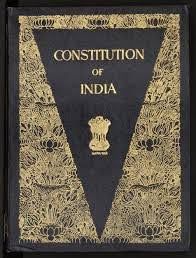
Article 30 states that:
|
|
"Article 30 protects the right of minorities to establish and administer educational institutions of their choice, championing their educational and cultural autonomy." |
Constituent Assembly Debates
- During the drafting stage the article on minorities to establish and administer educational institutions was included in the article on the protection of interests of minorities. However, it was debated and made as a separate article.
- A member of the Constituent Assembly proposed to give linguistic minorities the right to receive primary education in their own language and script.
- Another member advocated for the same if there is a minimum number of students available as due to freedom of movement people would settle in different parts of the country.
National Commission for Minority Educational Institution
- In 2004, the National Commission for Minority Educational Institutions was established.
- The provisions for the formation and administration of minority educational institutions are outlined in the National Commission for Minorities Educational Institutions Act of 2004.
- The Commission is tasked with investigating particular complaints alleging denial or infringement of minorities' rights to create and govern educational institutions of their choosing.
- The Commission can investigate any complaints pertaining to minorities' rights to create and govern educational institutions of their choosing.
- This Commission is a quasi-judicial body having the authority of a Civil Court. It will be chaired by a former High Court judge, and three members will be appointed by the Central Government. Both the chairman and all three members must be members of a minority community.
- The Commission has three functions: adjudicatory, advisory, and recommendatory powers.
- The Commission has the authority to advise the Central Government or any State Government on any matter relating to minorities' education that is referred to it, as well as to make recommendations on any matter that directly or indirectly deprives the minority community of their educational rights as enshrined in Article 30.
Benefits of Minority Institutions
- Minority educational institutions are not obligated to maintain a reservation in jobs or affirmations for SCs, STs, and OBCs, as other educational institutions are.
- Minority educational institutions wield far more influence over lawmakers than other institutions.
- For example, in the appointment of teachers and principals, a minority educational institution might form a selection advisory panel that excludes university officials.
- Thus, although in traditional institutions, the headmaster is usually picked based on seniority, minority administrations can appoint a headmaster of their own choosing.
- When it comes to student admission, minority educational institutions can have a reservation of up to 50% for students from their own community.
Important Court Judgements
St. Stephen’s College v. University of Delhi
- It was challenged regarding the preference given to Christian students by St.Stephen’s College.
- The Supreme Court said that the college is not bound to follow the university circulars as it will deprive the college of its minority character.
- Therefore, an admission policy where 50% of the seats reserved for the minority community and 50% of seats based on merit were followed.
T.M.A Pai Foundation v. State of Karnataka
- The Supreme Court ruled that a minority institution may have its own procedure and method of admission as well as a selection of students.
- The procedure for selection must be fair and transparent, and the selection of students in professional and higher education colleges should be on the basis of merit.
Conclusion
Article 30 of the Indian Constitution is a cornerstone of minority rights, ensuring that all minorities have the autonomy to establish and administer their own educational institutions. This provision not only preserves and promotes the diverse cultural, linguistic, and educational traditions of India but also reinforces the nation's commitment to equality and inclusivity. By safeguarding these rights, Article 30 empowers minority communities, contributing to the rich mosaic of India's pluralistic society and fostering a sense of belonging and respect among all its citizens.
FAQs
Q1: What is Article 30 of the Indian Constitution?
Answer: Article 30 provides minorities the right to establish and administer educational institutions of their choice. This right is aimed at ensuring the protection and promotion of minority cultures, languages, and religions.
Q2: Which communities are considered minorities under Article 30?
Answer: The term "minority" refers to religious and linguistic minorities in India. This classification can vary from state to state based on population demographics.
Q3: Can the government interfere in the administration of minority educational institutions?
Answer: While Article 30 grants minorities the right to administer their institutions, the government can impose reasonable regulations to ensure educational standards and public interest are maintained.
Q4: How does Article 30 protect minority educational institutions?
Answer: Article 30 ensures that minority institutions are not discriminated against when receiving aid from the government and that their unique identity is preserved.
Q5: Is Article 30 applicable to both religious and linguistic minorities?
Answer: Yes, Article 30 applies to both religious and linguistic minorities, giving them the right to establish and administer educational institutions of their choice.
MCQs
- Which article of the Indian Constitution provides the right to minorities to establish and administer educational institutions?
a) Article 29
b) Article 30
c) Article 32
d) Article 25
Answer: (B) See the Explanation
- Which of the following rights is provided by Article 30(1) of the Indian Constitution?
a) Right to freedom of religion
b) Right to conserve language and culture
c) Right of minorities to establish and administer educational institutions
d) Right to form associations
Answer: (C) See the Explanation
- Can the government impose regulations on minority educational institutions?
a) No, the government cannot interfere in any manner
b) Yes, to ensure educational standards
c) Yes, to restrict religious teachings
d) No, the institutions are fully autonomous
Answer: (B) See the Explanation
- Which constitutional body has the authority to interpret the provisions of Article 30?
a) Parliament
b) Supreme Court
c) President
d) State Legislatures
Answer: (B) See the Explanation
- Which of the following communities is NOT covered under Article 30?
a) Religious minorities
b) Linguistic minorities
c) Ethnic minorities
d) None of the above
Answer: (C) See the Explanation
GS Mains Questions and Model Answers
Q1. Discuss the constitutional provisions for the protection of minority educational institutions in India.
Answer: Article 30 of the Indian Constitution provides religious and linguistic minorities with the right to establish and administer educational institutions of their choice. The provision is crucial in safeguarding the cultural, linguistic, and educational interests of minorities. The article ensures that these institutions are not discriminated against when receiving aid from the government. Furthermore, the autonomy of minority institutions is protected, though the government may impose reasonable regulations to ensure educational standards and public welfare. Judicial interpretations, particularly by the Supreme Court, have played a key role in defining the scope of these rights, emphasizing a balance between autonomy and regulation. Thus, Article 30 is essential for maintaining India's pluralistic identity.
Q2. Explain the role of the judiciary in interpreting and protecting minority rights under Article 30.
Answer: The judiciary, particularly the Supreme Court, has played a pivotal role in interpreting and protecting minority rights under Article 30. Through various landmark judgments, such as in the St. Xavier's College case (1974), the court has clarified the scope of minority rights, balancing the need for government regulation and the autonomy of minority educational institutions. The judiciary has upheld that while the state can regulate the administration of such institutions to ensure quality and uniform standards, it cannot interfere in a way that infringes on the autonomy of minority institutions. The court's role ensures that the cultural and educational rights of minorities are not compromised by excessive government control.
Q3. Analyze how Article 30 contributes to India's pluralism and diversity.
Answer: Article 30 plays a critical role in preserving India's pluralism and diversity by empowering minorities to establish and manage their educational institutions. This right not only protects the cultural and linguistic heritage of minorities but also allows them to contribute to the educational landscape of the nation. By ensuring that minorities have control over their educational institutions, the Indian Constitution fosters inclusivity and promotes cultural coexistence. In a diverse nation like India, where multiple religions and languages thrive, Article 30 serves as a safeguard against the homogenization of educational systems, encouraging diversity in thought and practice.
Previous Year Questions on Right of Minorities to Establish and Administer Educational Institutions
1. UPSC CSE 2018
Question: Discuss the scope of the right of minorities to establish and administer educational institutions as provided under the Indian Constitution.
Answer: Article 30 of the Indian Constitution grants religious and linguistic minorities the right to establish and administer educational institutions of their choice. The scope of this right has been clarified through judicial interpretation, particularly by the Supreme Court. While minorities have the autonomy to manage their institutions, this right is subject to reasonable government regulation to ensure educational standards and the broader public interest. The court has emphasized that the right to establish and administer does not mean absolute freedom from state interference, especially when it comes to maintaining the quality of education. This balance ensures that while minority institutions can preserve their identity, they also adhere to national standards of education. Through cases like St. Stephen's College v. University of Delhi, the courts have maintained the delicate balance between autonomy and regulation, ensuring the preservation of India's pluralistic ethos.
2. UPSC CSE 2016
Question: Explain the judicial interpretation of Article 30 concerning minority educational institutions.
Answer: The judicial interpretation of Article 30 has been essential in defining the rights of minority educational institutions. The Supreme Court, through landmark rulings, has consistently upheld the autonomy of minority institutions to establish and administer themselves while recognizing the government's ability to impose reasonable regulations. In cases like T.M.A. Pai Foundation v. State of Karnataka (2002) and P.A. Inamdar v. State of Maharashtra (2005), the Court ruled that while minority institutions enjoy significant autonomy, they must also adhere to basic norms of educational quality and fairness. The Court has reiterated that government regulations should not interfere with the fundamental nature of these institutions but should only aim to maintain education standards and public interest.
*email: contactus@prepp.in
Download the PREPP App and attempt FREE IAS Exam Mock Tests and get complete study material!


Comments