Freedom to Manage Religious Affairs (Article 26) - Indian Polity Notes
Freedom to Manage Religious Affairs states in Article 26 of the Indian constitution. It provides freedom to every religious denomination to establish and maintain religious institutions, manage its affairs, own and acquire property and administer it subject to public order, morality and health grounds. Since the Indian Constitution does not specify religious denomination, judicial pronouncements should be considered to determine what constitutes a religious denomination. This Fundamental Right is an important topic for the UPSC Exam as India is a secular nation. In this article, we will explain the constitutional provisions and break down the important Supreme Court judgements regarding this right.
Table of Contents
Freedom to Manage Religious Affairs
- Article 26 implies that subject to morality, health, and public order, every religious denomination has the following rights.
- The right to establish and sustain religious and charitable institutions.
- In matters of religion, the right to regulate one's own affairs.
- The ability to purchase both movable and immovable property.
- The authority to manage such property in accordance with the law.
- Individual rights are guaranteed in Article 25, whereas religious denominations or their parts are protected in Article 26.
- In other terms, Article 26 safeguards communal religious freedom. Rights under Article 26, like those under Article 25, are subject to public order, morality, and health, but not to other Fundamental Rights provisions.
- The Supreme Court held that a religious denomination must satisfy three conditions:
- It should be a collection of individuals who have a system of beliefs (doctrines) which they regard as conducive to their spiritual well-being;
- It should have a common organisation
- It should be designated by a distinctive name.
- Indian Constitution does not specify religious denominations, court decisions must be consulted to determine what constitutes a religious denomination.
- In SP Mittal v. Union of India, the Supreme Court established three standards that a religious group must meet:
- A group of people who share a shared faith.
- A common structure.
- A distinct name is used for identification.
- Examples of religious denomination: Shaivism, Shaktism, Vaishnavism, in Hinduism and Shia and Sunni in Islam.
- Restrictions of Article 26: Article 26 specifies that this right is subject to public order, morality, and health. It means state is allowed to regulate religious practices that may pose a threat to public order, morality, or health.
|
Article 26 states that: Subject to public order, morality and health, every religious denomination or any section thereof shall have the right— (a) to establish and maintain institutions for religious and charitable purposes; (b) to manage its own affairs in matters of religion; (c) to own and acquire movable and immovable property; and (d) to administer such property in accordance with law. |
|
"Article 26 upholds the right of every religious denomination to manage its own affairs in matters of religion, ensuring freedom and autonomy." |
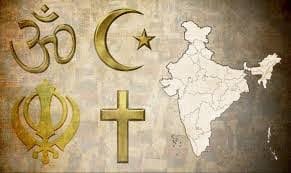
Freedom to Manage Religious Affairs - Constitutional provisions
- Article 26 grants citizens the right to conduct their religious matters.
- This Article guarantees the following four rights to every religious sect, subject to public order, morality, and health:
- Article 26(a): The right to create and maintain religious and benevolent organisations.
- Every religious institution has the right to create and sustain a religious institution. It is necessary to read the words established and maintained together.
- As a result, it is critical for a religious institution to first establish a religious institution before granting that group the right to maintain an institution.
- It should be noted that the right to maintain an institution includes the right to administer it as well.
- Article 26(b): Right to conduct its own religious concerns Every religious organisation has the right to conduct its own religious affairs. The state has no power to intervene in these situations unless it threatens public order, morals, or people' health.
- Article 26(c): Right to possess and acquire movable and immovable property.
- Every religious denomination and branch has complete ownership and acquisition rights to all moveable and immovable property. By law, the state can govern the property of a religious group.
- Article 26(d): The right to manage such property in conformity with the law. It is the religious institutions' right to buy the property.
- They have the freedom to govern the property in conformity with the law after they have acquired it.
- The administration of religious entity property can be regulated by the state. It is also critical to note that the state cannot completely remove the religious institution's administrative authority.
Constituent Assembly Debates
- At the time of discussion this Article didn't have any restrictions as such. Dr BR Ambedkar moved an amendment to include “subject to public order, morality and health” to ensure the state has the ability to regulate religious institutions.
- A member of the constitutional assembly raised objections to the phrase “charitable” in clause(a). He felt that allowing religious denominations to maintain charitable institutions solely to benefit their own members violated the principles of fraternity and single nationality in the Constitution.
Important Supreme Court Judgements
Azeez Basha v. Union of India
- The government made certain amendments in the years 1951 and 1965 to the Aligarh Muslim University Act, 1920.
- These were challenged by the petitioner on the ground that it violated Articles 25,26,29 and 30 (the right to establish and manage religious educational institutions by minorities)
- Supreme Court held that AMU was “established” through the enactment of a law, the Aligarh Muslim University Act, 1920. This meant, AMU does not qualify for minority status as it was not established by the Muslim community.
Saifuddin Saheb v. State of Bombay AIR 1962 SC 853
- The State of Bombay passed the Bombay Prevention of Ex-Communication Act, 1949, which sought to prevent the ex-communication of members of any community.
- Saifuddin Saheb, the religious head of the Dawoodi Bohra Community challenged the Act, arguing that it violated the fundamental rights guaranteed under Articles 25 and 26 of the Indian Constitution.
- The Supreme Court observed that the power of ex-communication by the religious head was integral to the essential affairs of the Dawoodi Bohra Community and also violates both Articles 25 and 26 and was therefore void.
Conclusion
Article 26 highlights the constitutional commitment to respect and protect the autonomy of religious communities, fostering a pluralistic society where diverse religious practices can thrive. It strikes a balance between individual freedoms and communal rights, ensuring that religious groups can manage their affairs independently while remaining within the framework of the law.
FAQs
Q1: What is Article 26 of the Indian Constitution?
Answer: Article 26 guarantees the freedom to manage religious affairs, allowing every religious denomination the right to establish and maintain institutions for religious and charitable purposes.
Q2: What rights does Article 26 confer to religious groups?
Answer: It grants the right to manage their own affairs in matters of religion, establish and maintain places of worship, and manage their own property.
Q3: Can the government interfere in religious affairs according to Article 26?
Answer: While Article 26 provides autonomy, the state can impose reasonable restrictions in the interest of public order, morality, and health.
Q4: What is meant by 'religious denomination' in Article 26?
Answer: A religious denomination refers to a distinct religious group that is recognized as such by the law and is allowed to manage its own affairs.
Q5: How does Article 26 relate to other fundamental rights?
Answer: Article 26 is part of the fundamental rights guaranteed under Part III of the Constitution, complementing rights to freedom of speech, expression, and practice of religion.
MCQs
- Which article of the Indian Constitution provides the freedom to manage religious affairs?
a) Article 19
b) Article 25
c) Article 26
d) Article 30
Answer: (c) See the Explanation
Article 26 specifically grants individuals and groups the freedom to manage their religious affairs, establishing their right to maintain religious institutions.
- What does Article 26 NOT allow the government to do?
a) Regulate the affairs of religion
b) Impose reasonable restrictions
c) Prevent the establishment of places of worship
d) Manage properties of religious institutions
Answer: (c) See the Explanation
Article 26 provides for the establishment of places of worship, hence the government cannot prevent this right unless justified under reasonable restrictions.
- Which of the following is a provision of Article 26?
a) Freedom to propagate religion
b) Freedom to establish religious institutions
c) Freedom of speech
d) Freedom of assembly
Answer: (b) See the Explanation
Article 26 includes the freedom to establish and maintain institutions for religious purposes as a fundamental right.
- Under what circumstances can the state impose restrictions on the rights granted by Article 26?
a) National security
b) Public order, morality, and health
c) Economic development
d) Cultural practices
Answer: (b) See the Explanation
The state can impose restrictions on the freedom to manage religious affairs only for reasons related to public order, morality, and health.
- Which of the following best describes 'religious denomination' as per Article 26?
a) Any individual believer
b) A distinct religious community
c) All religions combined
d) Any organization
Answer: (b) See the Explanation
'Religious denomination' refers to a distinct religious community that is recognized as such under the law, entitled to manage its own affairs.
GS Mains Questions and Model Answers
Q1: Discuss the significance of Article 26 in maintaining religious freedom in India.
Answer: Article 26 plays a crucial role in upholding the fundamental right to religious freedom in India by empowering religious denominations to manage their own affairs, including establishing and maintaining places of worship. This autonomy fosters a pluralistic society where diverse religious practices can flourish without state interference, thereby promoting social harmony and respect for individual beliefs. Furthermore, it ensures that communities can preserve their religious heritage and cultural practices, which is essential for the democratic fabric of the nation.
Q2: Analyze the balance between Article 26 and the state's power to regulate religious practices.
Answer: Article 26 offers significant protections to religious groups; however, it is not absolute. The Constitution permits the state to impose reasonable restrictions on this freedom in the interest of public order, morality, and health. This balance is critical in a diverse society like India, where multiple religious communities coexist. While autonomy is essential for preserving cultural identity, the state's regulatory power helps prevent potential conflicts and ensures that one group's practices do not infringe upon the rights and well-being of others. Thus, Article 26 embodies the delicate equilibrium between individual rights and collective responsibilities.
Q3: Evaluate the challenges faced in the implementation of Article 26 in contemporary India.
Answer: Despite its robust framework, the implementation of Article 26 faces several challenges. One major issue is the rise of communal tensions that can arise from the misuse of religious freedoms, leading to conflicts among different denominations. Additionally, the lack of awareness about rights under Article 26 among various communities can hinder their ability to assert these rights effectively. Furthermore, political interference in religious affairs often complicates the autonomy granted by this article, leading to potential violations. Addressing these challenges requires legal reforms, public awareness campaigns, and a commitment to maintaining the secular fabric of the Indian state.
Previous Year Questions on Article 26
1. UPSC CSE 2019
Question: "What is the significance of Article 26 of the Indian Constitution?"
Answer: Article 26 is significant as it empowers religious denominations to manage their affairs without undue interference from the state, fostering an environment of religious freedom. This autonomy ensures that various communities can maintain their cultural and spiritual identities, which is vital in a diverse nation like India. Furthermore, it contributes to the overall framework of fundamental rights, reinforcing the notion that the state should respect and protect the freedom of religion. The provisions under Article 26 also underline the importance of pluralism in Indian society, allowing multiple beliefs to coexist harmoniously.
2. UPSC CSE 2020
Question: "Discuss how Article 26 interacts with the concept of secularism in India."
Answer: Article 26 interacts with the concept of secularism in India by establishing a framework where all religions are treated equally, allowing religious groups to manage their affairs independently. This autonomy is essential for preserving the secular character of the Indian state, ensuring that no single religion dominates or receives preferential treatment. However, the state retains the right to impose reasonable restrictions to maintain public order and morality, highlighting the need for a balance between individual freedoms and societal harmony. Therefore, Article 26 is integral to upholding both religious freedoms and the secular ethos of India.
*email: contactus@prepp.in
Download the PREPP App and attempt FREE IAS Exam Mock Tests and get complete study material!

Full Test - 04: UPSC CSE Prelims CSAT (Paper-II)
Full Test - 03: UPSC CSE Prelims CSAT (Paper-II)
UPSC CSE Prelims 2026 CSAT Paper 2 Question Paper (24-May-2026)
UPSC CSE Prelims 2026 GS Paper 1 Question Paper (24-May-2026)

17 February 2025 | The Hindu Must Read Articles | Current Affairs

16 February 2026 | The Hindu Must Read Articles | Current Affairs

13 February 2026 | The Hindu Must Read Articles | Current Affairs









Comments