Protection of Interests of Minorities (Article 29) - Indian Polity Notes
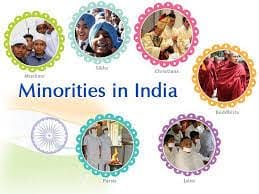
Protection of Interests of Minorities is established in Article 29 in the Indian Constitution. A linguistic or religious minority community can conserve its language and culture through educational institutions but no citizen must be discriminated against from entering such educational institutions. The discrimination should not be on grounds only of religion, race, caste, language or any of them. The rights of Indian people in terms of culture and education are covered in Articles 29 and 30. This fundamental rights is very important in the context of the UPSC Exam. In this article, we will explain the constitutional provisions, look into the constituent assembly debates and decode the Supreme Court judgements on this fundamental right.
Table of Contents
Constitutional Provisions
- Article 29 provides that any section of the citizens residing in any part of India having a distinct language, script or culture of its own, shall have the right to conserve the same.
- The first clause, Article 29(1), safeguards a group's rights. While the second clause, Article 29(2), ensures a citizen's right as an individual regardless of the group to which he belongs.
- Minorities have an absolute right under Article 29(1). It cannot be subjected to reasonable limits in the public interest.
- No citizen must be discriminated against from entering such educational institutions on grounds only of religion, race, caste, language or any of them.
- The term “minority” is not defined in the Constitution and the courts interpret the meaning based on different cases.
- Religious minorities and linguistic minorities are also protected under Article 29.
- The Supreme Court, however, ruled that the reach of this article is not necessarily limited to minorities, as is widely understood.
- This is due to the inclusion of the term "part of citizens" in the Article, which includes both minorities and the majority.
- The Supreme Court also ruled that the right to preserve a language includes the right to advocate for its preservation.
- As a result, political statements or pledges made for the preservation of a segment of the people's language do not constitute corrupt practices under the Representation of the People Act, 1951.
|
Article 29 states that:
|
|
"Article 29 safeguards cultural diversity, ensuring every citizen's right to conserve their distinct language, script, and heritage." |
Constituent Assembly Debates
- A member of the constituent Assembly felt that there must be a provision for the minorities to “develop” their culture along with conserving them.
- Another member wanted the Draft Article's scope to be limited to linguistic minorities solely. He claimed that respecting religious minorities' unique privileges would promote communalism.
Difference between Article 29(2) and Article 15(1)
When we read Article 29(2), we recognised that it was identical to Article 15(1). However, take notice that there are some differences between the two here.
| Article 29(2) | Article 15(1) |
|---|---|
|
Rights are protected against the state and other entities |
Only protects rights against the state. Many sorts of discrimination are prohibited. |
|
Discrimination based on 'Sex' or 'Birth Place' is not prohibited |
Discrimination based on 'Sex' and 'Birth Place' is prohibited. |
|
Only applicable to admission to a state-run educational institution or obtaining help from state money. |
This provision is broader in scope and applies to all citizens, regardless of minority or majority status. |
Important Court Judgements
Azeez Basha v. Union of India
- The government made certain amendments in the years 1951 and 1965 to the Aligarh Muslim University Act, 1920.
- These were challenged by the petitioner on the ground that it violated Articles 25,26,29 and 30 (the right to establish and manage religious educational institutions by minorities)
- Supreme Court held that AMU was “established” through the enactment of a law, the Aligarh Muslim University Act, 1920. This meant, AMU does not qualify for minority status as it was not established by the Muslim community.
Dr Naresh Agarwal v. Union of India
- The petitioner contested against the 50% of the seats to be filled on the basis of entrance examination conducted by Aligarh Muslim University and the other 50% of the seats was reserved for Muslim Candidates.
- The Allahabad Court followed Azeez Basha’s case verdict and declared AMU is not a minority institution and declared the process void.
Conclusion
"Unity in Diversity" is the most important theme of our constitution. Minority status is determined not only by religion but also by language differences. Minorities will be able to retain and develop their culture thanks to these provisions in the constitution.
FAQs
What is the protection of interests of minorities under Article 29 of the Indian Constitution?
Answer: Article 29 of the Indian Constitution provides protection to the interests of minorities by ensuring that any group of citizens with a distinct language, script, or culture can preserve and promote their unique heritage. It also ensures that no citizen can be discriminated against on the basis of religion, race, caste, language, or any of these factors when entering state-funded educational institutions.
What is the difference between Article 29(1) and Article 29(2)?
Answer: Article 29(1) protects the rights of groups to conserve their culture, language, and heritage, while Article 29(2) ensures that no citizen is denied admission to educational institutions on grounds of religion, race, caste, or language.
What is the significance of the Azeez Basha v. Union of India case?
Answer: In this case, the Supreme Court ruled that Aligarh Muslim University (AMU) does not qualify for minority status because it was established by a central act, not the Muslim community. This landmark ruling clarified that institutions established by legislation cannot claim minority status.
How does Article 29 safeguard minority rights in education?
Answer: Article 29(2) ensures that no person is denied admission to any state-run or state-aided educational institution on grounds of religion, race, caste, language, or any combination of these factors, promoting equal access to education.
What is the term ‘minority’ as per the Indian Constitution?
Answer: The term ‘minority’ is not explicitly defined in the Constitution of India. Its interpretation depends on the context, including whether the reference is religious, linguistic, or cultural, and is left to be decided by the courts in different cases.
MCQs
- What does Article 29(1) of the Indian Constitution guarantee?
A) Right to form a new religion
B) Right of minorities to conserve their language, script, or culture
C) Right to free education
D) Right to establish religious institutions
Answer: (B) See the Explanation
Article 29(1) safeguards the rights of citizens to preserve and promote their distinct language, script, or culture.
- Which of the following cases clarified the concept of minority institutions in India?
A) Azeez Basha v. Union of India
B) Kesavananda Bharati v. State of Kerala
C) Minerva Mills v. Union of India
D) Maneka Gandhi v. Union of India
Answer: (A) See the Explanation
The Azeez Basha case clarified that the Aligarh Muslim University, established by a central law, does not qualify as a minority institution.
- What does Article 29(2) protect?
A) The right of minorities to establish educational institutions
B) The right to equality before the law
C) The right to equal access to educational institutions regardless of religion, race, caste, or language
D) The right to manage religious institutions
Answer: (C) See the Explanation
Article 29(2) ensures that no citizen is discriminated against while seeking admission to state-funded educational institutions.
- Which of the following does not come under the protection provided by Article 29?
A) Right to conserve cultural heritage
B) Right to enter educational institutions without discrimination
C) Right to freedom of speech
D) Right to preserve one's distinct language or script
Answer: (C) See the Explanation
The right to freedom of speech is covered under Article 19, not Article 29.
- Which of the following is NOT protected under Article 29?
A) Right of citizens to establish and manage minority educational institutions
B) Right to preserve a distinct language, culture, and script
C) Right to not face discrimination in educational admissions
D) Right to practice any religion freely
Answer: (D) See the Explanation
The right to practice religion is protected under Article 25, not Article 29.
GS Mains Questions and Model Answers
Q1: Discuss the provisions of Article 29 regarding the protection of minorities in India.
Answer: Article 29 of the Indian Constitution ensures that minorities can preserve and promote their distinct language, script, or culture. It guarantees the right to establish educational institutions to conserve these aspects of minority groups. Article 29(1) specifically protects the collective rights of minorities, while Article 29(2) ensures that individuals cannot be denied admission to state-run or aided educational institutions based on religion, race, caste, or language. These provisions play a crucial role in fostering a diverse and inclusive society by safeguarding minority cultures and promoting equal access to education for all citizens, regardless of their background.
Q2: Analyze the role of Article 29 in ensuring cultural diversity and promoting inclusivity in educational institutions.
Answer: Article 29 ensures that cultural diversity is preserved by protecting the rights of minorities to conserve their unique heritage. By granting them the right to maintain and promote their language, script, and culture, the article fosters an inclusive environment that encourages diversity. Additionally, Article 29(2) prohibits discrimination in educational institutions based on religion, race, caste, or language, thereby ensuring that all citizens, regardless of their social or cultural background, have equal access to education. This provision not only safeguards minority interests but also contributes to a more inclusive and equitable educational system, promoting social harmony and understanding.
Q3: Evaluate the impact of the Azeez Basha v. Union of India case on the interpretation of minority status in India.
Answer: The Azeez Basha v. Union of India case had a significant impact on the interpretation of minority status in India. The Supreme Court ruled that institutions established by central laws, like the Aligarh Muslim University (AMU), cannot claim minority status simply because they serve a particular religious community. This judgment clarified that for an institution to be considered a minority institution, it must be established by the minority community itself. The case reinforced the principle that the protection provided by Articles 29 and 30 is meant for institutions that genuinely represent the interests of minority groups, ensuring that such institutions are not unjustly categorized as minority institutions when they are not established by the minority community.
Previous Year Questions on Protection of Interests of Minorities
1. UPSC CSE 2018
Question: "Discuss the constitutional provisions under Article 29 for the protection of minorities in India."
Answer: Article 29 of the Indian Constitution provides safeguards for minorities by allowing them to preserve and promote their distinct language, culture, and script. It also ensures that no citizen is discriminated against when seeking admission to educational institutions funded by the state on the grounds of religion, race, caste, or language. These provisions aim to promote equality, diversity, and inclusivity in society, ensuring that minority communities can thrive without facing discrimination.
2. UPSC CSE 2019
Question: "Explain the significance of Article 29(2) in promoting social justice in educational institutions."
Answer: Article 29(2) plays a crucial role in promoting social justice by ensuring that no individual is denied admission to any state-funded educational institution on the basis of religion, race, caste, or language. This provision fosters equality of opportunity in education and promotes inclusivity by preventing discrimination based on these factors. By securing equal access to education for all citizens, it contributes to social justice and reduces barriers to upward mobility for disadvantaged groups, promoting a more inclusive and equitable society.
*email: contactus@prepp.in
Download the PREPP App and attempt FREE IAS Exam Mock Tests and get complete study material!
UPSC IAS : CSAT - Mini Live Test

Live Test : UPSC CSE Prelims CSAT (Paper-II) (Oct 20 - 23)
Full Test - 04: UPSC CSE Prelims CSAT (Paper-II)
Full Test - 03: UPSC CSE Prelims CSAT (Paper-II)
UPSC CSE Prelims 2026 GS Paper 1 Question Paper (24-May-2026)
UPSC CSE Prelims 2026 CSAT Paper 2 Question Paper (24-May-2026)

17 February 2025 | The Hindu Must Read Articles | Current Affairs

16 February 2026 | The Hindu Must Read Articles | Current Affairs

13 February 2026 | The Hindu Must Read Articles | Current Affairs









Comments