
Composition of the Atmosphere - Geography Notes
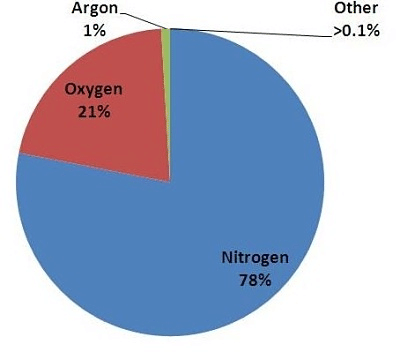
Earth’s atmosphere is composed of about 78 % nitrogen, 21 % oxygen, 0.9 % argon, and 0.1 % other gases. Trace amounts of carbon dioxide, methane, water vapour, and neon are some of the other gases that make up the remaining 0.1 %.
|
Table of Contents |
What is the Atmosphere?
- The atmosphere is a gaseous layer that protects all life on Earth by maintaining a constant temperature and deflecting harmful sun rays.
- The atmosphere allows the sun's heat to be trapped instead of escaping into space.
- It shields living things from the harmful effects of the sun's rays.
- The Earth's water cycle is influenced by the atmosphere.
- There is no boundary between the atmosphere and outer space.
- The atmosphere gradually becomes less dense as it approaches the outer atmosphere, until it "blends" with it.
|
|
|
|---|---|
| Troposphere | Tropopause |
| Stratosphere | Mesosphere |
| Stratopause | Mesopause |
| Insolation and Heat Budget | Thermosphere |
| Elements of Weather and Climate | Structure of the Atmosphere |
Composition of the Atmosphere
The atmosphere is composed of numerous gases. These glasses are divided into two categories i.e., constant gases and variable gases.
Constant Gases
- Nitrogen, oxygen, and argon are called the “constant gases” because their concentration has remained virtually the same for much of recent Earth history.
- Nitrogen (78%): It is a relatively inert gas produced primarily by volcanic eruptions. Most atmospheric nitrogen enters the soil by nitrogen-fixing microorganisms.
- Oxygen (21%): It is chemically very active, combining readily with other elements in the process of oxidation. Free oxygen in the atmosphere is a product of plant photosynthesis.
- Argon (0.93%): It is a colourless, odourless, relatively inert gas.
Variable Gasses
- The so-called variable gasses are those present in small and variable amounts. These include carbon dioxide, methane, ozone, water vapor, and particulates among others.
- Even though they represent a tiny portion of the atmosphere as a whole, they exert great control over our environment.
Carbon dioxide
- CO2 makes up only 0.036% of the atmosphere by volume. Co2 is the fourth most abundant gas.
- Carbon dioxide in the atmosphere shows seasonal variation, decreasing slightly during the summer as plants leaf out and then increasing during the winter as plants go dormant and photosynthesis decreases.
- The greenhouse effect is caused when longwave radiation is absorbed by CO2 molecules in the lower atmosphere, which reradiates some of that heat back to the surface.
Methane (CH4)
- It is a greenhouse gas that contributes to about 18% of global warming and has been on the rise over the last several decades.
- Though methane makes up for less of the atmosphere (0.0002%) than carbon dioxide, it is 20 times more potent than CO2 as a greenhouse gas. Human activity has contributed to the rise of methane in our atmosphere.
- Landfills, rice paddy agriculture, natural gas systems, and livestock production appear to be significant contributors to anthropogenic sources of methane.
Ozone (O3)
- It is both beneficial and harmful to life on earth. Much of the ozone in the atmosphere is found in the stratosphere at a height of 15-50 Km from the Earth’s surface.
- Here ozone absorbs UV light from the sun preventing it from reaching the surface.
- Ozone is also found in the lowest layer of the atmosphere, the troposphere. But here ozone can act as an eye and respiratory irritant.
Water Vapor
- It is the most variable of the atmospheric gasses and can range from 0.02% by volume in a cold, dry Antarctic climate of Antarctica to more than 4% in the humid tropics.
- Water vapor is a good absorber of the Earth’s outgoing radiation and thus is considered a greenhouse gas.
*Click on the following link to learn about the Atmospheric Layers
Conclusion
Because of its simplicity, inherent logic, and scientific appeal, the tidal hypothesis, as proposed by James Jeans and modified by Harold Jeffreys, enjoyed a long period of popularity and wide acceptance until the end of the first half of the twentieth century, but the hypothesis was severely criticised on various grounds. Even Jeffreys admitted in Guttenberg (1951) that his modified version of the tidal hypothesis needed significant revisions and was incorrect in several places.
|
|
|
|---|---|
| Geography Notes | Physical Geography |
| Atmosphere | Geomorphology |
| Climatology | Lakes and Its Types |
| Plateau and its Types | Geomorphic Processes |
FAQs
Question: What is the composition of Earth's atmosphere?
Answer: The Earth's atmosphere is primarily composed of nitrogen (78%), oxygen (21%), and trace amounts of other gases, including argon (0.93%), carbon dioxide (0.04%), neon, helium, methane, and hydrogen. In addition to these gases, the atmosphere contains water vapor, which varies in concentration depending on the location and weather conditions. The composition of the atmosphere plays a crucial role in maintaining life on Earth by supporting respiration, regulating temperature, and protecting the planet from harmful solar radiation.
Question: What is the role of nitrogen in the atmosphere?
Answer: Nitrogen (N₂) makes up about 78% of the Earth's atmosphere and is chemically inert, meaning it does not readily react with other elements under normal conditions. Its primary role in the atmosphere is to provide stability, preventing oxygen from reacting with other elements too quickly, which could lead to combustion. Additionally, nitrogen is a crucial component of amino acids and proteins, which are essential for life, and it is involved in the nitrogen cycle that sustains ecosystems.
Question: How does oxygen in the atmosphere support life?
Answer: Oxygen (O₂), which makes up about 21% of the Earth's atmosphere, is essential for the process of respiration in most living organisms. In humans and animals, oxygen is used to release energy from food, a process that occurs in the mitochondria of cells. Plants also require oxygen for respiration, though they produce oxygen during photosynthesis. The balance between oxygen production and consumption helps maintain a stable environment that supports life on Earth.
Question: What is the significance of trace gases in the atmosphere?
Answer: While trace gases, such as carbon dioxide (CO₂), argon (Ar), methane (CH₄), and neon, make up only a small percentage of the atmosphere, they play crucial roles in maintaining Earth's climate and supporting life. For example, carbon dioxide is essential for photosynthesis in plants and contributes to the greenhouse effect, helping regulate Earth's temperature. Methane is a potent greenhouse gas, and trace gases like ozone (O₃) are important for protecting the Earth from harmful ultraviolet radiation by absorbing it in the stratosphere.
Question: How does the composition of the atmosphere affect weather and climate?
Answer: The composition of the atmosphere influences both weather and climate through various processes. Gases like water vapor and carbon dioxide are critical in regulating the Earth's temperature by trapping heat in the atmosphere, a phenomenon known as the greenhouse effect. Water vapor, which is the most abundant greenhouse gas, influences cloud formation, precipitation, and storms, thereby directly affecting weather patterns. Long-term changes in the concentration of greenhouse gases can lead to shifts in climate, influencing global temperatures, precipitation patterns, and extreme weather events.
MCQs
1. What is the most abundant gas in Earth's atmosphere?
A) Oxygen
B) Nitrogen
C) Carbon Dioxide
D) Argon
Answer: (B) See the Explanation
Explanation: Nitrogen (N₂) is the most abundant gas in Earth's atmosphere, making up about 78% of the atmosphere’s composition.
2. Which of the following gases is essential for respiration in animals?
A) Carbon Dioxide
B) Oxygen
C) Nitrogen
D) Hydrogen
Answer: (B) See the Explanation
Explanation: Oxygen (O₂) is essential for respiration in animals, where it is used to release energy from food in the process of cellular respiration.
3. What percentage of Earth's atmosphere is made up of oxygen?
A) 50%
B) 21%
C) 78%
D) 30%
Answer: (B) See the Explanation
Explanation: Oxygen (O₂) makes up about 21% of Earth's atmosphere and is vital for life on the planet.
4. Which gas contributes to the greenhouse effect in the Earth's atmosphere?
A) Nitrogen
B) Oxygen
C) Carbon Dioxide
D) Neon
Answer: (C) See the Explanation
Explanation: Carbon dioxide (CO₂) is a greenhouse gas that contributes to the greenhouse effect, which helps trap heat in the atmosphere and regulate Earth's temperature.
5. What is the role of water vapor in the atmosphere?
A) Provides oxygen for respiration
B) Contributes to the formation of clouds and precipitation
C) Reduces atmospheric pressure
D) Prevents UV radiation from reaching the Earth
Answer: (B) See the Explanation
Explanation: Water vapor is crucial for the formation of clouds and precipitation, influencing weather patterns such as rainfall and storms.
GS Mains Questions and Model Answers
Q1: Analyze the impact of human activities on the composition of Earth's atmosphere and its implications for climate change.
Answer: Human activities such as deforestation, industrial emissions, and burning of fossil fuels have led to an increase in greenhouse gases like carbon dioxide, methane, and nitrous oxide in the atmosphere. These changes disrupt the natural balance of gases, amplifying the greenhouse effect and contributing to global warming. The rise in global temperatures has significant implications for climate patterns, including increased frequency of extreme weather events, rising sea levels, and shifts in precipitation patterns. It also threatens biodiversity and poses challenges for agriculture, water resources, and human health. The enhanced concentration of greenhouse gases in the atmosphere is the primary driver of anthropogenic climate change, necessitating urgent measures to reduce emissions and transition to renewable energy sources.
Q2: Discuss the role of trace gases in Earth's atmosphere and their contribution to global climate dynamics.
Answer: Trace gases, despite making up a small fraction of the atmosphere, play a critical role in climate regulation. Carbon dioxide, methane, and ozone are prominent greenhouse gases that significantly contribute to the Earth's warming. For example, methane, though less abundant, is far more effective at trapping heat than carbon dioxide, making it a potent greenhouse gas. Ozone in the stratosphere protects the Earth from harmful ultraviolet radiation. The presence of these trace gases impacts the Earth's energy balance, climate stability, and overall environmental health. An increase in their concentrations due to human activities accelerates global warming, disrupts climate patterns, and has various ecological and socio-economic consequences.
Q3: Evaluate the potential consequences of changes in atmospheric composition due to increasing pollution and their effects on weather patterns and human health.
Answer: Changes in atmospheric composition due to increasing pollution, especially the rise in particulate matter, greenhouse gases, and aerosols, can significantly alter weather patterns. The increase in greenhouse gases such as CO₂ enhances the greenhouse effect, leading to global warming and changes in regional climates, including shifts in rainfall, higher temperatures, and more frequent extreme weather events such as floods, droughts, and storms. Additionally, air pollution leads to poor air quality, which can result in respiratory and cardiovascular diseases, particularly in urban areas. Long-term exposure to pollutants is linked to chronic health problems, reduced life expectancy, and increased healthcare costs. The alteration of atmospheric composition due to pollution is a global concern, requiring international cooperation to reduce emissions and mitigate health risks.
Previous Year Questions on Atmospheric Composition
1. UPSC CSE Prelims 2021:
Question: Which of the following gases is most responsible for the greenhouse effect in the Earth's atmosphere?
A) Carbon Dioxide
B) Nitrogen
C) Oxygen
D) Neon
Answer: (A)
Explanation: Carbon dioxide (CO₂) is the primary greenhouse gas responsible for trapping heat in the atmosphere, leading to global warming and climate change.
2. UPSC CSE Mains 2020 (GS Paper 3):
Question: "Discuss the impact of increased levels of carbon dioxide and methane on Earth's atmosphere and its climate."
Answer: Increased levels of carbon dioxide and methane in the atmosphere intensify the greenhouse effect, which leads to global warming. Carbon dioxide, the most abundant greenhouse gas, traps heat within the Earth’s atmosphere, raising global temperatures. Methane, though present in smaller quantities, is more potent than carbon dioxide in terms of heat retention. The higher concentrations of these gases disrupt climate patterns, causing more frequent extreme weather events such as storms, droughts, and floods, and contributing to the melting of glaciers and rising sea levels. The impact of these gases on Earth's atmosphere is a significant concern for the future of ecosystems, agriculture, and human habitation.
Download the PREPP App and attempt FREE IAS Exam Mock Tests and get complete study material!


Comments