Zonal Councils - Indian Polity Notes
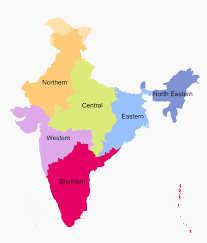
Zonal Council is a statutory body established by the State Reorganisation Act of 1956. They were established on the recommendations of India’s first Prime Minister Pandit Nehru, when linguistic hostilities and bitterness as a result of re-organisation of the States were threatening the very fabric of our nation. Zonal Councils provide an excellent forum where irritants between Centre and States and amongst States can be resolved through free and frank discussions. The act divided the country into five zones: Northern, Central, Eastern, Western, and Southern, with each zone having its own zonal council. Home Minister is the common chairman of all the zonal councils. This article explains about the Zonal Council, Compositions and Objectives which is useful for UPSC Prelim and Mains 2024.
|
Table of Contents |

Zonal Councils
- The zonal council is a statutory body established under the State Reorganisation Act of 1956, it's a statutory body. It is not a constitutional body. It is an organ of deliberation and advice.
- The purpose of creating zonal councils is to promote interstate cooperation and coordination.
- The concept of Zonal Councils was proposed by India's first Prime Minister, Pandit Jawahar Lal Nehru, during a discussion on the findings of the States Reorganisation Commission in 1956.
- According to Section 17(1) of the States Reorganisation Act, each Zonal Council shall meet at such time as the Meetings of Chairman of the Council may appoint in this behalf and shall, the Councils.
- The statue has also formed the Secretariat of the Zonal Councils.
- The Secretariat of the Zonal Councils investigates centre-state, inter-state, and zonal topics that will be debated by the Councils or Standing Committees.
|
|
|
|---|---|
| Inter state council | Inter-State Water disputes |
| Legislative Relations | Trends in Centre-State Relations |
| Financial Relations | Administrative Relations |
|
Zonal Councils provide an excellent forum where irritants between Centre and States and amongst States can be resolved through free and frank discussions and consultations.
|
Zonal Councils - Composition
- Chairman -The Union Home Minister is the chairman of each council.
- Vice Chairman: The Chief Ministers of the States included in each zone act as Vice-Chairman of the Zonal Council for that zone by rotation, each holding office for a period of one year at a time.
- Members: The Chief Minister and two other ministers nominated by the governor of each state, and two members from the Union territories within that zone.
- Advisor: One person nominated by the Planning Commission (now by NITI Aayog) for each of the Zonal Councils, Chief Secretaries and another officer/Development Commissioner nominated by each of the States included in the Zone.
- If necessary, the ministers of the Union are also invited to participate in the meetings of the regional committees.
Zonal Councils - Objectives
- To promote national integration.
- Stop the growth of extreme state consciousness, regionalism, linguisticism, and particularism.
- Allow the center and states to cooperate and exchange ideas and experiences.
- Establish an atmosphere of cooperation between countries for the successful and rapid implementation of development projects.
Zonal councils - Functions
- Each Zonal Council is an advisory body that may discuss any matter in which some or all of the States represented in that Council, or the Union and one or more of the States represented in that Council, have a common interest and advise the Central Government and the Government of each State concerned on the appropriate action to be taken.
- A Zonal Council, in particular, may discuss and make recommendations on:
- any matter of common interest in the field of economic and social planning;
- any matter concerning border disputes, linguistic minorities, or inter-State transport;
- any matter connected with or arising out of the States Reorganisation Act.
How many zonal councils are there?
There are five zonal councils, namely:
- The Northern zonal council - It includes: Haryana, Himachal Pradesh, Jammu and Kashmir, Punjab, Rajasthan, Delhi National Capital Territory, and Chandigarh Union Territory.
- The Central zonal council - It includes: Chhattisgarh, Uttarakhand, Uttar Pradesh and Madhya Pradesh.
- The Eastern zonal council - It includes: Bihar, Jharkhand, Odisha and West Bengal.
- The Western zonal councils - It includes Goa, Gujarat, Maharashtra and the Union Territories of Daman & Diu and Dadra & Nagar Haveli.
- The Southern zonal council - It includes: the combined territories of Andhra Pradesh, Telangana, Karnataka, Kerala, Tamil Nadu and Pondicherry.
The northeastern states, namely (i) Assam (ii) Arunachal Pradesh (iii) Manipur (iv) Tripura (v) Mizoram (vi) Megara Yabang (vii) Sikkim and (viii) Nagaland are not included in the zonal council and its special issues, which are administered by the Northeast Council established under the Northeast Council Act of 1972.
Zonal councils - Significance
- The Zonal Councils provide a great platform for resolving issues between the Centre and the states, as well as among the states, via open and honest conversations and deliberations.
- As advisory bodies, their meetings allow for a free and open exchange of ideas.
- Though there are other fora, such as the National Development Council, Inter-State Council, Governor's/Chief Minister's Conferences, and other periodic high-level conferences conducted under the auspices of the Union Government, the Zonal Councils are distinct in both substance and character.
- They are regional cooperation endeavours for states that are economically, politically, and culturally integrated.
- Being compact high-level entities designed specifically to look after the interests of respective zones, they are capable of focusing attention on specific concerns while taking regional elements into account and maintaining the national viewpoint in mind.
Conclusion
The Zonal Councils provide a platform for discussing and resolving various issues, including infrastructure development, security, economic and social planning, and cultural exchange, among others.
|
|
|
|---|---|
| Indian Polity UPSC Notes | Parliamentary System |
| Federal System | Centre-State Relations |
| Inter-State Relations | Comparing Features of Federal and Unitary Governments |
| State Legislature | State Government |
FAQs
Question: What are Zonal Councils in India?
Answer: Zonal Councils in India are advisory councils set up under the States Reorganisation Act of 1956. They aim to promote cooperation and coordination between states and the central government on issues of common interest, including economic and social planning, border disputes, and regional development.
Question: How many Zonal Councils are there in India?
Answer: India has six Zonal Councils: Northern, Central, Eastern, Western, Southern, and the North Eastern Council (which is a special statutory body). Each council comprises states grouped by geographical proximity to address regional issues.
Question: Who chairs the meetings of the Zonal Councils?
Answer: The Union Home Minister acts as the Chairman of all Zonal Council meetings. Each state’s Chief Minister acts as the Vice-Chairman on a rotational basis, providing leadership and fostering state-level discussions within the zone.
Question: What is the main objective of Zonal Councils?
Answer: The main objective of Zonal Councils is to foster interstate cooperation, resolve regional disputes, and promote balanced regional development. They serve as a platform for dialogue and coordination between the states and the central government to ensure policy harmonization and mutual understanding.
Question: How often do Zonal Councils meet?
Answer: Zonal Councils typically meet at least once a year, but meetings can be more frequent if needed. The regularity of these meetings is intended to facilitate continuous dialogue and timely resolution of interstate issues.
MCQs
1. Under which act were the Zonal Councils established?
A) Government of India Act, 1935
B) States Reorganisation Act, 1956
C) Indian Independence Act, 1947
D) Constitution of India
Answer: (B) See the Explanation
Explanation: Zonal Councils were established under the States Reorganisation Act of 1956 to promote interstate cooperation and coordination.
2. How many Zonal Councils are there in India, excluding the North Eastern Council?
A) Four
B) Five
C) Six
D) Seven
Answer: (B) See the Explanation
Explanation: There are five Zonal Councils in India: Northern, Central, Eastern, Western, and Southern. The North Eastern Council is a separate statutory body.
3. Who acts as the Chairman of the Zonal Council meetings?
A) Prime Minister
B) Chief Minister of the host state
C) Union Home Minister
D) President of India
Answer: (C) See the Explanation
Explanation: The Union Home Minister acts as the Chairman of the Zonal Council meetings, providing leadership and overseeing discussions.
4. What is the primary function of the Zonal Councils?
A) To implement national policies
B) To resolve interstate disputes and promote regional cooperation
C) To enforce state laws
D) To draft state budgets
Answer: (B) See the Explanation
Explanation: The primary function of the Zonal Councils is to resolve interstate disputes and foster regional cooperation by providing a platform for dialogue and coordination.
5. Who acts as the Vice-Chairman of a Zonal Council?
A) The Governor of the host state
B) The Chief Secretary of the host state
C) The Chief Minister of each state in rotation
D) The Union Home Secretary
Answer: (C) See the Explanation
Explanation: The Chief Minister of each state within the zone acts as the Vice-Chairman of the Zonal Council on a rotational basis.
GS Mains Questions and Model Answers
Q1: Explain the role of Zonal Councils in promoting interstate cooperation and coordination in India. How do they contribute to resolving regional disputes?
Answer: Zonal Councils play a pivotal role in promoting interstate cooperation and coordination in India. Established under the States Reorganisation Act of 1956, these councils serve as advisory bodies that facilitate discussions on issues of common interest such as economic development, border disputes, and social planning. Chaired by the Union Home Minister and with Chief Ministers acting as Vice-Chairmen on rotation, these councils ensure that both central and state perspectives are considered. By providing a structured platform for dialogue, Zonal Councils help resolve regional disputes amicably and promote policy harmonization, contributing to balanced regional development and fostering national unity.
Q2: Assess the effectiveness of Zonal Councils in addressing contemporary interstate challenges. What improvements can be made to enhance their role?
Answer: Zonal Councils have been effective in fostering dialogue and resolving interstate issues related to development, resource sharing, and border conflicts. Their structured meetings, chaired by the Union Home Minister, provide a formal mechanism for states to voice concerns and collaborate on common challenges. However, to enhance their role, improvements such as increased frequency of meetings, enhanced coordination with other intergovernmental bodies, and better implementation of decisions are needed. Strengthening the secretariat support and ensuring timely follow-up on decisions can also make Zonal Councils more effective in addressing contemporary challenges, including economic disparities and regional cooperation.
Q3: Discuss the significance of the North Eastern Council and its role compared to the other Zonal Councils. What unique challenges does it address?
Answer: The North Eastern Council (NEC) holds special significance compared to other Zonal Councils due to its statutory status and focus on the unique developmental needs of the northeastern states. Established under the North Eastern Council Act of 1971, it addresses challenges such as infrastructure deficits, economic isolation, and social issues specific to the region. Unlike other Zonal Councils, the NEC has a broader mandate that includes funding regional projects and coordinating development initiatives. It plays a crucial role in bridging the developmental gap between the northeastern states and the rest of India, promoting inclusive growth and integration. Enhancing NEC’s funding and coordination capabilities is essential for it to effectively address regional challenges.
Previous Year Questions on Zonal Councils
1. UPSC CSE Prelims 2021:
Question: Which act led to the creation of Zonal Councils in India?
A) Indian Independence Act, 1947
B) States Reorganisation Act, 1956
C) Government of India Act, 1935
D) Constitution (42nd Amendment) Act
Answer: (B)
Explanation: Zonal Councils were created under the States Reorganisation Act of 1956 to facilitate cooperation and coordination between states and the central government.
2. UPSC CSE Mains 2020 (GS Paper 2):
Question: "Evaluate the role of Zonal Councils in strengthening cooperative federalism in India. How effective are they in resolving interstate disputes?"
Answer: Zonal Councils are integral to strengthening cooperative federalism in India by fostering dialogue and cooperation between states and the central government. They provide a platform for states to discuss regional issues such as economic development, border disputes, and social welfare, thereby promoting coordination. While they have been effective in facilitating discussions, the implementation of their decisions often requires stronger follow-up. Enhancing the frequency of meetings and ensuring that their recommendations are acted upon can make Zonal Councils more effective in resolving interstate disputes and supporting cooperative federalism. Their role complements other intergovernmental mechanisms, contributing to balanced regional development and the resolution of shared challenges.
*email: contactus@prepp.in
Download the PREPP App and attempt FREE IAS Exam Mock Tests and get complete study material!

Full Test - 04: UPSC CSE Prelims CSAT (Paper-II)
Full Test - 03: UPSC CSE Prelims CSAT (Paper-II)
UPSC CSE Prelims 2026 GS Paper 1 Question Paper (24-May-2026)
UPSC CSE Prelims 2026 CSAT Paper 2 Question Paper (24-May-2026)

17 February 2025 | The Hindu Must Read Articles | Current Affairs

16 February 2026 | The Hindu Must Read Articles | Current Affairs

13 February 2026 | The Hindu Must Read Articles | Current Affairs









Comments