WHO Asks Countries To Work Towards Unlocking The Power Of Traditional Medicine
Relevance: GS2- Issues relating to development and management of Social Sector/Services relating to Health, Important International institutions, agencies, and fora- their structure, mandate. GS3 - Achievements of Indians in science & technology; indigenization of technology and developing new technology.
(Source: The Hindu, 08/17/2023)
Click here for Daily Current Affairs
Why in the news?
- Recently, the Director General of the WHO asked countries to work towards unlocking the benefits of traditional medicine and establishing its role in addressing global health challenges through evidence and action-based global strategy.
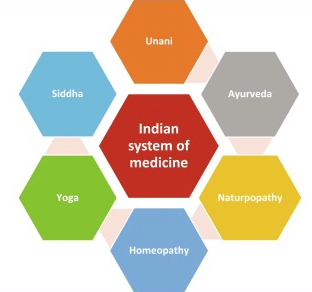
- India has six recognized systems of traditional medicine - Ayurveda, Siddha, Unani and Yoga, Naturopathy, and Homoeopathy.
- India currently has a medical workforce of 13 lakh allopathic doctors, 8 lakh AYUSH doctors, and 34 lakh nurses, auxiliary nurses, and midwives.
Table of Contents
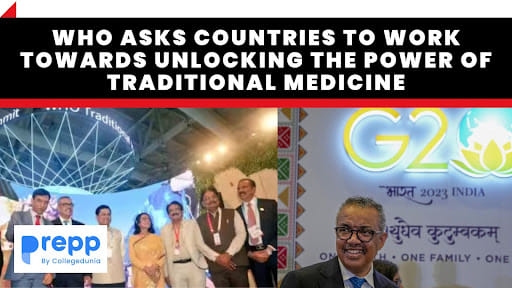
WHO’s Traditional Medicine Global Summit
- The first WHO global summit was organized in Gandhinagar on the 17th and 18th August as part of the G-20 Health Ministers’ meeting.
- It has the theme “Towards Health and Well-being for All”, and will explore the role of traditional, complementary, and integrative medicine in addressing pressing health challenges and sustainable development.
- Aim: Showcase the interconnectedness of Traditional Medicine with the natural environment in the form of ‘Kalpavriksha’ and the scientific and technological advancements led by the Ministry of Ayush and WHO regional centers.
- The Director General of the WHO expressed hope that the Gujarat Declaration would help countries integrate traditional medicines in national health systems.
- He also acknowledged India’s efforts to enhance Universal Health Coverage through the Ayushman Bharat scheme and the adoption of telemedicine.
- The Union Minister for Health suggested that a healthy blend of ancient knowledge and modern science could help the G-20 countries achieve the UN’s health-related Sustainable Development Goals while fostering an ethos of ‘One Earth, One Family, One Future’.
- He also conducted bilateral meetings with
- EU: Fortifying healthcare systems, enhancing disease surveillance capacities, Ayurveda Telemedicine; clinical trials and research, Medical Value Travel.
- Saudi Arabia: Exchanging experiences and best practices on regulatory requirements, joint ventures, technology transfer, de-risking supply chains, and boosting resilience.
- Germany: Cooperation in the Pharmaceutical sector, strengthening Value-based Healthcare through Medical Value Travel, cooperation in traditional medicine, promotion of digital health
WHO Global Centre for Traditional Medicine
- It is the first and only global outpost for traditional medicine in the world and is a collaborative project of the Ministry of Ayush and the World Health Organization (WHO).
- It was launched by the WHO in 2022 with the support of the Ministry of Ayush and is being constructed at Jamnagar, Gujarat.
- Objectives:
- Provide leadership on all global health matters related to traditional medicine
- Extend support to member countries in shaping public health and traditional medicine policies.
- Serve as a knowledge hub to integrate ancient wisdom with modern science.
- Supplement the WHO’s core functions and accelerate the advancement of traditional medicine across the world.
Significance of traditional medicine
- Potential benefits: AYUSH is doing evidence-based research to supplement modern medicine in order to develop scientific methods to deal with diseases like cancer, TB, and other communicable diseases and promote women's and child health.
- Popularity: Around 80% of the world’s population use traditional medicine, such as herbal medicines, indigenous therapies, etc.
- It is decentralized and thus easily accessible for rural people and the urban poor for whom other methods are inconvenient, time-consuming, and costly.
- Access: More than 12,500 Ayush-based Health & wellness centers are expected to be functional across the nation by 2026, out of which 8,500 are already in place.
- The Ministry of Home Affairs recently notified the creation of a new visa category, the Ayush Visa, for foreign nationals to visit India for medical treatment including therapeutic care, wellness, and yoga.
- Links with modern medicine: Modern drugs have been inspired by the traditional medicine methods used by indigenous communities across the world.
- Eg: Willow bark, and periwinkle form the basis for aspirin, and cancer drugs.
Other steps taken by India
- In 2014, the Union government established the Ministry of AYUSH, a separate ministry dedicated to traditional medicine and treatment.
- The National AYUSH Mission was launched to promote cost-effective AYUSH services, strengthen educational systems, enforce quality control of AYUSH drugs, and ensure sustainable availability of raw materials.
- The FSSAI introduced the AYUSH Aahar to help the producers of herbal nutritional supplements.
- The AYUSH Export Promotion Council has been set up recently to encourage exports and help find foreign markets.
- A network of AYUSH Parks is being established to encourage research and promote AYUSH manufacturing.
- An incubation centre has been developed by the All-India Institute of Ayurveda to encourage entrepreneurship in traditional medicine.
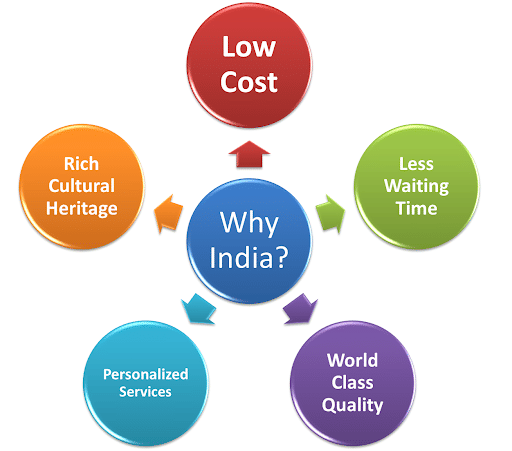
Medical Travel
- The Advantage Healthcare India portal - One Stop Digital Portal For Patient’ and ‘Workforce Mobility 'was launched by the Union Minister of Health.
- These two portals would allow India to offer a tangible solution to the most, pressing challenges in healthcare today.
- Advantage Healthcare India (AHCI) is the leading event in South East Asia focused on the medical value travel industry.
- The medical value travel sector is expected to grow at a CAGR of 29.3 % to reach a market size of ₹15 lakh crores by 2026 from ₹3.9 lakh crores in 2021.
- The Asia Pacific region including India accounts for nearly 46% of the sector.
- India has been ranked 10th out of the top 46 countries, 12th out of the world’s top 20 wellness tourism markets, and 5th out of 10 wellness tourism destinations in Asia-Pacific on the Medical Tourism Index 2020-21.
- Bangladesh (54%), Iraq, Maldives, Afghanistan, Oman, Yemen, Sudan, Kenya, Nigeria, and Tanzania account for 88% of the total international patients visiting India.
- The government has implemented various initiatives to promote India as a hub of medical tourism by developing awareness about the benefits of Ayurveda, yoga, and other Indian systems of medicine in the international market
- Significance:
- Medical value travel will enable greater knowledge-sharing, sustainable partnerships, and increased synergies which will help build a stronger and more efficient global health architecture.
- It will allow countries to offer and patients to access specialized resources and services that may not be available, affordable, or accessible in other parts of the world.
(*Click this link to read prelims specific weekly current affairs articles)
FAQs
Question: What is traditional medicine?
Answer:
According to the WHO, traditional medicine is the sum total of the knowledge, skill, and practices based on the theories, beliefs, and experiences indigenous to different cultures, whether explicable or not, used in the maintenance of health as well as in the prevention, diagnosis, improvement or treatment of physical and mental illness.
Question: What are some examples of traditional medicine?
Answer:
In addition to the well-known Ayurveda, Yoga, Unani, Siddha, and Homeopathy, other forms include Sowa Rigpa (Tibet and North India), Naatuvaidyam (South India), Uyghur traditional medicine, Native Hawaiian Lau lapaau, Japanese Kamp medicine, and traditional Aboriginal bush medicine.
UPSC Mains Practice Question:
|
MCQs
Question: Consider the following statements:
- Sowa Rigpa is a traditional form of medicine from Karnataka.
- It is also known as the Amchi system of medicine.
Which of the above statements is/are correct?
(a) 1 only
(b) 2 only
(c) Both 1 and 2
(d) None of the above
Answer: (b) See the Explanation
- Sowa Rigpa is a traditional form of medicine that originated in Tibet. It is practiced in India in Sikkim, Arunachal Pradesh, Darjeeling (West Bengal), Lahoul & Spiti (Himachal Pradesh), and the Ladakh region of Jammu & Kashmir, etc. Hence statement 1 is incorrect.
- It is also known as the Amchi system of medicine. The Gyud-Zi (four tantra) - Root Tantra, Exegetical Tantra, Instructional Tantra, and Subsequent Tantra - is the fundamental textbook of this medicine. Hence statement 2 is correct.
Therefore, option (b) is the correct answer.
Question: Consider the following statements:
- The National Ayush Mission is a Centrally sponsored mission.
- It is implemented by Vigyan Prasar and the Global Indian Scientists and Technocrats’ Forum.
Which of the above statements is/are correct?
(a) 1 only
(b) 2 only
(c) Both 1 and 2
(d) None of the above
Answer: (a) See the Explanation
- The National Ayush Mission is a Centrally sponsored mission managed and executed by the Ministry of AYUSH. Hence statement 1 is correct.
- The Vigyan Prasar, Vijnana Bharati, Global Indian Scientists and Technocrats’ Forum, and Pravasi Bharatiya Academic and Scientific Sampark (PRABHASS) launched Aahaar Kranti Mission to spread awareness about good nutrition. Hence statement 2 is incorrect.
Therefore, option (a) is the correct answer.
Download the PREPP App and attempt FREE IAS Exam Mock Tests and get complete study material!

Full Test - 04: UPSC CSE Prelims CSAT (Paper-II)
Full Test - 03: UPSC CSE Prelims CSAT (Paper-II)
UPSC CSE Prelims 2026 GS Paper 1 Question Paper (24-May-2026)
UPSC CSE Prelims 2026 CSAT Paper 2 Question Paper (24-May-2026)

17 February 2025 | The Hindu Must Read Articles | Current Affairs

16 February 2026 | The Hindu Must Read Articles | Current Affairs

13 February 2026 | The Hindu Must Read Articles | Current Affairs









Comments