Role of The Prime Minister - Indian Polity Notes
Prime Minister is the de facto head of state, sets the direction of government policy, and oversees the implementation of government programs and policies. The Prime Minister is a crucial topic for the UPSC Exam preparation.
|
Table of Contents |
Constitutional Position of the Prime Minister
- Article 74 mentions that the Council of Ministers headed by the Prime Minister provide aid and advice to the President.
- Article 75 mentions that the President appoints the Prime Minister and other ministers are appointed by the President on the advice of the Prime Minister.
- Article 78 mentions that the Prime Minister communicates all decisions made by the council of members to the President. The President can also refer issues for the consideration of the council of members through the Prime Minister.
| Other Relevant Links | |
|---|---|
| Role Descriptions by Jennings | Article 74 |
| Article 75 | Article 78 |
|
Prime Minister leads the executive branch of the Government of India, sets the direction of government policy, and oversees the implementation of government programs and policies. |
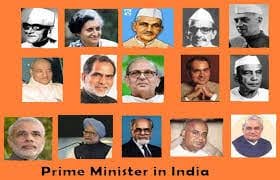
Role of Prime Minister in the Indian Parliamentary System
In Relation to the Council of Ministers
The Prime Minister enjoys the following powers as head of the Union council of ministers:
- He or she makes recommendations to the president for ministerial appointments. Only those people recommended by the Prime Minister can be appointed as ministers by the President.
- He/she allocates and reshuffles various ministerial positions.
- In the case of a dispute, he or she may request that a minister resign or recommend that the President fire him or her.
- He or she presides over the council of ministers meeting and has a say in its decisions.
- He/she is in charge of guiding, directing, controlling, and coordinating the operations of all ministries.
- By retiring from office, he or she can bring the council of ministers to its collapse.
In Relation to the President
The Prime Minister enjoys the following powers in relation to the President:
- He/she serves as the President's primary point of contact with the Council of Ministers. The prime minister has the responsibility to:
- convey to the President all decisions of the council of ministers relevant to the administration of the Union's affairs, as well as legislative initiatives.
- to provide the President with any information or legislative recommendations relevant to the administration of the Union's affairs.
- to present to the council of ministers for consideration any item on which a minister has made a decision but which has not been considered by the council, if the President so requests.
- He/she advises the president on significant appointments such as the attorney general of India, the Comptroller and Auditor General of India, the chairman and members of the UPSC, election commissioners, and the chairman and members of the commission etc.
In Relation to the Parliament
The Prime Minister is the leader of the Lower House. And thus he/she enjoys the following powers:
- He provides advice to the President on the summoning and proroguing of Parliamentary sessions.
- He has the authority to recommend to the President the dissolution of the Lok Sabha at any moment.
- On the House floor, he unveils government initiatives.
Criticism
- Shah Commission Report stated that the decision to impose Emergency was made by prime minister Indira Gandhi alone, without consulting her cabinet colleagues, and was not justified.
- To check the misuse of power by Prime Ministers, the Lokpal has been provided with the jurisdiction to inquire into allegations of corruption against anyone who is or has been Prime Minister.
- But there is a problem that it cannot inquire into any corruption charge against the Prime Minister if the allegations are related to international relations, external and internal security, and public order, unless a full Bench of the Lokpal, consisting of its chair and all members, considers the initiation of a probe, and at least two-thirds of the members approve it.
Conclusion
In the country's politico-administrative structure, the Prime Minister plays a very important and critical function. 'If any functionary under our constitution is to be likened to the US president, he is the Prime Minister, not the President of the Union,' said Dr B.R. Ambedkar described the role of the Prime Minister.
FAQs
Question: What is the Prime Minister's role in appointing ministers?
Answer: The Prime Minister recommends the appointment of ministers to the President and has the authority to allocate and reshuffle portfolios.
Question: How does the Prime Minister advise the President?
Answer: The Prime Minister communicates decisions of the Council of Ministers to the President and advises on appointments like the Chief Justice of India, Attorney General, and other key positions.
Question: What is the role of the Prime Minister in the Lok Sabha?
Answer: The Prime Minister is the leader of the Lok Sabha and plays a vital role in introducing government policies and ensuring legislative measures are passed.
Question: Does the Prime Minister have a role in international relations?
Answer: Yes, the Prime Minister represents India on global platforms, negotiates treaties, and manages international relations.
Question: What happens if the Prime Minister resigns?
Answer: If the Prime Minister resigns, it leads to the collapse of the Council of Ministers, necessitating the formation of a new government.
MCQs
1. Which Article of the Indian Constitution mentions the role of the Prime Minister?
A. Article 50
B. Article 75
C. Article 74
D. Article 80
Answer: (C) See the Explanation
Article 74 mentions that the Council of Ministers, headed by the Prime Minister, provides aid and advice to the President.
2. Who appoints the Prime Minister of India?
A. Lok Sabha
B. President
C. Rajya Sabha
D. Chief Justice of India
Answer: (B) See the Explanation
The President of India appoints the Prime Minister, who is usually the leader of the majority party in the Lok Sabha.
3. Which of the following is not a function of the Prime Minister?
A. Managing foreign policy
B. Impeaching the President
C. Allocating portfolios to ministers
D. Leading the Council of Ministers
Answer: (B) See the Explanation
Impeachment of the President is done by the Parliament, not by the Prime Minister.
4. Which of the following appointments is made on the advice of the Prime Minister?
A. Chief Minister
B. Chief Justice of India
C. President of India
D. Vice-President of India
Answer: (B) See the Explanation
The President appoints the Chief Justice of India based on the advice of the Prime Minister.
5. What happens if the Prime Minister resigns?
A. President assumes power
B. Elections are immediately called
C. The Council of Ministers is dissolved
D. Lok Sabha is dissolved
Answer: (C) See the Explanation
If the Prime Minister resigns, the entire Council of Ministers is dissolved.
GS Mains Questions and Model Answers
Q1: Analyze the constitutional relationship between the Prime Minister and the President of India.
Answer: The Prime Minister and President have a unique relationship where the Prime Minister provides aid and advice to the President. While the President holds nominal executive authority, real power is exercised by the Prime Minister, especially in matters like the appointment of ministers, legislative matters, and key appointments like the Chief Justice. However, certain constitutional functions, such as the dissolution of the Lok Sabha, require the President's discretion.
Q2: Discuss the significance of the Prime Minister in the Indian parliamentary system.
Answer: The Prime Minister is the linchpin of the Indian parliamentary system. As the leader of the majority party, they ensure that government policies are introduced and passed in the Lok Sabha. The Prime Minister coordinates the activities of various ministries and represents India internationally, making decisions on foreign policy and trade agreements. Their role in legislative functions and policy decisions is critical for maintaining the balance of power.
Q3: Examine the powers and limitations of the Prime Minister under the Indian Constitution.
Answer: The Prime Minister has extensive powers, including leading the government, coordinating ministries, advising the President, and representing India internationally. However, these powers are not absolute. The Prime Minister must work within the constitutional framework, and their actions are subject to judicial review and parliamentary scrutiny. Additionally, coalition politics can limit the autonomy of the Prime Minister in decision-making.
Previous Year Questions on Prime Minister's Role
1. UPSC CSE Prelims 2016
Question: The Prime Minister of India is:
A. Appointed by the Lok Sabha
B. Appointed by the President
C. Elected by the members of Parliament
D. Selected by the ruling party
Answer: B
Explanation: The Prime Minister of India is appointed by the President of India, usually from the majority party in the Lok Sabha.
2. UPSC CSE Mains 2019 (GS Paper 2)
Question: "The Prime Minister in India holds the real executive power." Discuss with reference to the constitutional provisions and actual functioning.
Answer: The Prime Minister in India is the real executive head, as per Article 74, which states that the President shall act on the advice of the Council of Ministers, headed by the Prime Minister. They lead the government, play a crucial role in policy formulation, and coordinate between the executive and legislative branches. However, their power is subject to checks and balances, including the judiciary and parliamentary oversight.
*email: contactus@prepp.in
Download the PREPP App and attempt FREE IAS Exam Mock Tests and get complete study material!
UPSC IAS : CSAT - Mini Live Test

Live Test : UPSC CSE Prelims CSAT (Paper-II) (Oct 20 - 23)
Full Test - 04: UPSC CSE Prelims CSAT (Paper-II)
Full Test - 03: UPSC CSE Prelims CSAT (Paper-II)
UPSC CSE Prelims 2026 GS Paper 1 Question Paper (24-May-2026)
UPSC CSE Prelims 2026 CSAT Paper 2 Question Paper (24-May-2026)

17 February 2025 | The Hindu Must Read Articles | Current Affairs

16 February 2026 | The Hindu Must Read Articles | Current Affairs

13 February 2026 | The Hindu Must Read Articles | Current Affairs









Comments