Right to Education (Article 21A) - Indian Polity Notes
Right to education means every child has the right to access education. Right to Education was made a fundamental right by the 86th Constitutional Amendment 2002 by inserting Article 21A in the Constitution. Education is a fundamental prerequisite for a person's complete development. A nation cannot flourish unless its population is educated, as citizens play a critical part in the country's development. In this article, let us look into the constitutional provisions and certain amendments which resulted in the enactment of Right to Education Act.
Table of Contents
Right to Education in India
- Education is a fundamental human right that is required for the full enjoyment of all other human rights.
- It encourages individual independence and empowerment while also providing significant development advantages.
- Nonetheless, millions of children and adults continue to be denied educational chances, often as a result of poverty.
- In 2009, the Right to Education Act (RTE) guaranteed free and compulsory education for children and established it as a fundamental right under Article 21-A.
- It explains the importance of free and compulsory education for children aged 6-14 years in India under Article 21 (A) of the Indian Constitution.
- The Right to Education is a cornerstone for ensuring that every child has the opportunity to receive a high-quality elementary education.
|
"The right to education is the key to unlocking human potential, empowering individuals to shape their future, and building a foundation for a more equitable and enlightened society." |
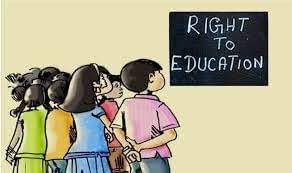
Right to Education - Constitutional Provisions
- Article 21A was included to make the right to education a Fundamental right for children aged 6 to 14.
- Originally, Article 45 of the Indian Constitution and Article 39 (f) of the DPSP provided for state-funded, equal, and accessible education.
- The Ramamurti Committee Report, published in 1990, was the first formal document addressing the right to education.
- In the landmark case of Unnikrishnan JP against the State of Andhra Pradesh & Others, the Supreme Court ruled that education is a fundamental right derived from Article 21.
- The Tapas Majumdar Committee was established in 1999, with the goal of inserting Article 21A.
- Under 2002, the 86th amendment to India's constitution designated education as a basic right in Part III of the Constitution.
- Article 21 A states that the State shall offer free and compulsory education to all children aged six to fourteen years in the manner determined by the State.
- As a result, this clause recognises only primary education as a Fundamental Right, not further or professional education.
- The 86th Amendment paved the way for the Right to Education Bill 2008 to be followed by the Right to Education Act 2009.
- The term "free" appears in the title of the article. What this means is that no child (except those allowed by their parents to a non-government school) is responsible to pay any fee, charge, or expense that may prohibit him or her from pursuing and completing primary education.
- This Act makes it mandatory for the government to ensure that all children aged six to fourteen years are admitted, attend school, and complete their elementary education.
- Essentially, this Act ensures that all children from economically disadvantaged families receive free elementary education.
|
Article 21A states that: The State shall provide free and compulsory education to all children of the age of six to fourteen years in such manner as the State may, by law, determine. |
Other Constitutional Provisions
- Other provisions in the Indian Constitution promote and develop the educational structure.
- Article 28 guarantees the freedom to attend religious instruction or worship in educational institutions.
- Article 29: This article guarantees equitable access to educational institutions.
- Article 30: Recognize minorities' freedom to create and manage educational institutions.
- Article 46: Discusses particular consideration for the advancement of education and economic interests of Scheduled Tribes, Scheduled Castes, OBCs, and the weakest sections of society.
- Article 337: This article governs the particular provision of educational subsidies for the Anglo-Indian community.
Amendments to achieve Right to Education
86th Constitutional Amendment (2002)
- In 2002, the 86th Amendment to the Constitution provided the Right to Education as a fundamental right.
- The same amendment inserted Article 21A, which made the RTE a fundamental right for children aged between six and 14 years.
- The passage of the amendment was followed by the launch of the Sarva Shiksha Abhiyan (SSA) that aimed to provide “useful and relevant, elementary education’’ to all children between six and 14 years.
- According to this, the right to education was declared a basic right and was withdrawn from the list of State Policy Directive Principles.
- The RTE is the follow-up law envisioned by the 86th Amendment.
- The term "free" appears in the title of the article. It implies that no kid (save those allowed by his or her parents to a school not financed by the government) is required to pay any form of fee, tax, or expenditure that may prohibit him or her from pursuing and finishing primary education.
- This Act requires the government to assure the entrance, attendance, and completion of primary education for all children between the ages of six and fourteen.
93rd Constitutional Amendment (2006)
- In 2006, the 93rd CAA inserted Clause (5) in Article 15.
- This enabled the State to create special provisions, such as reservations for the advancement of any backward classes of citizens like SCs and STs, in all aided or unaided educational institutes, except minority educational institutes.
- The act aims to increase access to higher education, especially professional education, for students from socially and educationally deprived sections of people, as well as those from Scheduled Castes and Scheduled Tribes.
- In comparison to private unaided universities, the number of seats available in aided or State-maintained institutions was restricted, particularly in professional education.
- Article 46 states that the State should support with special attention the educational and economic interests of the weaker parts of the population and safeguard them from social injustice.
Right to Education Act (2009)
- The government subsequently brought the Right to Education (RTE) Act, 2009, which centres around inclusive education for all, making it mandatory to include underprivileged children in schools.
- Specifically, Section 12(1)(c) of the Act provided for a 25 per cent reservation of seats in unaided schools for admission of children from economically weaker sections and disadvantaged groups.
- It contained a "No Detention Policy" section, which was deleted by The Right of Children to Free and Compulsory Education (Amendment) Act, 2019.
- It also prohibits the use of teachers for non-educational purposes other than the decennial census, elections to local governments, state legislatures, and parliament, and disaster assistance.
- It calls for the selection of instructors having the necessary entrance and academic credentials.
International Organisations in the field of Education
- On the basis of international recognition, the "Right to Education" is enshrined in international law in Article 26 of the Universal Declaration of Human Rights and is regarded as a basic human necessity.
- Many international events, like Articles 13 and 14, state that everyone has the right to elementary education.
- In 1960, UNESCO reaffirmed the right to education in the Convention Against Discrimination in Education.
- Many additional international human rights accords have recognised and propagated the right to education, including the following:
- Articles 28 and 29 of the United Nations Convention on the Rights of the Child were ratified in 1989.
- Article 10 of the Convention on the Elimination of All Forms of Discrimination Against Women was ratified in 1981.
- Article 3 of the Convention against Discrimination on the Basis of Employment and Corruption was adopted in 1953.
- Some multinational organisations that seek to promote education;
- UNESCO
- UNICEF
- Amnesty International
- The International Labour Organization
- The World Bank
Conclusion
To develop equality, inclusion, and unity, the government and all stakeholders should now focus on education quality and progressively work toward establishing an unified educational system and platform across the country for all parts of society. In general, education accounts for 5% of a country's GDP in order to enable social transformation. Education is the key to growing finer or one step ahead of others who are not educated. Education is a strong instrument for allowing a person to develop to their maximum potential. Many more conventions address the right to education for the advancement and promotion of the right to education.
FAQs
Question: What is the significance of Article 21A in the Indian Constitution?
Answer: Article 21A makes education a fundamental right for children aged 6 to 14 years and mandates the state to provide free and compulsory education to all children in this age group.
Question: What is the main objective of the Right to Education Act, 2009?
Answer: The Right to Education Act, 2009 aims to provide free and compulsory education to children between the ages of 6 and 14, ensuring access, equity, and quality in primary education.
Question: What is the role of private schools under the RTE Act?
Answer: Under the RTE Act, private schools are required to reserve 25% of their seats for children from economically weaker sections and disadvantaged groups.
Question: Does the Right to Education Act cover children with disabilities?
Answer: Yes, the RTE Act includes provisions for the education of children with disabilities, ensuring their inclusion in mainstream schools and providing special training where necessary.
Question: What are neighborhood schools under the RTE Act?
Answer: Neighborhood schools refer to schools located within a certain distance from the child's residence to ensure easy access to education, especially for children in rural and remote areas.
MCQs
1. Which constitutional amendment introduced the Right to Education in India?
A) 42nd Amendment
B) 44th Amendment
C) 86th Amendment
D) 74th Amendment
Answer: (C) See the Explanation
Explanation: The 86th Constitutional Amendment introduced Article 21A, which made the right to education a fundamental right for children aged 6 to 14 years.
2. Under the Right to Education Act, 2009, what percentage of seats in private schools must be reserved for economically weaker sections?
A) 10%
B) 15%
C) 25%
D) 30%
Answer: (C) See the Explanation
Explanation: The RTE Act mandates that 25% of seats in private schools be reserved for children from economically weaker sections and disadvantaged groups.
3. Which age group is covered under Article 21A of the Indian Constitution?
A) 3 to 10 years
B) 6 to 14 years
C) 5 to 16 years
D) 4 to 12 years
Answer: (B) See the Explanation
Explanation: Article 21A provides for free and compulsory education for children aged 6 to 14 years.
4. What is the primary focus of the Right to Education Act, 2009?
A) Higher education
B) Primary education
C) Vocational training
D) Teacher education
Answer: (B) See the Explanation
Explanation: The RTE Act focuses on providing free and compulsory primary education to all children in the 6 to 14 age group.
5. The Right to Education is a fundamental right under which article of the Indian Constitution?
A) Article 19
B) Article 21
C) Article 21A
D) Article 15
Answer: (C) See the Explanation
Explanation: The Right to Education is a fundamental right under Article 21A of the Indian Constitution, which mandates free and compulsory education for children aged 6 to 14 years.
GS Mains Questions and Model Answers
Q1: Analyze the significance of Article 21A in achieving universal primary education in India.
Answer: Article 21A, which makes education a fundamental right, has been a crucial step toward achieving universal primary education in India. By mandating free and compulsory education for children aged 6 to 14, the state ensures that economic or social barriers do not prevent children from accessing education. The accompanying Right to Education Act, 2009, sets standards for school infrastructure, teacher quality, and accountability, ensuring that children receive quality education. This has been instrumental in increasing enrollment rates, reducing dropout rates, and providing equal educational opportunities for marginalized communities.
Q2: Discuss the challenges in implementing the Right to Education Act, 2009, in rural and remote areas.
Answer: Implementing the Right to Education Act, 2009, in rural and remote areas faces several challenges. These include inadequate school infrastructure, lack of trained teachers, and poor accessibility due to geographical barriers. Additionally, many children in these areas are engaged in child labor or household work, which hinders their ability to attend school regularly. Despite the mandate for neighborhood schools, many remote areas still lack adequate educational facilities. Addressing these challenges requires increased government investment, better monitoring mechanisms, and community engagement to ensure that all children can access their right to education.
Q3: Evaluate the role of private schools in ensuring access to education for disadvantaged children under the RTE Act.
Answer: Private schools play a significant role in ensuring access to education for disadvantaged children under the Right to Education (RTE) Act by reserving 25% of seats for children from economically weaker sections (EWS) and disadvantaged groups. This provision promotes social inclusion by allowing children from diverse backgrounds to receive quality education alongside their more privileged peers. However, challenges remain, including resistance from private schools, discrimination against EWS students, and financial constraints in implementing the provision effectively. To maximize the impact of this provision, there is a need for stronger enforcement, financial support for private schools, and monitoring to ensure that the reserved seats benefit the intended groups.
Previous Year Questions on Right to Education
1. UPSC CSE Prelims 2021
Question: Which constitutional amendment made education a fundamental right for children aged 6 to 14 years?
A) 86th Amendment
B) 73rd Amendment
C) 44th Amendment
D) 61st Amendment
Answer: A
Explanation: The 86th Constitutional Amendment introduced Article 21A, making education a fundamental right for children aged 6 to 14 years.
2. UPSC CSE Mains 2020 (GS Paper 2)
Question: Analyze the impact of the Right to Education Act, 2009, on access to education for marginalized communities in India.
Answer: The Right to Education Act, 2009, has had a significant impact on improving access to education for marginalized communities in India. By mandating free and compulsory education and reserving seats in private schools for children from economically weaker sections (EWS) and disadvantaged groups, the act has reduced barriers to education. Enrollment rates among marginalized communities, including Scheduled Castes (SCs), Scheduled Tribes (STs), and children with disabilities, have seen a substantial increase. However, challenges such as discrimination, inadequate infrastructure, and dropout rates persist. To fully realize the potential of the RTE Act, there is a need for continued focus on quality of education, inclusive practices, and community participation.
*email: contactus@prepp.in
Download the PREPP App and attempt FREE IAS Exam Mock Tests and get complete study material!
UPSC IAS : CSAT - Mini Live Test

Live Test : UPSC CSE Prelims CSAT (Paper-II) (Oct 20 - 23)
Full Test - 04: UPSC CSE Prelims CSAT (Paper-II)
Full Test - 03: UPSC CSE Prelims CSAT (Paper-II)
UPSC CSE Prelims 2026 GS Paper 1 Question Paper (24-May-2026)
UPSC CSE Prelims 2026 CSAT Paper 2 Question Paper (24-May-2026)

17 February 2025 | The Hindu Must Read Articles | Current Affairs

16 February 2026 | The Hindu Must Read Articles | Current Affairs

13 February 2026 | The Hindu Must Read Articles | Current Affairs









Comments