Prohibition of Employment of Children in Factories, etc (Article 24) - Indian Polity Notes
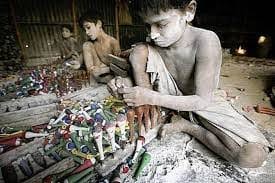
Article 24 strictly prohibits the employment of children below the age of 14 in any hazardous industry or factories or mines, without exception. However, the employment of children in non-hazardous work is not. Child Labour in India is still prominent even after 75 years of Independence in spite of the constitutional provisions to eradicate it.
In this article, we will discuss the constitutional provisions, constituent assembly debates and important Supreme Court Judgements regarding the practice of Child Labour in India.
|
Table of Contents |
Constitutional Provisions
- Article 24 prohibits the employment of children under the age of 14 years in dangerous or unhealthy conditions which could harm their mental and physical strength.
- However, the employment of children in non-hazardous work is not prohibited by the constitution.
- The term hazardous is not defined by the constitution and the Parliament decides what hazardous employment means.
- The Child Labour (Prohibition and Regulation) Amendment Act slashed the list of hazardous occupations for children from 83 to include just mining, explosives, and occupations mentioned in the Factory Act.
- The government prohibited the employment of minors as domestic servants or workers in businesses like hotels, dhabas, restaurants, stores, industries, resorts, spas, tea shops, and so on in 2006.
- It cautioned that anyone hiring children under the age of 14 would face prosecution and penalties.
|
Article 24 states that: No child below the age of fourteen years shall be employed to work in any factory or mine or engaged in any other hazardous employment |
| Other Relevant Links | |
|---|---|
| Right to Privacy | Protection of Life and Personal Liberty |
| Right to Education (Article 21A) | Prohibition of Traffic in Human Beings and Forced Labour |
|
"Article 24 stands as a guardian of childhood, ensuring that the innocent hands meant to hold books and toys are not burdened by labor” |
Constituent Assembly debates
A member of the constituent assembly wanted a similar provision to protect women from being employed ‘at night, in mines or in industries detrimental to their health’.
Important Supreme Court Judgements
| Case | Judgement |
|---|---|
| People’s Union for Democratic Rights v. Union of India (1982) |
|
| M.C. Mehta v. State of Tamil Nadu (1996) |
|
Important Legislations
The Factories Act, 1948
- This was the first law to set a minimum age to employ workers at 14 and prohibited child employment.
- In 1954, this law was amended to provide that children below the age of 17 could not be employed during the night.
The Mines Act of 1952
- This act prohibits the employment of children under the age of 18 years in mines.
- The Mines Act of 1952 includes provisions for measures pertaining to the health, safety, and welfare of coal, metalliferous, and oil mine employees.
- The Act specifies the owner's responsibilities for managing mines and mining operations, as well as mine health and safety.
The Child Labour (Prohibition and Regulation) Act, 1986
- This amendment specified where and how minor children can be employed, as well as where and how they could not.
- The age of children was defined as anyone younger than 14 years of age.
- Children were prohibited from working in 13 occupations and 57 procedures under this law.
Child Labour (Prohibition & Regulation) Amendment Act, 2016
- The law prohibits people between the ages of 14 and 18 from working in hazardous activities or processes.
- This Act empowers children to work in a variety of household jobs as well as artists.
- The Government of India will impose harsher penalties on employers that violate the Act as a result of this change to the Act.
- It will also make any employer that employs a kid or teenager in violation of the Act liable.
- The Act also permits the government to prohibit the employment of juveniles who labour in dangerous conditions.
Child Labour (Prohibition and Regulation) Amendment Rules, 2017
- The Rules simplified issues relating to the employment of children in family businesses, as well as provided protection for child artists by defining working hours and conditions.
- Working hours and working conditions are protected for creative workers or artists who have been allowed to work under the Act.
- A set of precise tasks and obligations for law enforcement authorities in order to guarantee the Act's proper implementation and compliance.
Conclusion
Despite these legal safeguards and judicial interventions, significant challenges remain. The enforcement of child labor laws is often inconsistent, particularly in rural and informal sectors where monitoring is difficult. Additionally, economic pressures and poverty drive many families to ignore these prohibitions, leading to continued child labor practices. Article 24 provide a robust foundation for the protection of children's rights but still there is urgent need for more effective enforcement, better monitoring mechanisms, and comprehensive support systems to address the socio-economic factors driving child labor. Only through a multi-faceted approach can the vision of a child labor-free India be realized.
FAQs
Question: What does Article 24 of the Indian Constitution stipulate?
Answer: Article 24 of the Indian Constitution prohibits the employment of children below the age of 14 years in factories and hazardous employment. This provision aims to safeguard children's rights and ensure their well-being and development by preventing their exploitation in labor.
Question: Why is the prohibition of child labor significant in India?
Answer: The prohibition of child labor is significant in India as it addresses the social and economic issues related to child exploitation. Child labor deprives children of their childhood, education, and potential, perpetuating the cycle of poverty. By enforcing Article 24, the Indian government aims to promote children's rights and ensure that they can grow up in a safe and nurturing environment, which is crucial for national development.
Question: How does Article 24 relate to other child protection laws in India?
Answer: Article 24 complements other child protection laws in India, such as the Right of Children to Free and Compulsory Education Act (RTE) and the Child Labour (Prohibition and Regulation) Amendment Act. Together, these laws work to ensure that children are not only protected from labor exploitation but also guaranteed access to education and a nurturing environment for their holistic development.
Question: What measures can be taken to effectively implement Article 24?
Answer: Effective implementation of Article 24 requires a multi-faceted approach, including stricter enforcement of laws against child labor, regular inspections of factories, and penalties for violators. Additionally, awareness campaigns aimed at educating parents about the importance of education and the legal ramifications of employing children are essential. Support programs that provide financial assistance to families can also help reduce the economic need for child labor.
Question: What are the challenges faced in enforcing Article 24?
Answer: Challenges in enforcing Article 24 include widespread poverty, lack of awareness about legal rights, and the informal nature of many sectors employing children. Additionally, corruption and inadequate resources for monitoring and enforcement hinder the effectiveness of laws designed to protect children. Cultural attitudes that prioritize immediate economic contribution over education also contribute to the persistence of child labor.
MCQs
1. What age group does Article 24 protect from employment in factories?
A) Below 12 years
B) Below 14 years
C) Below 16 years
D) Below 18 years
Answer: (B) See the Explanation
Explanation: Article 24 prohibits the employment of children below the age of 14 years in factories and hazardous jobs.
2. Which other law complements Article 24 in protecting children's rights?
A) The Juvenile Justice Act
B) The Right to Information Act
C) The Right of Children to Free and Compulsory Education Act
D) The Indian Penal Code
Answer: (C) See the Explanation
Explanation: The Right of Children to Free and Compulsory Education Act complements Article 24 by ensuring that children receive education, thus supporting their development and well-being.
3. What is the primary objective of Article 24?
A) To promote education
B) To prevent child exploitation
C) To regulate labor laws
D) To improve factory conditions
Answer: (B) See the Explanation
Explanation: The primary objective of Article 24 is to prevent child exploitation by prohibiting the employment of children in factories and hazardous environments.
4. Which of the following is NOT a measure to implement Article 24 effectively?
A) Regular inspections of factories
B) Public awareness campaigns
C) Encouraging child labor
D) Financial assistance programs for families
Answer: (C) See the Explanation
Explanation: Encouraging child labor is contrary to the goals of Article 24, while the other options are measures that would support its effective implementation.
5. What is a significant barrier to enforcing Article 24?
A) High literacy rates
B) Lack of economic opportunities
C) Abundance of resources
D) Strong legal frameworks
Answer: (B) See the Explanation
Explanation: Lack of economic opportunities often forces families to rely on child labor for income, creating a significant barrier to enforcing Article 24.
GS Mains Questions and Model Answers
Q1: Analyze the importance of Article 24 in the context of child rights in India.
Answer: Article 24 of the Indian Constitution is a pivotal provision in the framework of child rights, emphasizing the need to protect children from exploitation in labor. By prohibiting the employment of children below the age of 14 years in factories, Article 24 ensures that children have the opportunity for education and a healthy childhood free from the burdens of work. This provision reflects India's commitment to uphold the rights of children as enshrined in the UN Convention on the Rights of the Child. The importance of Article 24 extends beyond mere legal prohibition; it is a cornerstone for advancing policies that support child welfare, development, and education, thereby contributing to the socio-economic progress of the nation.
Q2: Discuss the role of government policies in enforcing Article 24 and protecting children's rights.
Answer: Government policies play a critical role in enforcing Article 24 and ensuring the protection of children's rights. These policies include the Child Labour (Prohibition and Regulation) Amendment Act, which provides a legal framework for identifying and penalizing violations of child labor laws. Additionally, the implementation of the Right to Education Act ensures that children are not only protected from labor but are also provided with access to education. Regular inspections, community awareness programs, and collaboration with NGOs are essential components of these policies that enhance enforcement mechanisms. Furthermore, financial support programs for families can alleviate the economic pressures that lead to child labor, thereby reinforcing the objectives of Article 24.
Q3: Evaluate the challenges in enforcing Article 24 and suggest measures to overcome them.
Answer: Enforcing Article 24 presents several challenges, including poverty, lack of awareness about legal rights, and the informal nature of many sectors where child labor persists. Additionally, cultural attitudes that prioritize immediate economic contribution over education contribute to the ongoing issue of child labor. To overcome these challenges, comprehensive strategies are needed, including increasing public awareness about the negative impacts of child labor and the importance of education. Strengthening law enforcement agencies to ensure compliance with child labor laws is vital, alongside providing alternative livelihood opportunities for families in poverty. Moreover, fostering partnerships with civil society organizations can enhance community engagement and create a supportive environment for children's rights and welfare.
Previous Year Questions on Article 24
1. UPSC CSE Prelims 2021:
Question: Which article of the Indian Constitution prohibits the employment of children in factories?
A) Article 21
B) Article 24
C) Article 25
D) Article 30
Answer: (B)
Explanation: Article 24 prohibits the employment of children below the age of 14 years in factories and hazardous jobs, ensuring their protection and rights.
2. UPSC CSE Mains 2020 (GS Paper 2):
Question: "Evaluate the effectiveness of legal measures in combating child labor in India."
Answer: Legal measures such as Article 24 and the Child Labour (Prohibition and Regulation) Amendment Act have laid a foundation for combating child labor in India. However, effectiveness is hampered by challenges like enforcement gaps, socio-economic pressures, and cultural norms that normalize child labor. While legal frameworks provide a structure for protection, their successful implementation relies on coordinated efforts among various stakeholders, including government agencies, non-governmental organizations, and communities. Enhanced monitoring, stricter penalties for violations, and educational initiatives are crucial for making these laws effective and ensuring that children can enjoy their rights to education and a secure childhood.
*email: contactus@prepp.in
Download the PREPP App and attempt FREE IAS Exam Mock Tests and get complete study material!

Live Test : UPSC CSE Prelims CSAT (Paper-II) (Oct 20 - 23)
Full Test - 04: UPSC CSE Prelims CSAT (Paper-II)
Full Test - 03: UPSC CSE Prelims CSAT (Paper-II)
UPSC CSE Prelims 2026 GS Paper 1 Question Paper (24-May-2026)
UPSC CSE Prelims 2026 CSAT Paper 2 Question Paper (24-May-2026)

17 February 2025 | The Hindu Must Read Articles | Current Affairs

16 February 2026 | The Hindu Must Read Articles | Current Affairs

13 February 2026 | The Hindu Must Read Articles | Current Affairs









Comments