Responsible Government – Indian Polity Notes
Responsible Government refers to a system of government that embodies the principle of parliamentary accountability which is the foundation of the Westminster system of parliamentary democracy. The Council of Ministers headed by the Prime Minister is responsible to the Parliament for all their actions and policies. Therefore, the parliamentary system is known as a 'responsible system of government'. In this article we will discuss the Responsible Government in great detail which is important for the Polity and Governance topic of UPSC IAS examination.
|
Table of Contents |
What Is Government?
- A government is the system or group of people in charge of an organized community, most commonly a state.
- In the broadest sense, the government is made up of the legislature, the executive, and the judiciary.
- Government is both a means of enforcing organizational policies and a mechanism for determining policy.
- Every government has a constitution, which is a statement of its governing principles and philosophy.
| Other Relevant Links | |
|---|---|
| Features of Parliamentary Government | Features of Presidential Government |
| Demerits of the Parliamentary System | Merits of the Parliamentary System |
|
“A responsible government thrives on accountability, ensuring that those in power remain answerable to the people they serve, fostering transparency, trust, and ethical governance." |
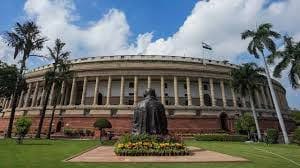
What Is Responsible Government?
- The parliamentary government is also known as 'responsible government,' because the Council of Ministers headed by the Prime Minister is accountable to Parliament and remains in office as long as it has the confidence of the latter.
- The parliamentary system, by its very definition, establishes the responsible government.
- Ministers are accountable to Parliament for all acts of omission and commission.
- The Parliament exerts control over ministers through various mechanisms such as question hour, discussions, adjournment motions, no-confidence motions, and so on.
Principles of Responsible Government
- A distinguishing feature of the parliamentary system is that the cabinet is collectively accountable to the legislature.
- The cabinet's activities can be questioned and checked by the legislature through a variety of constitutional means.
- Ministers remain in office as long as the legislature trusts them. In the event of a vote of no confidence in a single minister, the entire cabinet must resign.
- A bill presented by a minister must be supported by all ministers because failure to do so results in a vote of no confidence in the entire cabinet.
- Cabinet members are accountable to the public via their elected representatives.
- People can express their grievances through their representatives, and ministers must answer to the people.
- It is believed that the daily assessment of responsibility is far more effective than the periodic assessment and far more necessary in a country like India.
- In recommending the Parliamentary system of Executive, the Draft Constitution preferred more responsibility over greater stability.
Examples In India's Context
- The Question Hour is one of the venues for holding the government accountable for its actions.
- During Question Hour, MPs may ask ministers questions about the government's implementation of laws and policies.
- Members of Parliament assess the functioning of the government through Questions, Resolutions, No-confidence motions, Adjournment motions, and Debates on Addresses.
- Periodic assessment at the time of the election, which may occur every five years or earlier.
Conclusion
Responsible government is a cornerstone of democratic governance, emphasizing accountability, transparency, and the alignment of government actions with the will of the people. It ensures that the executive branch is answerable to the legislature and, by extension, to the electorate. This system fosters a check and balance that helps prevent abuses of power and promotes informed decision-making, as elected representatives are directly accountable to their constituents. Responsible government also enhances civic engagement by encouraging public participation and scrutiny in governmental processes.
| Other Relevant Links | |
|---|---|
| Indian Polity UPSC Notes | Parliamentary System |
| Federal System | Center-state Relations |
| Inter-State Relations | Emergency Provisions |
| Indian Parliament | State Legislature |
FAQs
Question: What is meant by a "responsible government" in India?
Answer: A responsible government refers to a system where the executive (the Prime Minister and Council of Ministers) is accountable to the legislature (the Lok Sabha). It ensures that the government remains answerable to the elected representatives of the people, who can hold it accountable through debates, questions, and motions in the Parliament. The principle of responsibility ensures that the executive does not act arbitrarily and must function with the support and confidence of the legislature.
Question: Why is the concept of a responsible government important?
Answer: The concept of a responsible government is important because it ensures that the executive remains answerable to the people's representatives, thereby making the government accountable for its actions. This prevents misuse of power and promotes transparency and democracy. It also strengthens the functioning of the Parliament by ensuring that the government is constantly held to account for its policies and decisions.
Question: How does the Indian system ensure a responsible government?
Answer: In India, the system of a responsible government is ensured through the parliamentary system. The Prime Minister and the Council of Ministers are collectively responsible to the Lok Sabha. If the Lok Sabha loses confidence in the government, it can compel the government to resign through a vote of no confidence. This ensures that the executive remains accountable to the legislature and by extension, to the people.
Question: What is the role of the Prime Minister in a responsible government?
Answer: The Prime Minister plays a crucial role in a responsible government as the head of the executive. The Prime Minister leads the Council of Ministers, formulates policies, and ensures the implementation of government decisions. The Prime Minister is accountable to the Parliament, particularly to the Lok Sabha, and must maintain its confidence for the government to continue functioning.
Question: Can a government in India continue if it loses the confidence of the Lok Sabha?
Answer: No, in the Indian system, if the government loses the confidence of the Lok Sabha, it must resign. A vote of no confidence can be brought against the government, and if it fails to secure a majority in the House, the government is considered defeated and must step down. This ensures that the executive remains responsible to the legislature.
MCQs
- What is the main feature of a responsible government in India?
A) The executive is not accountable to the legislature
B) The executive is accountable to the President
C) The executive is accountable to the legislature
D) The executive is accountable to the judiciary
Answer: (C) See the Explanation
In India, the executive (Prime Minister and Council of Ministers) is accountable to the legislature (Lok Sabha). This means that the government must have the confidence of the Lok Sabha to remain in power.
- In the Indian parliamentary system, which of the following can lead to the resignation of the government?
A) Losing the confidence of the Rajya Sabha
B) Losing the confidence of the President
C) Losing the confidence of the Lok Sabha
D) Winning a majority in the Rajya Sabha
Answer: (C) See the Explanation
If the government loses the confidence of the Lok Sabha, it must resign. This ensures that the executive is accountable to the legislature, which represents the people's will.
- Who is responsible for the overall functioning of the government in India?
A) The President of India
B) The Speaker of the Lok Sabha
C) The Prime Minister and the Council of Ministers
D) The Judiciary
Answer: (C) See the Explanation
In India, the Prime Minister, along with the Council of Ministers, is responsible for the overall functioning of the government. They are accountable to the Lok Sabha and must ensure that government policies align with the interests of the people.
- Which of the following is a method through which the executive is held accountable in India?
A) Vote of no confidence in the Lok Sabha
B) Judicial review
C) Election of the President
D) None of the above
Answer: (A) See the Explanation
The government can be held accountable through a vote of no confidence in the Lok Sabha. If the majority of members do not have confidence in the government, it must resign.
- What happens when a motion of no confidence is passed in the Lok Sabha?
A) The government is required to resign
B) The President dissolves the Lok Sabha
C) The judiciary intervenes
D) The Rajya Sabha takes over the functioning of the government
Answer: (A) See the Explanation
If a motion of no confidence is passed in the Lok Sabha, the government must resign. This is a key feature of the Indian parliamentary system, ensuring that the executive is accountable to the legislature.
GS Mains Questions and Model Answers
Q1: Discuss the importance of a responsible government in the Indian democratic system.
Answer: A responsible government is fundamental to the functioning of India's democracy as it ensures that the executive is accountable to the legislature, and thus to the people. This accountability is a cornerstone of the parliamentary system, where the government is answerable for its actions and policies. A responsible government ensures transparency, prevents the abuse of power, and fosters public trust in the political system. The ability of the Parliament to hold the government accountable through motions like a vote of no confidence reinforces the principle that the government must act in the best interest of the citizens.
Q2: How does the principle of collective responsibility work in the Indian system of government?
Answer: The principle of collective responsibility is one of the core features of the Indian parliamentary system. It means that the entire Council of Ministers, headed by the Prime Minister, is collectively responsible to the Lok Sabha. If the Lok Sabha loses confidence in the government through a vote of no confidence, the entire government must resign, regardless of individual ministers’ positions. This ensures that the government operates as a cohesive unit, and any failure or mistake is shared by all members of the executive.
Q3: Explain how the executive in India can be held accountable by the legislature.
Answer: In India, the executive is held accountable by the legislature through various mechanisms. The most significant of these is the requirement that the Prime Minister and the Council of Ministers must maintain the confidence of the Lok Sabha. If the Lok Sabha passes a vote of no confidence against the government, it must resign. Additionally, the executive is answerable to the legislature through discussions, debates, and questions in both Houses of Parliament. Parliamentary committees also play a role in scrutinizing the executive’s actions. This system ensures that the government operates within the framework of democratic accountability.
Previous Year Questions on Responsible Government in Indian Polity
1. UPSC CSE 2023
Question: How does the principle of a responsible government work in the Indian context?
Answer: In India, the principle of a responsible government is reflected in the accountability of the executive (the Prime Minister and the Council of Ministers) to the legislature (Lok Sabha). The government is collectively responsible to the Lok Sabha, and if the majority of members lose confidence in the government, it must resign. This system ensures that the government is answerable for its actions and decisions to the people's elected representatives. The mechanism of parliamentary questions, debates, and motions like no-confidence motions serve as important tools for ensuring executive accountability.
2. UPSC CSE 2022
Question: Explain the concept of collective responsibility of the government and its significance.
Answer: The concept of collective responsibility means that the entire Council of Ministers, led by the Prime Minister, is collectively accountable to the Lok Sabha. If the government loses a vote of no confidence, it must resign as a whole. This principle ensures unity within the executive and prevents individual ministers from taking independent actions that could undermine the functioning of the government. It also ensures that the government is answerable to the legislature, maintaining democratic accountability and preventing arbitrary decision-making by any individual minister.
*email: contactus@prepp.in
Download the PREPP App and attempt FREE IAS Exam Mock Tests and get complete study material!

Live Test : UPSC CSE Prelims CSAT (Paper-II) (Oct 20 - 23)
Full Test - 04: UPSC CSE Prelims CSAT (Paper-II)
Full Test - 03: UPSC CSE Prelims CSAT (Paper-II)
UPSC CSE Prelims 2026 GS Paper 1 Question Paper (24-May-2026)
UPSC CSE Prelims 2026 CSAT Paper 2 Question Paper (24-May-2026)

17 February 2025 | The Hindu Must Read Articles | Current Affairs

16 February 2026 | The Hindu Must Read Articles | Current Affairs

13 February 2026 | The Hindu Must Read Articles | Current Affairs









Comments