Powers of Vice President - Indian Polity Notes
Vice President of India holds significant constitutional powers and responsibilities, primarily acting as the second highest office in the country.
Article 63 provides that there should be a Vice President of India. The Vice President acts as the Ex-Officio Chairman of the Council of States that is the Rajya Sabha. This constitutional post is vested with various powers and responsibilities. He/She even discharges the functions of the President in case of any contingencies. Since the Office of the Vice President is a constitutional post it is an important topic for the UPSC Exam.
|
Table of Contents |

Vice President - Constitutional Provisions
- Part V of the Constitution of India discusses the office of the Vice-President of India. Articles 63 to Article 73 deal with the qualifications, election, and removal of the Vice-President of India.
- Article 63 states that there shall be a vice-president of India
- Article 64 states that the Vice-President shall be the ex-officio Chairman of the Rajya Sabha
- Article 65 states that the Vice-President shall act as President in the vacancy of the office of the President until the new President is elected.
- Article 66 deals with the provision of the Election of the Vice-President.
- Article 67 mentions the Term of Office of Vice-President.
- Article 68 states regarding the Vacancy of office of the Vice-President.
- Article 69 deals with Oaths & Affirmation by the Vice-President.
- Article 71 deals with matters relating to or connected with, the election of a President and Vice-President.
| Other Relevant Links | |
|---|---|
| Qualifications of Vice President | Election of vice president |
| Election of the President | Powers and Functions of the President |
|
Vice President of India holds significant constitutional powers and responsibilities, primarily acting as the second highest office in the country. |
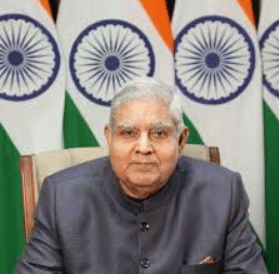
Powers Of The Vice-president
- The vice-President acts as the ex-officio chairman of the Rajya Sabha and his powers and functions are similar to those of the speaker of the Lok Sabha.
- In the event of the president's inability to work due to any reason or a vacancy in the office of the president due to any reason, he can act as the president. The office was created to maintain continuity in the Indian state, however, this is only for 6 months till the next president is elected.
- The Vice President while discharging duty as President, should not preside over Rajya Sabha.
- He is not a member of the Rajya Sabha, he doesn’t have the right to vote. He can only give a “casting vote”.
Criticism Of The Post Of Vice President
- The post of Vice President was taken from the American Constitution. However, his powers are not similar to his American counterpart.
- The Vice President doesn’t become the President automatically when the post of President is vacant due to his demise or poor health like the American Vice President. But he just discharges the duty of the President till the elections are held.
- The Vice President is not vested with any real powers similar to the President, but only acts as the Ex-Officio Chairman of Rajya Sabha which can be elected from the members of the house like the Speaker in the Lok Sabha.
- The removal procedure of the Vice President is not as complex as the impeachment of the President.
Conclusion
The Vice President's post is not particularly facilitated in the Indian Constitution of 1950 with specific functions; however, it is made clear that the Vice President must act as a deputy to the President of India. However, this obscure role is critical in ensuring the democratic nation's political continuation.
| Other Relevant Links | |
|---|---|
| Indian Polity UPSC Notes | Vice-President |
| President | Governor |
| Prime Minister | Chief Minister |
| Indian Parliament | Central Council of Ministers |
FAQs
Q1: What are the primary roles of the Vice President of India?
Answer: The Vice President of India primarily serves as the ex-officio Chairman of the Rajya Sabha and acts as the second-highest constitutional authority in the country. Additionally, they take on the President's duties in their absence and play a crucial role in legislative functions.
Q2: How is the Vice President of India elected?
Answer: The Vice President is elected by an electoral college consisting of the elected members of both houses of Parliament using a single transferable vote system.
Q3: What is the significance of the Vice President's role in the Rajya Sabha?
Answer: As the Chairman of the Rajya Sabha, the Vice President plays a critical role in maintaining order during sessions, regulating discussions, and ensuring that parliamentary rules are followed, thus upholding the legislative process.
Q4: Can the Vice President be removed from office? If so, how?
Answer: Yes, the Vice President can be removed from office through a process similar to that of the President, which requires a two-thirds majority in the Rajya Sabha and the Lok Sabha.
Q5: What are the discretionary powers of the Vice President?
Answer: The Vice President's discretionary powers include deciding on matters related to the conduct of the Rajya Sabha and, in some cases, exercising influence on legislative agendas, although these powers are largely ceremonial.
MCQs
- What is the primary duty of the Vice President of India?
a) President of India
b) Chairman of the Rajya Sabha
c) Chief Justice of India
d) Speaker of the Lok Sabha
Answer: (B) See the Explanation
- Which system is used to elect the Vice President of India?
a) First-past-the-post
b) Direct election
c) Single transferable vote
d) Indirect election
Answer: (C) See the Explanation
- Under which Article of the Indian Constitution is the office of the Vice President mentioned?
a) Article 63
b) Article 64
c) Article 65
d) Article 66
Answer: (A) See the Explanation
- What happens if the office of the Vice President becomes vacant?
a) The President appoints a new Vice President
b) The Prime Minister assumes the role
c) A by-election is held
d) The Speaker of the Lok Sabha assumes the role
Answer: (C) See the Explanation
- Which power does the Vice President NOT hold?
a) Acting as the President in their absence
b) Deciding on matters of parliamentary procedure
c) Appointing the Prime Minister
d) Conducting sessions of the Rajya Sabha
Answer: (C) See the Explanation
GS Mains Questions and Model Answers
Q1: Analyze the role of the Vice President of India in the legislative process.
Answer: The Vice President of India, as the ex-officio Chairman of the Rajya Sabha, plays a pivotal role in the legislative process. Their responsibilities include maintaining order during debates, deciding who may speak, and ensuring that rules are followed. The Vice President also has the authority to take disciplinary actions if necessary, contributing to a structured and respectful environment in the House. Furthermore, the Vice President can influence the legislative agenda by prioritizing certain issues. This role is vital for facilitating effective discussions and ensuring that legislation is passed smoothly, reflecting the democratic principles of governance.
Q2: Discuss the powers and limitations of the Vice President of India.
Answer: The Vice President of India possesses significant powers, primarily as the Chairman of the Rajya Sabha. They can influence legislative proceedings, maintain order, and preside over sessions. However, their powers are largely ceremonial, as the Vice President does not have a direct role in executive functions or policymaking. The Vice President's discretion is limited to the functioning of the Rajya Sabha, and they cannot unilaterally decide on matters outside their jurisdiction. Additionally, while they can act in the President's absence, the role does not extend to exercising executive authority, thus maintaining a clear distinction between the roles of the President and the Vice President.
Q3: Evaluate the importance of the Vice President's position in the Indian political system.
Answer: The Vice President's position is crucial in the Indian political system, serving as a stabilizing force within the legislative framework. As the Chairman of the Rajya Sabha, the Vice President ensures the smooth functioning of parliamentary debates, thereby upholding democratic norms. Their role in the electoral process, through the election of the Vice President by an electoral college, adds to the representation of both houses of Parliament in governance. Furthermore, the Vice President acts as a bridge between the executive and legislative branches, contributing to the overall balance of power. This position not only provides continuity in governance during the President's absence but also reinforces the importance of collective decision-making in a parliamentary democracy.
Previous Year Questions on Powers of Vice President
1. UPSC CSE 2022
Question: Discuss the powers and functions of the Vice President of India and their significance in the Indian political system.
Answer: In this question, candidates are expected to provide a comprehensive overview of the Vice President's powers and functions as outlined in the Indian Constitution. This includes their role as the ex-officio Chairman of the Rajya Sabha, where they preside over sessions, maintain order, and ensure adherence to parliamentary procedures. Candidates should also discuss the Vice President's authority to take disciplinary actions and influence the legislative agenda. The significance of the Vice President's role in the political system can be examined in the context of their responsibilities during the President's absence, ensuring continuity in governance. Candidates might highlight the balance of power maintained between the legislative and executive branches, emphasizing how the Vice President serves as a crucial link in this framework. The answer could include examples of how the Vice President has exercised these powers historically and their impact on legislative effectiveness.
2. UPSC CSE 2021
Question: Analyze the constitutional provisions regarding the Vice President of India and their implications for governance.
Answer: For this question, candidates should delve into the specific constitutional articles that outline the Vice President's role, primarily Articles 63 to 71 of the Indian Constitution. These articles describe the election process, powers, and functions of the Vice President, including their responsibilities in the Rajya Sabha and their role in the electoral college for the President's election.
The implications for governance involve analyzing how these provisions affect the functioning of the parliamentary system. Candidates could discuss how the Vice President's role ensures that legislative proceedings are conducted smoothly and how this stability contributes to effective governance. They may also explore the ceremonial aspects of the Vice President's role and how it reflects the broader democratic principles enshrined in the Constitution. Moreover, candidates might assess the challenges faced by the Vice President in balancing their legislative duties with their constitutional responsibilities.
*email: contactus@prepp.in
Download the PREPP App and attempt FREE IAS Exam Mock Tests and get complete study material!
UPSC IAS : CSAT - Mini Live Test

Live Test : UPSC CSE Prelims CSAT (Paper-II) (Oct 20 - 23)
Full Test - 04: UPSC CSE Prelims CSAT (Paper-II)
Full Test - 03: UPSC CSE Prelims CSAT (Paper-II)
UPSC CSE Prelims 2026 GS Paper 1 Question Paper (24-May-2026)
UPSC CSE Prelims 2026 CSAT Paper 2 Question Paper (24-May-2026)

17 February 2025 | The Hindu Must Read Articles | Current Affairs

16 February 2026 | The Hindu Must Read Articles | Current Affairs

13 February 2026 | The Hindu Must Read Articles | Current Affairs









Comments