Coal Bed Methane - Environment Notes
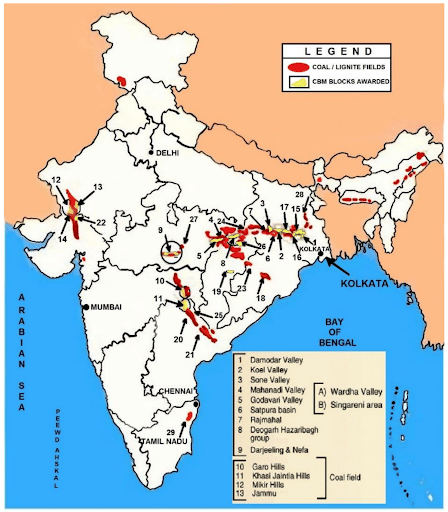
Coal bed methane (CBM) is a natural gas that may be extracted from coal beds. It is a significant unconventional gas that occurs naturally in coal beds and is increasingly being employed in industrial and utility applications. India’s coal and CBM deposits are spread throughout 12 Indian states, with the Gondwana sediments of eastern India holding the majority. The Damodar Koel and Son valleys are potential CBM development regions. This article explains about Coal Bed Methane which is important for UPSC IAS exam preparation.
Table of Contents
Coal bed methane (CBM)
- Coalbed methane, also known by other names such as coal seam gas, coal-mine methane, and coalbed gas, is a kind of natural gas derived from coal beds. It has gained popularity in recent years as a Renewable energy source.
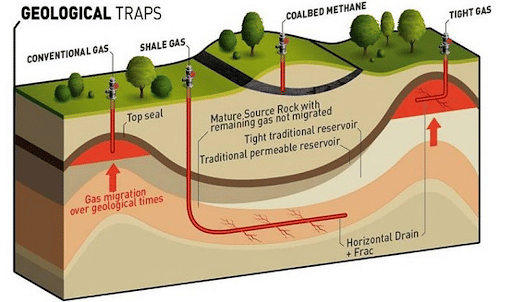
- CBM is collected from unconventional gas reservoirs, where gas is taken straight from the source rock.
- Methane is stored underground inside coal and is collected by drilling into the coal seam and extracting groundwater. As a result of the pressure reduction, methane is released from the coal.
- CBM has been considered a clean alternative fuel with promising future possibilities.
- CBM may be used to generate electricity, as Compressed natural gas (CNG) vehicle fuel, as fertiliser feedstock, and in industrial applications such as cement manufacture, rolling mills, steel plants, and methanol production.
Coal bed methane (CBM) - Uses
- It is used in the manufacturing of cement, methanol, and other products.
- It is used in both steel factories and rolling mills.
- It can be used as a fertiliser feedstock.
- CBM is an environmentally friendly energy source that is utilised in power generating.
Coal bed methane (CBM) - Benefits
- It is an environmentally safe and pure fuel that produces just carbon dioxide and water when burned.
- Methane (CH4) dominates, with modest quantities of nitrogen (N2), carbon dioxide (CO2), and heavier hydrocarbons such as ethane. (C2H6).
- It is a renewable energy source.
- It is not only an efficient fuel, but it also cuts greenhouse gas emissions from coal mining.
- Its extraction before coal mining activities improves mining safety by degassing coal seams.
Coal bed methane (CBM) - In India
- According to the Directorate General of Hydrocarbons, India has the fifth-largest known coal reserves in the world, providing substantial opportunities for CBM exploration and production.
- CBM resources in India are expected to be approximately 92 trillion cubic feet (TCF), or 2,600 billion cubic metres. (BCM).
- India's coal and CBM deposits are spread throughout 12 states.
- The majority of coal and CBM reserves are found in the Gondwana strata of eastern India.
Concerns and Challenges of CBM
- The disturbance of drilled fields (for coal bed methane) and its impact on wildlife habitats causes environmental degradation.
- Water discharges from CBM development harm the water sources downstream.
- A substantial volume of salinized water is dumped into freshwater habitats during the CBM extraction process. This might have a negative influence. The disposal of salinized water is a problem.
- CBM was previously responsible for a huge number of explosions in underground mines.
- However, the gas is currently being evacuated to the surface from subterranean mines.
- During the extraction of CBM, methane is released. Methane is a greenhouse gas, which causes worry.
- Production behaviour in the early phases of recovery is complicated and difficult to anticipate.
Conclusion
Coal bed methane (CBM) is a natural gas derived from coal beds. It is an important unconventional gas that naturally originates in coal beds and is increasingly used in industrial and utility applications. CBM methane is an ecologically safe and pure gas. It would aid in increasing domestic gas output while lowering greenhouse gas emissions. However, procedures such as environmental impact assessment and cost benefit analysis should be thoroughly considered and executed before considering CBM as an alternative fuel in the long run.
FAQs
Question. What is Coal Bed Methane (CBM)?
Answer: CBM is a form of natural gas found in coal seams, composed primarily of methane, which is extracted for various industrial and energy uses.
Question. How is CBM formed?
Answer: CBM is formed during the coalification process when organic materials in coal are converted into coal under high pressure and temperature over millions of years.
Question. Why is CBM considered an unconventional energy source?
Answer: Unlike conventional natural gas, which is extracted from gas reservoirs, CBM is sourced from coal seams, making it an unconventional energy resource.
Question. What are the environmental benefits of CBM?
Answer: CBM reduces greenhouse gas emissions by capturing methane, a potent greenhouse gas, before it escapes into the atmosphere. It is also a cleaner-burning fuel compared to coal.
Question. Which states in India have significant CBM reserves?
Answer: Jharkhand, Madhya Pradesh, Chhattisgarh, West Bengal, and Odisha have significant CBM reserves.
MCQs
- What is the primary component of Coal Bed Methane (CBM)?
A) Carbon dioxide
B) Methane
C) Hydrogen
D) Sulfur dioxide
Answer: (B) See the Explanation
CBM primarily consists of methane, making it a valuable source of natural gas.
- Which process leads to the formation of CBM?
A) Volcanic activity
B) Coalification
C) Sedimentation
D) Combustion
Answer: (B) See the Explanation
CBM is formed during the coalification process, where organic matter is transformed into coal under high pressure and temperature.
- In which of the following states is CBM extraction most prevalent?
A) Kerala
B) Punjab
C) West Bengal
D) Rajasthan
Answer: (C) See the Explanation
West Bengal, along with states like Jharkhand and Madhya Pradesh, is one of the leading CBM-producing regions in India.
- Why is CBM extraction considered environmentally beneficial?
A) It eliminates the need for fossil fuels
B) It captures methane before it escapes into the atmosphere
C) It produces zero emissions
D) It improves soil fertility
Answer: (B) See the Explanation
CBM extraction prevents methane, a potent greenhouse gas, from being released into the environment.
- Which sector primarily utilizes CBM?
A) Agriculture
B) Power generation
C) Textile industry
D) Fisheries
Answer: (B) See the Explanation
CBM is commonly used in power generation due to its clean-burning properties.
GS Mains Questions and Model Answers
Q1: Discuss the significance of Coal Bed Methane as an alternative energy source for India.
Answer: Coal Bed Methane (CBM) is a valuable alternative energy source for India, offering a cleaner and more efficient option compared to conventional fossil fuels. As India seeks to diversify its energy mix, CBM provides a domestic resource that reduces dependence on imported energy. It plays a crucial role in power generation, industrial applications, and as a transportation fuel. CBM extraction also mitigates environmental hazards by capturing methane, a potent greenhouse gas, before it escapes into the atmosphere. The presence of substantial CBM reserves in states like Jharkhand, West Bengal, and Madhya Pradesh underscores its potential for regional development and energy security. However, challenges such as water management during extraction and technological constraints must be addressed to optimize its utilization.
Q2: What are the challenges associated with Coal Bed Methane extraction in India, and how can they be addressed?
Answer: CBM extraction in India faces challenges such as high water production during extraction, land acquisition issues, and limited technological expertise. The extraction process often produces large volumes of water, which require proper disposal to prevent environmental contamination. Land acquisition for drilling and extraction operations faces resistance due to displacement concerns. Additionally, the lack of advanced drilling technology and skilled personnel limits efficient CBM recovery. Addressing these challenges requires adopting advanced technologies like horizontal drilling and hydraulic fracturing to enhance efficiency. Regulatory frameworks should balance environmental concerns with economic benefits, ensuring sustainable water management and community engagement. Encouraging public-private partnerships and investing in research and development can further improve CBM extraction processes.
Q3: Evaluate the environmental impact of Coal Bed Methane extraction and its role in reducing greenhouse gas emissions.
Answer: Coal Bed Methane (CBM) extraction has both environmental benefits and challenges. It plays a significant role in reducing greenhouse gas emissions by capturing methane, which is 25 times more potent than carbon dioxide, before it escapes into the atmosphere. As a cleaner-burning fuel, CBM reduces reliance on coal, lowering carbon emissions from power generation. However, the extraction process produces large volumes of water that may contain harmful contaminants, posing risks to soil and water bodies if not managed properly. Land disturbances during drilling can also affect local ecosystems. To minimize environmental impact, sustainable water management practices, advanced drilling technologies, and robust regulatory frameworks are essential. Despite these challenges, CBM remains a critical resource for transitioning to cleaner energy and achieving climate goals.
Previous Year Questions on Coal Bed Methane
1. UPSC CSE 2020
Question: "Explain the significance of unconventional sources of energy like Coal Bed Methane for India’s energy security."
Answer: Unconventional energy sources like CBM enhance India’s energy security by reducing dependence on imported fuels and diversifying the energy mix. CBM offers a cleaner, domestic energy source for power generation, industrial use, and transportation. Its efficient utilization contributes to sustainable economic growth.
2. UPSC CSE 2019
Question: "What are the environmental concerns associated with the extraction of unconventional energy sources like CBM?"
Answer: CBM extraction poses environmental concerns like groundwater depletion, contamination due to produced water, and land degradation. Methane leaks during extraction can contribute to greenhouse gas emissions. Sustainable practices and regulatory oversight are essential to mitigate these impacts.
Download the PREPP App and attempt FREE IAS Exam Mock Tests and get complete study material!
UPSC IAS : CSAT - Mini Live Test

Live Test : UPSC CSE Prelims CSAT (Paper-II) (Oct 20 - 23)
Full Test - 04: UPSC CSE Prelims CSAT (Paper-II)
Full Test - 03: UPSC CSE Prelims CSAT (Paper-II)
UPSC CSE Prelims 2026 GS Paper 1 Question Paper (24-May-2026)
UPSC CSE Prelims 2026 CSAT Paper 2 Question Paper (24-May-2026)

17 February 2025 | The Hindu Must Read Articles | Current Affairs

16 February 2026 | The Hindu Must Read Articles | Current Affairs

13 February 2026 | The Hindu Must Read Articles | Current Affairs









Comments