Armed Forces and Fundamental Rights (Article 33) – Indian Polity Notes
Under Article 33, Parliament has the authority to restrict the Fundamental Rights of members of the armed forces, paramilitary forces, police forces, intelligence agencies, and similar forces. It is to ensure that they carry out their duties properly and maintain discipline. In this article, we will discuss the topic Armed Forces and Fundamental Rights (Article 33) in great detail.
Concept of Fundamental Rights
- The Indian Constitution bestows fundamental rights on every Indian citizen, which are enshrined in Part III (Articles 12 to 35) of the Indian Constitution.
- Fundamental rights are essential in nature because they are the foundation for an individual to develop into an independent, intellectual, responsible, moral and spiritually developed citizen.
- The Constitution guarantees all people fundamental rights without discrimination.
- They defend the equality of all individuals, the dignity of the individual, the larger public interest, and national unity.
- They prevent the establishment of authoritarian and despotic rule in the country and defend the people's liberties and freedoms from invasion by the state.
- They serve as checks on the executive's tyranny and the legislature's arbitrary laws. In a nutshell, they want to establish "a government of laws, not of men."
- Originally, the Constitution established seven Fundamental Rights, namely,
- Right to equality (Articles 14–18)
- Right to freedom (Articles 19–22)
- Right against exploitation (Articles 23–24)
- Right to freedom of religion (Articles 25–28)
- Cultural and educational rights (Articles 29–30)
- Right to property (Article 31)
- Right to constitutional remedies (Article 32)
- The right to property, however, was removed from the list of Fundamental Rights by the 44th Amendment Act of 1978.
- Article 300-A of Part XII of the Constitution establishes it as a legal right.
- As a result, there are currently only six Fundamental Rights.
|
"Article 33 empowers the state to modify the fundamental rights of armed forces and related personnel to ensure the proper discharge of their duties and the maintenance of discipline.” |
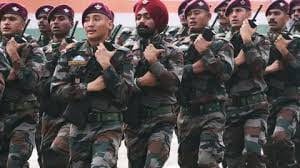
Restrictions of Fundamental Rights of the Armed Forces
- Article 33 gives the Parliament the authority to limit or abolish the fundamental rights of members of the armed forces, paramilitary forces, police forces, intelligence agencies, and similar forces.
- The purpose of this provision is to ensure that they carry out their duties properly and that they maintain discipline among themselves.
- Article 33 grants the power to make laws only to Parliament, not to state legislatures.
- Any such law enacted by Parliament cannot be challenged in a court of law on the basis of a violation of any of the fundamental rights.
- The Armed Forces have imposed restrictions on a limited number of fundamental rights, as specified in Articles 14, 15, and 19 of the Constitution.
- The provisions of these special acts (Army Act, Air Force Act, or Navy Act) cannot simply be challenged on the grounds that they violate fundamental rights. This is because these acts are laws duly enacted by Parliament in the exercise of its plenary legislative jurisdiction, as stated in Article 33 of the Indian Constitution.
- Aside from the three branches of the armed forces, these rights have been revoked in respect of members of the police and paramilitary forces, persons employed in intelligence or counter-intelligence services, and communication systems set up for the aforementioned organizations.
- The Central Government, in exercising its rule-making power under the Army Act of 1950 (as well as the Air Force Act), has limited the rights to freedom of speech and expression, freedom of assembly, and freedom to form associations and unions enshrined in Article 19 of the Constitution.
- In the case of the Navy, this was done by Parliament under Section 12 of the Navy Act itself.
- The Supreme Court has ruled that these rights can be limited even for members of the armed forces who serve in non-combat roles.
Related Constitutional Provisions
- Article 33 of the Constitution deals with Parliament's power to modify fundamental rights, stating that the Parliament may, by law, determine to what extent any of the rights conferred by this Part shall apply to:
- members of the Armed Forces; or
- members of the Forces charged with maintaining public order;
- persons employed in any bureau or other organization established by the State for intelligence or counterintelligence purposes; or
- persons employed in, or in connection with, the telecommunication systems set up for the purposes of any Force, bureau, or organization referred to in clauses (1) to (4), be restricted or abrogated in order to ensure the proper discharge of their duties and the maintenance of discipline among them
- Article 34 further classified certain restrictions on fundamental rights in any area where martial law is in effect.
- Thus, Articles 33 and 34 empower the Parliament to limit, modify, or revoke the fundamental rights of members of the armed forces, paramilitary forces, police forces, intelligence agencies, or similar services.
- The above-mentioned modification power, which restricts fundamental rights, is available only to parliament and not to the state legislature.
Reasons for Limitations on the FR of Armed Forces
- The Parliament imposed these restrictions after considering their pivotal role in discharging their duties and responsibilities to secure our country's sovereignty and integrity, maintain public order, and promote discipline among themselves.
- This is done as some of the fundamental rights (such as freedom of expression/speech, to form unions on various bases) may create a hindrance in the efficient, effective, and impartial performance of their duties.
Criticism
- The Supreme Court has liberally construed fundamental rights over the last five decades, keeping in mind the international covenants to which India is a party.
- For example, the right to life and personal liberty has been given the broadest possible interpretation.
- When it comes to military personnel's fundamental rights, the Supreme Court's interpretation of the constitutional provision has been very narrow.
- In any contentious case, the Supreme Court has frequently taken the path of least resistance by siding with the military.
- The courts are generally of the opinion that any negative comment on military higher-ups may erode military discipline.
- The judiciary believes, in good faith, that by supporting the organization, they are giving the military hierarchy and the government a chance to correct the flaws in governance and the justice delivery system.
- As a result, in cases of alleged bias, denial of rights, or injustice at the hands of a commander, courts may be tempted to rule out the possibility of culpability or malice on the part of the superior.
Related Judgements
- In the case of Ram Sarup in 1964, the Supreme Court relied on the Attorney General's submission.
- It stated that each provision of the Army Act is a law made by Parliament and that if any provision tends to affect fundamental rights, it must be assumed that Parliament, under Article 33, has made the necessary modification to affect the respective fundamental right.
- This was possibly an incorrect interpretation of the constitutional provision, which must be reconsidered in light of the passage of time and the evolution of law.
Conclusion
Members of the Armed Forces, while they are citizens of India, belong to a distinct class of people governed by special laws enacted by the Parliament, and they play a critical role in safeguarding the nation, whether in war or peace. Members of the armed forces must have the same rights and protections as everyone else, with some limitations imposed to maintain discipline. When their human rights and fundamental freedoms are protected within their institution, they are more likely to uphold these while performing their duties.
FAQs
Question: What is the significance of Article 33 in the Indian Constitution?
Answer: Article 33 of the Indian Constitution allows Parliament to modify or restrict the fundamental rights of members of the armed forces, paramilitary forces, police forces, and intelligence agencies. This provision is designed to maintain discipline and ensure the proper performance of duties essential for national security.
Question: Why are fundamental rights restricted for armed forces personnel?
Answer: Fundamental rights are restricted for members of the armed forces to ensure that they maintain discipline, loyalty, and efficiency. This is essential because the unrestricted exercise of certain rights could compromise the armed forces' operational effectiveness and national security.
Question: Can armed forces personnel challenge the restrictions on their fundamental rights?
Answer: Armed forces personnel cannot challenge the restrictions on their fundamental rights in a court of law if these restrictions have been imposed under Article 33 of the Constitution. Parliament has the power to impose these restrictions in the interest of discipline and national security.
Question: What fundamental rights are typically restricted for armed forces personnel?
Answer: Fundamental rights such as the right to freedom of speech and expression (Article 19), right to form associations or unions, and the right to life and personal liberty (Article 21) may be restricted for members of the armed forces. These restrictions ensure that the armed forces operate with discipline and efficiency.
Question: How does Article 33 protect national security?
Answer: Article 33 ensures that members of the armed forces and other security forces cannot exercise certain fundamental rights in a manner that would hinder their duty or compromise national security. By allowing Parliament to restrict these rights, Article 33 ensures the smooth functioning of the defense forces in times of war or peace.
MCQs
1. Under which article can Parliament restrict the fundamental rights of armed forces personnel?
A) Article 19
B) Article 21
C) Article 33
D) Article 32
Answer: (C) See the Explanation
Explanation: Article 33 of the Indian Constitution empowers Parliament to restrict or modify the application of fundamental rights for members of the armed forces, paramilitary forces, and other security agencies to ensure discipline and duty efficiency.
2. Why are restrictions imposed on the fundamental rights of armed forces personnel?
A) To protect individual freedoms
B) To prevent court interference
C) To maintain discipline and security
D) To promote political activity
Answer: (C) See the Explanation
Explanation: Restrictions on the fundamental rights of armed forces personnel are imposed to maintain discipline, operational effectiveness, and national security. These restrictions prevent rights from being exercised in ways that could undermine the forces' duties.
3. Which right is most likely to be restricted under Article 33 for armed forces personnel?
A) Right to form associations
B) Right to equality
C) Right to education
D) Right against exploitation
Answer: (A) See the Explanation
Explanation: The right to form associations or unions (Article 19) is one of the most common rights restricted for armed forces personnel. This ensures that the formation of unions does not interfere with the disciplined functioning of the military.
4. Which authority is empowered to modify the application of fundamental rights for security forces?
A) Supreme Court
B) President of India
C) Parliament
D) Armed Forces Tribunal
Answer: (C) See the Explanation
Explanation: Parliament is empowered by Article 33 to modify or restrict the application of fundamental rights to armed forces personnel and other security agencies in the interest of maintaining discipline and security.
5. Can armed forces personnel move to the Supreme Court under Article 32 for the enforcement of their fundamental rights?
A) Yes, in all cases
B) Yes, but with limitations
C) No, if restricted under Article 33
D) No, under any circumstances
Answer: (C) See the Explanation
Explanation: Armed forces personnel cannot approach the Supreme Court under Article 32 for enforcement of their fundamental rights if these rights have been restricted by Parliament under Article 33.
GS Mains Questions and Model Answers
Q1: Analyze the rationale behind Article 33 of the Indian Constitution. How does it balance the rights of armed forces personnel with the requirements of national security?
Answer: Article 33 allows for the modification or restriction of fundamental rights for members of the armed forces, paramilitary forces, and other similar agencies. The rationale is to ensure that the military operates with discipline and efficiency, as the unrestricted exercise of rights such as free speech and association could hinder their operational effectiveness. While this restricts individual liberties, it is necessary for maintaining national security, as the nature of military service requires a high level of discipline and duty that could be compromised by allowing full fundamental rights.
Q2: Discuss the impact of restricting fundamental rights on the morale and discipline of armed forces personnel. How can these restrictions be justified in a democracy?
Answer: While the restriction of fundamental rights may seem to negatively impact the morale of armed forces personnel, it is necessary to ensure military discipline and operational readiness. In a democracy, the primary justification for such restrictions is the need to balance individual freedoms with the collective security of the nation. The armed forces are tasked with defending the nation, and any actions or behaviors that compromise this duty need to be regulated. Hence, these restrictions, though stringent, are essential for the functioning of the defense forces.
Q3: Evaluate the role of the judiciary in interpreting Article 33 in the context of fundamental rights and the armed forces.
Answer: The judiciary plays a limited role in interpreting Article 33, as it grants Parliament the authority to determine the extent of restrictions on fundamental rights for armed forces personnel. However, the judiciary can review whether such restrictions are reasonable and in line with the provisions of the Constitution. Over the years, the courts have upheld the need for these restrictions to maintain military discipline and national security, while ensuring that the restrictions are not arbitrary or unjust.
Previous Year Questions on Armed Forces and Fundamental Rights
1. UPSC CSE Prelims 2022:
Question: Under which Article can Parliament impose restrictions on the fundamental rights of armed forces personnel?
A) Article 19
B) Article 33
C) Article 21
D) Article 31
Answer: (B)
Explanation: Article 33 allows Parliament to restrict or modify the fundamental rights of armed forces personnel, paramilitary forces, and intelligence agencies in the interest of maintaining discipline and security.
2. UPSC CSE Mains 2020 (GS Paper 2):
Question: "Examine the relevance of Article 33 in the context of ensuring discipline within the armed forces and balancing it with the protection of fundamental rights."
Answer: Article 33 is essential for maintaining the balance between individual rights and the operational requirements of the armed forces. By allowing Parliament to impose reasonable restrictions on the fundamental rights of military personnel, it ensures that discipline and duty are upheld without completely disregarding their rights. This provision is crucial for the proper functioning of the military, which requires order and discipline, while also ensuring that such restrictions do not become arbitrary or excessive.
*email: contactus@prepp.in
Download the PREPP App and attempt FREE IAS Exam Mock Tests and get complete study material!
UPSC IAS : CSAT - Mini Live Test

Live Test : UPSC CSE Prelims CSAT (Paper-II) (Oct 20 - 23)
Full Test - 04: UPSC CSE Prelims CSAT (Paper-II)
Full Test - 03: UPSC CSE Prelims CSAT (Paper-II)
UPSC CSE Prelims 2026 GS Paper 1 Question Paper (24-May-2026)
UPSC CSE Prelims 2026 CSAT Paper 2 Question Paper (24-May-2026)

17 February 2025 | The Hindu Must Read Articles | Current Affairs

16 February 2026 | The Hindu Must Read Articles | Current Affairs

13 February 2026 | The Hindu Must Read Articles | Current Affairs









Comments