Criticism of the Amendment Procedure - Indian Polity Notes
Indian constitution is a blend of rigidity and flexibility. The Constitution makers vested the powers of amendment in Article 368 in Part XX of the Constitution. The makers of the constitution provided the provision for amendment procedure to meet the changing needs of society. However, the Amendment Procedure didn't fall short of any criticism by the intellects.
Constitutional Amendment is an important topic for the UPSC Exam. The Aspirant is expected to know the various types of Amendments available for the lawmakers, what type of Amendment is used in different scenarios and what are its criticisms.
|
Table of Contents |
What Are Constitutional Amendments?
- Making changes to the constitution, which is the governing law of the land, is known as a constitutional amendment.
- Changing or altering the constitution necessitates a formal modification to the written text of the country's constitution. It entails the addition of a new article or clause, the deletion of an existing article or clause, or the improvement of existing articles.
- The text of the constitution has also been modified in other areas. The constitution's amendment requires it to go through a specific procedure, which includes passing it via multiple legislative assemblies before being sent to the president for final approval and signature.
| Other Relevant Links | |
|---|---|
| Procedure for Amendment | Types of Amendments |
| 11 Fundamental Duties | Procedure for Amendment |
Constitutional Provisions
- Part XX, Article 368, deals with Parliament's power to modify the Constitution and the procedure for doing so. It keeps the Indian Parliament's arbitrary power under check.
- Article 368 of the Constitution sets forth the mechanism for amending the Constitution, which states that an amendment can only be commenced by introducing a Bill in either House of Parliament, which must be passed by both.
- The Bill must be passed by both houses with a total majority (regardless of vacancies or absentees) and a majority of not less than 2/3rds of those present and voting.
- In the event of disagreement, there is no provision for a joint sitting.
- It must be ratified by not less than half of the states in order to alter provisions stated in Article 368, such as amending federal features.
|
“Constitutional amendments are crucial to maintaining the dynamic and responsive nature of the country's legal framework.” |
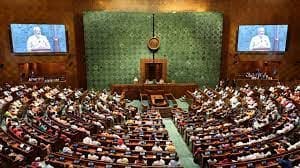
Criticism of Amendment Procedure
- No Special Body: There is no provision for a special body to change the Constitution, such as a Constitutional Convention (as in the United States) or a Constitutional Assembly.
- Exclusive to Parliament: The Parliament has the authority to propose a constitutional modification. Except in one situation, when passing a resolution seeking the creation or elimination of legislative councils in the states, state legislatures are unable to introduce any bill or proposal to modify the Constitution.
- Parliament can change the majority of the Constitution: The majority of the Constitution can be changed by Parliament alone, using either a special majority or a simple majority. The assent of state legislatures is required only in a few circumstances, and even then, only in half of them.
- States have no power to ratify or reject amendments: The Constitution makes no provision for the state legislatures to ratify or reject an amendment that is presented to them. It is also silent on the question of whether states can revoke their permission after giving it.
- No joint Sitting: If there is a deadlock over the passage of a constitutional amendment bill, there is no provision for a joint sitting of both Houses of Parliament.
- Similar process as Ordinary lawmaking: The procedure for amending a document is comparable to the procedure for enacting legislation. The constitutional amendment legislation must be carried by Parliament in the same way as other laws, with the exception of the special majority requirement.
- Room for judicial intervention: They give a lot of room for the courts to intervene.
Conclusion
Despite these shortcomings, the method for Amending the Constitution has shown to be straightforward and easy to implement, and it has met the changing demands and situations. The method is not so adaptable that the ruling parties may modify it at their leisure. It is also not so inflexible as to be incapable of adapting to changing demands. It, as K.C. Wheare correctly stated, "strikes a reasonable balance between flexibility and stiffness."
FAQs
Question: What are the main criticisms of the amendment procedure in the Indian Constitution?
Answer: The amendment procedure in the Indian Constitution has faced several criticisms, primarily for being complex and rigid in certain respects. Critics argue that the requirement for a special majority in Parliament to amend the Constitution makes the process lengthy and difficult, especially for amendments that require approval by state legislatures. Another criticism is that while the Constitution provides for flexibility, it is still quite formalistic, requiring multiple steps, which can slow down necessary reforms. Furthermore, the fact that Parliament can alter the Constitution without a direct public referendum is seen by some as undemocratic, as it concentrates power in the hands of elected representatives without giving citizens a direct say in constitutional changes.
Question: How does the flexibility of the Indian Constitution compare with other countries?
Answer: The Indian Constitution is considered semi-rigid, offering a balance between rigidity and flexibility. It allows for amendments to be made, but these amendments require either a simple majority or a special majority, depending on the nature of the change. In comparison, some countries, like the United States, have a more rigid Constitution, requiring supermajority votes and a referendum for any changes. On the other hand, countries like the UK do not have a formal written Constitution and thus do not require any special procedure to make amendments. India’s Constitution is designed to be adaptable but requires significant consensus for major amendments, which ensures stability and prevents hasty changes.
Question: What is the role of the judiciary in the amendment procedure of the Indian Constitution?
Answer: The judiciary plays a crucial role in interpreting the amendment procedure under the Indian Constitution. The Supreme Court of India has the power to review constitutional amendments to ensure that they do not violate the 'basic structure' doctrine. This doctrine, established by the Court in the Kesavananda Bharati case (1973), stipulates that certain fundamental principles of the Constitution, such as democracy, federalism, and the rule of law, cannot be altered by the amendment procedure. Therefore, while the Parliament can amend the Constitution, the judiciary ensures that such amendments do not infringe upon the basic structure of the Constitution, thus safeguarding its core values.
Question: What is the basic structure doctrine in relation to constitutional amendments?
Answer: The basic structure doctrine, established by the Supreme Court of India in the landmark Kesavananda Bharati case, asserts that while Parliament can amend the Constitution, it cannot alter or destroy its basic structure. The Court held that the Constitution has certain fundamental principles and values, such as democracy, the separation of powers, federalism, and the rule of law, that are essential to its identity and cannot be changed by any amendment. This doctrine has been instrumental in maintaining the stability of the Constitution and preventing arbitrary amendments that could undermine its foundational principles.
Question: Why is the need for a special majority to amend certain provisions of the Indian Constitution considered a safeguard?
Answer: The requirement for a special majority to amend certain provisions of the Indian Constitution acts as a safeguard against hasty or unbalanced changes that could undermine the integrity and stability of the Constitution. The special majority ensures that any proposed amendment has broad political support and is not merely the result of partisan interests. It prevents a single party or group from altering the Constitution in a way that could alter the balance of power or erode the rights and freedoms of citizens. This provision helps to maintain a consensus-driven approach to constitutional change, which is essential for preserving democratic principles and ensuring that any amendments reflect the will of the people.
MCQs
1. Which of the following is a criticism of the amendment procedure in the Indian Constitution?
A) The procedure is too flexible and lacks checks.
B) The procedure is too rigid and makes it difficult to make changes.
C) The procedure requires a referendum for any amendment.
D) The procedure allows changes without the approval of Parliament.
Answer: (B) See the Explanation
Explanation: The amendment procedure in the Indian Constitution has been criticized for being too rigid. It requires either a special majority in Parliament or the approval of state legislatures for significant amendments, which can slow down necessary changes.
2. The basic structure doctrine was established by the Supreme Court in which case?
A) Golaknath v. State of Punjab
B) Kesavananda Bharati v. State of Kerala
C) Minerva Mills v. Union of India
D) Indira Gandhi v. Raj Narain
Answer: (B) See the Explanation
Explanation: The basic structure doctrine was established in the landmark case of Kesavananda Bharati v. State of Kerala (1973), where the Supreme Court ruled that Parliament cannot alter the basic structure of the Constitution through amendments.
3. Which of the following provisions of the Indian Constitution cannot be amended by the Parliament?
A) The preamble
B) Fundamental Rights
C) Distribution of powers between Centre and States
D) The name of the country
Answer: (B) See the Explanation
Explanation: The structure of Parliament, especially the division of powers between the two houses, is part of the basic structure doctrine, which cannot be altered by amendments.
4. What does a 'special majority' mean in the context of amending the Indian Constitution?
A) A majority of the people in the country.
B) A majority of the states in the country.
C) A majority of the members present and voting, with at least two-thirds of those present agreeing.
D) A unanimous vote of both Houses of Parliament.
Answer: (C) See the Explanation
Explanation: A special majority means that a proposal for an amendment must receive the approval of at least two-thirds of the members present and voting in both Houses of Parliament.
5. What is the primary role of the judiciary in the amendment process of the Indian Constitution?
A) To ensure that all amendments are in line with the Constitution's basic structure.
B) To review the legality of amendments after they are passed.
C) To suggest amendments to Parliament.
D) To approve amendments before they are enacted.
Answer: (A) See the Explanation
Explanation: The judiciary’s role in the amendment process is to ensure that any constitutional amendments do not violate the basic structure of the Constitution. This was established in the Kesavananda Bharati case.
GS Mains Questions and Model Answers
Q1: Evaluate the strengths and weaknesses of the amendment procedure in the Indian Constitution. How does it maintain a balance between flexibility and rigidity?
Answer: The amendment procedure in the Indian Constitution is designed to strike a balance between flexibility and rigidity. On one hand, it allows for necessary changes to adapt to new challenges, such as changes in societal values, technological advancements, and global dynamics. On the other hand, the procedure is sufficiently stringent to prevent arbitrary or hasty changes that could undermine the core values of the Constitution. The requirement for a special majority in Parliament and, in some cases, the approval of state legislatures ensures that amendments have wide political support, which helps in maintaining stability and legitimacy. However, critics argue that the complexity of the procedure and the lack of a direct referendum process could prevent quick responses to pressing issues. The basic structure doctrine further limits Parliament's power, ensuring that essential principles like democracy, federalism, and the rule of law are preserved.
Q2: Discuss the implications of judicial review on the amendment procedure of the Indian Constitution. How does this influence the relationship between the legislature and judiciary?
Answer: Judicial review plays a crucial role in the amendment procedure of the Indian Constitution, ensuring that any changes proposed by Parliament do not violate the Constitution's basic structure. This has created a delicate balance between the legislature and the judiciary, as the judiciary has the power to strike down amendments that are deemed unconstitutional. This power of judicial review reinforces the principle of checks and balances, as it ensures that Parliament cannot make arbitrary or unwise changes to the Constitution. However, this has also led to tension between the two branches of government, with some arguing that the judiciary's power to review amendments encroaches upon the sovereignty of Parliament. Nevertheless, the basic structure doctrine, while limiting Parliament's powers, serves as a safeguard to protect the Constitution’s foundational values.
Previous Year Questions on Amendment Procedure
1. UPSC CSE Prelims 2020:
Question: Which of the following provisions of the Indian Constitution requires a special majority for amendment?
A) The preamble
B) Fundamental Rights
C) Distribution of powers between Centre and States
D) All of the above
Answer: (D)
Explanation: Articles relating to the distribution of powers between the Centre and the States and the fundamental rights require a special majority for amendment. Other provisions can be amended with a simple majority.
2. UPSC CSE Mains 2017 (GS Paper 2):
Question: Discuss the limitations imposed on the amendment procedure by the 'basic structure' doctrine. How does this doctrine ensure the preservation of constitutional values?
Answer: The basic structure doctrine limits Parliament's power to amend the Constitution, ensuring that fundamental principles such as democracy, federalism, and the rule of law remain intact. By judicial review, the Supreme Court has preserved these core values and prevented arbitrary amendments that might alter the foundational structure of the Indian Constitution.
*email: contactus@prepp.in
Download the PREPP App and attempt FREE IAS Exam Mock Tests and get complete study material!

Full Test - 04: UPSC CSE Prelims CSAT (Paper-II)
Full Test - 03: UPSC CSE Prelims CSAT (Paper-II)
UPSC CSE Prelims 2026 GS Paper 1 Question Paper (24-May-2026)
UPSC CSE Prelims 2026 CSAT Paper 2 Question Paper (24-May-2026)

17 February 2025 | The Hindu Must Read Articles | Current Affairs

16 February 2026 | The Hindu Must Read Articles | Current Affairs

13 February 2026 | The Hindu Must Read Articles | Current Affairs









Comments