Abolition of Untouchability (Article 17) - Indian Polity Notes
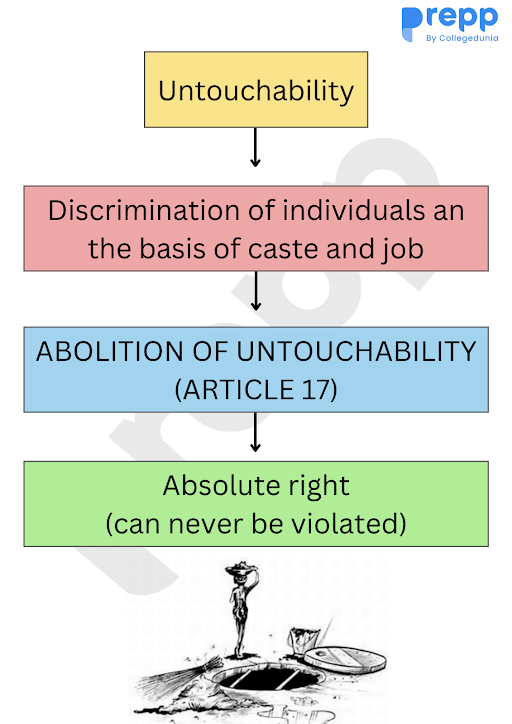
Untouchability is the discrimination of individuals on the basis of caste and the nature of jobs done by them. Untouchability has been deeply rooted in the Indian caste system for ages. Abolition of untouchability (Article 17) was incorporated in Part III - Fundamental Rights of the Indian Constitution. It places limitations on and outlaws the practice of untouchability, ensuring that it is removed in all forms. The practice of untouchability will not be accepted by a democratic government and will be punished. The topic “Abolition of Untouchability (Article 17)” is an important part of the UPSC/IAS Exam Indian Polity and Governance syllabus which is discussed in this article in detail.
Table of Contents
What is Untouchability?
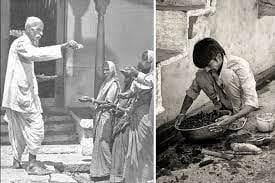
- Untouchability refers to a societal practice that looks down on particular depressed groups purely because of their birth and discriminates against them on that basis. Their bodily contact was said to taint others.
- Neither the Constitution nor the Act defines untouchability
- These untouchable classes were not permitted to collect water from the same wells or utilize the pond/tank used by the upper castes.
- They were not permitted to enter some temples and were subjected to a variety of other restrictions.
- However, in one of its judgments, the Mysore High Court confirmed its meaning.
- According to the court, the subject matter of Article 17 is not untouchable in its literal or grammatical sense but the ‘practice as it had developed historically in the country.
- It refers to the social disabilities imposed on certain classes of persons because of their birth in certain castes. Hence, it does not cover the social boycott of a few individuals or their exclusion from religious services, etc
- Due to the numerous verdicts and guidelines issued by the court, some activities will be viewed as customs of untouchability, for which a provision for punishment has also been provided.
| Other Relevant Links | |
|---|---|
| Equality before Law and Equal Protection of Laws | Exceptions to Equality |
| Rule of Law | Abolition of Titles |
|
"Untouchability is a profound injustice that denies human dignity and equality, perpetuating discrimination and division in society.” |
Article 17 – Explanation
- Article 17 says “Untouchability” is abolished and its practice in any form is forbidden. The enforcement of any disability arising out of “Untouchability” shall be an offence punishable in accordance with law.
- The concept of "untouchability" has been abolished, and its application in any form is prohibited. The imposition of any limitation resulting from "Untouchability" is a criminal offence punishable by law.
- To put a stop to the caste system, untouchability, prejudice, and other forms of oppression that have existed in our culture for generations, Article 17 was included in the Indian Constitution
- It provides security not only against the government but also against private individuals.
- The state has a legal obligation to take the appropriate efforts to ensure that it is not violated. ( People's Union for Democratic Rights v Union of India Case)
- Of all the rights articles established in the Constitution, Article 17 is the only one that is absolute. That is, practicing untouchability in any form is prohibited and there are 'no ifs, no buts,' only punishments if you practice untouchability.
- The inclusion of this article in the Constitution demonstrates the priority given by the Constituent Assembly to the abolition of this heinous practice.
- Article 17 is also a key clause in terms of equality before the law (Article 14). It ensures social justice and human dignity, two rights that have been denied to a large segment of Indian society for millennia.
- Article 17 is absolute in nature, which means it cannot be violated under any circumstances.
Examples of Practices Considered as Untouchability
- Directly or indirectly preaching untouchability
- Preventing any person from attending or praying in a place of public worship (Like Temple, Majid, Church)
- Justifying untouchability on traditional, religious, philosophical, or other reasons (I am adhering to casteism because it is written in the Bible.) That won't work, and it'll be considered a felony as well.)
- Denying entry in any store, hotel, club, or other public amusement facilities;
- Restriction on where public services are supplied, such as at a reservoir, a tap, or other sources of water, a road, a public pasture, a crematorium, or other locations.
- Insulting someone from a scheduled caste (SC, ST, OBC) because they are untouchable;
- Refusing to accept people to hospitals, educational institutions, or hostels that are meant to serve the public good
- Refusing to sell anything or provide services to anyone
Laws To End Untouchability
- This fundamental right is not inherently applicable. Untouchability would continue to exist in many parts of India even after the Constitution has been in force for 70 years.
- To combat this, the Parliament has enacted legislation under Article 35's authority.
The Untouchability Offences Act of 1955
Main provision
- This will be a criminal offense for which no pardon will be granted.
- If proven, a sentence of six months in prison or a fine of 500 rupees, or both, may be imposed.
- If a candidate for Parliament or a state election is found guilty, he/she will be disqualified.
The Protection of Civil Liberties Act 1976
- The Untouchability Offenses Statute of 1955 was amended by this act.
- In 1976, the Untouchability (Offences) Act, 1955 was comprehensively amended and renamed the Protection of Civil Rights Act, 1955 to enlarge the scope and make penal provisions more stringent.
- The act defines a civil right as any right accruing to a person by reason of the abolition of untouchability by Article 17 of the Constitution.
- On proving charges, the sentence was raised to two years in prison or a fine of Rs. 2000, or both.
The Scheduled Caste and Scheduled Tribe Prevention of Atrocities Act, 1989
- Its principal goal is to avoid atrocities by increasing surveillance and collecting permits from upper castes, among other things.
- Provides victims with assistance and rehabilitation.
- It establishes a special court and a special police force.
- Police may even offer arms to members of the SC and ST communities for self-defense in some cases.
Some Important Judgements
The State of Karnataka v. Appa Balu Ingale
- Respondents were sued in this case because they forcefully barred the plaintiff from using water from the recently dug-up borewell because he belonged to an untouchable community.
- Four Harijans testified against the respondent. The purpose of Article 17 was stated in this instance to restore the ethical and moral foundations that society had lost due to unthinking and ritualistic devotion to cultural ideals.
- It was said that the purpose is to bring Dalits on par with the rest of the population. The use of caste and religious grounds should be prohibited.
People’s Union for Democratic Rights v. Union of India, AIR 1982
- According to this Case, if any private individual violates the rights guaranteed by Article 17, it is the obligation of the State to take urgent action.
Safai Karamchari Andolan and Ors. v. Union of India and Ors
- In this case, the Petitioners filed a petition under Article 32, requesting that the Central Government, State Governments, and Union Territories should execute the Manual Scavengers and Construction of Dry Latrines (Prohibition) Act, 1993.
The Court issued many instructions in this matter, including:
- All manual scavengers will be rehabilitated.
- Scholarships for the children of scavengers are provided.
- Scavengers receive one-time financial help.
- Each household should have one member receive skill training in order to make a living.
- They require more legal aid.
- Compensation is provided for each sewer death.
Conclusion
Article 17 is an essential component of the Right to Equality. It ensures not only equality but also social justice. In India, all forms of untouchability are considered as a crime that is penalized by law. It is also important that the definition of Untouchability should not be interpreted literally. Rather, the concept of untouchability should be interpreted in the context of Indian society.
FAQs
Question: What does Article 17 of the Indian Constitution state?
Answer: Article 17 abolishes untouchability in all forms and makes its practice a punishable offense.
Question: Why is Article 17 considered absolute?
Answer: Article 17 is absolute because it does not allow untouchability under any circumstances, with no exceptions.
Question: What are some examples of untouchability practices?
Answer: Examples include barring people from public places, refusing services, and restricting entry to temples or educational institutions based on caste.
Question: What laws support the abolition of untouchability?
Answer: The Protection of Civil Rights Act (1955) and Scheduled Castes and Tribes (Prevention of Atrocities) Act (1989) help enforce Article 17.
Question: Can private individuals be punished for practicing untouchability?
Answer: Yes, both the government and private individuals can be penalized for practicing untouchability.
MCQs
1. Which Article of the Indian Constitution abolishes untouchability?
A) Article 14
B) Article 19
C) Article 17
D) Article 21
Answer: C See the Explanation
Explanation: Article 17 explicitly abolishes untouchability in any form.
2. Which law was passed to further protect civil liberties and abolish untouchability?
A) Right to Education Act
B) Protection of Civil Rights Act
C) Citizenship Amendment Act
D) Prevention of Corruption Act
Answer: B See the Explanation
Explanation: The Protection of Civil Rights Act (1955) enforces Article 17 by making untouchability a criminal offense.
3. Which act prevents atrocities against Scheduled Castes and Tribes?
A) National Security Act
B) SC/ST Prevention of Atrocities Act
C) Domestic Violence Act
D) Right to Information Act
Answer: B See the Explanation
Explanation: The Scheduled Castes and Tribes (Prevention of Atrocities) Act (1989) prevents caste-based discrimination and violence.
4. In which case did the court rule that Article 17 applies to private individuals?
A) Kesavananda Bharati v. Union of India
B) People's Union for Democratic Rights v. Union of India
C) Minerva Mills v. Union of India
D) M.C. Mehta v. Union of India
Answer: B See the Explanation
Explanation: In People's Union for Democratic Rights v. Union of India, the court confirmed that private individuals are also accountable under Article 17.
5. Which of the following is a punishable offense under Article 17?
A) Violating the Right to Education
B) Practicing untouchability
C) Owning property
D) Misusing Right to Information
Answer: B See the Explanation
Explanation: Practicing untouchability is a punishable offense under Article 17.
GS Mains Questions and Answers
Q1: Examine the role of Article 17 in addressing caste-based discrimination in India.
Answer: Article 17 plays a crucial role in abolishing caste-based discrimination by declaring untouchability a punishable offense. It provides social justice and protects the rights of marginalized communities. Along with legal frameworks like the Protection of Civil Rights Act and the SC/ST Prevention of Atrocities Act, it ensures equality for all citizens. Article 17’s implementation has been reinforced by several court rulings, making it central to India's social transformation.
Q2: Discuss how judicial rulings have reinforced the abolition of untouchability in India.
Answer: Judicial rulings such as People's Union for Democratic Rights v. Union of India and State of Karnataka v. Appa Balu Ingale have reinforced Article 17’s principles. These rulings expanded the scope of protection, holding private individuals accountable and recognizing untouchability practices as constitutional violations. Such judgments strengthened the fight against caste-based discrimination and upheld the Constitution’s vision of equality.
Q3: Analyze the impact of legislative measures supporting Article 17 on Indian society.
Answer: Legislative measures like the Protection of Civil Rights Act (1955) and the Scheduled Castes and Tribes (Prevention of Atrocities) Act (1989) have made significant contributions to combating untouchability and caste-based violence. These acts provide legal recourse for victims, establish special courts for faster justice, and aim to eradicate caste-based oppression. The impact of these laws is evident in the increasing awareness and reduction in overt caste-based discrimination, although challenges remain in full implementation.
Previous Year Questions on Article 17
1. UPSC CSE Prelims 2018
Question: Which Article of the Indian Constitution deals with the abolition of untouchability?
A) Article 14
B) Article 17
C) Article 21
D) Article 32
Answer: B
Explanation: Article 17 explicitly deals with the abolition of untouchability and prohibits its practice in any form.
2. UPSC CSE Mains 2015 (GS Paper 2)
Question: Examine the role of Article 17 in eradicating caste-based discrimination and promoting equality in India.
Answer: Article 17 is a cornerstone in India's efforts to eradicate caste-based discrimination. It outlaws untouchability and makes its practice a punishable offense. Alongside laws like the Protection of Civil Rights Act and judicial interventions, Article 17 promotes social equality and justice. Its strict enforcement and constitutional status make it a vital tool in the fight against caste-based oppression.
*email: contactus@prepp.in
Download the PREPP App and attempt FREE IAS Exam Mock Tests and get complete study material!

Full Test - 04: UPSC CSE Prelims CSAT (Paper-II)
Full Test - 03: UPSC CSE Prelims CSAT (Paper-II)
UPSC CSE Prelims 2026 GS Paper 1 Question Paper (24-May-2026)
UPSC CSE Prelims 2026 CSAT Paper 2 Question Paper (24-May-2026)

17 February 2025 | The Hindu Must Read Articles | Current Affairs

16 February 2026 | The Hindu Must Read Articles | Current Affairs

13 February 2026 | The Hindu Must Read Articles | Current Affairs









Comments