What Does Aspartame Being ‘Possibly Carcinogenic’ Mean?
Relevance: GS2 - Issues relating to development and management of Social Sector/Services relating to Health, Important International institutions, agencies and fora- their structure, mandate GS3 - Science and Technology- developments and their applications and effects in everyday life.
(Source: The Hindu, 07/20/2023)
Click here for Daily Current Affairs
Why in the news?
- Recently, the WHO declared Aspartame, which is an artificial sweetener used in the food and beverages industry to be a possible carcinogen.
- Aspartame is present in a wide range of food products – sugar-free diet soda, iced tea, ice cream, low-fat yogurt, cereals, and medicines such as chewable vitamins.
- The report was authored by a committee of experts under the authority of the International Agency for Research on Cancer (IARC).
Table of Contents
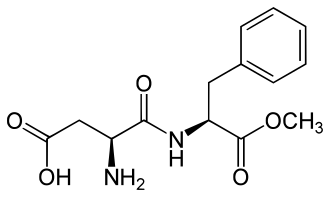
What is aspartame?
- Aspartame is an artificial non-saccharide sweetener that is considered to be nearly 200 times sweeter than sucrose.
- It was developed by chemist James M. Schlatter in 1965 as a substitute for sucrose.
- It was first approved by the U.S. Food and Drug Administration in 1974.
- It is composed of aspartic acid and phenylalanine, both of which are amino acids that occur naturally in many protein-rich foods.
- In humans, aspartame is metabolized into its constituent components - aspartic acid, phenylalanine - and a small amount of methanol.
- Uses: It is typically used as an artificial sweetener and is found in sugar-free diet soda, ice tea, ice cream, low-fat yogurt, cereals, and medicines such as chewable vitamins.
WHO Report on Aspartame
- A health impact report released by the International Agency for Research on Cancer (IARC) and the World Health Organization (WHO) and the Food and Agriculture Organization (FAO) Joint Expert Committee on Food Additives (JECFA) on July 14th stated classified aspartame as possibly carcinogenic to humans.
- Although safety is not a major concern at the doses of aspartame which are commonly used, some potential effects require more detailed investigations.
What is the IARC?
- The International Agency for Research on Cancer (IARC) is the specialized cancer agency of the WHO.
- It was established in May 1965 through a resolution of the World Health Assembly and is headquartered in Lyon, France.
- Objective:
- Promote international collaboration in cancer research.
- Identify the causes of cancer to enable the adoption of preventive measures and reduce disease burden and suffering.
- Members: It has 27 members including India who joined in 2006.
- Governance: A Governing Council, composed of the Representatives of Participating States and of the WHO Director-General guides the IARC’s policy.
Grading system
- Grade 1: Cancer-causing substances with evidence supporting carcinogenicity in humans.
- Eg: asbestos, processed meats, smoking
- Grade 2: Substances that are probably carcinogenic to humans.
- 2A: Grade 2 substances with sufficient evidence of carcinogenicity in animals and limited evidence in humans. This includes DDT, red meat, working night shifts, etc.
- 2B: Grade 2 substances with limited evidence of carcinogenicity in animals and humans such as occupational exposure, cell phone radiation, etc.
- Grade 3: Substances that cannot be classified as carcinogenic due to inadequate data.
- Eg: Coffee, mercury, paracetamol, etc.
What are the concerns associated with the Report?
- Inadequate: The IARC report does not measure the risk of cancer but only categorizes substances based on their properties and behavior.
- It does not provide any details regarding the level of harm posed by the substances.
- Even smoking and red meat, which are both Grade 1, cannot be compared for cancer incidence.
- Contradicting report by JCEFA: The U.N. Food and Agriculture Organization and the WHO Joint Expert Committee on Food Additives (JECFA) separately evaluated the risk or odds of developing cancer with the use of aspartame.
- It found that aspartame is safe for human consumption up to a limit of 40 mg/kg of body weight.
- No consistent association was found between the use of aspartame and the incidence of cancer.
- Impact:
- Non-sugar sweeteners are used extensively by large Indian brands of soft as "healthy" alternatives to sugar.
- Restrictions in line with the IARC suggestions could impact sales and the dietary habits of Indian consumers.
How has India responded?
- The FSSAI stated that guidelines and thresholds for the use of artificial sweeteners would be developed based on its own risk assessment studies.
- All stakeholders, including food and beverage companies, scientists, and government agencies would be consulted in the process.
Conclusion
- Although Aspartame has been classified as a ‘possible carcinogen’, it is still safe to be used as a food additive in reasonable quantities.
- However, ultra-processed and processed foods are generally not good for health and well-being and must be used sparingly.
FAQs
Question: What are carcinogens?
Answer:
Carcinogens refer to chemical substances or mixtures of chemical substances that may induce cancer or increase its incidence in humans. They can be physical (UV radiation), chemical (benzene), or viral (papillomaviruses) in nature.
Question: What are amino acids?
Answer:
Amino Acids are organic compounds that combine to form proteins, and are involved in several biological and chemical functions in the human body. They are necessary for the growth and development of human beings and are also known as the building components of proteins. Examples: Aspartic acid, glycine, glutamine, etc.
MCQs
Question: Aspartame is an artificial sweetener sold in the market. It consists of amino acids and provides calories like other amino acids. Yet, it is used as a lowcalorie sweetening agent in food items. What is the basis of this use? (UPSC 2011)
(a) Aspartame is as sweet as table sugar, but unlike table sugar, it is not readily oxidized in the human body due to lack of requisite enzymes.
(b) When aspartame is used in food processing, the sweet taste remains, but it becomes resistant to oxidation.
(c) Aspartame is as sweet as sugar, but after ingestion into the body, it is converted into metabolites that yield no calories.
(d) Aspartame is several times sweeter than table sugar, hence food items made with small quantities of aspartame yield fewer calories on oxidation.
Answer: (d) See the Explanation
Aspartame is several times sweeter than table sugar, hence food items made with small quantities of aspartame yield fewer calories on oxidation.
Question: Consider the following statements:
- Aspartame does not cause rises in blood glucose levels due to the absence of calories.
- It can be used for cooking and baking.
Which of the above statements is/are correct?
(a) 1 only
(b) 2 only
(c) Both 1 and 2
(d) None of the above
Answer: (d) See the Explanation
- The consumption of Aspartame does not lead to a rise in blood glucose levels like after eating regular sugar. This is because the calories which are present in aspartame are broken down entirely by the digestive system. Hence statement 1 is incorrect.
- Aspartame is generally used as a tabletop sweetener. It is not generally used for cooking and baking because it breaks down into its constituents and loses sweetness when heated. Hence statement 2 is incorrect.
Therefore, option (d) is the correct answer.
Download the PREPP App and attempt FREE IAS Exam Mock Tests and get complete study material!

Full Test - 04: UPSC CSE Prelims CSAT (Paper-II)
Full Test - 03: UPSC CSE Prelims CSAT (Paper-II)
UPSC CSE Prelims 2026 GS Paper 1 Question Paper (24-May-2026)
UPSC CSE Prelims 2026 CSAT Paper 2 Question Paper (24-May-2026)

17 February 2025 | The Hindu Must Read Articles | Current Affairs

16 February 2026 | The Hindu Must Read Articles | Current Affairs

13 February 2026 | The Hindu Must Read Articles | Current Affairs









Comments