Volcanic Materials - Geography Notes
A volcano is a fissure or vent in the Earth's crust that erupts volcanic materials such as lava, ash, rocks, and gases. Large volcanic eruptions have historically been followed by volcanic winters, resulting in terrible famines. Lava flows, volcanic bombs, pyroclastic debris, dust, ash, and gases are among the volcanic materials that flow to or reach the ground. In this article, we will discuss Volcanic Materials that will be helpful for UPSC/IAS exam preparation.
|
Table of Contents |

What are Volcanic Materials?
- Volcanic materials are substances ejected from a volcano during its eruptions.
- These materials can be solid, liquid, or gaseous and vary in size from tiny ash particles to large boulders.
- They play a significant role in shaping the Earth's surface and can have both short-term and long-term impacts on the environment and ecosystems.
- Some rocks slowly melt and convert into thick flowing stuff known as magma as a result of extremely high temperatures.
- Magma rises and collects in magma chambers because it is lighter than the solid rock surrounding it, eventually pushing through fissures and vents on the earth's surface.
|
|
|
|---|---|
| Active Volcanoes | Dormant Volcanoes |
| Extinct Volcanoes | Types of Volcanoes |
| Basic Lava | Acidic Lava |
Types of Volcanic Materials
Lava
- Magma that reaches the Earth's surface is termed lava.
- Its properties and behavior vary based on its chemical composition, temperature, and gas content.
- The amount of silica and gas in the lava determines how easily it flows and the structures it forms.
- The more silica in the lava, the more polymerization (the production of long molecules) takes place, hardening it.
- The viscosity of lava is used to define its rigidity; low viscosity lava flows readily, whereas high viscosity lava is sticky and stiff.
- High-silica lava, on average, contains more gas than low-silica lava.
Pyroclastic Material / Tephra
- Pyroclastic rocks are clastic rocks made up of rock pieces ejected by violent volcanic eruptions.
- Pyroclasts are the individual rock fragments that make up a pyroclast.
- Volcanic eruptions produce three types of materials: gas, lava, and fragmented debris called tephra.
- Sulfur compounds, nitrogen compounds, and trace amounts of argon, hydrogen, and chlorine are among the few that could be present.
- Tephra is the collective term for loose particles spewed from a volcano.
- Individual shards are referred to as pyroclasts in general, hence tephra is also known as pyroclastic debris.
- Pyroclasts are classed based on their size.
- Volcanic ash is defined as particles with a diameter of less than 2 mm. Small mineral grains and glass make up volcanic ash.
- Lapilli are fragments with dimensions ranging from 2 mm to 64 mm.
- Pele's tears develop when lava droplets cool rapidly as they are propelled through the air.
- Moving quickly in the air may cause Pele's tears to form long threads known as Pele's hair.
- Depending on their origin, fragments larger than 64 mm are categorized as blocks or bombs.
- Blocks are solid volcanic debris formed when an explosive eruption shatters the pre-existing rocks.
- When lava is launched from a volcano and cools as it travels through the air, bombs develop. The lava may take on a streamlined appearance as it travels through the air.
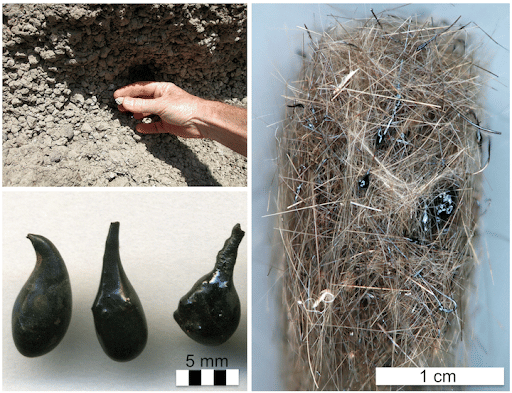
Lapilli, Pele’s Tear and Pele’s Hair
Gases from Volcanoes
- The gases are dissolved into magma at high pressures. When the pressure drops, the gas escapes the solution and forms bubbles.
- Water vapor is the most abundant component of volcanic gas emissions, followed by carbon dioxide (CO2), sulphur dioxide (SO2), and hydrogen sulphide (H2S).
- Volcanoes emit gases as they erupt and through vents known as fumaroles.
- They may potentially emit gas into the soil and groundwater.

Difference Between Magma and Lava
| Aspect | Magma | Lava |
|---|---|---|
| Location | Found beneath the Earth's surface. | Found on the Earth's surface after eruption. |
| Composition | Magma can have varying compositions based on its source and the minerals present. | Once magma reaches the surface and cools, it can crystallize and may have a slightly altered composition from its original magma source due to the loss of gases and other volatiles. |
| Temperature | Typically ranges from 700°C to 1300°C. | Cools rapidly when it reaches the surface, starting from a temperature similar to magma but decreasing as it flows and solidifies. |
| Viscosity | Can range from runny (like water) to thick (like honey) based on its silica content and temperature. | Generally less viscous than magma because it loses some gas and volatiles upon reaching the surface. However, its viscosity can still vary based on composition and temperature. |
| Associated Features | Magma chambers, sills, and dikes are features associated with magma accumulation and movement below the surface. | Lava flows, lava plateaus, and volcanic landforms like shields, cones, and domes are created by the movement and cooling of lava on the surface. |
| Hazards | Can cause earthquakes and uplift when accumulating underground. Can also contribute to a volcanic eruption. | Lava flows can burn and bury everything in their path, causing loss of life and property. They also release gases that can be hazardous to breathe. |
Significance of Volcanic Material
- Volcanic elements eventually decompose and weather to form some of the world's most fertile soils, which have yielded bountiful food and supported civilizations.
- As a result of volcanic eruptions, ash is scattered over a large area around the eruption site.
- This ash will contain various levels of soil nutrients depending on the chemistry of the lava from whence it emerged.
- Geothermal energy has been created by harnessing the internal heat associated with young volcanic systems.
- The majority of the world's metallic minerals, including copper, gold, silver, lead, and zinc, are linked to magmas found deep within the roots of extinct volcanoes.
- Pumice, basalt, and other volcanic rocks are used in construction.
- Volcanic ash is a key component in certain types of cement.
Conclusion
Volcanic materials play a fundamental role in shaping the Earth's landscape, influencing its climate, and enriching its soils. Ranging from the molten flows of lava to the dispersed ash carried by winds, these materials bear testament to the Earth's dynamic inner forces and their interactions with the surface.
|
|
|
|---|---|
| Geography Notes | Physical Geography |
| Geomorphic Processes | Geomorphology |
| Distribution of Oceans and Continents Basins | Minerals and Rocks |
| Endogenic Processes | Exogenic Processes |
FAQs
Question: What are volcanic materials and what types are commonly produced during eruptions?
Answer: Volcanic materials refer to the various substances expelled during a volcanic eruption, including lava, ash, gases, and pyroclastic flows. Common types of volcanic materials include:
- Lava: Molten rock that flows from a volcano during an eruption, categorized into different types such as basaltic, andesitic, and rhyolitic.
- Volcanic ash: Fine particles that are ejected into the atmosphere, which can travel vast distances and affect air quality and climate.
- Pumice: A light, porous volcanic rock formed from the rapid cooling of lava that contains gas bubbles.
- Pumice stone: Used in various industries, especially in personal care and beauty products for its abrasive properties.
- Gases: Volcanic eruptions release gases like water vapor, carbon dioxide, sulfur dioxide, and hydrogen sulfide, which can impact the environment and climate.
Question: How do volcanic materials impact the environment and human activities?
Answer: Volcanic materials can significantly impact the environment and human activities in several ways. The emission of volcanic ash can disrupt air travel, causing flight cancellations and delays due to reduced visibility and potential engine damage. Ashfall can also affect agriculture by damaging crops and contaminating soil. Gases released during eruptions, such as sulfur dioxide, can lead to acid rain, harming ecosystems and water quality. Additionally, pyroclastic flows, which are fast-moving currents of hot gas and volcanic matter, pose immediate threats to life and property in nearby areas. Understanding these impacts is crucial for disaster preparedness and management in volcanic regions.
Question: What role do volcanic materials play in the formation of new landforms?
Answer: Volcanic materials play a vital role in the formation of new landforms through processes such as lava flows, ash deposits, and volcanic eruptions. When lava cools and solidifies, it creates various geological formations, including shield volcanoes, stratovolcanoes, and lava plateaus. The accumulation of volcanic ash can lead to the development of tuff cones and other landforms. Over time, these processes contribute to the dynamic reshaping of the Earth's surface, creating fertile soils that support diverse ecosystems. Volcanic islands, formed by repeated eruptions, also demonstrate the significant impact of volcanic materials on landform development.
Question: How are volcanic materials classified?
Answer: Volcanic materials are classified based on their physical and chemical properties. This classification typically includes:
- Magmatic materials: This includes the lava that erupts from a volcano, classified further into basaltic, andesitic, or rhyolitic based on their silica content.
- Tephra: Refers to all sizes of volcanic materials ejected during an eruption, including ash, lapilli, and volcanic bombs.
- Volcanic gases: Gases released during eruptions are classified based on their chemical composition, such as water vapor, carbon dioxide, and sulfur dioxide.
Question: What safety measures can be implemented in areas prone to volcanic eruptions?
Answer: In areas prone to volcanic eruptions, several safety measures can be implemented to minimize risks:
- Monitoring and early warning systems: Establishing systems to monitor volcanic activity and provide timely alerts to communities.
- Evacuation plans: Developing and practicing evacuation plans for residents in high-risk areas.
- Public education: Conducting educational programs to inform the public about volcanic hazards and safety protocols.
- Infrastructure planning: Implementing land-use planning to restrict development in vulnerable areas and ensure infrastructure is resilient to volcanic impacts.
MCQs
1. What is the primary material expelled during a volcanic eruption?
A) Water vapor
B) Lava
C) Sand
D) Soil
Answer: See the Explanation
Explanation: The primary material expelled during a volcanic eruption is lava.
2. Which of the following is NOT a type of volcanic material?
A) Pumice
B) Ash
C) Sandstone
D) Tephra
Answer: See the Explanation
Explanation: Sandstone is not a type of volcanic material; it is a sedimentary rock formed from the compaction of sand.
3. What type of volcanic material is primarily responsible for the formation of tuff cones?
A) Lava
B) Volcanic ash
C) Pumice
D) Pyroclastic flows
Answer: See the Explanation
Explanation: Volcanic ash is primarily responsible for the formation of tuff cones.
4. Which volcanic gas is a significant contributor to acid rain?
A) Nitrogen
B) Carbon dioxide
C) Sulfur dioxide
D) Oxygen
Answer: See the Explanation
Explanation: Sulfur dioxide is a significant contributor to acid rain, as it reacts with water vapor in the atmosphere.
5. What is a key characteristic of pyroclastic flows?
A) Slow-moving lava
B) Hot, fast-moving currents of gas and volcanic materials
C) Solid rock formations
D) Mild eruptions
Answer: See the Explanation
Explanation: Pyroclastic flows are characterized by being hot, fast-moving currents of gas and volcanic materials that pose significant hazards during eruptions.
GS Mains Questions and Model Answers
Q1: Discuss the various types of volcanic materials and their geological significance.
Answer: Volcanic materials can be categorized into several types, including lava, ash, tephra, pumice, and gases. Each type plays a significant role in geological processes and the formation of landforms. Lava, when solidified, forms igneous rocks such as basalt, contributing to the construction of landforms like shield volcanoes and lava plateaus. Volcanic ash, consisting of fine particles, can create fertile soils when weathered, enhancing agricultural productivity in volcanic regions. Tephra, which encompasses all ejected materials, contributes to the stratigraphy of volcanic deposits, allowing geologists to study eruption history. The release of volcanic gases, including water vapor and carbon dioxide, impacts the atmosphere and climate, making volcanic materials crucial for understanding Earth’s geological and environmental dynamics.
Q2: Analyze the impact of volcanic materials on the environment and human society.
Answer: Volcanic materials can have profound impacts on both the environment and human society. The eruption of volcanic ash can disrupt air travel, contaminate water supplies, and damage infrastructure, leading to economic losses. On the other hand, volcanic materials enrich soils, creating fertile agricultural lands that support farming communities. The immediate effects of volcanic eruptions often pose significant risks to human life and property, necessitating effective disaster management strategies. Additionally, the long-term ecological effects, such as the creation of new habitats and changes in landscape, highlight the dual nature of volcanic materials as both hazardous and beneficial to ecosystems and societies.
Q3: Evaluate the importance of monitoring volcanic materials in disaster preparedness and response.
Answer: Monitoring volcanic materials is critical for disaster preparedness and response, as it provides vital information regarding volcanic activity and potential hazards. Early detection of changes in volcanic gas emissions, ground deformation, and seismic activity can signal an impending eruption, allowing authorities to implement evacuation plans and safety measures. The analysis of volcanic materials, including ash fall and lava flow patterns, informs risk assessments and helps communities develop effective response strategies. By understanding the behavior of volcanic materials, researchers and disaster management agencies can enhance resilience against volcanic hazards, ultimately safeguarding lives and reducing economic impacts in vulnerable regions.
Previous Year Questions on Volcanic Materials
1. UPSC CSE Prelims 2021:
Question: What type of volcanic material is primarily responsible for the creation of fertile soils?
A) Pumice
B) Volcanic ash
C) Lava
D) Gases
Answer: (B)
Explanation: Volcanic ash is primarily responsible for creating fertile soils, as it enriches the ground with minerals.
2. UPSC CSE Mains 2019 (GS Paper 1):
Question: "Examine the environmental and societal impacts of volcanic materials." Discuss their significance.
Answer: The environmental and societal impacts of volcanic materials are significant, as they affect ecosystems, agriculture, and human settlements. The immediate hazards posed by volcanic ash and pyroclastic flows can threaten lives and infrastructure, necessitating effective emergency responses. In contrast, volcanic materials can enrich soils, promoting agricultural productivity and providing economic benefits to communities. Understanding these impacts is crucial for developing strategies to mitigate risks while maximizing the benefits of volcanic landscapes, highlighting the importance of integrated disaster management and sustainable land-use practices.
Download the PREPP App and attempt FREE IAS Exam Mock Tests and get complete study material!

Live Test : UPSC CSE Prelims CSAT (Paper-II) (Oct 20 - 23)
Full Test - 04: UPSC CSE Prelims CSAT (Paper-II)
Full Test - 03: UPSC CSE Prelims CSAT (Paper-II)
UPSC CSE Prelims 2026 GS Paper 1 Question Paper (24-May-2026)
UPSC CSE Prelims 2026 CSAT Paper 2 Question Paper (24-May-2026)

17 February 2025 | The Hindu Must Read Articles | Current Affairs

16 February 2026 | The Hindu Must Read Articles | Current Affairs

13 February 2026 | The Hindu Must Read Articles | Current Affairs









Comments