Secondary Sector – Indian Economy Notes
The secondary sector, often known as the industrial sector, plays a vital role in converting raw materials extracted from the primary sector into finished products. This sector encompasses manufacturing, construction, and energy production activities that add value to resources and contribute significantly to a nation's economic growth. The secondary sector contributes 24% of the share in the Indian economy. The topic “Secondary Sector” is one of the important topics in the UPSC/IAS 2023 Economy syllabus which is discussed in this article in detail.
|
Table of Contents |

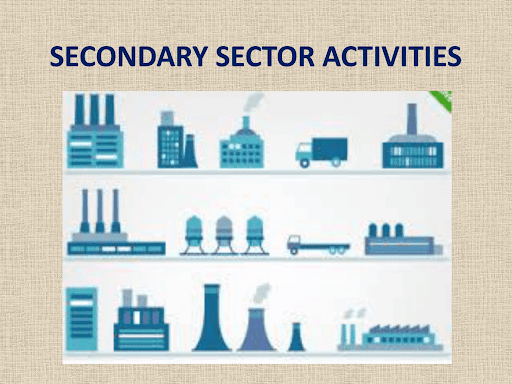
What exactly is the Secondary Sector?
- The secondary sector is responsible for transforming raw materials into finished goods, adding value through various processing and manufacturing activities.
- India's secondary sector encompasses a wide range of industries, from textiles and automobiles to electronics and pharmaceuticals.
- It drives the process of industrialization, which in turn leads to job creation, technological advancement, and higher economic output.
- The secondary sector is sometimes called the industrial sector or manufacturing sector.
- The secondary sector is a significant source of employment for a large portion of the population, contributing to economic development.
- The integration of automation, data exchange, and AI-driven technologies is transforming manufacturing processes in India.
- Industries are adopting digitalization to enhance efficiency, reduce operational costs, and improve product quality.
- The secondary sector contributes to India's exports, earning foreign exchange and boosting the trade balance.
- Indian industries are becoming integral parts of global value chains, enhancing their competitiveness.
- Most economies go through a middle period of development during which the secondary sector overtakes the primary sector in terms of production and employment, while the primary sector declines in prominence.
- India, on the other hand, is an exception in that we have jumped right into developing the services industry without first enhancing our industrial capabilities.
Why did India shift from the primary sector to the services sector and not the secondary sector?
|
| Other Relevant Links | |
|---|---|
| Primary Sector | Tertiary Sector |
| Quaternary Sector | Quinary Sector |
Classification of Industries
Manufacturing industries are classified on the basis of their output/products, ownership, size and inputs/raw materials.
- Industries Based on Size
- Industries Based on Inputs/Raw Materials
- Industries Based on Ownership
Industries Based on Size
1) Household Industries or Cottage Manufacturing
- Household Industries or Cottage Manufacturing is the smallest unit of production. The artisans manufacture everyday things in their homes with the support of family members or part-time labour, using local raw materials and modest tools.
- The finished products may be used in the same household, sold in local (village) marketplaces, or bartered.
- As this type of production has a limited commercial significance and most of the tools are designed locally, capital and transportation have little influence.
2) Small Scale Manufacturing
- Small-scale manufacturing differs from household businesses in terms of production processes and location (a workshop outside the producer's home/cottage).
- Local raw materials, simple power-driven machines, and semi-skilled labour are used in this sort of manufacturing.
- It creates jobs and boosts the purchasing power of the local community.
- As a result, countries such as India, China, Indonesia, and Brazil have established labour-intensive small-scale manufacturing to offer jobs for their citizens.
3) Large Scale Manufacturing
- Large-Scale Manufacturing includes a large market, different raw materials, enormous energy, specialised labour, modern technology, assembly-line mass production, and large capital.
Industries Based on Inputs/Raw Materials
1) Agro-based Industries
- The processing of raw resources from the field and farm into finished products for rural and urban markets is known as agro-processing.
- Agro-based Industries include food processing, sugar, pickles, fruit juices, beverages (tea, coffee, and chocolate), spices and oils, fats and textiles (cotton, jute, silk), rubber, etc.
2) Mineral-based Industries
- Minerals are used as a raw materials in these industries.
- Some businesses, such as the iron and steel industries, employ ferrous metallic minerals that contain ferrous (iron), whereas others, such as the aluminium, copper, and jewellery industries, use non-ferrous metallic minerals.
- Non-metallic minerals are used in a variety of industries, including cement and ceramics.
3) Chemical-based Industries
- Natural chemical minerals are employed in these industries, such as mineral oil (petroleum) in the petrochemical industry.
- Natural minerals are also used in the salt, sulphur, and potash industries.
- Wood and coal are also used as raw materials in the chemical industry.
- Chemical-based industries include synthetic fibre, plastic, and others.
4) Forest-based Raw Materials using Industries
- Many big and small goods that are used as raw materials can be found in the forests.
- Forests provide timber for the furniture industry, wood, bamboo, and grass for the paper industry, and lac for the lac industries.
5) Animal-based Industries
- Animals provide leather for the leather industry and wool for woollen goods.
Industries Based on Ownership
1) Public Sector Industries
- Governments own and oversee the public sector industries.
- There are a number of Public Sector Undertakings (PSUs) in India.
- Many state-owned industries exist in socialist countries.
2) Private Sector Industries
- Public Sector Industries are generally owned by individual investors.
- Private organisations will be in charge of these.
- The majority of industries in capitalist countries are privately owned.
3) Joint Sector Industries
- Joint Sector Industries are controlled by joint-stock corporations, or the private and public sectors collaborate to create and operate them.
Factors Affecting Industrial Locations
Modern manufacturing has flourished in a small number of locations that account for less than ten per cent of the worldwide geographical area. As the goals of the corporation are to maximise profits, industry locations are frequently chosen in such a way that production expenses are kept to a minimum. The following are the factors that determine industrial location:
Access to Market
- The most essential factor in the location of industries is the existence of a market for manufactured goods.
- People who have a demand for these things and also have the purchasing power (ability to buy) to buy from the vendors at a location are referred to as "market."
- Small markets can be found in remote places where only a few people live.
Access to Raw Material
- Industries should employ low-cost, easy-to-transport raw materials.
- Steel, sugar, and cement businesses, for example, are dependent on inexpensive, bulky, and weight-losing material (ores) and are located near raw material sources.
Access to Labour Supply
- Industry location is influenced by the availability of labour. Some manufacturing processes still require expert labour.
- Industrial processes have become more mechanised, automated, and flexible as a result of increased mechanisation, automation, and flexibility.
Access to Sources of Energy
- Industries that consume more energy, such as the aluminium sector, are placed near the source of energy.
- Although coal was once the primary source of energy, hydroelectricity and petroleum are now key sources of energy for a variety of businesses.
Access to Transportation and Communication Facilities
- For the development of industries, quick and effective transportation infrastructure are required to deliver raw materials to the plant and finished items to the market.
- The cost of transportation has a significant impact on where industrial units are located.
Government Policy
- Governments implement regional policies in order to foster 'balanced' economic development and, as a result, establish industries in specific areas.
Access to Agglomeration Economies/ Links between Industries
- Nearness to leading industry and other industries benefits several industries.
- Agglomeration economies are the name given to these advantages.
- Savings are obtained through the interconnections that exist between various sectors.
Secondary Sector - Advantages
Value Addition
- The secondary sector adds value to raw materials by transforming them into finished products through various manufacturing processes.
- Value addition increases the economic worth of resources, leading to higher profits and greater economic output.
Job Creation
- The secondary sector is a significant source of employment, providing jobs to a diverse range of skilled and semi-skilled workers.
- The sector's expansion can alleviate unemployment and underemployment issues, contributing to economic development.
Technological Advancement
- The secondary sector drives technological innovation and advancement as industries continuously seek to improve efficiency, productivity, and product quality.
- Innovation often results in the development of new products, processes, and technologies.
Economic Diversification
- A strong secondary sector diversifies an economy, reducing dependency on a single industry or sector.
- Diversification increases economic resilience and stability, making the economy less vulnerable to fluctuations in global markets.
Export Opportunities
- Many secondary sector industries contribute to exports, earning foreign exchange and improving a nation's trade balance.
- Export-oriented industries can also attract foreign investments and contribute to the growth of foreign direct investment (FDI).
Infrastructure Development
- The growth of the secondary sector often necessitates the development of infrastructure, such as transportation networks, energy production, and communication systems.
- Infrastructure development benefits the entire economy, enabling smoother trade and communication.
Secondary Sector - Disadvantages
Environmental Impact
- Some secondary sector industries, particularly heavy industries, can have adverse environmental effects, including pollution, resource depletion, and habitat destruction.
- Insufficient environmental regulations and unsustainable practices can lead to long-term ecological harm.
Overdependence on External Factors
- The secondary sector is susceptible to global market fluctuations and external factors that can impact demand for goods.
- Economic downturns or changes in consumer preferences can affect production and lead to layoffs.
Resource Intensiveness
- The secondary sector often requires significant amounts of raw materials, energy, and water to operate, contributing to resource depletion and environmental strain.
Uneven Distribution of Benefits
- The benefits of the secondary sector are not always evenly distributed. Profits may concentrate in the hands of a few while workers face challenging working conditions and limited job security.
Skills Gap and Unemployment
- As industries adopt advanced technologies, a skills gap may emerge, leading to unemployment or underemployment among workers without the necessary skills.
- Workers in declining industries may also struggle to find alternative employment opportunities.
Urbanization Pressure
- The growth of the secondary sector often leads to urbanization, putting pressure on urban infrastructure, housing, and services.
- Rapid urbanization can lead to congestion, inadequate living conditions, and increased social challenges.
Conclusion
The secondary sector, with its ability to transform raw materials into valuable products, acts as a catalyst for economic transformation. India's industrial landscape, characterized by diversity and challenges, is a testament to the sector's role in shaping the nation's progress. As India continues to innovate, invest, and overcome obstacles, the secondary sector's capacity to generate employment, drive technological advancement, and contribute to economic growth remains pivotal.
| Other Relevant Links | |
|---|---|
| Indian Economics Notes | Sectors of Indian Economy |
| What is Economics | Micro Economics |
| Economic Systems | Macro Economics |
FAQs
Question: What is the secondary sector of the economy?
Answer: The secondary sector of the economy involves industries that produce finished goods from raw materials provided by the primary sector. This includes manufacturing, construction, and industrial production, contributing to economic growth through value addition.
Question: How does the secondary sector contribute to economic growth?
Answer: The secondary sector contributes to economic growth by transforming raw materials into finished goods, creating jobs, boosting industrial production, and supporting exports. It plays a key role in urbanization and technological advancement.
Question: What are the key industries in the secondary sector?
Answer: Key industries in the secondary sector include manufacturing (automobiles, textiles, electronics), construction, chemical industries, and steel production. These industries are vital for the development of infrastructure and national economy.
Question: What challenges does the secondary sector face?
Answer: The secondary sector faces challenges such as infrastructure bottlenecks, energy shortages, outdated technology, and labor-related issues. Global competition and environmental regulations also add to the pressures faced by this sector.
Question: How does the secondary sector differ from the primary and tertiary sectors?
Answer: The primary sector is focused on raw material extraction (e.g., agriculture, mining), the secondary sector involves manufacturing and processing these raw materials into finished goods, and the tertiary sector provides services (e.g., transportation, banking) to consumers and businesses.
MCQs
1. Which of the following industries is part of the secondary sector?
A) Agriculture
B) Steel manufacturing
C) Banking
D) Fishing
Answer: (B) See the Explanation
Explanation: Steel manufacturing is a part of the secondary sector as it involves processing raw materials into finished products, unlike agriculture or fishing, which are part of the primary sector.
2. What is the primary role of the secondary sector in the economy?
A) Extract raw materials
B) Produce services
C) Manufacture goods from raw materials
D) Provide financial services
Answer: (C) See the Explanation
Explanation: The secondary sector's primary role is to take raw materials from the primary sector and process them into finished goods through manufacturing and industrial processes.
3. Which of the following is a challenge commonly faced by the secondary sector?
A) Lack of raw materials
B) High agricultural output
C) Infrastructure bottlenecks
D) Insufficient financial services
Answer: (C) See the Explanation
Explanation: One of the major challenges for the secondary sector is the lack of adequate infrastructure, including transportation and energy supply, which can hinder production and industrial growth.
4. What sector is closely related to the secondary sector due to its role in supplying raw materials?
A) Primary sector
B) Tertiary sector
C) Quaternary sector
D) None of the above
Answer: (A) See the Explanation
Explanation: The primary sector supplies raw materials such as minerals, crops, and natural resources, which the secondary sector processes and manufactures into finished goods.
5. Which of the following is an outcome of growth in the secondary sector?
A) Increased imports
B) Urbanization and job creation
C) Decreased industrial production
D) Decline in infrastructure development
Answer: (B) See the Explanation
Explanation: Growth in the secondary sector leads to urbanization and job creation as more factories, industries, and infrastructure projects are established, drawing labor and resources to urban centers.
GS Mains Questions and Model Answers
Q1: Analyze the role of the secondary sector in the development of the Indian economy. How does it contribute to employment and GDP?
Answer: The secondary sector plays a crucial role in India's economic development by transforming raw materials from the primary sector into manufactured goods. It contributes to GDP through industrial production, export earnings, and value addition. Furthermore, the sector generates significant employment opportunities, especially in urban areas, as manufacturing and construction industries expand. The sector also drives technological advancements and infrastructure growth, further boosting the economy.
Q2: Discuss the challenges faced by the secondary sector in India. What steps can the government take to promote industrial growth?
Answer: The secondary sector in India faces challenges such as inadequate infrastructure, energy shortages, labor market issues, and outdated technology. To promote industrial growth, the government can invest in infrastructure, provide incentives for technological upgrades, and improve ease of doing business. Policies encouraging private investment, innovation, and skill development are also crucial for overcoming these challenges and fostering growth in the secondary sector.
Q3: Evaluate the impact of industrialization on the environment. How can the secondary sector balance economic growth with sustainability?
Answer: Industrialization, while driving economic growth, often has negative environmental impacts, including pollution, resource depletion, and greenhouse gas emissions. To balance economic growth with sustainability, the secondary sector must adopt cleaner technologies, improve energy efficiency, and reduce waste. Government policies encouraging green manufacturing, strict environmental regulations, and corporate responsibility initiatives can help mitigate the environmental impact while fostering sustainable growth.
Previous Year Questions on Secondary Sector
1. UPSC CSE Prelims 2021:
Question: Which of the following sectors is responsible for transforming raw materials into finished goods?
A) Primary sector
B) Secondary sector
C) Tertiary sector
D) Quaternary sector
Answer: (B)
Explanation: The secondary sector is responsible for processing raw materials from the primary sector into finished goods through industrial and manufacturing activities.
2. UPSC CSE Mains 2020 (GS Paper 3):
Question: "Examine the role of the secondary sector in India's economic development. How can the government support industrial growth while ensuring sustainability?"
Answer: The secondary sector is a key driver of India's economic development, contributing to GDP, employment, and infrastructure growth. However, industrial growth must be balanced with sustainability. The government can support this balance by encouraging clean technologies, enforcing environmental regulations, and promoting green industrial practices. Additionally, investment in infrastructure and skill development will foster long-term growth in the sector.
Download the PREPP App and attempt FREE IAS Exam Mock Tests and get complete study material!

Full Test - 04: UPSC CSE Prelims CSAT (Paper-II)
Full Test - 03: UPSC CSE Prelims CSAT (Paper-II)
UPSC CSE Prelims 2026 GS Paper 1 Question Paper (24-May-2026)
UPSC CSE Prelims 2026 CSAT Paper 2 Question Paper (24-May-2026)

17 February 2025 | The Hindu Must Read Articles | Current Affairs

16 February 2026 | The Hindu Must Read Articles | Current Affairs

13 February 2026 | The Hindu Must Read Articles | Current Affairs









Comments