Rajamannar Committee – Indian Polity Notes
Rajamannar Committee was tasked to examine the distribution of powers and resources between the Centre and states, suggesting measures to improve the federal structure of the country. It was formed in response to the perceived centralization of power and resources in the hands of the central government, which was seen as undermining the autonomy and functioning of state governments. The topic “Rajamannar Committee” is an important part of the UPSC/IAS Exam Indian Polity and Governance Syllabus which is discussed in this article in detail.
|
Table of Contents |
Historical Background
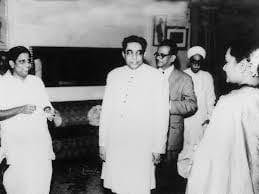
- In 1969, the Tamil Nadu Government (DMK) appointed a three-member committee, chaired by Dr. P.V. Rajamannar, to investigate the entire issue of Centre-state relations.
- It wanted the committee to propose constitutional amendments to ensure the states' maximum autonomy.
- In 1971, the committee delivered its report to the Tamil Nadu government.
|
Rajamannar Committee was tasked with examining the distribution of powers and resources between the Centre and states, suggesting measures to improve the federal structure of the country. |
The Committee identified the causes of the country's current unitary trends (centralization tendencies). They are as follows:
- certain constitutional provisions conferring special powers on the Centre;
- one-party rule both at the Centre and in the states;
- inadequacy of state fiscal resources and consequent reliance on the Centre for financial assistance; and
- the institution of Central planning and the role of the Planning Commission
| Other Relevant Links | |
|---|---|
| Anandpur Sahib Resolution | Administrative Reforms Commission |
| Punchhi Commission | Sarkaria Commission |
Recommendations
The committee's key recommendations are as follows:
- An Inter-State Council should be formed immediately.
- The Finance Commission should be made permanent.
- The Planning Commission should be disbanded and replaced by a statutory body.
- Articles 356, 357, and 365 (concerning President's Rule) should be deleted entirely.
- The provision stating that the state ministry holds office at the pleasure of the governor should be removed.
- Certain subjects from the Union List and the Concurrent List should be transferred to the State List.
- Residuary powers should be devolved to the states.
- All-India services such as IAS, IPS, and IFS should be phased out.
Conclusion
While the recommendations of the Rajamannar Committee were significant, they were not fully implemented by the central government. However, the committee's work brought attention to the need for a more balanced federal structure and paved the way for subsequent discussions and reforms in Centre-State relations.
| Other Relevant Links | |
|---|---|
| Indian Polity UPSC Notes | Legislative Relations |
| Financial Relations | Administrative Relations |
| Indian Parliament | Trends in Centre-State Relations |
| Federal System | Parliamentary System |
FAQs
Question: Why was the Rajamannar Committee established?
Answer: The Rajamannar Committee was established in 1969 by the Government of Tamil Nadu to examine the distribution of powers between the Centre and the states and recommend measures to strengthen the federal structure of India.
Question: What was the Rajamannar Committee's stance on the Planning Commission?
Answer: The Rajamannar Committee recommended the abolition of the Planning Commission, arguing that it had led to excessive centralization and undermined the financial autonomy of the states.
Question: How did the Rajamannar Committee view the use of Article 356?
Answer: The Rajamannar Committee recommended imposing restrictions on the use of Article 356 (President’s Rule) to prevent its misuse by the Centre to dismiss state governments.
Question: What was the significance of the Rajamannar Committee's recommendation on the Inter-State Council?
Answer: The Rajamannar Committee recommended the establishment of a permanent Inter-State Council to promote cooperation between the Centre and the states, ensuring better coordination on issues of common interest.
Question: Did the Rajamannar Committee recommend transferring more powers to the states?
Answer: Yes, the Rajamannar Committee recommended transferring more subjects from the Concurrent List to the State List to enhance state autonomy and reduce conflicts between the Centre and the states.
MCQs
1. In which year was the Rajamannar Committee appointed?
A) 1965
B) 1969
C) 1973
D) 1977
Answer: (B) See the Explanation
The Rajamannar Committee was appointed in 1969 by the Government of Tamil Nadu to study Centre-State relations.
2. What did the Rajamannar Committee recommend regarding the Planning Commission?
A) Strengthen the Planning Commission
B) Abolish the Planning Commission
C) Convert the Planning Commission into a statutory body
D) Transfer the functions of the Planning Commission to the Finance Commission
Answer: (B) See the Explanation
The Rajamannar Committee recommended the abolition of the Planning Commission, stating that it was contributing to excessive centralization of powers.
3. Which article of the Indian Constitution was a focus of the Rajamannar Committee for restricting its misuse?
A) Article 365
B) Article 370
C) Article 356
D) Article 368
Answer: (C) See the Explanation
The Rajamannar Committee recommended restrictions on Article 356 to prevent its misuse by the central government for dismissing state governments.
4. What was the key recommendation of the Rajamannar Committee regarding the division of powers between the Centre and states?
A) Reduce powers of states
B) Transfer more subjects from the Concurrent List to the State List
C) Maintain the status quo
D) Abolish the State List
Answer: (B) See the Explanation
The Rajamannar Committee recommended transferring more subjects from the Concurrent List to the State List to enhance state autonomy.
5. Which of the following institutions did the Rajamannar Committee recommend for promoting Centre-State cooperation?
A) Finance Commission
B) National Development Council
C) Inter-State Council
D) Election Commission
Answer: (C) See the Explanation
The Rajamannar Committee recommended the establishment of a permanent Inter-State Council to promote better cooperation between the Centre and states.
GS Mains Questions and Model Answers
Q1: Discuss the significance of the Rajamannar Committee in the context of Centre-State relations in India.
Answer: The Rajamannar Committee was established in 1969 to examine the increasing centralization of powers in India and its impact on the federal structure. The committee’s recommendations focused on enhancing the autonomy of states by suggesting the abolition of the Planning Commission, transferring more subjects from the Concurrent List to the State List, and imposing restrictions on the use of Article 356. The committee also recommended establishing a permanent Inter-State Council to foster better cooperation between the Centre and the states. Although the recommendations were not fully implemented, the Rajamannar Committee highlighted the need to strengthen federalism and remains significant in the ongoing debate on Centre-State relations.
Q2: Analyze the impact of the Rajamannar Committee’s recommendations on financial relations between the Centre and the states.
Answer: One of the key recommendations of the Rajamannar Committee was to improve the financial autonomy of the states. The committee suggested the abolition of the Planning Commission, arguing that it undermined state finances by centralizing resource allocation. It also proposed amending the financial arrangements to ensure that states had adequate resources to fulfill their responsibilities. The Rajamannar Committee’s recommendations aimed to reduce the financial dependency of states on the Centre and promote a more balanced federal structure. While these recommendations were not implemented, they have influenced discussions on Centre-State financial relations in subsequent decades.
Q3: Evaluate the relevance of the Rajamannar Committee's recommendations in the current context of Indian federalism.
Answer: The Rajamannar Committee’s recommendations remain relevant in the current context of Indian federalism, as they address issues of state autonomy and decentralization. The call for the abolition of the Planning Commission, which was eventually replaced by NITI Aayog in 2015, reflects the ongoing debate about the balance of power between the Centre and the states. The committee’s recommendation to establish a permanent Inter-State Council for fostering Centre-State cooperation has also gained relevance, as states continue to demand greater participation in national policy-making. Additionally, the proposal to transfer more subjects to the State List resonates with the increasing demands for greater state autonomy in certain regions of India.
Previous Year Questions on Rajamannar Committee
1. UPSC CSE Mains 2017 (GS Paper 2)
Question: Examine the significance of the Rajamannar Committee’s recommendations in strengthening federalism in India.
Answer: The Rajamannar Committee was significant in highlighting the need to strengthen the federal structure of India by recommending greater state autonomy. It emphasized the abolition of the Planning Commission and the need for a permanent Inter-State Council to promote cooperation between the Centre and the states. The committee also called for transferring more subjects from the Concurrent List to the State List to reduce central interference in state matters. Although the recommendations were not fully implemented, they remain important in the broader discourse on federalism and continue to influence demands for a more balanced division of powers between the Centre and the states.
2. UPSC CSE Mains 2018 (GS Paper 2)
Question: Discuss the role of the Rajamannar Committee in addressing the challenges of Centre-State relations in India.
Answer: The Rajamannar Committee played a key role in addressing the challenges of Centre-State relations by recommending reforms to enhance the autonomy of states. It advocated for the abolition of the Planning Commission, restrictions on the use of Article 356, and the transfer of more subjects to the State List. The committee also proposed the establishment of a permanent Inter-State Council to facilitate better coordination between the Centre and the states. Although the committee’s recommendations were not fully adopted, they have remained relevant in the ongoing discussions on the need to strike a balance between central authority and state autonomy in India’s federal.
*email: contactus@prepp.in
Download the PREPP App and attempt FREE IAS Exam Mock Tests and get complete study material!

Full Test - 04: UPSC CSE Prelims CSAT (Paper-II)
Full Test - 03: UPSC CSE Prelims CSAT (Paper-II)
UPSC CSE Prelims 2026 GS Paper 1 Question Paper (24-May-2026)
UPSC CSE Prelims 2026 CSAT Paper 2 Question Paper (24-May-2026)

17 February 2025 | The Hindu Must Read Articles | Current Affairs

16 February 2026 | The Hindu Must Read Articles | Current Affairs

13 February 2026 | The Hindu Must Read Articles | Current Affairs









Comments