North Eastern Council – Indian Polity Notes
North-Eastern Council (NEC) means the nodal agency for the social and economic development of the North Eastern region in India. The North-Eastern Council includes 8 north-eastern states: Assam, Arunachal Pradesh, Meghalaya, Manipur, Mizoram, Sikkim, Nagaland, and Tripura. The formation of the NEC marked the beginning of a new chapter of concerted and planned effort for the region's rapid development. This Council has worked tirelessly and ceaselessly for the socioeconomic development of the region, thereby launching a new economic endeavour aimed at removing the fundamental impediments to the region's normal development. The topic “North-Eastern Council (NEC)” is an important part of the UPSC/IAS Exam Polity and Governance syllabus which is discussed in this article in detail.
|
Table of Contents |
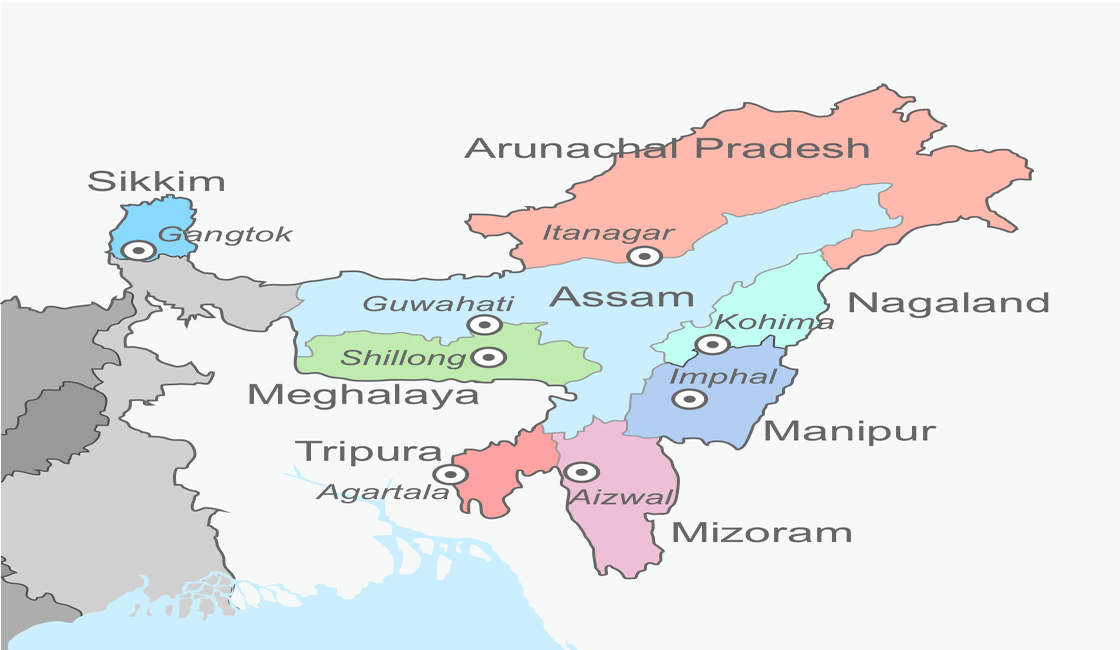
North-Eastern Council (NEC): 8 States
North-Eastern Council
- Historically, the states of North East India were organised primarily on the basis of linguistic diversity and the political necessity resulting from a wide range of ethnicities, cultures, and levels of development.
- As a result, they were not economically viable and had to rely heavily on the Central Government for financial assistance.
- As a result, these states are referred to as Special Category States.
- Even after more than four decades, these states remain in the backwaters of economic development and require a significant amount of concerted effort to bring them up to speed with the country's more developed states.
- The North Eastern Council is the nodal agency for the North Eastern Region's economic and social development, which includes the eight states of Arunachal Pradesh, Assam, Manipur, Meghalaya, Mizoram, Nagaland, Sikkim, and Tripura.
- The North Eastern Council was formed in 1971 by an Act of Parliament.
- The formation of the Council has marked the beginning of a new chapter of concerted and planned effort for the Region's rapid development.
- Over the last 35 years, NEC has been instrumental in launching a new economic endeavour aimed at removing the basic impediments to the region's normal development, ushering in a new era of hope in this backward area rich in potential.
| Other Relevant Links | |
|---|---|
| Inter-State Water Disputes | Inter-State Councils |
| Inter-State Trade and Commerce | Zonal Councils |
|
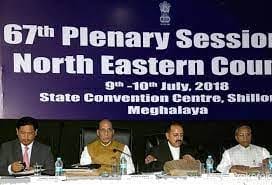
North Eastern Council was established by North Eastern Council Act, 1971 for securing balanced and coordinated development and facilitating effective co-ordination amongst seven States of North Eastern Region. |
Significance
- Since its inception, NEC has prioritised regional connectivity, which has been a major bottleneck for all development activities.
- In its efforts, the Council has made significant contributions to the Region's inter-state connectivity.
- Furthermore, NEC has supported the installation of 694.5 MW of power plants and the construction of 2540.41 KM of transmission and distribution lines to date.
- The North Eastern Region Community Resource Management Project (NERCORMP), a sustainable livelihood project, is the NEC's Flagship Program, with funding from the International Fund for Agricultural Development (IFAD).
- The NEC has also given cash awards to athletes from the NE Region who have won medals in the Olympics, Asian Games, Commonwealth Games, and National Games.
- NEC has also worked on development projects in areas such as education, healthcare, agriculture, horticulture, tourism, and industry.
- It reviews on a regular basis the measures taken by member states to maintain regional security and public order.
Challenges
- The disparity between the region and the rest of the country in terms of various developmental outcomes, productivity, and capacity of people and institutions is widening and must be bridged.
- Even within the region, there are significant differences, particularly between populations living in the hills and plains, as well as those living in towns and villages.
- Given the region's vast disparities, a development strategy must be devised based on available resources, conditions, and people's needs and priorities.
- Furthermore, the development strategy for the region's various tribes must be participatory and calibrated in their own context.
- Given the complexities of the task, increasing investment to accelerate regional growth is only part of the story.
- A variety of strategic initiatives are required for the successful transformation of investments into developmental outcomes.
Conclusion
The North Eastern Council, which was established to complement and supplement the states' developmental efforts, has already made significant contributions in terms of institution building, transportation and communication, power generation and transmission, and the construction of various types of infrastructural facilities, with the goal of positioning the states to launch themselves into a self-sustaining growth trajectory. However, much work remains to be done because the gap between the NE States and the rest of the country continues to widen.
| Other Relevant Links | |
|---|---|
| Indian Polity UPSC Notes | Emergency Provisions |
| Centre-State Relations | Inter-State Relations |
| Federal System | Parliamentary System |
FAQs
Question: What is the North Eastern Council (NEC)?
Answer: The North Eastern Council (NEC) is the apex body for coordinating the economic and social development of the northeastern states of India. It was established in 1971 by an Act of Parliament under the NEC Act, 1971. The council aims to promote regional cooperation, planning, and the development of the eight northeastern states—Arunachal Pradesh, Assam, Meghalaya, Manipur, Mizoram, Nagaland, Tripura, and Sikkim. It serves as a platform for dialogue among the states to address common issues such as infrastructure development, security, and economic growth.
Question: What are the objectives of the North Eastern Council?
Answer: The key objectives of the NEC include:
- Regional Development: To promote the overall socio-economic development of the northeastern region, focusing on infrastructure, education, healthcare, and rural development.
- Cooperative Federalism: To foster collaboration and coordination between the central government and the state governments in the region to address regional disparities and challenges.
- Security and Governance: To support initiatives related to improving security, governance, and law and order in the region.
- Policy Formulation: To advise the government on policies related to the unique needs of the northeastern region, ensuring their integration into the broader national framework.
Question: What is the structure of the North Eastern Council?
Answer: The North Eastern Council is headed by the Union Home Minister, who serves as its Chairman. The council comprises the Chief Ministers of the eight northeastern states as its members. Additionally, the council includes a Member Secretary, who is appointed to handle its day-to-day functions and coordination activities. The NEC Secretariat, based in Shillong, facilitates the working of the council. The council holds periodic meetings to discuss development issues, and its recommendations are presented to the central government for implementation.
Question: How does the North Eastern Council contribute to the development of the northeastern region?
Answer: The North Eastern Council contributes to regional development by focusing on key sectors such as infrastructure, education, healthcare, and economic growth. It provides financial assistance and facilitates the implementation of various central government schemes in the region. The NEC also encourages investment in sectors like tourism, agriculture, and industry to enhance regional economic growth. Additionally, the council plays a crucial role in promoting regional connectivity through transportation and communication projects, including roads, bridges, and airports.
Question: What challenges does the North Eastern Council face in promoting regional development?
Answer: The North Eastern Council faces several challenges in promoting regional development:
- Geographical Isolation: The region’s difficult terrain and geographical isolation pose challenges for infrastructure development and connectivity.
- Security Concerns: Insurgency and law and order issues in certain parts of the region have hindered socio-economic progress and created challenges in implementing government policies.
- Political Differences: There are occasional political differences between the state governments, which can affect the smooth functioning of the NEC and regional cooperation.
- Resource Constraints: Limited resources and funding often affect the timely implementation of development projects in the region.
MCQs
1. When was the North Eastern Council (NEC) established?
A) 1947
B) 1956
C) 1971
D) 1980
Answer: (C) See the Explanation
Explanation: The North Eastern Council (NEC) was established in 1971 under the NEC Act, 1971, to coordinate and promote the socio-economic development of the northeastern region of India.
2. Who is the head of the North Eastern Council?
A) President of India
B) Prime Minister of India
C) Union Home Minister
D) Chief Minister of Assam
Answer: (C) See the Explanation
Explanation: The North Eastern Council is headed by the Union Home Minister, who serves as the Chairman of the Council.
3. What is the main objective of the North Eastern Council?
A) Economic development of the northern region
B) Promoting regional cooperation among northeastern states
C) Maintaining law and order in the region
D) Managing the defense of northeastern states
Answer: (B) See the Explanation
Explanation: The primary objective of the North Eastern Council is to promote regional cooperation, planning, and the socio-economic development of the eight northeastern states of India.
4. How does the North Eastern Council support regional development?
A) By providing financial support and facilitating infrastructure projects
B) By promoting insurgency-free zones
C) By controlling state governments
D) By monitoring security operations
Answer: (A) See the Explanation
Explanation: The NEC supports regional development by providing financial assistance and facilitating the implementation of infrastructure projects, as well as promoting economic growth in sectors like agriculture, tourism, and industry.
5. What is a key challenge faced by the North Eastern Council in promoting development?
A) Lack of political support
B) Insufficient financial resources
C) Strong cooperation among states
D) Lack of regional cultural identity
Answer: (B) See the Explanation
Explanation: One of the key challenges faced by the North Eastern Council is insufficient financial resources, which affects the timely execution of development projects and initiatives in the region.
GS Mains Questions and Model Answers
Q1: Analyze the role of the North Eastern Council in promoting the socio-economic development of the northeastern region. How effective has the council been in addressing regional challenges?
Answer: The North Eastern Council has played a pivotal role in promoting socio-economic development in the northeastern region by focusing on areas such as infrastructure development, education, health, and regional cooperation. The council provides financial assistance to various development projects and facilitates the coordination of policies among the northeastern states and the central government. However, its effectiveness has been limited by challenges such as geographical isolation, security concerns, and resource constraints. While the council has made notable contributions, there is a need for enhanced cooperation between the central and state governments to address the region’s unique challenges more effectively.
Q2: How does the North Eastern Council facilitate regional cooperation among northeastern states? Discuss the role of the council in promoting peace and security in the region.
Answer: The North Eastern Council facilitates regional cooperation by providing a platform for the states to discuss common issues, share resources, and collaborate on projects. It encourages the development of regional infrastructure, such as roads, airports, and communication networks, to improve connectivity. The council also plays an important role in promoting peace and security by supporting initiatives that address insurgency, law and order issues, and social unrest in the region. Through dialogue and coordination, the NEC helps foster a sense of regional solidarity, contributing to overall stability and security in the northeastern states.
Q3: Evaluate the effectiveness of the North Eastern Council in addressing the developmental disparities in the northeastern states of India.
Answer: The North Eastern Council has made significant strides in addressing developmental disparities in the region by promoting infrastructural development, improving healthcare and education, and encouraging economic growth. However, the council faces challenges such as poor connectivity, political instability, and the lack of adequate funding for large-scale projects. The effectiveness of the NEC is often constrained by these challenges, limiting its ability to fully bridge the development gap between the northeastern states and the rest of India. Despite these hurdles, the council’s role in ensuring focused attention on the region and driving regional cooperation remains critical for long-term development.
Previous Year Questions on North Eastern Council
1. UPSC CSE Prelims 2020:
Question: What is the primary purpose of the North Eastern Council?
A) Security and defense
B) Socio-economic development
C) Environmental protection
D) Political control
Answer: (B)
Explanation: The primary purpose of the North Eastern Council is to promote the socio-economic development of the northeastern states of India through coordinated planning and development initiatives.
2. UPSC CSE Mains 2019 (GS Paper 2):
Question: "Examine the role of the North Eastern Council in fostering regional cooperation and development in the northeastern region of India."
Answer: The North Eastern Council fosters regional cooperation by providing a platform for northeastern states to address their common issues and collaborate on development projects. It helps in improving connectivity, promoting economic growth, and addressing challenges related to security and governance. The council has been instrumental in facilitating state-central government coordination and ensuring that policies are tailored to the region’s specific needs. However, its full potential has been constrained by resource limitations and external challenges such as insurgency and political unrest.
*email: contactus@prepp.in
Download the PREPP App and attempt FREE IAS Exam Mock Tests and get complete study material!
UPSC IAS : CSAT - Mini Live Test

Live Test : UPSC CSE Prelims CSAT (Paper-II) (Oct 20 - 23)
Full Test - 04: UPSC CSE Prelims CSAT (Paper-II)
Full Test - 03: UPSC CSE Prelims CSAT (Paper-II)
UPSC CSE Prelims 2026 GS Paper 1 Question Paper (24-May-2026)
UPSC CSE Prelims 2026 CSAT Paper 2 Question Paper (24-May-2026)

17 February 2025 | The Hindu Must Read Articles | Current Affairs

16 February 2026 | The Hindu Must Read Articles | Current Affairs

13 February 2026 | The Hindu Must Read Articles | Current Affairs









Comments