Theories of Origin of Earth - Geography Notes
Mysterious origin of Earth is explained by the early theories of “Gaseous Hypothesis of Kant”, “Jean and Jeffery’s Tidal or Gravitational Theory”, “The Nebular Hypothesis of Laplace”, “Hoyle’s Supernova Hypothesis”, “Schmidt’s Interstellar Hypothesis”, “The Planetesimal Hypothesis of Chamberlin” and Binary Theory or Planetesimal Hypothesis of Chamberlin. Big Bang Theory is also one of the most accepted theory related to origin of earth. While these early ideas offered fundamental insights into Earth's formation and laid the groundwork for understanding our planet's origins but were not without their challenges and debates among researchers providing a comprehensive overview of Earth's extraordinary genesis in the realm of Geomorphology which is an important part of the UPSC exam geography syllabus.
|
Table of Contents |

Theories of Origin of Earth
Theories for the earth's origin has been classified into two categories i.e., early theories and modern theory which are as follows:
- Early Theories: Early Theories explained how the earth was formed. The early theories were the Gaseous hypothesis of Kant, the Nebular Hypothesis of Laplace, the Planetesimal hypothesis of Chamberlin, Jean and Jeffery's tidal theory/Gravitational Theory, Russel's binary star hypothesis, Hoyle's supernova hypothesis, Schmidt's interstellar hypothesis.
- Modern Theories: Modern theories state the need to find how the universe has formed then automatically we will be able to find the formation of the earth.
- Early theories focused solely on the evolution of the earth and planets, whereas recent theories attempt to solve the questions of the universe's creation.
- Big Bang theory is an example of modern theory.
| Other Relevant Links | |
|---|---|
| Planetesimal Hypothesis | Nebular Hypothesis |
| Tidal Hypothesis | Binary Star Hypothesis |

The Gaseous Hypothesis of Kant
- Immanuel Kant, a German philosopher, proposed his own theory regarding the origin of the earth in 1755, which was based on Newton's law of gravity.
- Kant believed that the original substance was initially distributed and was made up of cold, unmoving, solid particles.
- They clashed with each other because of gravity, which produced heat, which induced angular momentum, and it began to rotate.
- Later, it evolved into a hot nebula that began rotating, causing the speed to progressively increase.
- This rotation resulted in a strong centrifugal force, which produced rings of matter, which cooled to become planets and satellites.
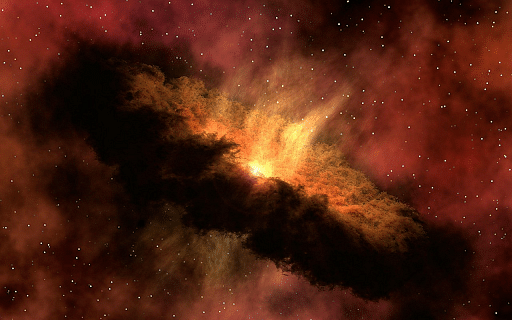
- According to the widely accepted nebular hypothesis, the earth formed from a massive cloud made primarily of hydrogen and helium.
- Contraction, rotation, and lowering temperatures resulted in the formation of small particles. After tens of millions of years of condensation and accretion, these started to clump together, and the earth was created about 4.5 billion years ago.
Criticism of Kant’s Theory
- Kant claimed that the universe included primordial matter, but he did not explain where the primordial matter came from.
- Kant did not explain the source of energy that caused the random motion of the original matter particles, which were first cold and unmoving.
- It is impossible for the primordial matter's particles to collide and produce rotatory motion. It's an incorrect mechanism statement.
- Law of conservation of angular momentum: Kant believes that the rotatory speed of the nebula increased as its size grew, which contradicts the law of conservation of angular momentum.
Nebular Hypothesis of Laplace
- Kant's theory was revised in 1976 by mathematician Laplace.
- According to the nebular hypothesis, the Sun was encircled by a solar nebula made up primarily of hydrogen and helium, as well as dust.
- The development of a disk-shaped cloud is caused by particle impact and friction.
- Planets were formed from material associated with the young sun as a result of the accretion process.

Criticism of Nebular Hypothesis
- The nebula's origins are not explained by the nebula hypothesis.
- It was unable to explain the sources of nebula heat and motion.
- According to the nebular hypothesis, because the nebula is gaseous, the planet should likewise be gaseous, however, this is not the case.
- The hypothesis fails to explain how the development of solid planets is caused by house gas nebulae.
- The planets and satellites should all rotate in the same direction as the nebula, however, this isn't the case.
Binary Theory or Planetesimal Hypothesis of Chamberlin

- In 1900, Chamberlain and Moulton gave this theory.
- According to this theory, another wandering star approached the sun.
- As a result, the material's cigar-shaped extension from the solar surface was separated.
- The sun with its very high-temperature projects hot material called the prominences.
- The particles of this material got coalesced to form the planets. A lot of heat was generated in the process.
- Separated material slowly condensed into a planet as the passing star moved away, and the sun continued to spin.
Jean and Jefferys Tidal Theory/Gravitational Theory

- Jeans and Jeffrey were both scientists from the United Kingdom. To explain the formation of Earth and our solar system, they proposed the "Jeans Jeffreys Tidal Hypothesis."
- The gravitational force of two stars has resulted in the formation of our solar system.
- Primitive Sun: The primitive sun is the early stage of the sun.
- Intruding Star: In comparison to the primitive sun, it was much larger.
- When intruding stars passed close enough to the primitive sun, hot gas tides rose on it.
- Cigar-shaped hot gaseous particles were separated from the primordial sun when the intruding star was closest to it across the entire traveled distance. Jeans and Jeffrey refer to filament as cigar-shaped.
- Because the filament's central sectors were bulgy and had more gas material, bigger planets like Jupiter and Saturn were formed.
- On both sides of the filament, smaller planets were produced.
Criticism of Jean and Jeffreys Tidal Theory
- Our solar system's planets are made up of heavier atomic material, but if the planets' material is carved from the sun, it should be made up of lighter atomic material like helium and hydrogen.
- The process and mechanism of condensation were not explained.
- In the universe, stars are so far apart that there are few chances of intruding stars.
- Jean Jeffrey did not give much information about the intruding star and its origin.
Russell's Binary Star Hypothesis

- The theory propounded the existence of binary (two) stars, the bigger one of which ejected mass under the influence of a third one coming close at higher speed, leading to the formation of planets.
Criticisms of Russell's Binary Star Hypothesis
The intruding star and the remnant of the star from which stuff was ejected are not explained by Russell's binary Star Hypothesis.
Hoyle's Supernova Hypothesis

- In 1946, Fred Hoyle proposed this theory.
- The sun used to be twinned with another star, which burst due to nuclear processes that transformed lighter components into heavier ones.
- The companion star's explosion produced a cloud of incandescent gases, which he refers to as the "Supernova stage."
- As the nucleus receded far away, the sun's gravitational power kept this gaseous cloud and the rest of the star together.
- The gaseous cloud at the supernova stage contains iron and other earth elements.
- The earth, as well as other planets and satellites, were formed from these particles.
- They revolved around the sun because they were in the sun's gravitational field, and gradually cooled to the solid form in which the planets and satellites exist today.
Schmidt's Interstellar Hypothesis
- According to this theory, the primordial dust began to coalesce into a disk-shaped configuration as it moved at a high pace.
- These disk-shaped nebulae were further subdivided into rings, each holding asteroids that eventually merged into planets.
Criticism of Schmidt's Interstellar Hypothesis
- Schmidt didn't go into detail about how these mysterious substances came to be. Schmidt dubbed these black particles "interstellar dust".
Big Bang Theory

- After Edwin Hubble proposed the constant expansion of the Universe, another Belgian cosmologist came up with the Big Bang Theory in 1931.
- According to the big bang theory, all of the matter that made up the universe resided in a single location with a volume smaller than an atom, an unlimited temperature, and an infinite density.
- The theory suggests that the Universe, at some point in time, was condensed into a single particle and later started expanding infinitely after a huge explosion.
- The expansion later gave birth to nebulae that in turn, coalesced into stars and planets.
- The science community unanimously agrees over the age of the Universe to be around 13.8 billion years.
- Around 3 lakh years after the big bang, the universe turned transparent due to the production of atomic matter.
Conclusion
Origin of Earth is a captivating journey spanning 4.54 billion years, shaped by early theories like Kant's Gaseous Hypothesis and Laplace's Nebular Hypothesis. As we explore diverse perspectives, from Chamberlin's Planetesimal Hypothesis to Hoyle's Supernova Hypothesis, and embrace modern theories like the Big Bang Theory, we gain profound insights into the dynamic processes that birthed our planet. Despite the criticisms, these theories collectively contribute to our understanding of Earth's remarkable evolution within the vast cosmic tapestry.
FAQs
Question: What does the Nebular Hypothesis propose about the origin of the Earth?
Answer: The Nebular Hypothesis suggests that the Earth and other planets formed from a rotating cloud of gas and dust (nebula) that collapsed under gravity. The central mass became the Sun, while the planets, including Earth, formed from the surrounding material.
Question: How does the Planetesimal Hypothesis explain the formation of Earth?
Answer: The Planetesimal Hypothesis proposes that Earth was formed from smaller celestial bodies called planetesimals, which collided and stuck together over time. These planetesimals were remnants from the solar nebula after the Sun's formation.
Question: What is the central idea of the Tidal Hypothesis?
Answer: The Tidal Hypothesis suggests that a star passed close to the Sun, causing a gravitational disturbance. The material pulled from the Sun eventually cooled and condensed to form the planets, including Earth.
Question: How does the Big Bang Theory relate to the formation of Earth?
Answer: The Big Bang Theory explains the origin of the universe, suggesting it began with a massive explosion. Over time, matter cooled and formed galaxies, stars, and planets, including Earth.
Question: What is the Solar Nebular Disk Model?
Answer: The Solar Nebular Disk Model is a modern theory that explains how planets formed from a disk of gas and dust around the young Sun. This theory refines the Nebular Hypothesis and includes the understanding of planetary accretion and differentiation processes.
MCQs
- Which of the following theories is associated with the formation of the solar system from a nebula?
A. Big Bang Theory
B. Tidal Hypothesis
C. Nebular Hypothesis
D. Planetesimal Hypothesis
Answer: (C) See the Explanation
The Nebular Hypothesis, proposed by Immanuel Kant and later modified by Laplace, explains the formation of the solar system, including Earth, from a large cloud of gas and dust (nebula). The nebula contracted due to gravity, and as it spun, the Sun formed at its center, while planets formed from the surrounding material. This theory is one of the earliest scientific explanations of the origin of the solar system.
- Who is credited with proposing the Nebular Hypothesis?
A. Immanuel Kant and Laplace
B. James Jeans and Harold Jeffreys
C. Chamberlin and Moulton
D. Albert Einstein
Answer: (A) See the Explanation
The Nebular Hypothesis was first proposed by Immanuel Kant in 1755 and later refined by Pierre-Simon Laplace in 1796. It suggests that the solar system, including Earth, formed from a slowly rotating nebula that contracted and flattened into a disk, with the Sun forming at its center and the planets coalescing from the remaining material.
- The Tidal Hypothesis suggests that the planets formed as a result of:
A. A massive explosion of a companion star
B. A passing star pulling material from the Sun
C. Collisions between planetesimals
D. Accretion of gas and dust
Answer: (B) See the Explanation
The Tidal Hypothesis, proposed by James Jeans and Harold Jeffreys, suggests that a star passing near the Sun caused a strong gravitational pull, drawing out material from the Sun. This material eventually cooled and condensed, forming the planets, including Earth. This theory emphasizes the influence of an external event (the passing star) in the formation of planets.
- The theory that suggests the Earth formed from smaller celestial bodies colliding and sticking together is known as:
A. Nebular Hypothesis
B. Planetesimal Hypothesis
C. Binary Star Hypothesis
D. Big Bang Theory
Answer: (B) See the Explanation
The Planetesimal Hypothesis, proposed by Chamberlin and Moulton, suggests that Earth and other planets formed from the collision and gradual accretion of small celestial bodies called planetesimals. These planetesimals were remnants of the solar nebula after the Sun's formation and eventually combined to form larger planets over time.
- The Big Bang Theory primarily explains the:
A. Formation of planets
B. Expansion of galaxies
C. Origin of the universe
D. Origin of Earth’s atmosphere
Answer: (C) See the Explanation
The Big Bang Theory primarily explains the origin of the universe. According to this theory, the universe began with a massive explosion (the Big Bang) approximately 13.8 billion years ago. This event led to the expansion of matter and the formation of galaxies, stars, and eventually planets, including Earth. While the Big Bang Theory doesn’t directly explain the formation of Earth, it provides the context for the formation of the universe in which Earth exists.
GS Mains Questions and Model Answers
Q1: Discuss the significance of the Nebular Hypothesis in understanding the formation of the solar system and Earth.
Answer: The Nebular Hypothesis, proposed by Immanuel Kant and later modified by Laplace, was one of the first scientific explanations for the formation of the solar system. According to this theory, the Sun and planets, including Earth, formed from a large rotating cloud of gas and dust (nebula) that contracted under the force of gravity. The central part of the nebula formed the Sun, while the surrounding material flattened into a disk from which the planets gradually accreted. This theory is significant because it provided a logical framework for understanding the formation of the solar system through natural processes, laying the groundwork for modern theories like the Solar Nebular Disk Model.
Q2: Analyze the differences between the Planetesimal Hypothesis and the Tidal Hypothesis in explaining the formation of Earth.
Answer: The Planetesimal Hypothesis, proposed by Chamberlin and Moulton, suggests that Earth formed from the gradual collision and aggregation of small celestial bodies called planetesimals. These planetesimals were remnants of the solar nebula after the Sun's formation and coalesced over time to form planets.
In contrast, the Tidal Hypothesis, proposed by James Jeans and Harold Jeffreys, posits that a star passing near the Sun caused a gravitational pull that drew material from the Sun. This material eventually condensed and formed the planets, including Earth.
While both theories attempt to explain the origin of Earth, the Planetesimal Hypothesis emphasizes gradual accumulation, whereas the Tidal Hypothesis involves an external event (the passing star) leading to the formation of planets. The Planetesimal Hypothesis is more widely accepted due to its alignment with observations of protoplanetary disks.
Q3: Evaluate the relevance of the Big Bang Theory in explaining the formation of Earth.
Answer: Although the Big Bang Theory primarily explains the origin of the universe, it indirectly relates to the formation of Earth. According to the theory, the universe began approximately 13.8 billion years ago with a massive explosion. As the universe expanded and cooled, matter coalesced to form galaxies, stars, and planets. The Milky Way galaxy, where our solar system resides, formed during this process. Eventually, the Sun and planets, including Earth, emerged from the remnants of interstellar gas and dust. Thus, while the Big Bang Theory does not directly explain Earth’s formation, it provides the broader cosmological context within which Earth and the solar system formed.
Previous Year Questions on Theories of Origin of Earth
1. UPSC CSE Prelims 2018
Question: Which of the following theories suggests that the Earth was formed from the gravitational pull of a passing star?
A. Planetesimal Hypothesis
B. Nebular Hypothesis
C. Tidal Hypothesis
D. Binary Star Hypothesis
Answer: C
Explanation:
The Tidal Hypothesis, proposed by James Jeans and Harold Jeffreys, suggests that a passing star caused a gravitational pull on the Sun, drawing out material that eventually formed the planets, including Earth. This theory emphasizes an external event that led to planetary formation.
2. UPSC CSE Mains 2019 (GS Paper 1)
Question: "Theories explaining the origin of Earth have evolved over time, reflecting advancements in scientific understanding." Discuss the major theories and their contributions to our knowledge of Earth’s formation.
Answer:
- Nebular Hypothesis: Formation of solar system from a rotating cloud of gas and dust.
- Planetesimal Hypothesis: Accretion of smaller bodies to form planets.
- Tidal Hypothesis: Formation of planets due to gravitational pull from a passing star.
- Solar Nebular Disk Model: Modern theory incorporating planetary accretion and differentiation.
Download the PREPP App and attempt FREE IAS Exam Mock Tests and get complete study material!

Full Test - 04: UPSC CSE Prelims CSAT (Paper-II)
Full Test - 03: UPSC CSE Prelims CSAT (Paper-II)
UPSC CSE Prelims 2026 GS Paper 1 Question Paper (24-May-2026)
UPSC CSE Prelims 2026 CSAT Paper 2 Question Paper (24-May-2026)

17 February 2025 | The Hindu Must Read Articles | Current Affairs

16 February 2026 | The Hindu Must Read Articles | Current Affairs

13 February 2026 | The Hindu Must Read Articles | Current Affairs









Comments