Freedom of Assembly - Indian Polity Notes
Freedom of assembly is a fundamental right that allows people to come together and collectively express, promote, pursue, and defend their collective or shared ideas to the public. According to Article 19 (1) (b), all citizens have the freedom to assemble peacefully and without armaments, which makes an important part of the Fundamental Rights of the citizens. Here we will discuss the Freedom of Assembly according to Article 19 of the Constitution of India which is an important topic for UPSC General Studies preparation.
Table of Contents
Freedom of Assembly
- Freedom of assembly is a fundamental right that allows individuals to gather together and collectively express, promote, seek, and defend their collective or shared views to the public.
- The state guarantees everyone the right to peacefully assemble without the use of weapons.
- Each and every person has the right to assemble in peace and without arms.
- Only public property may be used to exercise this freedom, and the gathering must be unarmed and peaceful.
- Example: Organizing a party, attending church, militia gatherings, political conferences, public gatherings, political demonstrations, rallies, and gatherings of people.
- Freedom of Assembly does not protect gatherings that are violent, unruly, rioting, or that disturb the quiet of the community or use force.
- The right to strike is not a part of this right.
- On two grounds, namely, public order, which includes maintaining traffic in the area in question, and the sovereignty and integrity of India, the State may impose reasonable limits on the exercise of the right to assemble.
- It is important to highlight that there is no right to convene a meeting on government land or private property owned by others.
|
"Freedom of assembly is the heartbeat of democracy, allowing individuals to come together, voice their collective concerns, and advocate for change in pursuit of a just and equitable society." |
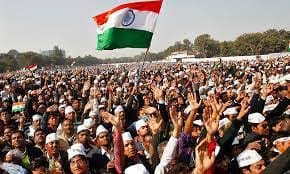
Freedom of Assembly - Constitutional Provisions
- Article 19(1)(b) guarantees the freedom to assemble in peace and without armaments.
- This includes the right to conduct public meetings, go on hunger strikes, and march in processions. The gathering, however, must be peaceful and without weapons.
- The purpose of organising a gathering or meeting is to spread ideas and educate the public.
- As a result, the right to peaceful assembly follows naturally from the right to free speech and expression.
- Article 19 guarantees to all citizens the six rights. These are:
- Right to freedom of speech and expression.
- Right to assemble peaceably and without arms.
- Right to form associations or unions or co-operative societies.
- Right to move freely throughout the territory of India.
- Right to reside and settle in any part of the territory of India.
- Right to practice any profession or to carry on any occupation, trade or business.
- Originally, Article 19 contained seven rights. But, the right to acquire, hold and dispose of property was deleted by the 44th Amendment Act of 1978.
- Here the freedom to assemble includes the ability to hold meetings and parades.
- The gathering must be nonviolent and must not disrupt the public order. If the assembly is rowdy or riotous, it is not protected under Article 19 (1) (b), and reasonable restrictions can be imposed in the interests of India's sovereignty and integrity or public order under clause (3) of Article 19.
- A magistrate may stop an assembly, meeting, or procession under Section 144 of the Criminal Procedure Code (1973) if there is a chance that it will obstruct, annoy, or endanger human life, health, or safety, or if it will disturb the peace of the community, spark a riot, or result in physical altercation.
- Under Section 141 of the Indian Penal Code, as assembly of five or more persons becomes unlawful if the object is
- to resist the execution of any law or legal process;
- to forcibly occupy the property of some person;
- to commit any mischief or criminal trespass;
- to force some person to do an illegal act;
- to threaten the government or its officials on exercising lawful powers.
| Other Relevant Links | |
|---|---|
| Freedom of Speech and Expression | Freedom of Association |
| Freedom of Movement | Fundamental Rights in India and United states |
| Right to Privacy | Right to Education (Article 21A) |
Freedom of Assembly - Restrictions
- Article 19(2) establishes reasonable restrictions on the freedom to peacefully assemble without arms.
- These reasonable restrictions are imposed in the interests of India's sovereignty and integrity, security, cordial relations with other countries, public order, decency, or morality, or in connection to contempt of court, defamation, or incitement to an offence.
- Section 129 of the Code of Criminal Procedure empowers magistrates and police personnel to prohibit unlawful assembly that threatens public order.
- Restrictions during the Pandemic: Section 144 of the Code of Criminal Procedure empowers the Magistrate to impose emergency measures, including limits on public meetings and assemblies.
- The Prevention of Seditious Gatherings Act of 1911 empowers the State Government to declare any region a "proclaimed area," where no public meetings can be held without three days' notice to the Magistrate.
Freedom of Assembly in Other Human Rights Instruments
The following human rights instruments, among others, include freedom of assembly:
- Universal Declaration of Human Rights – Article 20
- International Covenant on Civil and Political Rights – Article 21
- European Convention on Human Rights – Article 11
- American Convention on Human Rights – Article 15
Significance of Freedom of Assembly
- The right to assemble and meet, both publicly and privately, is guaranteed under the right to freedom of assembly.
- Assemblies can serve as venues for individuals to advocate for change and raise awareness about topics that are important to them, whether it is human rights, socio economic rights, or any other topic.
- The right to assemble is a vital tool for citizens to communicate their opinions to their leaders and other members of society.
- It encourages public debate and variety, as well as being an effective vehicle for societal transformation.
Freedom of Assembly - Important Judgement
- In Himmat Lal v. Police Commissioner, Bombay (1972), the Supreme Court overturned a provision allowing the police commissioner to prohibit all public assemblies and processions.
- It was decided that the state may only adopt laws to facilitate citizens' freedom to assemble and apply reasonable limits in the interest of public order, but no rule could be imposed that prohibited all gatherings or processions entirely.
Conclusion
Freedom of assembly is a vital pillar of democracy, ensuring that individuals can gather peacefully to express their views, advocate for their rights, and influence societal change. This right fosters a vibrant public discourse, strengthens civil society, and holds authorities accountable. While it may be subject to reasonable restrictions to maintain public order and safety, the essence of freedom of assembly must be preserved to uphold democratic values. Protecting and respecting this fundamental right is essential for the health and progress of any democratic nation.
FAQs
Q1: What is the right to freedom of assembly?
Answer: It is the right of individuals to gather peacefully without interference, an essential aspect of democratic societies.
Q2: Where is the freedom of assembly mentioned in the Indian Constitution?
Answer: Article 19(1)(b) guarantees citizens the right to assemble peacefully without arms.
Q3: Can freedom of assembly be restricted?
Answer: Yes, reasonable restrictions can be imposed in the interest of public order, sovereignty, or national security.
Q4: What is the significance of this right?
Answer: It allows citizens to express opinions, protest, and demand accountability from the government.
Q5: What are the conditions for lawful assembly in India?
Answer: Assemblies must be peaceful and without weapons to remain within constitutional boundaries.
MCQs
- Under which Article of the Indian Constitution is the freedom of assembly guaranteed?
a) Article 14
b) Article 19(1)(b)
c) Article 21
d) Article 32
Answer: (B) See the Explanation
- Which of the following is a valid reason to restrict the right to assemble?
a) Political opposition
b) Public order maintenance
c) Media coverage issues
d) Criticism of the government
Answer: (B) See the Explanation
- Which of these is NOT a requirement for exercising the right to assembly?
a) Assembly must be peaceful
b) No arms or weapons allowed
c) Permission from local government is always required
d) Assembly must not threaten national security
Answer: (C) See the Explanation
- Freedom of assembly is fundamental to which type of government system?
a) Monarchy
b) Democracy
c) Autocracy
d) Dictatorship
Answer: (B) See the Explanation
- What happens if an assembly turns violent?
a) It remains protected under Article 19
b) It can be lawfully dispersed by authorities
c) Participants cannot be held responsible
d) Authorities are barred from taking any action
Answer: (B) See the Explanation
GS Mains Questions and Model Answers
Q1: Analyze the significance of the right to assembly in a democracy.
Answer: The right to assemble peacefully is crucial in a democracy as it enables citizens to express opinions, voice grievances, and demand accountability from the government. It fosters public participation, ensuring that diverse perspectives are heard. Assemblies also serve as platforms for peaceful protest, contributing to social and political reforms. However, maintaining public order while balancing this right is essential for the proper functioning of democracy.
Q2: Explain the reasonable restrictions imposed on the freedom of assembly in India.
Answer: While the right to assemble peacefully is a constitutional guarantee, the state can impose reasonable restrictions in the interest of public order, sovereignty, national security, and morality. These restrictions ensure that the exercise of one’s freedom does not infringe upon others’ rights or disrupt public peace. For example, protests that threaten public safety can be lawfully restricted to prevent violence or unrest.
Q3: Discuss how freedom of assembly strengthens the accountability of government institutions.
Answer: Freedom of assembly enables citizens to organize protests and rallies to hold government authorities accountable. It pressures institutions to act transparently and responsively to public demands. For instance, peaceful demonstrations often result in policy changes or prompt inquiries into administrative actions, fostering a culture of accountability.
Previous Year Questions on Freedom of Assembly
1. UPSC CSE 2019
Question: “What are the reasonable restrictions on the freedom of assembly under the Indian Constitution?”
Answer: The state can impose reasonable restrictions on the freedom of assembly under Article 19(3) to ensure public order, national security, and the integrity of India. Protests must remain peaceful and unarmed; otherwise, the state has the authority to intervene. These restrictions ensure a balance between individual freedoms and societal interests.
2. UPSC CSE 2015
Question: “Discuss the role of peaceful protests in a democracy.”
Answer: Peaceful protests play a pivotal role in democracy by providing citizens a platform to express dissent and demand changes. Movements such as the Indian independence struggle exemplify the power of peaceful assembly in effecting social and political change. They help maintain a responsive and accountable government while upholding the principle of non-violent activism.
*email: contactus@prepp.in
Download the PREPP App and attempt FREE IAS Exam Mock Tests and get complete study material!

Live Test : UPSC CSE Prelims CSAT (Paper-II) (Oct 20 - 23)
Full Test - 04: UPSC CSE Prelims CSAT (Paper-II)
Full Test - 03: UPSC CSE Prelims CSAT (Paper-II)
UPSC CSE Prelims 2026 GS Paper 1 Question Paper (24-May-2026)
UPSC CSE Prelims 2026 CSAT Paper 2 Question Paper (24-May-2026)

17 February 2025 | The Hindu Must Read Articles | Current Affairs

16 February 2026 | The Hindu Must Read Articles | Current Affairs

13 February 2026 | The Hindu Must Read Articles | Current Affairs









Comments