Arctic Amplification - Environment Notes
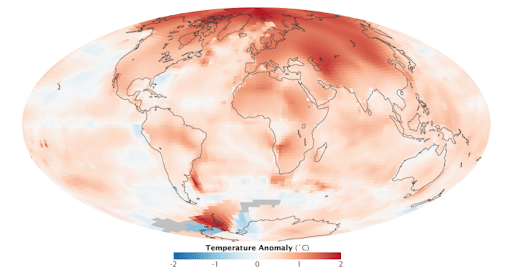
Arctic amplification means the phenomena in which the Arctic area warms faster than the world average. In recent decades, the Arctic has warmed nearly twice as much as the rest of the world. Arctic amplification has far-reaching consequences for global climate change. It has the potential to hasten the melting of Arctic sea ice, have an impact on ecosystems and biodiversity, alter weather patterns, and contribute to rising sea levels. This article explains about Arctic amplification which is important for UPSC IAS exam preparation.
Table of Contents
What is Arctic amplification?
- Arctic amplification or Polar amplification occurs when changes in the earth's atmosphere cause a greater temperature differential between the north and south poles than the rest of the planet.
- Global warming, or the long-term heating of the earth's surface caused by anthropogenic causes or human activity, has elevated the planet's average temperature by 1.1 degrees Celsius since pre-industrial times.
- While changes may be seen all around the earth, changes in surface air temperature and net radiation balance tend to have the greatest impact in the north and south poles. Polar amplification is the name given to this phenomena.
- These effects, known as Arctic amplification, are more pronounced at higher latitudes.
- It occurs when a rise in greenhouse gases affects the net radiation balance of the atmosphere.
- Researchers from the Finnish Meteorological Institute published their findings in August 2022, stating that the Arctic is warming four times faster than the rest of the world.
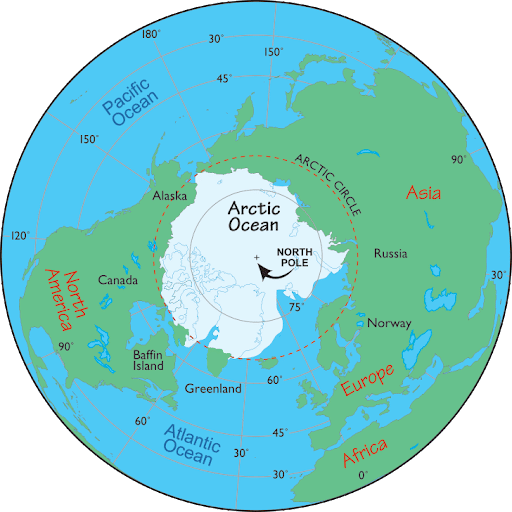
- The warming is more concentrated in the Eurasian Arctic, where the Barents Sea north of Russia and Norway is warming at an alarming rate – seven times faster than the world average.
| Other Relevant Links | |
|---|---|
| Net Zero Pledges | Carbon Leakage |
| Karakoram Anomaly | HPCL - Cow Dung to Compressed Biogas Project |
| Triple Planetary Crisis | Panchamrit |
| CO2 Equivalent | Carbon Dioxide Levels -Keeling Curve |
| Updated NDCs | India's GreenHouse Gas Emissions |
| UNEP Production Gap Report | UN World Water Conference |
| Global Alliance for Industry Decarbonisation | Green Coal |
Causes of Arctic Amplification
- Albedo Feedback: The Arctic has a high albedo, which means it reflects a large quantity of incoming solar energy back into space. However, when the region warms, the amount of sea ice and snow melts, exposing darker surfaces such as open water and land.
- These darker surfaces absorb more solar energy, contributing to more warmth and melting. The Arctic amplification is exacerbated by this positive feedback loop.
- Positive Feedback from Sea Ice Loss: One of the primary causes of Arctic amplification is a drop in Arctic sea ice coverage. As sea ice melts, the comparatively warm ocean waters beneath are exposed.
- This causes the water to absorb more heat, thus warming the area and decreasing ice development in coming years.
- Changes in Atmospheric Circulation: The loss of sea ice has an impact on atmospheric circulation patterns such as the jet stream and the polar vortex. These shifts can modify weather patterns, causing warmer air to be transported to the Arctic and colder air to be transported to lower latitudes.
- As a result, more extreme weather occurrences, such as heatwaves and cold spells, may occur.
- Greenhouse Gas Emissions: Thawing permafrost in the Arctic emits significant volumes of greenhouse gases, principally methane and carbon dioxide.
- These gases contribute to the greenhouse effect by trapping more heat in the atmosphere and causing it to warm more. The initial warmth induced by other sources is amplified by this feedback process.
- Deposition of Black Carbon: Black carbon, commonly known as soot, is a byproduct of incomplete combustion from sources such as industrial operations, home heating, and wildfires.
- When black carbon settles on snow and ice, it darkens them, lowering reflectivity and increasing heat absorption. This hastens the melting process and contributes to Arctic amplification.
- Oceanic Heat Transport: Warmer water from lower latitudes can be brought into the Arctic by changes in oceanic circulation patterns. This heat transmission, along with diminishing ice cover, causes accelerated melting and amplifies Arctic warming.
- Melting Land Ice: Melting land-based ice sheets, such as those found on Greenland, contribute to Arctic amplification. As the ice melts, the gravitational attraction in the region decreases, causing the land to rebound or rise.
- This rebounding land can alter atmospheric circulation patterns, influencing Arctic climate dynamics.
Global Consequences of Arctic Amplification
Greenland Ice Sheet Thinning
- The Greenland ice sheet is melting at an alarming rate, and the rate of sea ice formation has been exceptionally low since 2000, with fresh and thinner ice replacing older and larger ice sheets.
- The extraordinary summer temperatures caused an ice sheet melt of 6 billion tonnes every day, totaling 18 billion tonnes in three days, enough to submerge West Virginia under a foot of water.
Sea Level Rise
- The Greenland ice sheet, which houses the second greatest volume of ice behind Antarctica, is critical for controlling sea level.
- In 2019, this was the single most significant source of the 1.5-metre rise in sea level.
- If the ice sheet totally melts, sea levels would increase by seven metres, threatening to submerge island nations and large coastal towns.
Impact on Biodiversity
- The warming of the Arctic Ocean and the seas in the region, acidity of the water, and changes in salt levels are all having an influence on biodiversity, especially marine species and dependent species.
- The increased frequency of rainfall is also altering the availability and accessibility of lichens to reindeer.
- Arctic amplification has resulted in severe famine and mortality among Arctic wildlife.
Permafrost Thawing
- The permafrost in the Arctic is thawing, releasing carbon and methane, two of the principal greenhouse gases responsible for global warming.
- Experts are concerned that the thaw and melt would liberate long-dormant germs and viruses locked in the permafrost, potentially causing illnesses.
- The best-known example is the permafrost melt that caused an anthrax epidemic in Siberia in 2016, killing approximately 200,000 reindeer.
Connectivity
- The melting of Arctic ice and its geographical location will result in the lowest maritime distance connecting America, Europe, and North East Asia.
- This is expected to revolutionise global marine commerce, which is currently done via the conventional East-West route via the Malacca Strait and the Suez Canal.
Monsoons
- Due to the country's dependence on rainfall for water and food security, the relationship between the impact of changing Arctic and monsoons in India is becoming increasingly important.
Mineral Resources
- The Arctic area is rich in coal, gypsum, and diamond resources, as well as significant amounts of zinc, lead, placer gold, and quartz.
- Greenland alone holds over a fifth of the world's rare earth deposits.
Geopolitics
- As Arctic ice melts, so do geopolitical temperatures. China referred to itself as a 'Near-Arctic State' in its Arctic strategy White Paper in 2018.
- The opening of maritime routes and the possibility of expanded resource exploitation are causing the major three—the United States, China, and Russia—as well as NATO to compete for position and influence in the region.
Arctic Amplification - Impacts on India
- In recent years, scientists have pondered the influence of climate change on the Indian subcontinent's monsoons.
- Due to India's reliance on rainfall for water and food security, the relationship between the two is becoming increasingly important.
- Research (A possible relation between Arctic Sea ice and late season Indian Summer Monsoon Rainfall extremes) released in 2021 indicated that diminishing sea ice in the Barents-Kara Sea area can contribute to severe rainfall occurrences in the later part of the monsoons — between September and October.
- Changes in air circulation caused by melting sea ice, along with high temperatures in the Arabian Sea, lead to increased moisture and intense rainfall events.
- According to the World Meteorological Organization's 2021 study (State of world Climate in 2021), sea level is rising faster along the Indian coast than the world average pace.
- The melting of sea ice in the northern areas, particularly the Arctic, is one of the key causes of this surge.
Initiatives by India
- India has had a long relationship with the Arctic, having been one of the original High Contracting Parties to the Svalbard (previously Spitsbergen) Treaty in February 1920.
- The Indian research station 'Himadri' at Ny-lesund was dedicated to the nation in 2008, making India the only developing country with an Arctic research facility other than China.
- IndARC, India's first moored-underwater observatory, was deployed in the Kongsfjorden fjord, Svalbard, in 2014 to study the influence of changes in the Arctic Ocean on tropical processes such as the monsoons.
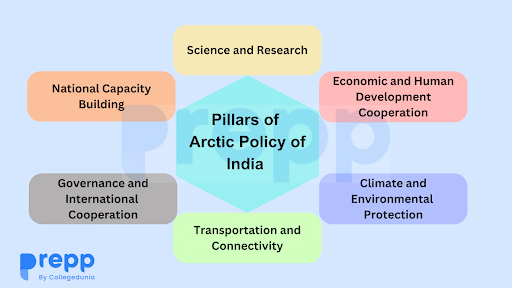
- The Arctic Policy of India: The Government of India published India's Arctic Policy titled "India's Arctic Policy: Building a Partnership for Sustainable Development" in March 2022.
Conclusion
Sea ice loss is causing the Arctic to warm two to three times as quickly as the rest of the earth, a process known as Arctic amplification. Sea ice ages and thins as it melts, making it more susceptible to additional melting. When the ice is completely gone, darker land or ocean surfaces may absorb more solar radiation, leading to more warmth. Ice sheet melting, sea level rise, more violent Arctic fire seasons, and permafrost melting are all being caused by Arctic amplification. An increasing amount of studies also demonstrates that fast Arctic warming is causing changes in the climate and weather of mid-latitudes.
FAQs
What is Arctic amplification?
Answer: Arctic amplification refers to the phenomenon where the Arctic region is warming at a rate faster than the global average. This accelerated warming is due to various factors, including the loss of ice cover, which reduces the Earth's albedo (reflectivity), causing more sunlight to be absorbed, and the increasing concentration of greenhouse gases.
Why is the Arctic warming faster than other regions?
Answer: The Arctic is warming faster due to a combination of factors, including the ice-albedo feedback mechanism, where melting ice exposes darker ocean or land, which absorbs more heat. Additionally, changes in atmospheric circulation, such as altered jet streams, and the increase in greenhouse gas emissions, contribute to Arctic amplification.
What are the consequences of Arctic amplification?
Answer: The consequences of Arctic amplification include the accelerated melting of ice sheets and glaciers, rising sea levels, changes in weather patterns, and disruption to ecosystems. Warming in the Arctic affects global weather systems, including the jet stream, which can lead to extreme weather events in other parts of the world.
How does Arctic amplification affect global climate change?
Answer: Arctic amplification has a cascading effect on global climate systems. As the Arctic warms, it disrupts the balance of heat distribution across the planet, influencing ocean currents, weather patterns, and atmospheric circulation. This can lead to more extreme weather events, such as hurricanes, heatwaves, and heavy precipitation, even in regions far from the Arctic.
What role does Arctic amplification play in sea level rise?
Answer: Arctic amplification contributes to sea level rise by accelerating the melting of ice sheets and glaciers in the Arctic and Greenland. This meltwater flows into the ocean, contributing to rising sea levels. Additionally, the warming of ocean waters itself leads to thermal expansion, further exacerbating sea level rise.
MCQs
- What is the primary cause of Arctic amplification?
A) Increased volcanic activity
B) The ice-albedo feedback mechanism
C) Increased solar radiation
D) More intense human activity in the region
Answer: (B) See the Explanation
Arctic amplification is primarily driven by the ice-albedo feedback, where melting ice exposes darker surfaces that absorb more heat, further accelerating warming.
- Which of the following is a direct consequence of Arctic amplification?
A) Reduced solar radiation in the Arctic
B) Increased snowfall in the region
C) Melting of Arctic ice sheets and glaciers
D) Decreased ocean temperatures in the Northern Hemisphere
Answer: (C) See the Explanation
Arctic amplification leads to the accelerated melting of ice sheets and glaciers, contributing to sea level rise.
- How does Arctic amplification influence global weather patterns?
A) It leads to cooler temperatures globally
B) It disrupts ocean currents and atmospheric circulation
C) It stabilizes global weather patterns
D) It has no effect on global weather systems
Answer: (B) See the Explanation
Arctic amplification alters the jet stream and atmospheric circulation, leading to shifts in global weather patterns and extreme weather events.
- Which of the following is a potential global consequence of Arctic amplification?
A) Decrease in global sea levels
B) More frequent and intense extreme weather events
C) Cooling of the global climate
D) More stable weather patterns
Answer: (B) See the Explanation
The warming of the Arctic influences global weather systems, leading to more extreme weather events such as heatwaves, storms, and heavy rainfall.
- What is the role of greenhouse gases in Arctic amplification?
A) They have no effect on Arctic warming
B) They enhance the natural cooling of the region
C) They contribute to warming the Arctic by trapping heat in the atmosphere
D) They cause the Arctic to cool down
Answer: (C) See the Explanation
Greenhouse gases, such as carbon dioxide, trap heat in the atmosphere, contributing to the warming of the Arctic and enhancing the process of Arctic amplification.
GS Mains Questions and Model Answers
Q1: Explain the concept of Arctic amplification and its impact on global climate change.
Answer: Arctic amplification refers to the faster-than-global-average warming in the Arctic region. This phenomenon is largely driven by the ice-albedo feedback loop, where the loss of reflective ice surfaces exposes darker ocean water or land, absorbing more heat and further accelerating warming. The accelerated warming in the Arctic has profound global implications, including the disruption of weather patterns, the destabilization of the jet stream, and the melting of polar ice, which contributes to rising sea levels. Furthermore, Arctic amplification influences the distribution of heat around the globe, leading to extreme weather events, such as more intense hurricanes, droughts, and heavy rainfall. As such, Arctic warming has cascading effects on global climate systems, emphasizing the interconnectedness of regional and global climate patterns.
Q2: Analyze the role of the ice-albedo feedback mechanism in Arctic amplification and its global implications.
Answer: The ice-albedo feedback mechanism is one of the primary drivers of Arctic amplification. As global temperatures rise, ice sheets and glaciers in the Arctic begin to melt, reducing the Earth’s albedo, or reflectivity. Ice, being highly reflective, bounces most of the sunlight back into space. As it melts, darker ocean water or land is exposed, which absorbs more heat, leading to further warming. This feedback loop accelerates the melting process and contributes to the rapid warming of the Arctic. The global implications of this feedback are significant. As the Arctic warms, it can disrupt weather patterns worldwide, alter ocean currents, and contribute to rising sea levels. These changes can lead to more extreme weather events, changes in ecosystems, and increased pressure on global food and water security.
Q3: Evaluate the impact of Arctic amplification on sea-level rise and global ecosystems.
Answer: Arctic amplification significantly contributes to sea-level rise through the accelerated melting of the Greenland ice sheet and Arctic glaciers. As these ice masses melt, they release freshwater into the ocean, which raises global sea levels. Additionally, warming oceans due to higher Arctic temperatures contribute to thermal expansion, further exacerbating sea-level rise. This rise threatens coastal communities and ecosystems, particularly in low-lying areas. Furthermore, Arctic amplification affects global ecosystems by disrupting the migratory patterns of species, changing habitats, and impacting food chains. The altered timing of seasons, changes in precipitation patterns, and the loss of ice cover affect biodiversity in the Arctic and globally. The ripple effects of Arctic warming are felt far beyond the region, demonstrating the interconnectedness of the Earth’s climate systems.
Previous Year Questions on Arctic Amplification
1. UPSC CSE 2016
Question: "Discuss the phenomenon of Arctic amplification and its potential impact on the global climate system."
Answer: Arctic amplification is the faster warming of the Arctic compared to the global average, primarily due to the ice-albedo feedback mechanism. As the ice melts, it exposes darker surfaces, which absorb more heat and further accelerate warming. The effects of Arctic amplification are far-reaching, influencing global climate systems by disrupting weather patterns, causing shifts in atmospheric circulation, and leading to more extreme weather events. It also contributes to rising sea levels through the melting of polar ice, threatening ecosystems and human populations in coastal areas.
2. UPSC CSE 2020
Question: "Analyze the consequences of Arctic amplification on global weather patterns and ecosystems."
Answer: The consequences of Arctic amplification on global weather patterns include disruptions to the jet stream, which can lead to extreme weather events such as heatwaves, storms, and floods in mid-latitude regions. The warming of the Arctic also influences ocean currents, which affects global temperature distribution and precipitation patterns. Arctic amplification can disrupt ecosystems, particularly in the Arctic itself, where melting ice and changing temperatures affect wildlife, including polar bears and marine species. The warming also accelerates sea-level rise, which threatens coastal ecosystems and human populations. These cascading effects highlight the interconnectedness of global climate systems.
Download the PREPP App and attempt FREE IAS Exam Mock Tests and get complete study material!

Full Test - 04: UPSC CSE Prelims CSAT (Paper-II)
Full Test - 03: UPSC CSE Prelims CSAT (Paper-II)
UPSC CSE Prelims 2026 GS Paper 1 Question Paper (24-May-2026)
UPSC CSE Prelims 2026 CSAT Paper 2 Question Paper (24-May-2026)

17 February 2025 | The Hindu Must Read Articles | Current Affairs

16 February 2026 | The Hindu Must Read Articles | Current Affairs

13 February 2026 | The Hindu Must Read Articles | Current Affairs









Comments